A few thoughts on Director Paul Thomas Anderson’s One Battle After Another (Warner Bros. Pictures) released September 26 — or, how not to make a liberatory movie.
One Battle After Another comes complete with a nondescript title that gives away the weak episodic movement of the structure even though it’s loosely causal, technically. The story moves from one spectacle to another such that, as it turns out, there is mainly spectacle and next to no story and content.
The movie opens and sometimes continues as a “blaxploitation” flick that otherwise tries to present as a topical thriller. The main character is entirely miscast as a white male, a comedic white male, no less, in a movie that revolves entirely around sobering and grim race and class issues. Meanwhile, a satiric virtual side-story of militant and rich white males is tagged on by means of insulting blaxploitation and pasted into what little plot there is.
The plot? The story? Weather Underground type revolutionaries liberate immigration prison camps and rob banks to fuel their revolutionary ideas circa 2010. A revolutionary as new mother is captured after killing a bank guard, and then gives up her allies to the authorities. This allows her to escape to Mexico never to be heard from again. Her male partner goes underground into rural America with her infant daughter, and they live quietly until the present day, when they are hunted down by the militant state while the daughter is in high school. A racially motivated chase and hostage tale unfolds replete with militant white plutocrat supremacists. The mixed race daughter is pursued and held hostage while the white dad both flees authorities and attempts to find and save her. Spoiler — but you knew it would work out, no? It’s Hollywood: The daughter saves herself as it turns out, while her Dad is saved by surviving revolutionaries and other social justice workers, mostly minorities. The white supremacists are fought off, if not beaten. Sounds socially conscious and good?
There are some problems. 2 hours and 45 minutes of problems. There is precious little content in the entire 2 hours and 45 minute run of the movie. Next to nothing happens, nonstop. And what does happen is often, well, wanting.
The mixed genres of the film are crudely thrown together: violent rich white males in the movie are presented satirically; the empathetic white male lead is presented comedically; the female and minority characters are treated as haphazardly dramatic, cheeky, hip, larger than life, super savvy, or victims. The plot is threadbare. The character exploration is near zero. Any social discourse is severely muted, even in face of and despite a few telling visuals.
The continuous musical score is interesting and compelling about ten percent of the time and otherwise serves as sheer filler in place of story and content, or is redundant of the continuous spectacle, again in place of story and meaningful substance. And the music is relentless on your skull less like a lively ticking clock and more like a psychotic woodpecker. Because so little of substance actually happens in the film, the score sometimes gives a chewing gum like relief. But you often want to spit out the gum and can’t.
The arbitrary and unearned slapstick transformation of the main character from revolutionary and doting dad to burnout bumbler doesn’t play much better in the movie than do the too-thin cartoon characters play in the Thomas Pynchon novel Vineland,on which the movie is remotely based.
Go back and take a look at a century of macropolitical movies, or nominally macropolitical movies, with at least some modest leftish bent made from the time of Charlie Chaplin’s Modern Times and The Great Dictator and you’ll find that they are almost all made by men, very much like all American Presidents have been men. The Presidency, like this type of movie, consequently suffers greatly as a result. It’s long since time for macropolitical movies to be made by leftish women directors and especially by women of color directors just as it is long since time for women and women of color Presidents to preside in the most powerful country of the capitalist empire — for the purpose of changing its whole nature.
Had that been the case for this film, it’s not difficult to think that the minority exploitation and the wholly superfluous white male lead elements of the movie would have been cut or not even considered in the first place. And any need for spectacle would be far reduced, by building up the substance of social discourse and character development, with not unrelated and far better control of plot, and actual content and character revelation in dialogue.
It’s not that a white male director or writer is incapable of doing all this with an exposé of white empire and with characters of all races and backgrounds in macropolitical movies (or novels), it’s just an absolute rarity to see it in big American cinema, and in establishment literary novels.
In collaborative ventures like movies, you should collaborate. Paul Thomas Anderson clearly needed some help in this regard. I would not want to see my three anti-empire novels be treated like this film, at all. The novels involve a diverse populace of characters, Loop Day and Empire All In and Most Revolutionary — and if these novels would ever be filmed, then either the directors or script adapters or both should be women of color to add and combine their perspectives of life in white Empire to my own depictions. Similarly, if these novels would be adapted into TV shows, then the script adapters or showrunners or both should ideally be leftish women of color to give a broader spectrum of insight on the diverse cast of characters and the charged personal, social, and political situations.
Theoretically you could get by without such diversity among the creators but it would be difficult to do. There are so many reasons to absolutely want cross-race, cross-sex, and cross-class collaboration, especially for such sweeping macro projects. You still need a core group of creators with leftish, progressive populist sensibilities that overlap with the progressive populist ideology of the novels, otherwise you might as well surrender the thing entirely to corporate executives. One Battle After Another could have benefited enormously from a diverse writer and director collaboration rather than Paul Thomas Anderson proceeding all by his lonesome, with a white male lead no less. It’s painfully obvious. The great diverse cast salvages what can be salvaged in such a setup, mainly including Regina Hall, Teyana Taylor, Benicio Del Toro, and Chase Infiniti.
This is a Hollywood director’s spectacle of a film, not a writer’s movie of revelatory consciousness and story. The movie is far more about imagery as warped Hollywood caricature than compelling narrative and insight. The caricature of spectacle manufactures continuous decapitation of thought, even though it is said a picture is worth a thousand words. Clearly the reason so much money, or any money, was thrown at this movie is the moneymaker himself, Leonardo DiCaprio. Put Leo in the film and you’ll get your money back! What do we do with him? Make him the main character. Brilliant! Except he’s superfluous to the story. Nothing is about him. He’s a pointless main character — played off literally as a running joke to no end, no point, no purpose. He’s there in the movie for reasons that have nothing to do with the story. He’s there to get the thing funded. And it guts the movie.
DiCaprio is talented but in the way. There is far more drama, theme, meaning, reality, and possibility to be found in the excellent (when not exploited) black women characters and their stories, especially if they were to raise the daughter of the runaway mother, rather than the do-nothing beside-the-point DiCaprio character. DiCaprio gets in the way of anything interesting in the movie and everything that is most meaningful. The DiCaprio story is hollow and vacuous and spans the entire length of the film. The farce of following this guy takes up the space in which the great issues could be fully engaged. In this way the actually compelling events and characters are badly slighted, almost all people of color. Also, the vicious militants and supremacists of the plutocracy of white empire are skewered far from any real office of power, and far from any systemic illumination of their violent and profiteering oppression.
One Battle After Another? One spectacle after another. One mistake after another. One wasted moment after another. One DiCaprio after another. One PTA after another. If you could only get DiCaprio and PTA and the Hollywood executives out of the film you could have something far more vital and meaningful.
“A” for effort, I suppose, great enthusiasm wholly flawed. Warped and hollow result. The supporting cast far outdid the boss class in this one. A pity to be so badly handicapped by the funders and the conventional stars. Spanning seldom seen small cities and the vibrant countryside of the American northwest and southwest, at least the movie is sometimes scenic and the music is sometimes good though robotically overdone. Exasperated scoffing should more likely be summoned from the audience than great emotions, if you’re paying attention at all, not least when the main character is onscreen. While the movie is a vacuous, twisted mess thanks to the writing, directing, and structure, the actors are good or better. Why can the actors be such accomplished professionals and the writers, directors, and corporate executives such tools of capitalist power? To ask is to answer.
Look who’s in charge. Not the people. The power is elsewhere. Until the people come to power and a progressive populist ideology prevails, the movies will be mainly spectacles cast by the plutocracy, with all the prevailing whiz-bang, gee wow, and psychotic dross that that entails. If you go see this gutless, garish spectacle of a chase movie, you’ll need to bear it for what it is — a vapid caricature of physical movement and social movements — and what it is not — a critical cultural moment on the path to a better future.
The actors go for what’s vital more than the movie does. The movie was made to push flash-bang as content and does not even offer clichéd platitudes as theme. Just one spectacle after another. What is to be done by the socially conscious observer? Flee, or hang on to the best of the characters and the best moments in a few scenes, especially the scenes of scores of people in distress, and dream — dream of what might have been. An entirely different movie, an entirely different story of and for our perilous times.
There’s a major difference between the two recent political and culturally critical movies One Battle After Another and Eddington that is telling and that may account for One Battle being more enthusiastically received than Eddington.
For all its flaws, One Battle takes a clear and strong partisan liberatory stand with the oppressed and would-be revolutionaries against the oppressors. One Battle is clearly “An Antifascist Movie at a Fascist Moment” in the words of Michelle Goldberg even though it massively kneecaps its own potential and achievements.
One Battle glamorizes and validates action for social change while empathizing with and somewhat humanizing the plight of the oppressed. The movie also excoriates the derangement of the vicious sick white male plutocracy and their hired guns who uphold and benefit from the destructive and unjust status quo.
Eddington on the other hand minimally nods to bits of unjust reality and some delineation of good and bad while engaging it much more marginally than One Battle. For all of Eddington’smimetic accomplishment, the movie undercuts intelligence, especially liberatory and protective partisan intelligence. Eddington discredits or contradicts nearly everything and everyone’s professed positions and actions and thereby guts life of a lot of the clarity and power of principle, knowledge, healthy emotion, and protective partisanship, the liberatory. The movie guts much sense and stability and meaningful ways of being by presenting the half-blind and the irate and the uncertain and the confused as full reality. This is not exactly what anyone needs more of in these purposefully deluded and inflamed times.
Eddington‘s cross-spectrum negativity and discrediting effectively hides much good reality and healthy possibilities, giving a false and unhealthy impression of life; whereas, One Battle After Another revels in vital liberatory moments, including some very badly needed expressions of healthy emotion and insight for use in this turbulent and desperate day and age. One Battle does all this despite being the unfortunate structural and representational trainwreck of a movie that italso pervasively is.
Journalist and literary critic Rebecca West once noted that “A copy of the universe is not what is required of art; one of the damned thing is ample.” Eddington appears to copy the universe in presenting the depressing oppressive and confusing elements of reality, while botching and gutting the liberatory elements, and so does not present a full sense of reality. Illumination, inspiration, healthy emotions, and effective actions — these too are features commonly found in reality or readily imagined but are scarcely found in Eddington — let alone much greater possibilities and transcendent or impactful ways of being, artistically presented and created as story.
Eddington the movie is fixated by what becomes its own murderous mess of Eddington the town. In the movie — “spoilers” here — the conservative sheriff murders a mentally ill homeless man and then murders his political opponent, the liberal mayor, and his son. The sheriff’s right-wing pro-gun public bellicosity leads to voiceless antifa figures flying into town on a private jet — or fake antifa figures being flown in by the wealthy as a false flag operation — it’s indeterminate — to confront the sheriff, leading to a spiral of ever greater violence.
The end result is that the big data plutocrats wind up in exploitative material and political control of the town, which the murderous sheriff never actually cared or knew all that much about — the data plutocrats, not the town. The conservative sheriff was just sick of being contradicted and humiliated by the liberal mayor — and his private family life was going badly, also connected to the mayor. Self-contradictory and ultimately homicidal grievance politics in America — Eddington as Little America, or Little White Empire. And that’s it — the movie Eddington, the town Eddington. It represents the negative elements of society that everyone already knows all about — what is discussed and demonstrated over and over and over again online, on phone, in real life, on endless repeat. But that’s not all of reality and life — let alone the possible and the imaginable.
Rebecca West where are you now? “A copy of the universe is not what is required of art” — especially not the merely most confusing, violent and contradictory elements of the universe — “one of the damned thing is ample.” Thank you very much. I’ll pass. It’s possible to admire a work of art, the fastidious intimacies of its construction and action, while despising what it is. Give us an other to know and to experience so that we and our world may become greater others ourselves. Of course, on the flip side, be wary of giving us an equally fake alternate version of reality that may be allsunshine and light. These fractionally realistic types of art are not the worst things in the world, by far, but they can have their trying and troubling limits.
If only in place of the humbly-bumbly Joaquin Phoenix Sheriff in Eddington a bright orange Trump caricature had been cast instead — call it, Empireton! Now that would have been a sight to behold! — and possibly an epic story — especially if a true inspired and inspiring hero, however genuinely humble, were also cast alongside the fluorescent murderous incarnation of Evil in Little Fascist Eddington, America. Bye-bye miasmic and torturous realism, hello heightened reality!—
Lecturing a gathering of the top American military officials yesterday in Quantico, Virginia, American President Donald Trump declared war against his own country — supremacist military war against t…
Instead we get a kind of suffocating, fractured, noxious realism that we already know and experience all too much — and in much deeper texture and broader scope than can be experienced in Eddington. Not only are there other options for art that surpass Eddington both aesthetically and normatively, Eddington, while posing as realism, falsifies reality in debilitating ways:truncating, distorting, and further confusing reality. One Battle After Another perverts and insults reality, too, on the one hand but on the other hand it upholds a clear and strong and often liberatory sense of life. One Battle also at least partly transcends reality to indicate greater possibilities and impulses for vital consciousness, action, and being.
While One Battle After Anothergets a lot wrong, including much that undermines most anything and everything it might otherwise achieve as an aesthetic work of art and accomplish as a social and political artefact, Michelle Goldberg’s “An Antifascist Movie at a Fascist Moment” touches on a few important strengths of the story:
The film’s artistic success shouldn’t be reduced to its politics. But at a moment when an autocratic administration is trying to force cultural institutions into submission, it’s invigorating to see a Hollywood movie so fearless in its progressive convictions. “One Battle After Another” has complicated things to say about left-wing political violence and self-serving radicalism, but it takes a clear side in the broader fight between authoritarianism and resistance. …
…if “One Battle After Another” doesn’t celebrate revolutionary violence, it also doesn’t condemn the broad goals the French 75 fought for. Indeed, it celebrates those who quietly keep radical hopes alive. Its most winning character is Benicio Del Toro’s Sergio St. Carlos, a karate sensei who runs an underground railroad for undocumented immigrants, and who moves through the film’s chaos with Buddha-like serenity.
There is something subversive, in the best possible way, in the film’s vision of good and evil. The same week it came out, the [Trump] administration released a national security memorandum denouncing movements that “portray foundational American principles (e.g., support for law enforcement and border control) as ‘fascist’ to justify and encourage acts of violent revolution.” Watching “One Battle After Another” feels liberating in part because it’s heedless of all the new taboos Trump and his henchman are trying to force on us. The movie could scarcely be more relevant in Trump’s America.
Just as a “film’s artistic success shouldn’t be reduced to its politics” neither should a film’s artistic failures “be reduced to its politics.” But the film’s political failures are real and loom large and otherwise undercut its political, cultural, and social achievements and potential — as well as its own art.
People want to like One Battle After Another for a wide variety of compelling reasons, including its liberatory and antifascist qualities, and it has a lot of other positive qualities too, despite being otherwise so terminally vacuous. The film is obviously and fundamentally vulnerable to accurate critiques of blatant racism and sexism, not only in prominent scenes but structurally also — in particular, the upfront “blaxploitation” not least with its hyper-sexualization, plus the relative marginalization of all the minority characters who seem to be largely placed in a string to propel the plot for the near continuous presence and benefit of the white male main character and his one-note story. Deeply biased, at best, this tale, seemingly as old as time.
Such a critique barely scratches the surface of the problematic issues in One Battle After Another. There’s a lot of truth to Colleen Claes’ view that the movie is
pretty hollow: full of hacky Gen X humor and faux progressivism, with little point and even less character development (especially for the female characters, who are still somehow the driving force behind the story?) I cannot for the life of me understand how the “what time is it?” joke lasted for what felt like thirty minutes – precisely twenty-eight minutes longer than it needed to.
Because the plot is a showdown between two white men fighting to hold onto Black and biracial women for reasons that keep them in constant conflict with each other. There’s no choice then but for the film to feel incongruent and exploitative of those thinly written Black women characters. …
Because Anderson is not interested in revolution. He’s not interested in vulnerable immigrants. Despite the many jokes about lusting for them, he’s not interested in Black women. He’s only interested in the interiority of white men.
That most reviewers of One Battle After Another seemingly do not or cannot readily see the severe and debilitating flaws of the movie is not much credible at this late stage of cultural history. Vacuous garbage and cesspool liberalism — these are significant elements of this film, woefully misjudged by writer/director Paul Thomas Anderson and producers. The movie’s skewering of hideous reactionaries, and the condemnation of fascist oppression, and the valorization of social justice workers and so on helps offset these flaws but does not eliminate them.
That most reviewers overlook these problems or ignore them and then hype what often amounts to a lot of tedious or warped Hollywood clichés as wonderful features of art or society is symptomatic of many other cultural problems besides. Look at him run, look at him drive, look at him shoot, look at him pose — what does he say? not much — what does he do? not much — what does it all mean? not much! Alas. Not in the time given. Not in the context of the story nor in the society outside the story, life. It could have been, should have been so much more. The most vital and crucial characters, politics, and elements of culture are frequently exploited, distorted, and marginalized throughout the film, badly undercutting the film’s genuine qualities and strengths.
The empty or loaded, offensive and otherwise demeaning elements of One Battle After Another are all too vivid and predominant in a story that in other ways has a generous, liberatory, and sizable heart. There appears to be a lot of critical overcompensating going on in both lauding it and remaining largely silent about the (white) elephants in the movie that essentially suffocate and lobotomize it. The movie gives itself its own poison pills, however unwittingly — to negative artistic, political, and cultural effect.
Eddington, written and directed by Ari Aster, similarly commits intellectual and experiential, ideological and emotional butchery on itself by falsifying reality in one gutted distortion after another. Sure, pockets and swaths of reality can be perceived through a fundamentally claustrophobic, chaotic, and violent lens, which the film constantly pushes by discrediting virtually everything it fronts. The internet bombards people with these sorts of self-discrediting, bewildering, and poisoned pockets and panoramas 24/7 — even and especially as huge areas of the internet and larger world are liberatory too. Anyone in their five senses avoids online carnage or explains and counters it and does not recreate it, even as many fall or dive often unwittingly into the madhouse and risk breaking their own neck and that of others.
It’s not that nothing can be learned or gained from movies like Eddington. It’s not that these shrunken-partial, gritty-chaos, or horror-view works of art are necessarily wholly unengaging. But it can quickly be suffocating to mind and imagination, redundant to the worst of life, and off-putting to both consciousness and intelligence. “One of the damn thing is ample.” Or, if you especially like this kind of crazed-gutter aesthetic and content, you might find a way to make it more revelatory, moving, impactful. Give us something more, something other, something moving up and out from the utter “damnation” so that we and our world may be and become something more alive and whole too. It’s badly needed.
If the self- and socially-eviscerating characters of Eddington, that is, Eddington, don’t know any better about themselves and the world, surely the director writer/director does. Find a way to express it. Show it! Tell it! Instead, in Eddington viewers are left to choke on the incoherent violent spectacle of forced chaos as all reality. If anyone wants to experience aggravation, chaos, and horror, they can quickly browse the internet, or even sometimes simply look across the office or worksite, or glance at the street outside. A one-to-one recreation of disaster does not rise to the level of a cautionary tale when it merely keeps viewers sunk in the bowels of the daily disaster of an omnipresent kind of life.
Oh, Ed! In the movie, we see that the Big Data ruled town of Eddington is fundamentally awful, violent, confused, confusing, all of that. No shit, Sherlock. What else ya got? Pity the people trapped in this universe and torn apart by its limited notions and crimped expressions of reality. This is the tragedy of a very limited and warped vision of life, in some ways reality, far from all ways — which is news to whom exactly? Liberatory epics far more than tragedies are needed today, including liberatory epics far better than One Battle After Another. Transcendent impactful epics that provide as much progressive or revolutionary possibility and inspiring reality and imagination as can be conceived and created are needed far more than stultified and claustrophobic tragedies of chaotic and violent life like Eddington.
If it’s tragedy you find compelling and insightful, any sweeping epic can easily contain the tragic, and much more besides — the comedic, satiric, the dramatic, the essayistic, the poetic, and so on. Liberatory epics can encompass and inspire all. You can find a few of these revolutionary epics at Liberation Lit, along with critiques and referrals for more beyond.
A Stoner Dad and a Murderous Sheriff Go To War. Against each other. Against the universe. It could be epic! And truly revolutionary, illuminating, and moving — such a movie or other long story. Who would win? Hopefully someone unexpected, for the sake of us all and everything, not the stars of these two shows — warped and dull, broken, and gutted of the liberatory, as they too much are. My vote is for Sabia and Leif and Dhyna but that’s just me.
“Sinclair’s The Jungle was a socialist tract that changed labor law.”
In fact, the originally serialized international best-selling novel, The Jungle, helped directly cause enactment of both the Meat Inspection Act and the Pure Food and Drug Act; whereas, Sinclair had hoped the novel would affect labor laws.
The power of serialized fiction in progressive periodicals:
Upton Sinclair’s novel The Jungle “first appeared serially in Appeal to Reason on February 25, 1905, and it was published as a book … a year later…. Roosevelt, an avowed “trustbuster,” was sent an advance copy of The Jungle…. The novel was an instant international best seller and prompted massive public outrage at the contamination and sanitation issues raised in the work, even though Sinclair’s primary intent in writing the story was to promote socialism….By early 1906 both the Meat Inspection Act and the Pure Food and Drug Act had long been stalled in Congress, but, when the Neill-Reynolds report had fully confirmed Sinclair’s charges, Roosevelt used the threat of disclosing its contents to speed along the passage of both acts, which became law on the same day.
Upton Sinclair famously said that with The Jungle, “I aimed at the public’s heart and by accident I hit it in the stomach.” Probably would have been more accurate if Sinclair had said that he aimed “primarily” at the public’s heart, because the novel takes aim at many things of public interest — the public’s stomach, food quality being one of them.
Ottoman suggests that for incorporating ideology and propaganda in novels it should be done in a certain way, a familiar establishment caution, when propaganda is tolerated at all:
“If you want ideology, fuse it to form so it can’t be peeled away.”
In fact, writers can incorporate ideology or propaganda in novels that can be “peeled away” from it, lifted out wholesale, just as it can be cut and pasted into a novel, in ways as aesthetic or unaesthetic as you want to make it.
In my view, Burger’s Daughter is Nobel Prize winning Nadine Gordimer’s greatest novel, originally banned by the apartheid regime in South Africa because judged to be blatant propaganda. In Burger’s Daughter, Gordimer includes various kinds of sheer propaganda, incorporating propagandistic speeches, dialogue, and an actual banned student pamphlet.
In a 1980 interview, Gordimer stated that she was fascinated by the role of “white hard-core Leftists” in South Africa, and that she had long envisaged the idea for Burger’s Daughter. Inspired by the work of Bram Fischer, she published an essay about him in 1961 entitled “Why Did Bram Fischer Choose to Go to Jail?” Gordimer’s homage to Fischer extends to using excerpts from his writings and public statements in the book. Lionel Burger’s treason trial speech from the dock is taken from the speech Fischer gave at his own trial in 1966. Fischer was the leader of the banned SACP who was given a life sentence for furthering the aims of communism and conspiracy to overthrow the government. Quoting people like Fischer was not permitted in South Africa. All Gordimer’s quotes from banned sources in Burger’s Daughter are unattributed, and also include writings of Joe Slovo, a member of the SACP and the outlawed ANC, and a pamphlet written and distributed by the Soweto Students Representative Council during the Soweto uprising.
Some readers will always have problems with the aesthetics of Burger’s Daughter or lack thereof. Other readers will wrestle with the novel and come to mixed conclusions, including some reasonable sense that in certain ways, in certain contexts, aesthetics are beside the point. Sometimes content supersedes form, can and does, probably far more often than may be thought:
American writer Joseph Epstein had mixed feelings about the book. He wrote in The Hudson Review that it is a novel that “gives scarcely any pleasure in the reading but which one is pleased to have read nonetheless”. Epstein complained about it being “a mighty slow read” with “off the mark” descriptions and “stylistic infelicities”. He felt that big subjects sometimes “relieve a novelist of the burdens of nicety of style”. Epstein said that reading the book is like “looking at a mosaic very close up, tile by tile”, and that the big picture only emerges near the end. But he complimented Gordimer on the way in which she unravels Rosa’s fate, saying that it is “a tribute to her art”.
In creating art, you can’t please everyone. Some people will always disagree with what’s aesthetic and what’s not in various cases. And there are plenty of individual and organizational prejudices and biases deeply entrenched. Doesn’t mean analysis doesn’t matter, though flawed analyses are often used to justify and enforce aesthetic and content prejudices and biases.
Sometimes content can be so vital that weak, broken, or non-existent aesthetics don’t matter. And in fact this is sometimes a way in which new aesthetics are created. So, for instance, a novel consisting of nothing but “peeled away” ideology could be both fascinating to read and/or highly aesthetic, let alone novels that just incorporate a bit of that sort of thing.
There’s even an aesthetic name for one kind of technique that often embraces this: breaking the fourth wall. And detachable ideological content can be incorporated in other ways too, as soliloquy, or Greek chorus, pastiche, cut-and-paste of actual or fictitious documents….
It can be done in highly aesthetic ways or in ways that are clumsy and heavy-handed, but if it’s otherwise substantively powerful, it’s powerful.
Lots of great and classic art, including that of Shakespeare, was intended and successful as propaganda. Propaganda is a feature in art. It may also be a bug, depending, but is surely a feature.
What shall we call it — odd? — that a lot of literary criticism repeats, as if a mantra, that they don’t want propaganda in literature even though de facto propaganda is as much a feature of literature throughout the centuries as anything. And then if it’s explained that they mean they don’t want deceit and dishonesty in literature — it boggles the mind. Who does? Goes without saying.
This is all to use “propaganda” in its original non-pejorative sense. One might even say in its original honest sense.
The effect of denying propaganda in lit is to bow to the prejudiced and biased propagandistic gods of capitalism and the state, and the broad establishment, in pushing for fundamentally if not marginally depoliticized literature — meaning actually only a particular censored kind of establishment ideology is allowed and no other, with some marginal variance and exceptions aside.
Should literature contain propaganda? Only the most astounding, fraudulent, reactionary-propagandized culture could lead to this discussion and question. Great literature has always been steeped in widely ranging degrees and types of propaganda and ideology, across all types and genres. There is nothing specially non-propagandistic or non-ideological about imaginative literature.
It only takes one example to prove that extremely ideological or propagandistic lit can be created at the highest level — and examples are everywhere — even in popular songs from rap to folk to rock to country. But as for high lit: William Blake’s anti-empire poem “London” with its “mind-forged manacles.” Jonathan Swift’s short “autofiction” “A Modest Proposal” with the satiric suggestion that the English directly consume Irish infants, Victor Hugo’s epic novel of the “wretched” people, the “underclass,” Les Miserablés, that led to sweeping national social reform a decade after Hugo was forced into exile after denouncing Emperor Napoleon III for abolishing the French republic. Also Hugo’s modernist type anti-state-homicide novel The Last Day of a Condemned Man.
Evidently far more civilized and sophisticated than America’s literary establishment and its reigning ideology, Venezuela’s past President Hugo Chavez distributed
one million free copies of Don Quixote and 1.5 million free copies of Les Misérables in 2006 when he “inaugurated the Second Venezuelan International Book Fair … [and] addressed the opening ceremony after having handed out copies of a massive edition of Victor Hugo’s Les Miserablés to workers of the ‘Negra Hipolita Mission,’ a social program aimed at helping Venezuelans in situations of extreme poverty,” reports the Cuban paper Periódico 26. “The Venezuelan leader said: ‘The Empire sows death with its weapons. In contrast, these are our guns: books, ideas, culture.’ Earlier, participants had attentively listened [to] and applauded the reading of the poem ‘Che,’ by its author Miguel Barnet, to start off the Book Fair tribute to the historical legacy of Ernesto Che Guevara…” “Books Liberate” was the theme of the book fair.
The propagandistic response of the French establishment to Hugo’s massively internationally popular Les Miserablés:
…Perrot de Chezelles [a public prosecutor], in an ‘Examination of Les Misérables’, defended the excellence of a State which persecuted convicts even after their release, and derided the notion that poverty and ignorance had anything to do with crime…. The State was trying to clear its name. The Emperor and Empress performed some public acts of charity and brought philanthropy back into fashion. There was a sudden surge of official interest in penal legislation, the industrial exploitation of women, the care of orphans, and the education of the poor. From his rock in the English Channel, Victor Hugo…[exiled] had set the parliamentary agenda for 1862
as Hugo had intended.
And the consequences of Harriet Beecher-Stowe’s propagandistic and literary abolition novel Uncle Tom’s Cabinare well known — also published in a progressive periodical like that other best seller, The Jungle.
As for “Shakespeare,” in his time he was notoriously political and locked up for it — that is, if you understand the pen name of “Shakespeare” to be taken from the family crest of Edward de Vere. But even if you don’t, forget his pointedly political plays for a moment and think of his poems aiming to be so powerfully persuasive — that’s propaganda, that’s ideology — the poems urging marriage, the poems bestowing beauty — those are lines of ideology and propaganda —whether political or not — not in any cheap caricatured sense of those terms but in the fully intellectual, political, or cultural sense.
There is voluminous scholarship on this, from both Oxfordians and Stratfordians. It’s not just the aesthetics and content but the timing and staging of the plays as well that were sometimes geared to very pointed propagandistic effect. Propagandizing doesn’t necessarily hurt the art. In fact, it often enhances it and is necessary in the first place. Not to mention it serves vital social functions.
Of highly conscious thinking people in the world, including artists, and across all time, there is only a very narrow and extremely ideologically imbued stratum of thought that declaims literature to not be propagandistic and ideological. It is, inherently, to great and vast degrees. It is known. Simply that. One can quibble and mistake the meaning of propaganda but that’s quibbling and mistakes.
Ideology and propaganda are not the only features in literature and other arts but they are certainly prominent. This is why the most perniciously propagandized and toxically propagandizing people in the world ban books, including something like 23,000 cases in America since 2021, with Stephen King being the most banned author last year. Is King propagandistic? Ideological? Of course. That’s literature. According to PEN “The next most banned author [last year] was Ellen Hopkins, author of young adult fiction including Crank, Burned, Impulse and Glass, who had 18 titles banned totaling 167 times.”
Some people ban books physically, others ban them in their own minds. Composed experience is inescapably ideological, with propagandistic features and effects. One cannot deny ideology and propaganda in literature (as far as is known). One can only engage with it or against it consciously or unconsciously, and to a wide range of degrees. When people say they don’t want ideology and propaganda in story and other art they mean they don’t want the kinds of ideology and propaganda they don’t like, because these are inescapable features of art and intelligence. Nothing crude please! What’s crude to one may be sweet music to another: Fuck the King! Power to the People! And so on.
If anything we need far more ideology and propaganda these terrible days, of the best most inspiring, most epically moving and culturally rocking kind. We need ever greater propaganda in lit against the book banners and many other disasters.
This unfettered book banning is reminiscent of the Red Scare of the 1950s while the report notes: “Never before in the life of any living American have so many books been systematically removed from school libraries across the country.”
Between July 2024 and June 2025, the fourth school year of the book ban crisis nationwide, PEN America counted 6,870 instances of book bans across 23 states and 87 public school districts.. For the third straight year, Florida was the No. 1 state for book bans, with 2,304 instances of bans, followed by Texas with 1,781 bans and Tennessee with 1,622. Together, PEN America reports nearly 23,000 cases of book bans across 45 states and 451 public school districts since 2021.
“No book shelf will be left untouched if local and state book bans continue wreaking havoc on the freedom to read in public schools,” said Sabrina Baêta, senior manager of PEN America’s Freedom to Read program. “With the Trump White House now also driving a clear culture of censorship, our core principles of free speech, open inquiry, and access to diverse and inclusive books are severely at risk. Book bans stand in the way of a more just, informed and equitable world. They chill the freedom to read and restrict the rights of students to access information and read freely.”
The report said these pernicious censorship trends are sabotaging the basic values of public education as district after district respond by removing books targeted by extremist groups who take anti-woke, anti-DEI, and anti-LGBTQ+ stances. Educators and school boards comply out of fear of losing funding, being fired or harassed, even being subjected to police involvement. This is especially true with state laws that are purposefully vague and instill fear and apprehension.
The top five banned books for the school year were: A Clockwork Orange by Anthony Burgess with 23 bans; Sold by Patricia McCormick and Breathless by Jennifer Niven with 20 bans each; Last Night at the Telegraph Club by Malinda Lo with 19 bans and A Court of Mist and Fury by Sarah J. Maas with 18 bans.
The literary crisis, longstanding, is that there is a great desire for political stories and insight from readers (if not as much as you might like), while the publishers’ financial and ideological interests are wholly opposed to it. Thus you get the crap of weak allusions to the political, posing as something more. Goes against the grain to say that Thomas Pynchon — a non-public figure, notably — has been a master of this, thus a darling of the establishment. Many others like him. This crisis, call it a constitution of lit crisis, guts literature, video, culture. Lit should do more. It should describe the day truthfully, and it should imagine better days that could be, ought to be, need to be.
The ailing seemingly dying Trump tells epic stories. You need to if you want to become Trump the Great and conquer the world. The main epic story that Trump tells is the story of American Empire, from its founding — white financial and military supremacy — White Empire. Conquer the Natives. Kidnap and buy and sell and enslave Africans. Be an immigrant but then brutalize immigrants. The culture is primed for this story, and power and big money love it because it continues the extremely militant, controlling, and profitable exploitation.
It’s amazing that American tyranny has stopped at genocide and slavery and never gone as far as open cannibalism, though perhaps it can be judged that it has. Jonathan Swift certainly thought this of the English Empire, of which the American Empire is an extension.
Trump is all in for this deeply bigoted capitalist supremacy — his epic life’s work. A supremacist Pax Americana in a male white supremacist society and culture, deeply bigoted in general. Prejudice gets you gold. Pillaging and exploitation at the point of a gun in a police state makes you rich. Trump is the hero villain of the ages, gangster capitalist, genocidal and ecocidal, all plunder and profiteering. Trump is the avatar of a vicious populist degeneracy, as opposed to a liberatory human rights based populist revolution.
Some claim that “identity politics are and have always been extremely unpopular in this country and for obvious reasons” — Freddie deBoer — though in reality one and only one identity is allowed to be in power and political in the extreme. White supremacy identity politics reign supreme. Funny what is meant by “identity politics.” White male capitalist supremacy reigns supra supreme. Some identities are more exalted, equal, than others. George Washington was the first in a long line of affirmative action identity politics Presidents of the United States of Empire.
Donbo King Tyrump the most recent, pushing and pursuing his pillaging epic to the hilt. Progressive populists need to respond in kind, in stories and otherwise. Where to turn? A corporate-captured publishing establishment makes it difficult. And the corporate mindset bleeds into university and other presses and in fact throughout the culture. Thus the resort to independent and DIY publishing on uncertain platforms.
And what is the state of the story form of art?
As far aesthetics go, and limited politics, the better TV series far surpassed the better movies long ago. Now when a movie comes out, an apt reaction is — It’s just a movie. The better TV series have a lot more integrity, stamina, depth, and scope in general. You would like them to have more, both in quality and quantity, but especially now they beat even the big movies by miles.
Movies have become, and to some extent always were, the short stories of culture; whereas, TV series are the novels, the epic novels. Going at least as far back as MASH then surging forward in the age of streaming.
In serializing Most Revolutionary this past year, I simultaneously serialized an epic novel and a seven episode season one of a TV series, each chapter an act, five acts per episode, or part. 7 parts, 7 episodes — 35 chapters, 35 acts. How did I do this? Trained for a year with scriptwriters then wrote the whole novel in script forms first, before adapting to literary prose.
The conversations of our times in art, in story, are happening online and far more in TV series than in movies, so I tried to bring the magnitude and vibrancy of life back from TV series into the literary novel. I also tried to re-conscience the novel, as well as restore to it a vast sweep of consciousness. You can’t help but push the establishment’s buttons — ideological bounds and aesthetic defaults and crutches — when you do this.
Meanwhile there’s something very distorted about book fiction, ranging from genre/commercial to upmarket to literary fiction, a tendency, something insipid that the better TV shows get away from, a bit moreso. Not that the state of TV is all that great in absolute terms, by far.
Luke McGowan-Arnold at The Metropolitan Review:
What does contemporary literature have to say about riots? Namely, why does it have so little to say about riots? Past literature gave us accounts of the strike. Steinbeck’s novel In Dubious Battle,for example, does an exciting play-by-play of a picker’s strike in the fictionalized Torgas Valley. The strike has wavered as the main form of class struggle in the United States as history turned, and circulation struggles have become the norm in many ways. Circulation struggles are defined by the poet and political theorist Joshua Clover as struggles that occur in the point of circulation rather than the point of production, like public squares, freeways, ports, business districts, or airports, as opposed to factories.
The question becomes: Where is the riot novel?
Whether or not you agree with riots, novelists concerned with race and class struggle should probably write more about them, as they are ways that people express their distaste with the current ruling order.
A crucial topic. Can apply this analysis to movies and TV shows too. Songs and other art. Political stories, whether they are shorts, novels, TV shows and series, or movies, the most vital political stories are monuments to sanity, even if wildly satirical. Les Misérables is a monument to sanity. Wizard of the Crow is a monument to sanity. Parable of the Sower, a monument to sanity. Sweeping societal sanity that encompasses the personal. This is not all that literature should be, but it is one of the most ambitious things it can be, maybe the most.
Going all the way back through literature and to the present day, society would be lost without a steady stream of solid political stories and other socially conscious art.
(There’s always the role of religion and its influence upon society, but for that one would do well to go direct to the source and Interview God.)
It’s up to today’s artists across all genres to capture and express in stories the myriad and sometimes gargantuan battles against oppression and tyranny, and the expressions of anger, outrage, sorrow, and determination found in riots and among many rioters, and much more. Acts of resistance and rejection, protection and aggression need to be coalesced and dissected and otherwise rendered in story, including the riots, and the monkeywrenching, the hacking, the strikes, the boycotts, the slowdowns and all kinds of actions, the new People’s Navy, the sabotage against deadly fossil fuel and military/police infrastructure, the myriad revolutionary forays in culture and society on the streets, online, in households, at work, in government, in classrooms, everywhere.
These are crucial elements of the great battles for consciousness and conscience, for a humane and livable world, and they need to be vividly portrayed and enhanced in story to help expand consciousness, build it up, and spur action.
People of all races, classes, and genders need to write (well) about people of all races, classes, and genders, etc. The world is far too diverse, increasingly, not to do so. How on Earth can a person write about, say, white supremacy and its targets and opponents without writing with great diversity, for example. People, writers need to be brave and go for it.
Today President Trump’s military invasion of Chicago crossed another Rubicon. He not only activated and took command of the Illinois National Guard, but just in case the hometown troops are not willing to do his bidding, he has shipped in National Guard troops from a politically reliable territory.
From Loop Day (2025), Chapter One, “Day of the Devil” — the literary novel that the publishing establishment dares not touch:
Unhealthy and morose, plopped like a big shapeless lump of incredibly ambulatory cheese and — to use his own words against him — garbage at the Resolute Desk, President Tyrump hypnotically strokes his ancestral Bavarian sword. Con Don Tyrump would appear to be the very “garbage people” that he decries, with no irony, though he is very rich garbage, and supremely positioned, very dangerous in power.
Tyrump curls his upper lip at the Wolfe News anchor.
“My wonderful glorious invasion,” he says. “My gentle and lovely incursion.” He taps his billion dollar nails on the smooth where not sharp blade of the sword.
Let’s attack and invade them all! screams President Donbo King Tyrump. These people are the scum of the Earth! They are so very different from me it’s as if they are not even of my own human species! The Blacks, the Browns, the Reds, the dirty Whites, the hideous poor! Haters! Free-loaders! Carpers! Complainers! Useless Losers! Annoying! Obnoxious! Obscene! Nothing like me! Nothing to me! I will purify the country! All I need is their votes! And their dollars! To keep them in my debt! To push them deeper in! Or I can just sweep them away!
The courageous and principled Greta Thunberg after being kidnapped and tortured and abused by Israel:
“I will never comprehend how humans can be so evil. That you would deliberately starve millions of people living trapped under an illegal siege as a continuation of decades of oppression and apartheid.”
Greta Thunberg and Sabia Perez would have a lot to talk about:
Who is anyone — compared to them, compared to anyone — who is anyone to judge? There are laws and then there are laws. Higher laws, lower laws, and outright lawless laws. They are to judge. Jenna, Jasmine, and Sabia. They preside. Human beings acting in self defense. So they rule.
Political films can be like eating your vegetables. There are many exceptions of great films that are political; however, right now the only thing I want to see is a story that I can relate to. And the only thing that matters is the emotional. The emotional comes from the story of a family. It comes from the way we love and hate. When films preach, I stop listening. It’s impossible to keep pace with the state of the world—this is why it’s best to focus on the things that never go out of style. You can figure out what never goes out of style by realizing what in a story is going to be the thing an audience really cares about. Our question is: Can a father find his daughter? Or: What does it mean to be a family?
An apolitical film director, who can’t keep pace with the world, preaching hypocritically and falsely while smearing political films for preaching.
As if domestic dramas are the only story that is “emotional” and that never goes out of style. I guess Erin Brockovich has gone out of style. Spotlight, about abuse in the Catholic Church, no style. Dark Waters, about DuPont poisoning people, no style. Romero, about the imperial war and the assassination of the Archbishop, “Stop the repression!” — no style.
Paul Thomas Anderson’s antipolitical claptrap creates a debased culture that breeds malevolent political actors like Trump. This is what happens when sane and badly needed progressive and revolutionary politics are brainlessly belittled and silenced and culture is radically gutted. Meanwhile tyrannical politics and culture — generated in one cop and military show after another — are everywhere — as art and otherwise. And freedom fighters? Human rights warriors? No powerful political art for them! Unless we can shoehorn some minor and warped version of them into domestic dramas. Tyrants rejoice.
Though the film is badly gutted and counterproductive in many political, social, and cultural respects, One Battle After Another can be worth seeing for the token of revolution and social justice — and the cast is great, as I’ve noted, including DiCaprio — but this says more about the radically depoliticized, politically inept, weak nature of culture and art in America, across the board — movies, novels, music, and so on. The cultural production is so bad when it comes to macropolitics that the ultimate political vacuity of the movie is worth putting up with, if you can put up with the rest of its flaws because at least there’s some leftist life in the movie, which you don’t always get. I mean, you need to sit there for a long time to get not much, along with a host of political and aesthetic insults. It’s a typical liberal production — has its moments but often bankrupt and worse. If not for the skeleton of left liberatory elements, it’s not much more than an off-putting and tedious gun and chase flick.
A day after I posted “One Spectacle After Another,” my filleting of One Battle After Another, Brook Obie posted her “annoyance” and the defining critique of the movie in “One Fetish After Another” at Black Girl Watching:
Paul Thomas Anderson’s empty foray into white leftist revolutionary ideology and iconography hypersexualized Black women, left much to be desired in both ideology and revolution and simply refused to end.
A propaganda laden story — whether novel, show, or movie — does not guarantee that it will be a good or bad work of art. No precondition can guarantee it. Intent matters, substance matters, but intent and substance are not entirely responsible for the final construction and effect. And yet there is a drumbeat against certain kinds of intent and substance in novels — for being too political, or wrongly political. This ideological pounding and de facto censorship is all prejudice and bias. It needs to be countered by liberatory criticism and revolutionary aesthetic production — in intent, substance, and effects, in ideological revolution with corresponding aesthetic changes as well.
I appreciate plenty of depoliticized or marginally or niche politicized novels for the ways in which they can illuminate various aspects of life and tell moving stories. That’s what the culture and publishing world emphasizes and encourages so it would make sense that quality novels of this sort appear with some frequency; whereas, especially overt and fundamental political novels are often discouraged or de facto banned, so they are attempted far less frequently and are less well understood in both creation and reception. Those are real problems to their production when attempts are made or any publication is allowed.
The gutting and mangling of such novels happens in all kinds of ways in a culture hostile to them and frightened of their production. This has been true throughout history in oppressive cultures.
That’s why it’s important to build up the culture of production for such liberatory works — the intellectual culture, the material culture, the artistic and social culture, and so on. I see this site, Liberation Lit, as a kind of magazine toward this end — fiction, criticism, poetry, and texts commenting on other texts and the world.
So very impressive that satiric literary novels of Trump and his assault on America are not pouring out of the publishing world, long since.
Trump attacks America nonstop. The attacks must be stopped by wholesale popular progressive uprising. This means defeating establishment Democrats too, by progressive populists and socialists.
Trump and the plutocracy want it all. Loop Day, again:
“Sir, the People have every right to resist—”
“Fuck the people, Leif! People are stupid. People want things like free health care and education, jobs, wages, houses, clothes, food. Green space. Good weather. It makes no sense. No one owes the people anything. The people owe me. I’m the President. This isn’t a place for people! I’m a businessman, did you forget! The business of business is business! People have no business interfering in business! Who do you think you are talking to, right now? I’m in the trillionaire business! I’m the one who fokkks! I own the USA! I own the whole filching world!”
President Tyrump slaps his hands on the map of Texas and crumples the paper in his grip. The martial figurines go flying.
Nuance is overrated in art. That’s to say it is too often used to undercut what should be striking and prominent. Nuance often has a central place and role in art, but it’s not the only thing, and in important ways not the main thing.
“Nuance” is a word that so often flatters itself as wisdom, when in reality it can function as a delay, a cover, or a fog. For years, when Palestinians and their allies spoke of occupation, blockade, and apartheid, the response was: It’s complicated. A way of saying: don’t speak with certainty, don’t speak with conviction, don’t name what you see.
Many were lulled into silence, told they were overreacting, and yelled at for being too demanding of a situation they were told they didn’t “truly” understand.
But when the United Nations and majorhumanrightsorganizations now use the term genocide, nothing truly new has appeared, except permission. The violence was always asymmetrical, the dispossession always visible. “Nuance” only served to defer moral clarity until institutions of power caught up, at which point the very same truths suddenly became admissible.
This is the danger of nuance, as it can disguise domination as debate. It can turn oppression into a puzzle to be solved rather than a reality to be opposed. The oppressed don’t need nuance to recognize their suffering; it is the comfortable who need it to delay their responsibility.
Moral clarity is not the absence of complexity. It is the refusal to let complexity erase accountability.
However, sometimes, the idea of ‘nuance’ is vital for sketching out the complex complicity of power structures and dominating groups towards people’s suffering.
Nuance is valuable when it helps us see systems more clearly rather than excuse them. For example, when analyzing global events, nuance allows us to connect how colonial histories, economic structures, and political alliances shape the present. Without nuance, we risk reducing conflicts to caricatures like good vs. evil or “ancient hatreds,” which can flatten agency and obscure root causes. This deeper analysis doesn’t weaken moral clarity; it strengthens it by showing how oppression is structured and maintained.
The problem is that, as nuance can be weaponized to delay action in morally clear instances of oppression, it can also be weaponized by those who want to misuse it to spin their own interpretation of events.
Misrepresentation 14 — preeminence of the “subtle“: “Subtlety of analysis is what is important,” says Wood. Not striking analysis, subtlety, which is another word for nuance — the establishment’s all-time favorite word for the truncated range of its preferred fiction. Nuance is even more cherished than “limn.” Subtlety — that by which never have so many nuanced so much to limn toward so little.
The abuse of nuance is often used to deceive or to disappear thought, to brainwash. It’s a sophisticated form of the Orwellian — a kind of doublethink and effect of the memory hole where truth goes to die.
And so it goes in the corporate-state and American culture that have a long and ongoing history of destroying anti-supremacist, liberatory art and artists, society and politics. The pathology of capitalist supremacy runs rampant through America, through Empire, badly infecting publishing, literature, and art production and distribution.
A few thoughts on Debora Cahn’s The Diplomat — the unmaking of liberatory TV by topical evisceration — TV gutted.
Warning — “spoilers” galore—
The Diplomat is a Netflix political thriller as TV series currently streaming its third season. Why critique it? It’s a political thriller — also comedy, drama, and romance — with some relevance, or staggering lack thereof, to contemporary politics and culture in troubled times. Whatever its yawning lacks in politics, this showis easily in the top tier of current TV series for its narrative qualities, given the restrictive reigning culture. Season by season, The Diplomat generally surpasses most any trilogy of long movies that would be its equal in run time. Movies can feel like short stories compared to the novelistic sweep and detail, sometimes epic, of quality TV series. That said, The Diplomat goes only so far and no farther in bang for your buck and time, let alone in illumination of the contemporary age it portrays.
What The Diplomat delivers is not what one would hope for in any revealing show about the world and its geopolitics but it may be nearly as good as it gets dramatically. This seems strange to say given the amount of fluff and pomp and circumstance in the show. The bar is not high. The very different and relatively recent La Casa de Papel (aka Money Heist) Spanish TV series thriller and the French political riot and uprising movie Athena are lively rough equivalents in their own way, while the Danish political drama as TV series Borgen may be considered The Diplomat’s best quiet counterpart.
The Diplomat focuses on the politics — institutional and imperial — of America and Britain and the domestic politics of an American diplomat couple — and then several additional political couples — their private and public trials and battles waged through seemingly weighty cultural themes, contemporary topics, domestic issues, and bureaucratic scheming and diplomacy.
“The Diplomat is a show about long-term relationships, about marriages between people and marriages between countries and it gets hard to keep that going for a long time, be it a marriage or a military alliance,” series creator Debora Cahn (The West Wing, Homeland) told Netflix. “We change, we grow, the world changes and yet we want these relationships to last. It’s a show about a bunch of good people doing their best to keep their partnerships alive, while trying not to kill each other.”
Unfortunately, for these increasingly desperate political times, The Diplomat focuses on preserving existing power relationships, political and otherwise, rather than much improving the conditions within those relationships. This is far from the kind of political portrayal needed today, where so much of the populace, trapped by oppressive existing structures, is so badly abused, so outraged and unhappy, that they are doing everything they can to dissolve the existing political constraints and forces to create new and liberatory ones entirely. Additionally, there exists great destructive unjustified and confused right-wing populist outrage everywhere, but only in real life, not in the show.
To The Diplomat politics is about maintaining and containing change among high officials, by one formal tweak or another, while simply ignoring the most relevant current crises of the world. There are also little or no problems portrayed of ruling wealth in the form of menacing plutocrats who seem to exist almost entirely outside the scope of the show. There is much posturing and pushing and pulling among high government officials instead about concerns either remote from the concerns of the people, or very narrowly focused. Almost the whole plot of The Diplomat hinges on two passing and purported nuclear crises — the fate of a Scottish nuclear submarine base, and a missing Russian nuclear submarine and nuclear weapon off the coast of Britain — what is the fascination with Britain? ah, yes, it’s as if this show is a study of contemporary monarchy, yet no plutocrats are anywhere to be found. The two minimally examined nuclear plot pretexts seem dropped into the story merely to strain relationships between elite government officials — fires to be put out so that nothing changes — while the deadly troubles of the rest of the world, of the people, might as well not even exist to the American President, Vice President, and top diplomats in this big “political thriller” on Netflix.
The result is micro-drama in a macro-setting, producing yet another apolitical political show, that all-too-common cultural product of empire, a show that appears socially and political relevant but scarcely is. The result is akin to fluffy soap opera with a big budget. But The Diplomat is watchable because the show also offers a deft novelistic examination of skilled professionals in a working milieu interlaced with quandaries of their private lives and relationships. In this way, with intense focus on both the public and private qualities of people’s lives, The Diplomat is able to portray some sense and insight into the full person, the human condition — that complex combination of the public and private both — in great and often compelling detail. A portrait far from as complete as it might appear. Extended workplace matters and extended bedroom and home matters are evoked with a close eye, while the greater social and political, terminal and pressing issues of the peoples are basically written out of contemporary history — let alone dramatized, examined, and illuminated to any great benefit or for badly needed change.
In the first two seasons, Keri Russell stars as Kate Wyler, an American career diplomat unexpectedly thrust into the high-stakes role of ambassador to Britain amid an international crisis. The series delves into the complex interplay between her political maneuvering and personal difficulties. The character is written and played well to pointed comedic and dramatic effect, very classic novelistic. A seasoned crisis manager accustomed to working behind the scenes in countries such as Iraq and Afghanistan, Kate deals with public scrutiny and escalating global tensions in Britain and America while struggling with her troubled marriage to Hal Wyler (Rufus Sewell) — a former American ambassador to both Afghanistan and Iraq, where he met and worked with Kate and proposed marriage to her, and where she accepted. Hal’s ruthless tactics, destructive wake, and outspoken nature eventually saw him sidelined, after accusing the Secretary of State of being a war criminal.
The Wyler couple’s volatile chemistry drives the show, which tells you how much more this show is a case study of characters — ultimately four couples — in long-term relationships rather than a topical political thriller, despite the many professional political details of setting, plot, and dialogue. Hal’s charm and cunning make him both an asset and a threat, in every way. He is torn between loyalty to Kate and his own restless ambition. In fact, both Kate and Hal are walking dangers to themselves and to others, personally and politically. It’s all very dicey! That is, it’s supposed to feel that way, and often does.
Keri Russell as Kate Wyler
The Diplomat is a melodrama of the American police state, rendered nearly atopical, amazingly enough but this is what one may expect in a de facto police state of a capitalist empire that denies it is a police state. American Empire writ large but rendered vanishingly small. War, war, war is one of the big concerns in the show — avoiding it, initiating it, controlling it, potentially fighting it but the real basis for violent conflict, missile politics, is almost not addressed at all. The empire loves to obscure the real financial reasons for war and myriad other conflicts the better to cloak its vile and brutal actions in noble rhetoric — not least in Ukraine and all across Asia and Latin America, and everywhere else.
How much of the public knows, for example, that the ghastly war between Russia and Ukraine is basically a proxy battle between America and Russia over the flow of fossil fuels, both Ukraine’s and Russia’s, and America trying to shape and control that flow? This actual basis of the war in Ukraine is all-but-never discussed openly by the establishment. American economic hitman type manipulation and interference in Ukraine’s politics, economics, and government leading up to the military war was an attempt to interfere with and cripple Russia’s economy, which is heavily fossil fuel based. Russia responded by invading Ukraine to protect its economy, and America responded to that by secretly blowing up Russia’s Nordstream 1 and Nordstream 2 undersea natural gas pipelines to western Europe, crucial for sales. (America, naturally, denies doing this.) These are all crimes, international crimes, domestic crimes, war crimes, Russian and American, and Ukraine is caught in the middle committing crimes of its own, while America pushes the war to be fought to the last Ukrainian, more than a million dead on all sides of the war already. Meanwhile, also in real life, the politics and economics of the American-Israeli genocide of Palestinians are equally distorted by establishment ideology and proclamations and reporting, going so far as to deny genocide in the first place, let alone American responsibility for it. Ah, the lies of empire, aided, abetted, and ignored by Empire TV.
The Diplomat reveals nothing of this magnitude about international politics, let alone about domestic populist struggles, left or right. At least The Diplomat is not your typical gun-first, gun-slinging, warriors-marching police show or military glamfest, so typical in Empire TV. Much though not nearly all gratuitous militant flourishes of empire are kept just off-screen through each season.
The show is well made, with seemingly higher production values than the somewhat similar The West Wing, where showrunner Debora Cahn began her career as writer and producer. Season two of The Diplomat brought in West Wing alumnus Allison Janney as the American Vice President. She ascends to the Presidency to start season three, and another West Wing alumnus Bradley Whitford joins the show as her husband in a small but humanizing role — Empire TV aging right along with the seemingly ever-aging leaders of the increasingly ghoul-like empire. A refresh of younger faces may be along shortly in real life and in the stories of empire. Or not. Cahn is creator, writer, and producer of The Diplomat and evidently a consummate professional. Which is in some ways a pity, for to be wholly professional in American storytelling is to be wholly captured by the establishment. More comprehensive and illuminating, crucial and powerful stories are to be found among creators of personal and political stories who are pushed far outside the establishment — due to the ideological pressures and mandates of cultural production in empire.
The Diplomat skirts or avoids entirely the current most prominent international catastrophes in Ukraine and Gaza, along with nearly every other real and severe crisis, ongoing. Previous political thriller TV series with at least reasonably high production qualities like The Blacklist and Homeland (for which Debora Cahn also wrote) and The Americans (in which Keri Russell also starred) were far more topical and politically relevant — while being even more falsely propagandistic and skewed by ideology of empire, simply for taking political topics more directly — in being more explicit, more sweeping, more dire about many topics of the day — within the strictures of empire.
Keri Russell and other cast members and the writers prepared for The Diplomat by reading background material, including, in Russell’s words:
…a book called TheAmbassadors by Paul Richter. Another film that I found really useful was called The Human Factor, the documentary about the Israeli Palestinian conflict. It’s about all those negotiators who were behind [the Camp David Summit in 2000], who started at this young age within the Clinton administration, which is very apropos to our show.
Rufus Sewell read up on the figure about whom his character is loosely based — once prominent diplomat Richard Holbrooke, former American Assistant Secretary of State, Ambassador to the U.N., and President Obama’s Special Envoy for Afghanistan and Pakistan, a person sometimes called the last great diplomat. The creator, actors, and writers of the show all steeped themselves in George Packer’s book, Our Man: Richard Holbrooke and the End of the American Century. So there is significant intent at real world grounding in the show, plenty of research but precious little of the real world is actually revealed.
Screen Rant notes that “The Diplomat‘s creator Debora Cahn was inspired to create the Netflix series after meeting with U.S. ambassadors while writing for the show Homeland,” a show in significant part revolving around the Israeli-American-Palestinian conflict and American “Middle East” politics generally, though badly distorted. It’s not as if it’s possible for a contemporary political thriller to be created in a vacuum of continuous and longstanding political crises, and the creator, writers, and actors of the show know this, but The Diplomat simply opts out of addressing nearly all contemporary crises, except on rare occasion and in passing.
The first season of The Diplomat began airing in April 2023 more than a year after Russia invaded Ukraine in February 2022 and six months before the Hamas-Israel conflagration blew up in early October 2023. Season two of the show premiered in late October of 2024, and season three, now, a year later while President Trump has bombed Iran, Yemen, Somalia, and South American ships while feeding the Ukraine-Russia war and the American-Israeli genocide in Gaza and beyond. Trump of course is also committing other depredations in the global reach of empire, such as kidnapping and imprisoning many of America’s own residents and taxpayers — in one racist assault after another against the people and institutions of the country. In other words, Trump has been attacking the four largest continents on the globe — the Americas, Asia, and Africa — and basically none of it appears in this show about the highest ranking government officials in America. The American empire, the capitalist empire, is hinted at but not visualized, let alone the people — battered, killed, and fighting back within and against empire. The Russian invasion of Ukraine was barely alluded to in season one, in a grim remark by Hal that Russia was “busy,” while the American-Israeli genocide of Palestinians has not been alluded to at all in any of the three seasons, let alone referred to as a genocide.
Such is the state of police state American TV. You want truth and reality, you need to go elsewhere. You want lies by framing and omission, you know where to go — plutocrat TV. When you watch American TV, or many shows throughout empire, especially when they delve into politics, you are often forced to admire what they do, how they are made, the professionalism, the effects, the drama, while despising what they are — both on the surface and underneath, in detail and omission, the slants, twists, lies, distorts — basic whitewash for capitalist empire, for the crimes and the basic criminality of empire. The bigger the contemporary political stakes, the bigger the failure in portrayal and omission. So much to admire in formal production, so much to despise in content and lack thereof. It doesn’t need to be this way, except empire makes it so, by propaganda biased and prejudiced rather than illuminating and awakening, and by plutocrat ideology and other force.
The people’s woes, the people’s greatest hopes and possibilities, politically and otherwise, go so often unexplored in Empire TV. No revolutionaries of the real and the possible there. The blacklist continues, unspoken, unannounced, wholly declared. It is of course systematically built in. No wonder the people are so unhappy and restless and aggressive. Their most important issues and pressures and problematic qualities of life go unaddressed in the largest ways on the largest and most predominant screens — unseen, ignored, denied, counter-visualized. Apparently the only great question and story for the plutocrats who control society, politics, and culture in empire is how best to ignore or control the angry populace, to keep them from the throats of the plutocracy. Diversionary depoliticized culture in song, story, sports — or falsely politicized culture — are the great tranquilizers and lobotomizers and dividers of the people — to great pillaging and profiteering effect, for the plutocracy. The old story.
The Diplomat plays its role in empire as a show about empire, no populist place. The Netflix thriller is not thrilling enough to be an exception to the colossal rule.
The show must go on and so it does — in style. To start season one of The Diplomat, unknown “terrorists” blow a hole in the side of a British warship in the Persian Gulf, off the coast of Iran, killing many British sailors. Iran is instantly blamed for the attack. What is a British warship doing in Persia’s Gulf? It’s too obvious. One need not even ask. But let’s answer anyway. Seeking to control Persians (and others), and their vast stores of fossil fuels! and not vice versa — to subjugate the fossil fuel rich people and lands of western Asia and everyone else in the world to the mad profit of Western capitalist empire. Given The Diplomat’s crisis of attack and death on a British warship off the coast of Iran (of course it’s an American ally being attacked near Iran and not America bombing Iran to pieces, inflicting mass death, a neat and typical inversion of reality, part of the steady drumbeat of lies of empire — even if in this case it turns out to be the empire bombing itself as false flag operation to help keep ultimate nuclear control over the globe) the American President personally directs Kate Wyler not to begin her ambassadorship in Afghanistan where she is the leading on-the-ground American expert already and a natural fit. Instead, the President directs her to become America’s ambassador to Britain, a fancy formal posting in which she has no interest or expertise whatsoever. But the President insists, during this time of crisis. And so — Why? Why her?
As with most highly popular (and mixed literary) movies and TV shows, “question engines” often drive the story, along with engines of conflict, paradox, and deepest fears and desires, all the while the plot reverses itself as it moves forward, then reverses itself again, driving through the fabled twists and turns of story to keep generating questions, conflicts, paradoxes, fears and desires to most fully reveal life, society, people in compelling ways. The story reveals that Kate is being groomed — literally, non-fashionista rebel that she is — by the President and his Chief of Staff to be appointed Vice President of America in a few months, when the current Vice President will resign due to scandal — supposedly, due to massive misappropriated funds involving her husband. After many more twists and turns, viewers learn that none of any of this is true. Hidden, ulterior motives reign. Unfortunately not the most politically or culturally revealing motives but dramatic and plot-advancing ones nonetheless.
As it turns out, colleagues of the British Prime Minister attacked their own warship — in a violent attempt to rally nationalistic fervor, propaganda, and support for stopping the secession of Scotland, home to a key NATO nuclear base. They succeeded too well, in accidentally killing dozens of their own sailors in the terror deceit. First thinking Iran, then Russia, then the British Prime Minister himself ordered the attack, Kate, along with other key diplomats and government officials, learns event-by-event in season two that this false flag bombing was originally suggested by her own American Vice President! as a violent and deceitful means to preserve the key nuclear NATO installation in Scotland (which actually exists, HM Naval Base Clyde, commonly known as Faslane, home of Britain’s nuclear armed submarine fleet). And so the international crisis spirals, or is seemingly made to spiral, in very tight political circles that are especially dramatic to the key figures in the know and otherwise involved. The main characters learn of these devious and damaging machinations of Empire and try to contain its secrets. The story genre truly involved in all this is more a cozy mystery posing as epic political thriller. The seemingly macro masked by the micro, a kind of natural imperial sleight of hand for minimizing and hiding its full self, which too many people would find too revealing (the plutocrats) and wholly objectionable (the bulk of the people).
So that’s the very limited topical relation to any major political issue of our times international or otherwise that these high diplomats and the very top government officials, the elite officials of empire, focus on — a scarcely threatened nuclear submarine base in the North Atlantic, potentially putting Britain and Scotland and America at odds — oh my!
So the political drama goes, in its narrow channel. Kate is appalled by the Vice President’s reckless and disastrous approach to politics (as she often is by her husband Hal’s very similar recklessness), and Kate begins to accept that it is for the best that the President has slated her as replacement for VP, even though she had been both resistant and reluctant to eventually assume the role. But then the President dies! And the reckless and Machiavellian Vice President who had wanted to remain in office despite her mass-murderous lawless bombing — and despite Kate as ready replacement, and seemingly also to spite her — becomes President instead, now with nearly unfettered power over both Hal and Kate Wyler, she-who-knows-too-much. Season two ends, and the question is will Hal and Kate follow law and expose the new President?
Of course not! They will rationalize doing nothing for now and try to contain any future damage and danger by staying close to the new reckless, lawless President, who must keep her friends close and her enemies, who know too much, much closer. And so it goes, the writers of the show reveal quite a bit about human personalities and relationships and various kinds of political and personal scheming, but next-to-nothing, or worse, about topical politics or human rights and conditions, let alone prospects for social change.
So, that happened — seems to be the theme of season three of The Diplomat as it sweeps through the public and private relationships of government officials and their lovers and spouses. It’s difficult to think of a single cultural quality, let alone topical political quality, that makes the show worth watching, especially as a purported political thriller. It’s that by now familiar show about professionals being too often unprofessional, though mainly striving not to be. However, to its credit the show approximates a significant literary quality, roughly equivalent to the quality of Victorian novels, the height of the novel, and a height of story, it’s probably fair to say.
The Diplomat is essentially an atopical show, partly posing otherwise, and the cultural dynamics are by now endlessly familiar if not yet to the point of cliché. It’s a tribute to the details of microplot and the seemingly spontaneous inter and intrapersonal moments that the show sustains as much momentum in minor revelations as it does — if sometimes tediously and inadvertently comically. A lot of the time you just chuckle ruefully at what is played up as important — you think, so they’re going to assume that matters that much — when it’s really not so important and you are sighing and scoffing at the show on a regular basis rather than fully going with it in its genuinely comedic, dramatic, and revealing moments. Nevertheless, the show excels in its own ways, and season four is approved to continue this insider’s look at upper echelon bureaucrat melodrama in empire — though, incredibly enough, in a topical near vacuum, while the real world actually burns and threatens to melt entirely down, quite apart from almost anything that occurs in the show.
Almost the entire macropolitical plot of this political thriller revolves around scandals between America and Britain. What is this — 1776? Is a second revolutionary war at hand between Britain and America? This is one of the scoff-worthy and unintentionally comedic elements of the show in its seemingly unintentional vacuity, up to and including the most recent season three finale and cliff-hanger. Oh, how the modern-day monarchists chatter, cluck, and squabble. In minute one, episode one, season one, dozens of British sailors are accidentally killed in what was supposed to be a minor false flag attack against a British warship that was ultimately revealed to be suggested by the American Vice President, now President, with all operational details carried out by British political insiders and Russian affiliated mercenaries — that’s the whole basis of the plot, until season three adds another nuclear twist involving more America-versus-Britain deceit. Should this show instead be called, The Revenge of the British? Upon this thin reed of a political plot all the story tension is supposed to hang — pressures of careers, relationships, and geopolitical effrontery. But between Britain and America — not between the militant capitalist empire and the world it subjugates, for that would require genuinely free culture and art. (White) elites are not to fuck with other (white) elites, but they are happily free to plunder and pillage the rest of the world, especially if non-white. And so the many molehills of the show are transformed into small mountains of political and personal passions and obstacles of diplomacy, at the highest levels of government. Meanwhile plutocrats and the ruling plutocracy along with the people they subjugate are written entirely out of the script and existence, that is, reality.
The hotheaded British Prime Minister constantly threatens to make a colossal stink of everything, while in the real world his political pressuring would be handled across the Atlantic by a few under-the-table threats, if not limited reparations, and that would be the end of that — plot, story, politics. But the show must go on, even if the great crisis of The Diplomat manages to focus only on the diplomatic maneuvering between America and Britain — not exactly the hotspot of geopolitical tension today or ever, not since the War of 1812. The War of 1812 could have passed for the title of this show, rewritten entirely as a comedy of government bureaucrats who take themselves a little too seriously, given the realities of the plot that they are doomed to act within. Things get a bit too cute at times in this melodrama, including with the main characters, Kate Wyler and her husband Hal Wyler — The Wily Ones, another possible show title, belittling but at times more fitting. The show is somewhat sophisticated but far too minor, too cute, topically empty, and badly skewed compared to what it could and should far better be in an ideologically free culture and art. Meanwhile much of the acting and dramatic and comedic tension within the scenes — it’s vivid and well done. The musical score is lively and resonant and at times even clever. Top notch visuals. The Diplomat is a well-funded high quality production of empire.
Alas, Ukraine, NATO, and Russia get barely a passing nod in season three, zero on Israel-Palestine, zero on President Trump’s attacks against the Americas, North and South, Asia, and Africa, zero on domestic issues and on most any actual grave international issue at all. Nothing on climate. Nothing on pandemics. Next to nothing on actual nuclear threats, let alone possible abolition. Fascism rising — little or nothing on that. But we’ve got high diplomacy! International stakes! Between Britain and America. And interpersonal stakes. Among Americans and the British. Why again? Now? One look at the mini supercomputer screen in your hand shows you, if you wish, apocalyptic levels of fascist and omnicidal global horrors shocking humanity like never before. Even Jane Doe in East Podunk, USA, can immediately see and partly comprehend the sheer grotesque and vicious Evil of the Biblical butchery livestreamed from across the ocean in Palestine, but she gets illuminating dramatic shows not about genocide but instead about diplomats dancing around the politics of British-American make-believe acts and squabbles.
So much the worse for Jane Doe of East Podunk and the populace writ large, globally, their appalled humanity utterly shrugged off, written away. Just get away, stay away from the real issues. Go watch and listen to the head-trauma Super Bowl or any other distraction far from changing the basic quality and potential of your life and other lives too often broken apart or destroyed. As a consequence, Jane Doe may see fit, again, to storm the capital of empire when the bigoted fake populists of America next tell her to do so. She certainly sees all the reasons she needs to feel that there is some sort of Evil out there that desperately needs to be attacked. And she won’t learn much of anything fundamental about it by watching The Diplomat, or other manifestations of Empire TV, nor by reading much of establishment lit in general. Let alone learn of opportunities and possibilities for change, and be compelled by them, into actually constructive action.
Just so is the country cultured and decultured, politicized and depoliticized. Apoliticized and disinformed. The Diplomat is a literary soap opera, that is, melodrama, and only incidentally, skeletally, a political thriller despite the advertising and hype and superficial structure. It’s a curiosity of empire, made engaging by a diverse cast, with quality acting, production, and some novelistic flair. The characters show a lot of big heart, for their fellow diplomats in particular, and quick minds and a lot of complex personalities and just enough depravity to keep it somewhat real, to keep the problems coming, far away from basically all the great political topics of the world.
In establishment culture, The Diplomat is a critical darling for a variety of valid and some not so valid reasons, with some minimal criticism:
Over two high-stakes seasons, this drama about a US ambassador to the UK who finds herself moonlighting for the president and the entire state department has proved itself to be a rare beast: a political thriller that is frequently excellent, often erudite (a character once referred to another as “the Hecate of Highgate” instead of just calling her a stirrer), but which also requires the total and utter suspension of your disbelief. Question any of it for a second – as I did in the final episode of this third series, when the new US president asks the prime minister whether Chequers is his family’s ancestral seat – and it begins to crumble. But if you file it firmly within the category of spicy geopolitical soap? Boy oh boy, is it good.
[The deft characterization and plot] plus the show’s visual splendour and high production value, all add up to a riveting third season, with twists and turns galore, personal drama we can really engage in and political machinations that are thrilling to behold.
Meredith Loftus, Collider:
For as all-consuming as politics can be, there is an element of escapism in the political thriller genre. Instead of trying to keep up with the never-ending news cycle, it’s infinitely more manageable to keep up with the machinations of a fictional show. However, the best political shows reflect the real world through nuanced storylines and compelling characters. In the case of the Netflix critical hit The Diplomat, starring Keri Russell, this remains true — and Season 3 succeeds once again, thanks to its addictive, intense nature….
When political thrillers are done well, they can be as entertaining as they are meeting the moment in history. Where the U.S. previously carried a reputation for being the hero of the free world, The Diplomat Season 3 reckons with its status as a bully. The tag line for this season is “No alliance lasts forever,” and this rings true even into the season’s final minutes. The Diplomat remains as electric as ever, thanks to the depth of its characters, intriguing plot, and ever-changing dynamics. It grabs you for its opening scene and doesn’t let up until its finale
It’s meaty to the point that it could easily feel overstuffed and yet never does. It bounces between characters and locations with ease, maintaining a jaunty pace while still allowing moments to breathe as needed.
Tonally, it’s light on its feet, switching between comedy, drama, romance, and political thriller elements without ever feeling jarring. It’s serialized, but each episode is still its own satisfying meal, and no character is perfectly good or bad, but rather messy, believable, and incredibly fun to watch.
Martin Carr, CBR:
Audiences will certainly revel in the evolution of these characters as America and the UK continue to lock horns over matters of political policy. But beneath the pomp and ceremony, there is a focus on personal relationships that elevates this drama.
Once again, creator and showrunner Debora Cahn (“The West Wing”, “Homeland”) squeezes the most salacious juice out of political intrigue and emotional fallout. The wit, power plays, and addictive drama don’t disappoint. Especially when domestic troubles—as in family issues—are mixed with the diplomacy, it’s gleeful. Surprisingly, President Penn and the First Gentleman have a real marriage, which might be the first time we’ve seen one in this series.
…Season 3 is fueled by duplicity, disillusionment, diplomatic disaster, doomed romance, and domestic discontent on every level of society and politics. It’s one disaster after another, and that’s what makes the series engrossingly dynamic. Yet somehow it still finds humor in the failures of détente between states and lovers. It’s easy to see why “The Diplomat” is Emmy-nominated; this show deserves the praise.
Season 3 of “The Diplomat” is the first installment of the Netflix political drama to come out since the 2024 presidential election, which means the series is now even more of an escapist fantasy than it already was. Watching Ambassador Kate Wyler (Keri Russell) stalk the halls of the United States embassy in London, earnestly working to satisfy Danish concerns over British oil drilling in the North Sea and gushing over bipartisan treaties as the key to domestic popularity, it’s hard not to think of Elon Musk’s minions laying waste to USAID or trade wars conducted via Truth Social.
…Season 3 goes beyond extending the pre-existing story and meaningfully alters the status quo. Paradoxically, shaking up “The Diplomat” also returns the series to its roots: the tug-of-war between the aspirations of two ambitious people, both straining against the gender dynamics of monogamous heterosexual marriage.
[The show’s] institutionalist worldview, inherited from Cahn’s old workplace “The West Wing,” can grate in light of recent events; a casual mention of the Jared Kushner-negotiated Abraham Accords of the first Trump administration raised my eyebrows given ensuing developments in the Israel-Palestine conflict. It’s also less tenable with Hal working out of the White House, an office with a much broader portfolio than that of a diplomatic mission — including domestic issues “The Diplomat” still largely avoids…
Ultimately, “The Diplomat” doesn’t have much to say about international relations, being too in love with surface pageantry and process to dive into the real power dynamics beneath. Rather, it’s a story about the messy intersection of love, work and the battle of the sexes, with a setting grand enough to heighten both the stakes and the eroticism. In Season 3, “The Diplomat” recommits to this core mission, a pivot that pays dividends.
Maybe it’s time to lead prominent TV creators by the hand to meet the activists and organizers on the front lines of social change who are pushing mightily, oftentimes at great risk to themselves, to humanize the world rather than to administer to the rampaging beast.
I frequently note that epic stories may help inculcate and expand sanity while acting as great catalysts to change. Stories can also destroy and oppress and deceive. It’s worth repeating: it’s up to today’s artists across all genres to capture and express in stories the myriad and sometimes gargantuan battles against oppression and tyranny, and the fights for great possibilities of change and expanded human rights, to find and follow the stories of protest riots and monkeywrenching, the hacking, the strikes, the boycotts, the slowdowns and all kinds of actions, the desperate plight of the People’s Navy, the sabotage against deadly fossil fuel and military/police infrastructure, the myriad revolutionary forays in culture and society on the streets, in households, online, in independent reporting and progressive organizing, at work, in government, in classrooms, in art itself, everywhere.
These are crucial elements of the great battles for consciousness and conscience, for a humane and livable world, and they need to be vividly portrayed and enhanced in story to help expand consciousness, build it up, and spur action.
The Diplomat, almost like a slice of War and Peace among the gentry, the ruling elite of government masking the rule of capital, dramatizes politics in another world seemingly, as if high above it all, a world that can nevertheless be rocked and wrested from below by the people and by progressive and socialist popular forces for human rights, and must be, including by art and culture, story, and countless social and political actions, both liberatory and topical — all of it liberation lit. The Diplomat at its best approximates the Tolstoyan features of War and Peace, while falling far short of Tolstoy’s later political and human maturation into the anti-empire storytelling of his equally sophisticated short novel Hadji Murad.
In Empire TV, what you get is what you might expect from a capitalist-choked culture — one in which vicious ideological and monetary chokeholds crush ideas and opportunities alike. On the other hand, in anti-empire liberatory literature and culture, there are to be found far greater illuminations of reality and possibilities that truly push both the necessities and greatest possible reaches of imagination, via compelling and vital stories of the age, and for the ages.
A House of Dynamite, directed by Kathryn Bigelow, is almost the type of movie that should be made and distributed every day of the year. It’s almost freakishly good, though fatally flawed. Despite the movie’s massive contextual weaknesses, if the Academy has any brains, heart, or conscience, A House of Dynamite would win best picture. Released to scandalously few theaters a few weeks ago and now available on Netflix, A House of Dynamite — referring to nuclear-armed civilization — may be the best movie made to date on the nuclear threat, and likely the best since Stanley Kubrick’s Dr. Strangelove and Sidney Lumet’s gut-ripping Fail-Safe, both appearing in 1964, over sixty long years ago during which time the world is literally lucky to have survived total nuclear destruction.
The world has come close to the terminal ultimate on multiple occasions, including the Cuban missile crisis in 1962 when American President John Kennedy recklessly gambled the fate of the planet while moving like a tough guy against Cuba, threatening invasion, and pressing Soviet Premier Nikita Khrushchev to remove Soviet nuclear missiles from Cuba, which had been placed there to both protect Cuba from American invasion and as retaliation for American nuclear missiles placed near the Soviet Union in Turkey.
During this crisis, the American navy encircling Cuba bombed a nuclear-armed Soviet submarine in the area. The only reason the world didn’t blow up that day is that Vasili Arkhipov was the only one of three officers on the Soviet submarine required to approve nuclear missile launch who, instead, alone refused consent to do so amid the American bombing. Thus it has been widely noted (though little known in America) that Vasili Arkhipov is very possibly the most important person to have ever lived, saving the world from total nuclear destruction. The American Navy, aggressive and belligerent on the seas as so often, had no idea what they were doing, bombing a nuclear armed sub. And Kennedy — the bomber-invader of Vietnam, as belligerent as any American President — also had no idea what he was doing menacing and bullying Cuba and the Soviets. Kennedy and badly blinkered American intelligence had no idea about the quantity of nuclear weapons already in Cuba or how close they came to compelling the Soviets to launch those nukes at America.
President Kennedy and American intelligence thought they knew but weren’t even close to knowing. And so it has gone ever since, not least when decades later the USS Vincennes — accidentally? — shot down an Iranian airliner in the Persian Gulf when the plane was 12 miles off the coast of Iran. The USS Vincennes, a U.S. Navy guided-missile cruiser, was inside Iranian territorial waters, even closer to the coast of Iran than the Iranian plane, that summer of 1988 when it shot down the Iranian airliner killing 299 people including 66 children.
Iran retaliated 5 months later by blowing up an American airliner over Lockerbie, Scotland, Pan Am Flight 103, killing 270 people — though both America and Iran, intent upon deflecting blame for their own actions, continue to tacitly conspire to deny the tit-for-tat sequence. A year later, a report from U.S. Naval Institute Proceedings would note that the American Navy was too reckless and dangerous to be allowed to operate where it pleased — let alone, unlawfully, within the territorial waters of other countries.
During the Cuban Missile Crisis in 1962 that would inspire the two great anti-nuclear weapons movies two years later (two movies not as propagandistic as need be) — the American Navy got lucky. President Kennedy got lucky, and the world did not blow up. That kind of dumb luck runs out, and eventually the world will blow up unless nuclear weapons are abolished — entirely. Other times, computers have malfunctioned, showing false incoming attacks forcing officials to make desperate wholesale life and death decisions based on faulty and incomplete information. A House of Dynamite does a good job showing this horrific predicament in its scintillating non-stop slice of life hair-raising, hair-trigger dramatization. Unfortunately the drama and illumination of A House of Dynamite stops at these last second slice of life depictions and gives no insight into the crucial structural and historical context of the nuclear death threat we all live under, let alone the very real possibilities, and even near miss, of nuclear abolition.
During the 1986 nuclear summit in Reykjavík Iceland, American President Ronald Reagan and Soviet Premier Mikhail Gorbachev agreed to nuclear abolition, in a stunning moment of mutual sanity, shocking their aides. This idea was quickly rolled back by the high officials of the bureaucracy representing the military-industrial establishment. Nevertheless, the massive worldwide Peace movement of the 1980s helped force into existence nuclear arms control talks, agreements, and subsequent massive nuclear weapons reductions. Unfortunately, enough nuclear weapons remain to destroy civilization multiple times over, and nuclear weapons stockpiles and plans for use are growing again, while America and Russia retain control of about 90 percent of global nukes. You will learn none of this from A House of Dynamite, let alone that America is the only country to use nuclear weapons, is fundamentally responsible for nuclear proliferation, and has been historically the one country that has both blocked and stands in the way of nuclear abolition.
Oh no, in A House of Dynamite, it’s the poor United States of America that is under attack from the sheer madness of nuclear weapons — a madness America started, weaponized, proliferated, maintains, and has always been fundamentally responsible for. America is the nuclear enemy of the world, so of course an American movie of nuclear weaponry portrays America as the victim of a nuclear strike, with zero context that America is responsible for the crazed nuclear tragedy in progress.
At least key characters in the movie seem to show utter disgust for the existence of these weapons in the first place. And it does make sense to show the nuclear threat to even the big bully of nuclear weapons, America, if you want to try to convince Americans that nuclear abolition is not only a good idea but necessary for human and ecological survival — but even that is not well portrayed. You need the relevant context and facts of responsibility and possibilities to clarify and drive the point home, to sufficiently expand consciousness, knowledge, and conscience. A House of Dynamite — gripping, topical, timely, and vital as it is — badly lacks that insight and context, when it would have been so easy, so much more compelling, so vital to include to make something more of the movie than merely a slice of life nuclear thriller.
Much more could be said, and hopefully someone will have the brains, and the guts, and the heart to portray it in sequels and follow-ups to this movie, including in other films, TV shows, novels, songs, and so on, in any kind of art, grafitti, you name it. Awarding A House of Dynamite best picture of the year, for the heart-breaking, mind-bending, high-quality dramatization of one of the most, or the most, critical topics in the world might help spur the creation of greatly needed contextual sequels to this movie, to advance culture, so that people and the world itself might have a sequel to their own current tenuous and perilous existence.
Thomas Addison Richards — Entrance to a Coal Mine in the Valley of Wyoming, Pennsylvania — 1852
I. An American Epic Disappeared
Well over a century before former American president Jimmy Carter tried his hand at his lone novel in 2003, a Revolutionary War historical novel, another national political figure from Georgia, Thomas Manson Norwood in 1888 wrote a “politico-social” novel titled Plutocracy; Or, American White Slavery set contemporaneously to its time, a lost work of literature, which, despite egregious flaws — including sweeping racism — could be considered an important epic of American imaginative writing.1 Part classic Victorian novel, part satiric epic, this literary hybrid has long since been forgotten, even though it presages today’s resurgence of right-wing populism and Trumpism, and even though both the literary reach and cultural relevance of Plutocracy is comparable to other major American imaginative works of any era, including major works of its own time, such as Huckleberry Finn, Moby Dick, Uncle Tom’s Cabin, and The Scarlet Letter.
Plutocracy is a racist novel written by a racist author but is instructive nevertheless of American society, culture, and literature past and present. Plutocracy has been disappeared from history likely due to a combination of aesthetic issues along with cultural and political factors that are neither necessarily surprising nor difficult to understand — and which may in part be indicated by the novel’s full title: Plutocracy; Or, American White Slavery. Still, the complete disappearance of a major American work of the imagination by an American statesman from not only literature and literary history but also from nearly all historical record indicates that there may be even deeper retrograde social and cultural forces and prejudices at work than the entrenched racism and sexism systemic in the country. While society and critics’ racism and sexism are powerful forms of bigotry and chauvinism, institutionalized and otherwise, which have functioned to bury vital and accomplished literary works by minorities, including women generally, it seems that some equal or more fundamental forces such as classism or economic ideology may have helped to essentially blank Plutocracy from history.2
There is little critical reaction of any kind, even though Plutocracy was not published in some far off unsettled western territory, having been brought out by Metropolitan Publishing Company and The American News Company of New York City. Nor was the author an unknown or an unaccomplished figure.3 Thomas Manson Norwood was a noted statesman, scholar and historian, and multi-credited imaginative writer renowned in his time for his satiric wit and for the literary mark of his political speeches, in particular. He was the first Democrat from the South seated in the Senate after the Civil War and served in a wide range of professional capacities as historian, lawyer, judge, as US Senator from Georgia, and, at the time Plutocracy came out, as US Representative from Georgia.
Beyond its immediate years of publication, there is apparently virtually no reference to Plutocracy, apart from regional historical references and one footnote listing its title in a somewhat recent sociology article on the “white slavery” concern of the early twentieth century. To my knowledge, no reference to Plutocracy exists even in any of the many excellent works on political fiction. What’s more, there is no reference that I know of by even the strong “radical” literary criticism of the middle and early part of last century written by Maxwell Geismar, V.F. Calverton, Bernard Smith, Kenneth Burke, and others. It’s not unlikely that they were unaware of this satiric epic novel, or if known they may have disregarded it due to Norwood’s blatant racism which reportedly intensified as he aged, dying in 1913.
Plutocracy was published in 1888 three years after the publication of Mark Twain’s Huckleberry Finn, which Plutocracy rivals and resembles in some ways, not least in its harsh critique of basic elements of American life. That said, Plutocracy is much more a combination of the sociological and melodramatic novels of Charles Dickens and the biting satire of the imaginative works of Jonathan Swift. Half classic comic melodrama and half satiric epic, Plutocracy dramatizes, explicitly, the fundamentally exploitative nature of America’s national “wage-slave” economy in a way that has rarely been attempted so directly and forcefully in American fiction.
In 1852, literary writer and partisan activist Harriet Beecher-Stowe took similar aim at the inhumanity of chattel slavery in Uncle Tom’s Cabin, a novel that The Nation magazine discussed in 1868 as the sole novel that might lay claim to being a “Great American Novel,” the novel which President Lincoln, not solely in jest, suggested caused the Civil War. Since Stowe’s novel from the North, which dramatized and analyzed the depravity of African American slavery in the feudal South nearly a decade before the Civil War, met with immense popularity, why did Norwood’s novel from the South about the increasingly plutocratic “wage-slave” depravity of the North nearly two and a half decades after the war not meet with similar popular effect?
You can count the ways — Plutocracy’s lack of serialized publication in popular activist newsletters such as those that launched the partisan bestsellers, Uncle Tom’s Cabin and The Jungle; the author’s racism; and the context of the historical moment — scarcely two decades after white Christians like Norwood fought to the death, massive death, to maintain chattel slavery. Just so today does the Christian-backed right-wing Plutocrat-Populist movement continue to persecute and oppress Black Americans and many other minorities — per the insane wailings and decrees of President Trump and the Trumpists in that Whitest of Houses. Hello, American culture! The chattel slavery of the feudal Southern system decried in Stowe’s novel was soon destroyed (at least officially, contemporary American prison populations aside), which facilitated the expansion of the plutocratic northern, become American, system of wage servitude/slavery that still very much exists today — modified by the fact that many though not nearly all such wage manacles currently are often made of platinum, gold, silver, nickel and copper rather than the leather of whips and the iron of chains.
There exists no American President nor nationally empowered American public that has ever signed a decree or fought a national war to liberate the American wage serfs, except by marginal if important reforms — though America does have one of the bloodiest labor histories in the world, fought largely in pocket battles from coast to coast, and throughout the Appalachians and the Rockies. Thus there’s not much readymade appreciation for a novel that dramatizes the inhumanity of wage slavery — especially not for a problematic novel written in evident defense of the South a mere two decades after the monstrous and endlessly grisly Civil War fought to maintain chattel slavery. Thomas Manson Norwood was Trump-level racist, though both the former Georgia Senator and the current New York President did and do always deny it, all the while wrapping themselves tightly in the twin cloaks of country and Christianity — patriotism and the ostensible divine. President Trump is the accused pedophile and Bible waving militant billionaire this year alone assaulting people on the four largest continents in the world including his own — beyond grotesque but that’s what it is — a Reality TV President manufactured and elected by the deeply instilled delusions of a so-called and inadvertently ironic “Reality TV” culture and country.
By the mid-nineteenth century, abolition of chattel slavery had become a relatively easy cause for northern elites and the northern reading public to champion, for economic as well as moral reasons. Far less easy to champion later that century would be the withering novel Plutocracy as penned by the literary and devotedly racist author, despite its trenchant analysis and dramatization of the base relations between authoritarian capital and coerced labor, and the monstrous consequences of such relations. Such a socially challenging and culturally flawed novel could not be expected to receive much if any welcome or facilitation by a culturally, intellectually, and materially schizophrenic country that to this day is half-decent, half-deranged, and yes half-drowned in the mythic propaganda that the basic economics of the country — which are essentially capitalist feudal — are fundamentally sound, free, healthy, proper, inevitable, and if not entirely fair, as nearly fair as can be.
Medieval feudalism was abolished in Europe and chattel slavery in America more than a century ago, but both systems of ownership and exploitation were replaced by new more durable kinds of oppression, various types of capitalist ownership and rule, debt-and-wage bindings, figurative balls-and-chains with real consequences, a new feudalism — commonly known a century ago, and sometimes still today called, wage slavery — officially lauded and praised to the skies by provincial officials across the land and by powerful rulers of empire alike. The financial plutocracy and the novel Plutocracy are examples of the schizophrenia of Empire, and the convenient and imposed illusions and delusions — both works of plutocracy, one societal, one literary, authored by racists opining about liberty and justice in the wakes of horrific wars for and against slavery — chattel, capitalist, neo-feudal, and otherwise.
It remains the progressive and revolutionary activist and partisan organizations, individuals, and newsletters who most strongly oppose the widest range of oppressive and inhumane conditions. Among the public today, this manifests itself most broadly as movements of progressive populism. Meanwhile the right-wing populist culture and lineage to which Norwood belongs is a strange and distorted mix of desires for liberty and justice coupled with a defense of different types of oppression and inhumanity. Some right-wing populist officials or authors like Trump are knowing and complete frauds, while other officials and authors like Norwood may as likely be largely deeply cultured in retrograde ways, effectively brainwashed. Of course, a lot of people work hard to brainwash themselves when there’s significant financial or other compelling benefit to be had.
Countless establishment officials and their fellow travelers today argue for the basic necessity, even the propriety, of the current empire’s de facto system of capitalist feudalism just as mainly white Christian Southerners, and others, argued and fought ferociously for chattel slavery in the nineteenth century. From this dehumanized and intellectually bankrupt point of view, to dramatize against real-world capitalism, plutocrat rule, is to make a case for chaos, barbarism, pointless fantasy, anti-Americanism (that totalitarian concept), or the Devil of irresponsible fancy — unworthy propaganda as literature. Likely in part due to such ideology — Plutocracy as unworthy propaganda — American culture has functioned to send the novel down the memory hole and makes its retrieval difficult, if not impossible. Not only has the disappearance of the novel been a loss to American and world literature, it is a significant historical, political and broader cultural loss as well — despite its racism. Many otherwise valuable Victorian novels have been accurately understood to be in part racist. Plutocracy’s near total absence from literary consciousness handicaps the creation of novels that contain intense, explicit, and systemic criticism and dramatization of capitalist exploitation and dehumanization. The novel is obviously socially and culturally defensive and vindictive against the North in indefensible ways, but its value in blistering capitalist depravity in scathing and direct ways makes it a rare find and a rare literary artefact that should not be remotely as scarce as it is in the culture and in cultural production.
One can readily see much of the intent of the novel in Norwood’s brief preface and opening pages of the epic story, with very obvious implications and connections to the present day, Trumpian tariffs and all, penned by the hand of this Southern politician and literary figure. Norwood opens epically by appealing essentially to the muse of poetry and by quoting and paraphrasing Shakespeare-era poets, including English poet Francis Quarles and Italian poet Tasso, whose most influential poem, Gerusalemme Liberata (Jerusalem Delivered), dramatizes the Christian knights’ campaign of war in the First Crusade.
PREFACE
“—Forgive the wrong, If with grave truth light fiction I combine And sometimes grace my page with other flowers than mine.
“The world, thou know’st, on tiptoe ever flies Where warbling most Parnassus’ fountain winds; And that Truth, robed in song’s benign disguise, Has won the coyest, soothed the sternest minds. So, the fond mother her sick infant blinds, Sprinkling the edges of the cup she gives With sweets; delighted with the balm it finds Round the smooth brim, the medicine it receives, Drinks the delusive draught and, thus deluded, lives.”
This fabric is a woof of some fiction on a warp of many facts. The warp is strong—hemp-strong—to the sufferers; the woof must be judged by the reader. It was woven in the hours that I could snatch during a long and busy session of Congress. The work was undertaken with the intention and aim to do something to point out certain political wrongs, mercantile evils, and social follies and vices that are growing at rapid and dangerous speed in our republic. As, in the “View of Society” (Chapter 33), Mr. Woolhat and others, when they turned and looked back, could not see the churches, because the decline had been so sharp, so we, as a people, have made such descent, that certain landmarks—freedom, equality and justice—established and reverenced at the beginning of our march as a republic, are now lost to sight. If the effect of this work shall be to arrest, in any degree, that descent, I shall rejoice that my labor has not been in vain.
A people, like a man, slow to anger, is TERRIBLE WHEN AROUSED.
T. M. NORWOOD
October, 1888
The medley of various types of rhetorical persuasion and propaganda referred to and leaned into in this preface is impressive. There even seems to be a creepy prescient allusion to the intense rise of the business and financier class propaganda industry in the early part of the next century in the seemingly necessary illusions, or delusions, lyricized in regard to the defenseless infant under maternal care, rendered paternal in description.
And the locating of virtue and the good life in the mystical ancient Christian beliefs rather than in the modern Enlightenment understanding of human rights is also telling and can in part serve to distinguish much of today’s right-wing populism from progressive or left-wing populism. Without Christianity the Republican Party and right-wing populism would likely not exist, though something similar might take its place in this settler colony become “sea to shining sea” “manifest destiny” genocidal empire. Without the Enlightenment, progressive populism also might not exist in its current forms yet popular left struggles have made it so. Norwood, like today’s right-wing populists, poses the ancient belief of the Christian God and Christian virtue against the financial exploitation of an increasingly capitalist plutocracy, though such ancient cultural forces today often make common cause with the plutocracy, or are captured by it, or exploit it themselves for their own ends.
The opening chapter of Plutocracy reveals more of the focus of the novel and the understanding that in large part America is a plutocracy masquerading as a democracy.
CHAPTER FIRST.
THE HAPPY SPECULATOR AND HIS BROKER.
In the afternoon of a Friday, early in December, a few years ago, Mr. Galusha Smiling sat in his office which was on Wall street, New York, between Broad and William streets, waiting for his broker. Mr. Smiling was many times over a millionaire. His father had amassed what, in his day, was called a fortune, by a cotton mill in Lowell, Massachusetts, and the son, under the high protective tariff, small wages and increased plant, had added greatly to his inheritance. When the son was at the age to receive a thorough academic training the father, grasping and avaricious, did not think he had money enough to keep his son at school; and when he had become wealthy, Galusha was too old to take a regular, or even an irregular, course. The bulk of the father’s estate was accumulated during the war by contracts to supply the army with tent-cloth, and hospitals with sheeting. Galusha inherited three of his father’s possessions, to wit: his estate, his capacity for getting money, and his avarice.
Over the course of the next thirteen pages of the first chapter, Mr. Smiling makes a killing on Wall Street, whereupon:
Mr. Smiling, in as good humor and temper as a Grizzly that has just devoured an elk, rolled noiselessly up Broadway to his Fifth avenue home, while Comfort, Luxury and Power reposed in their warm bed unconscious of the many new subjects just reduced to slavery by their master.
Mr. Margin, reflecting on the big gain of his customer, consoled himself, when looking at his small profit in commissions, by repeating mentally as he went to his office, “Heads I win—tails you lose.”
But which of them thought of or felt for the Lambs they had shorn and turned out to the winter, and, may be, to want? That three-quarters of a million reaped without a scythe, garnered without work, represented the active brawn and sweat of seven thousand five hundred laborers for one hundred days at one dollar a day, and yet that vast sum was not the addition of one dollar to the country’s wealth. It was but one more, a very slight turn of the thumbscrew; one more transfer, with no equivalent, from the credit side of labor to the credit side of capital; one more stone laid in the temple being erected in this land of Democracy to Mammon; one more accession to the power and ultimate rule of PLUTOCRACY; one more step in the decline of the Republic.
Who sees the coral insect building its wall that finally wrecks the ship? Who notes the decay of the twig in the bank, and the water creeping in and out, until the crevasse is formed and the flood rushes over the growing grain?
Here we can see the fact-struck essence central to the Victorian height of the novel, which critic and novelist Mary McCarthy traces through a bit of history in her suggestive essay, “Characters in Fiction” (1961) in On the Contrary, discussing “the birthmarks” of the novel, as elements of form that are to be found in its content, and which are designed to render the fullest possible understanding of consciousness and culture, of society and life:
The word novel goes back to the word “new,” and in the plural it used to mean news – the news of the day or year…. Many of the great novelists were newspaper reporters or journalists [and “students” of criminals and prisons] “confirmed prison-visitors”…Defoe…Dickens…Dostoevsky…and Victor Hugo …Tolstoy…. Coming to the twentieth century, you meet the American novelist as newspaperman: Dreiser, Sinclair Lewis, Hemingway, O’Hara, Faulkner himself…. Novels carried the news – of crime, high society, politics, industry, finance, and low life…. The epic, I might put in here, is the form of all literary forms closest to the novel; it has the “boiler plate” [“durable informative matter”], the lists and catalogues, the circumstantiality, the concern with numbers and dimensions. The epic geography, like that of the novel, can be mapped, in both the physical and social sense…. Whenever the chance arises, Jane Austen supplies a figure.
This is the novel as a kind of both quantitative and qualitative accounting and dramatization of humanity and the world, a form unlike any other, capable of containing anything and everything, including every other form of content. That said, epic novelistic films or video by now very much challenge both the stature and capacity of the novel, or surpass it. Big artwork, big story. The kind you might create, conjure, or wreak to comprehend and impact the world in big ways, as was Norwood’s stated goal, and at least the implicit goal of many creators in a wide variety of forms and fields.
In the six parts of this research project of an essay,4 I sample, summarize, and analyze some strengths and weaknesses of Plutocracy, showing the importance of the work and the magnitude of its loss, and the loss of works akin to it, works with liberatory tendencies, flawed or otherwise. Politically, the novel is both Trumpist and anti-Trumpist nearly 150 years ahead of its time — that is, a confused mix of right-wing populism and old-fashioned idealism that overlaps with elements of left-wing or progressive populism. The novel includes appeals to liberty and justice of real and deluded sorts, with calls for tradition and cultural order and rebirth, while manifesting racist rationalizations. The novel also happens to rail against the effects of tariffs imposed by financiers and politicians that harm the agricultural economy of the American south and west.
II. Epic Aesthetics
Plutocracy has essentially all the marks of classic epic narratives. Set in New York City, Boston, Washington DC, and Arizona, the novel encompasses a national scope, with significant international implications. Spanning the heights and depths of society, from the most prosperous elite circles, to the urban middle class, the slums of despair, and to the rural frontier, Plutocracy covers remarkably varied, broad social and political spectrums — high income to low, rural to urban arenas, reactionary to progressive values and trains of thought. In addition to its wide sweep, the novel is epic in theme and style, large on the one hand and elevated on the other by irony, literary allusions and figures of speech not least.
Possibly the epic feature that most concisely demonstrates the novel’s main theme is a descent into Hell, which occurs in and around New York City about three-quarters of the way through the book (292-315). A group of four men visiting from the American West and eager to learn about the city arrive in downtown and meet up with a gentleman named Mr. Playfair who gives them a comprehensive tour, beginning with the “magnificent…churches…dedicated to God and vanity,” before proceeding to the stock exchange on Wall Street at the top of the monetary ladder and ending in the “dives” and pits of despair at the bottom.
At the sight and sound of the stock exchange, in a purposefully melodramatic and comic fashion characteristic of the novel, one of the westerners, Mr. Woolhat “trembled as he heard the bawling, screaming, yelling, and saw men jumping, running and pushing each other, as if trying to escape from fire or an earthquake.” Regarding the stock exchange, he cries out:
“Why, [Mr.] Jeans, this is a lunatic asylum! a mad-house! And look! not one of them chained! I am not going to stay here. Draw your knife, Jeans, and let’s get away.”
A policeman assures Mr. Woolhat, “They don’t want you. All they want is your money.”
Continuing on this tour that will culminate in Hell, Mr. Playfair leads the men to the Produce Exchange, describing it in some detail as an organization of wealthy robbers, to which Mr. Woolhat replies below and thus prompts from Mr. Playfair an explanation of the “politico-social” system that is shaped by the economic set-up:
“The Devil and Tom Walker,” exclaimed Mr. Woolhat, “why – why – what kind of people is this, that they don’t break up this gambling house? Where’s the police?”
“Be quiet, Mr. Woolhat. You are talking about Society. Be careful. Do you expect Society to turn on itself, to break itself up? This is Plutocracy – one of the phases of Plutocracy – the very hub of it, I may say.”
“Explain that plutocracy,” Mr. Jeans requested.
“Plutocracy is the Rule of Money, or the Rule of the Rich. It is the lowest and last stage of every Government.”
“Do this people let betting go on in faro banks and such?” asked Mr. Woolhat.
“No indeed. The police will raid them, destroy the cards and chips, and put the gamblers in jail. Then they are prosecuted and punished.”
“But where’s the difference?” insisted Mr. Woolhat.
“You astonish me. The difference! It’s in what you are inspecting – Society. Society condemns one, and Society approves the other. One is forbidden by law; the other is established by law. Besides, while faro, etc., will rob one man, ruin him and his family, drive him to suicide, and his wife and children to the poor-house or to something worse, this style of gambling will do the work of ten thousand faro banks. To kill one man is murder, a thousand makes a hero. One is villainy, the other respectability.”
“Well, thank God! this thing is not out my way,” said Mr. Woolhat, with an air of relief.
“There you are mistaken. This gambling house covers every foot of ground in the United States.”
“Well, durn my eyes, if I don’t sue out a warrant, and -”
“No, you won’t. Why, Mr. Woolhat, Society would laugh you out of town. This is where all classes of people gamble, from the clergy down to black-legs. Why, my friend, many of the men you see in there are pillars of the churches we have just passed.”
“Look here, Mr. Playfair, if there is anything ahead here worse than this, I am going back.” Mr. Woolhat looked sad as he slowly uttered these words.
“I assure you all, gentlemen, bad as some things you will see are, there is nothing worse. You will see effects most horrible, but they are not worse than the cause. But we must go on.”
So the men after viewing the suite-life, call it, encounter the street-life — economic and social situations that are far worse in terms of immediate impairment and violence, which may thus appear more ethically grievous. However, as Mr. Playfair has taken care to explain, these scenes are the predictable consequences of the legal crimes and intentionally oblivious values of the financial and cultural elite — and of those who are selected to do their bidding in political and social realms, or who otherwise adopt their asocial and anti-social mindsets. The western visitors go on to see “factories, foundries, mills, refineries” full of deplorable conditions and child labor. They read a committee report from a state legislature endorsing such labor. Then subsequent scenes of fairly accomplished aesthetic touch — highly Dickensian without Dickens’ full control — further mix the novel’s curious blend of discourse and melodrama, as the style shifts and ranges from comedy to tragedy, from naivety to wisdom, from understatement to exaggeration, from the deft ironic to the blunt literal, from realism to fantasy — Mr. Playfair leads the travelers on, first to the edge of the city where Mr. Woolhat is startled by a man emerging from underground. He does a double take:
“Wait a second. He is not a Negro. That is the shaft to a coal mine. The miners are coming up. Look at them!”
They kept rising up till a hundred or more were moving off, black as coal-dust, towards their little huts stuck about on all sides, each with a little bucket in one hand.
After a brief explanation of the mining industry, Mr. Playfair explains:
“My friend these are our Siberian slaves. They are a fair sample of American White Slavery…. The Plutocrats demanded of Congress to pass a law sentencing these beings to perpetual slavery, them and their children after them. Slavery has always existed somewhere, in some form, and, you see, when the Executive issued his proclamation freeing the black slaves, the Legislature Department issued its decree in 1861 to establish white slavery. These beings are a few of the white slaves…. These slaves, now and then, rise by getting up Strikes, but, like the Negroes, they are put down, starved out, and punished…. They have no money. There is not one in a hundred passing us now who has ten dollars in the world. How can they go? They are imprisoned here by Poverty, the most cruel jailer of the strongest jail ever built, and Plutocracy built it!”
Mr. Playfair guides the men back into the city slums:
“Here, right and left, are what are called ‘dives.’ Men and women walking along here suddenly disappear. They dive in there – underground. We will go to the door only and look in…. On the right, sitting in that little den, are five burglars. That one talking is giving a diagram of the premises they intend to break into tonight. Those on the left are dividing what they got last night. They are of the most cunning at this end of Society. You see, the upper end of Plutocracy robs the people, and the lower end robs the upper end.”
The touring group witness a quarrel over money and a murder, before going on to view a scene worthy of Dante’s Inferno:
“We have not far to go now. There is much to be seen, but it is late, and we will hasten on.”
“What noise is that ahead of us, Mr. Playfair? It is a strange, confused sound.”
“I will answer by leading the way to the place. It is steep and slippery here; so, keep your footing. Stop now. We are near enough. You notice just ahead that this steep incline suddenly turns straight down. Now look closely, just beyond.”
The strangers gazed anxiously for a few seconds, when Mr. Woolhat inquires:
“What are they? Are they human beings?”
“Yes and no. They are wrecks of human beings. You see a vast multitude of men women and children….”
Mr. Playfair describes at length their types and circumstances, one by one.
“These tens of thousands you see here are the castaways of society. Society has pushed them over that brink so steep, into that pit so deep, they can never escape or rise again….”
Just then they heard a wild scream to the right. They looked and saw a beautiful girl, with hair streaming and arms outstretched, falling over the brink into the pit.
“There’s another gone! There’s another! I will catch the next one and try to save her,” said good-hearted Mr. Woolhat.
“Stand just where you are. You cannot change the decrees of Society. You could not hold her back, while the whole of Plutocracy is pushing her in. You would fall in with her. There come several. Mr. Jones, hold Mr. Woolhat. Don’t let him move.”
“Oh God! This is too horrible!” exclaimed Mr. Woolhat, as the woman went over uttering a wail of despair…
They discuss the scene, then Mr. Playfair comments:
“Thus, my friends, you have had a very imperfect view of Plutocratic Society. You have seen the extremes, but not near all that lies between. At the upper end you were regaled by perfumes sweet as those of ‘Araby the Blest.’ You find here foul, fetid, sickening smells that make your gorge rise. You saw at the upper end millions wasted in riotous dissipation. Hundreds of millions buried in stone, marble and mortar, equipages, paintings, statues, sacrificed to appease Ennui, to gratify Vanity. You see here squalor, misery, hunger, nakedness, disease, danger, drunkenness, crime and death.
You heard a preacher cry as we passed a church:
‘Though you have all these things, and have not Charity you are become as sounding brass and a tinkling cymbal.’
Oh, for the heroism that would demand of the Plutocrats in those congregations to assemble on this brink, and would point out to them this pit and say to them:
“Oh, ye generation of hypocrites and robbers! Spin your false theories; run your printing presses; buy your scribblers; weave your sophistries; juggle with figures; falsify balance sheets; delude your victims; rob labor; roll your millions up to billions; but remember, ‘for all these things,’ sooner or later, the People ‘will bring you to judgment!’ And may they show that mercy they have not received!”
Then, in the manner of Huck Finn, who, at the end of Twain’s masterpiece, “lights out for the Territory” because he “can’t stand” to be “sivilized”:
Mr. Grange and Mr. Green hurried to their lodgings, packed their trunks, and took the first train that was leaving for the West.
In the final quarter of Plutocracy, the story continues from the “descent into Hell” to dramatize the fates of characters who have chosen to not light out for the territory but to fully engage in society in both private and public arenas knowing full well how much is at stake and how daunting and serious and potentially wonderful are the matters at hand — the fate of civilization and society. In this regard, at least, Plutocracy significantly surpasses the scope of Huckleberry Finn, a scant three years after Twain’s novel was published. And in the character of George Otis, Plutocracy anticipates by two decades the heroic socialist Ernest Everhard of Jack London’s powerful progressive partisan epic, The Iron Heel. The characters of Plutocracy whose stories continue to be explored are both as compelling as Huck and as repellant as the Duke and the Dauphin, and Twain’s other marvelous creations. They represent from various strata of society the “rightmost” forces of authoritarian power and “sivilization” moving fatefully against the “leftmost” forces of democratic power and humane civilization. The resulting end of Plutocracy — though technically rushed and sloppy in its construction — is fateful and revelatory.
III. Epic Range
Some of Plutocracy’s strongest moments as a classic novel occur in the dissection of ideologies, manners and behaviors of elite society at a ball hosted by one of the leading ladies of monied society, Mrs. Secretary Nonavie — who attempts to maintain her high standing in society by holding a “Diamond Ball” more resplendent than any other, with more of the “Respectability” gathered in one place than anywhere else. As Norwood notes, woe be unto any naïve questioner who wonders who exactly constitutes respectable society. To one such query, Mrs. Secretary Nonavie explains with both acid and comic propriety:
“there is respectability, and there is Respectability. And when Respectability, backed by millions, sees fit to do anything, it is always respectable.”
For emphasis she adds that what anyone might “consider respectable matters not-millions is a law unto itself. Millions is Society, and Society is Respectability itself” (221).
As the ball begins, the narrative’s scathing satiric style continues unabated and is accompanied by what are usually considered to be more realistic novelistic depictions of psychology and personality, per below. Though Miss Smiling, the daughter of an industrialist, is far from wholly approved of by Society, given that she associates with those of very low income and works on their behalf, she is nevertheless invited and welcomed by the host, Mrs. Secretary Nonavie, who:
received Miss Smiling kindly, because she was a millionaire’s daughter, but not rapturously, because her dress being plain, her decorations simple and inexpensive, her presence wasn’t brilliant.
A glance around the room satisfied Miss Smiling that she was out of place. Nearly every female figure, as far as it was covered, was a bank of satin or silk, each of different colors trimmed with costliest laces of every width, while the large portion of each figure, uncovered, glistened with diamonds….
As a rule the older the figure, the more wrinkled the skin, the more sallow from age the complexion, the more the diamonds; as if they were intended to dazzle the eyes, so they could not see the age beneath.
One “elderly” woman, the Widow Simpers, who had been for many years desperately battling with Time, had built an escarpment of diamonds around her neck, letting it drop as a curtain far down in front and rear to conceal the furrows Time’s arrows had made on that part of the works which she had defended with sleepless vigilance. The crowfeet and furrows in the cheeks were not covered, only because they could not be. She never admitted that they were wounds inflicted by her enemy, Time….
Miss Smiling felt lost – she was in solitude. Her good sense, her womanhood revolted. She instantly thought of her friends, her wards, the poor. She wished she had not come, but she had come to please her father, and her sense of duty softened her regret.
Still, she had a feeling of shame for her sex. She soliloquized, “Why will women be so silly as to lay bare their arms to the shoulder, their backs down to the waists, their bosoms so, so low? Why will society tolerate such exposure at a ball, or reception, and frown on it as indecent and vulgar on the street, at small gatherings, at church, or traveling, and even on stage?”
…But Miss Smiling did not feel lonesome many minutes. Her eyes, in scanning the statuary, saw two figures that were covered very like herself and her heart went out to them. They were Miss [Pythagorea] Euclid and Miss [Virginia] Lovelace. She asked Mrs. Secretary to give her an introduction, which was given at once….
“I know that you three graces will agree, in fact fall in love with each other, if you don’t with anybody else. Excuse me now, I must arrange for the dance. You all dance, of course?”
Miss Smiling did not dance, Miss Euclid and Miss Lovelace might after awhile. They preferred “to look on.” The scene was too attractive, too much of a study, to Miss Euclid, for her to lose any time just then in watching her own feet. She was studying Society. She had already thanked her friend Miss Virginia, a dozen times, for insisting on her coming….
Miss Euclid possessed far more vivacity then her new friend. Her sense of ridicule and the ludicrous was keener. She had seen less of the follies and weaknesses of mankind; less of their sorrows and woes; less of the grinding, crushing power of money, less of its brutalizing effects. But she was learning rapidly and was deeply interested. (241-242)
Apart from Plutocracy, Norwood had a reputation for literary satire and invective in his political speeches, and plenty of that sparkle and bite comes through in the novel. The narrative conflicts are powerful and many, cutting across and within age, gender, family, professions, culture, politics, class — and also race, to a lesser extent, and in a prejudiced way. Plutocracy is a novel of society and a novel of ideas, a novel of manners and a novel of history, a novel of romance and realism, laced with classic literary and historical allusions, diverse modes that in the best moments feed off one another contrapuntally, augmenting and enhancing their effects.
At well over four hundred pages, Plutocracy cannot be said to lack development except in comparison to the longest Victorian novels, and what Plutocracy may lack in elaborate refinement and expansion of novelistic detail, it replaces with satiric play and cogitation. The scope and weight of Plutocracy also contribute to the novel’s liveliness and power. Together, this satiric development and epic magnitude combine to make Plutocracy a unique and standout Victorian novel, by American and world standards both, despite its rejection from history.
IV. Epic Satire
Plutocracy is both a serious novel and a strong imaginative work in a long, marvelous, and often vital line of satiric literature, stretching from Aristophanes’ plays, through such landmark works of prose satire as Petronius’ The Satyricon, Lucian’s Lucius or The Ass, Apuleius’ The Golden Ass, Erasmus’ The Praise of Folly, Cervantes’ Don Quixote, Voltaire’s Candide and Zadig, Swift’s Gulliver’s Travels, Dickens’ Hard Times, Twain’s Huckleberry Finn, and on up to Bierce’s The Devil’s Dictionary at the dawn of the twentieth century. Norwood’s Plutocracy easily belongs in this list, fitting in well in quality and content chronologically between Twain and Bierce. Moreover, Plutocracy is a prime direct descendent of what may be, according to Kenneth Rexroth, the greatest of all satires, The Satyricon, known for its ridicule of opulent decadence, primarily in the form of the ludicrous debauched tycoon, Trimalchio, depicted in the novel-length extant fragment of the massive original. As Petronius did in The Satyricon, Norwood does in Plutocracy, satirizing the elite corruption of the overseers of mass misery in his dramatic assault against members of the American plutocracy, who go by names indicative mainly of their exploiting industries and professions: Mr. Ferrum, Mr. Clinkers, Mr. Cinders, Mr. Weaver, Mr. Spinner, Mr. O’Le Margarine, Mr. Petroleum, Mr. De Stilling, Mr. Lagér, Mr. Skinner, Dr. Nostrum, Mr. Bonanza, Mr. Bond, Mr. Banks, Mr. S. O. Stocks, Mr. Haslet, Mr. Smiling, Mr. Margin, Mr. Recker, and so on.
V. Epic Political Statement
Given that its central themes revolve so much around the abuses of ruling power, economic and governmental, the focus and concerns of Plutocracy remain as urgent as those of any novel written today, a time of increasingly anti-democracy corruption, legalized and otherwise. Though Norwood was in many ways reactionary and racist, as is the novel in severe aspects, Plutocracy dramatizes action and articulates thought to a significant progressive extent, possibly far more so than Norwood intended. If anyone wonders where the right-wing populism of Trump and Trumpism partly comes from, look no farther. If left-wing populism fails to counter this extremely deep-rooted and mixed retrograde-and-rebel component of American culture, then all culture and hope for a decent future may be destroyed entirely. Deep-rooted support for Trump and Trumpism grows out of the human strengths and insights that Norwood dramatizes as much as out of the oppressive and debilitating human faults and flaws that Norwood and the novel demonstrate, wittingly or not.
While Plutocracy delivers a scathing critique of capitalism on the one hand, the narrative voice of Plutocracy makes clear, and is in fact explicit at one point, that Norwood favors reformers, not radicals, socialists, anarchists — even if much of the drama and satire belies this. And though Norwood is to some degree as reactionary and racist in Plutocracy as he is in some of his non-fiction writings, it is not unlikely that the radical progressive elements of Plutocracy help account for the novel’s dismissal from history, given that, as a distinct minority of American literary critics and other intellectuals have shown, American intellectual (and general) culture is steeped in regressive capitalist political prejudice and bias. John Whalen-Bridge, for one, explores this tendency in Political Fiction and the American Self, especially in relation to Jack London’s remarkable political epic The Iron Heel. Though Plutocracy is more typically literary than The Iron Heel, somewhat like in London’s epic the heady mix of politics and literature in Plutocracy makes for compelling reading:
“Mr. Chairman,” said [Mr. Bonanza], “the Committee on Elections has made some progress. We employed a detective for seventy-seven Congressional districts. Their duty is to find two discreet men in each district, a Democrat and a Republican, into whose hands we can safely trust money. The two men are to be used to beat the candidate for Congress opposed to our interests….”
“Why do you hire a Democrat and a Republican?” asked Mr. Skinner.
“I will explain,” said the speaker. “We millionaires, as you all know, have no politics. Money is our politics. We don’t care a cent whether a Democrat or a Republican is elected Representative, Senator or President. Jeffersonian doctrines, strict construction, States’ Rights, and all that stuff, will do for young Fourth-of-July orators. The fact is, those doctrines are in our way. We have nearly killed them, however. But what I mean is, we don’t care what a man thinks on them, if he is all right with us on the tariff, gold, and monopolies…. If the Republican candidate is not orthodox, we give money to the Democrat to beat him. If the Democrat is not orthodox, we give the Republican the money to beat him.”
“How do you manage when both candidates are of the same party?” asked Mr. Skinner.
“…that is easily arranged. We send money to elect the one who favors our views; or, if they both have views opposed to us, our detective finds out the characters of both, and we help the one we can buy. When he comes to Congress, we turn him over to the Committee on Surreptitious Legislation, to use one of the many methods employed by that committee” (383).
Labor leader George Otis thinking aloud to advocate of the poor, Miss Smiling:
“The pending struggle was not brought on by the poor. Nor will I say it was intentionally started by the rich. They may not mean to crush. The increasing degradation is not the object, but it is the inevitable result of this unthinking, heartless Plutocracy. I doubt that the man exists who would seize the reins and lay on the lash, intending to ride down and crush pedestrians in the street. Yet, if he should, the law says he is as guilty as though he intended. The injury or death is the same.”
“You and I are laboring in the same field,” said Miss Smiling. “You are trying to prevent the weak from being crushed, while I help them in my feeble way, after they are crushed” (362-363).
Note that labor leader Otis here is offering a strikingly generous view of plutocrats and the plutocracy of his day and any day, including of course the livestreamed blood-soaked era of today.
Though one often senses Norwood aiming his “politico-social” narrative at northern capitalism in particular, because he focuses his denunciatory energy on satirizing capitalistic exploitation in general, the novel dramatizes, explicitly, the fundamentally exploitative nature of the American national (and now international) state-capitalist economy in a way that has rarely been done so directly or well in fiction. And when the rebellious adult daughter of Mr. Smiling engages her father in conversation, this dialogue from the century before last covers topics and points regarding militarism and the economy that are utterly contemporary, and urgent. Mr. Smiling speaks first:
“This is a free country, and this government don’t oppress any man,” said Mr. Smiling, with an air of patriotism. “If he don’t like his employer or business, he’s free to get another.”
“All oppression is not by governments directly,” said the daughter… “The oppression in this country is financial, and I am satisfied that most of the suffering all over the country has been produced by legislation.”
“What legislation do you mean?”
“I mean legislation in general, and some special legislation. The General Government since 1861 has been in the control of a victorious war party. The war sentiment and feeling have prevailed in every Presidential election. General Grant twice elected; then Mr. Hayes, a war candidate, and then General Garfield. And if Mr. Blaine had been a general in the late war he would have been elected by a large majority. The single feeling of those in control has been, and is, that they saved the country, and therefore it belongs to them, to do with as they please. The men who saved the Union, the men who did the fighting, have been deluded by the belief that they have shaped public affairs since the war. Demagogues have so flattered them, to get offices, but the rank and file of the army have had no more voice in shaping legislation than the negroes in the South. The masters of the situation are the men whom the war suddenly enriched, and those whose colossal fortunes have been acquired since by means of oppressive class-legislation. The rank and file have elected Congressmen and Presidents who passed at once under the control of the rich – the millionaires of the land – and they have shaped all financial legislation to gorge their pockets, already full…. Who have reaped the fruits – the people as a mass? No – the few, very few, have increased their wealth to a degree, and in sums without parallel in history, and these few are the men who were interested in the legislations I have named. And hence, I say, they have been and are masters and rulers of this country, and they are the ones against whom the poor make complaint, or will make it when they come to understand the situation.”
Such pointed politically conscious dialogue makes much of the socio-political fiction written today seem woefully indirect, evasive, and vacuous along such lines, with effects upon an ostensibly democratic nation and public that can be neither healthy generally nor politically or socially invigorating, nor often even, to me, much interesting. With Plutocracy and similar imaginative works pushed out of history, frequently no doubt before they have a chance to appear, how much that is lost cannot be overstated.
In the valuable volume, The Idea of an American Novel, Editors Rubin and Moore include a 1949 piece by Philip Rahv in which he observes of the state of fiction:
“The creative power of the cult of experience is almost spent, but what lies beyond it is still unclear. One thing, however, is certain: whereas in the past, throughout the nineteenth and well into the twentieth century, the nature of American literary life was largely determined by national forces, now it is international forces that have begun to exert a dominant influence. And in the long run it is in the terms of this historic change that the future course of American writing will define itself” (164).
The international effect Rahv notes may or may not be seen in much of the cultural diversification of literature in subsequent decades, including the infusion and global spread of Latin American magical realism and so-called identity politics and culture more than economic politics. That said, the American publishing establishment has always seemed to prefer its literature to be either parochial or identity based, whether national or international, rather than epic and fundamentally macropolitical and economic.
Still today, one area that contemporary fiction fails to explore in much explicit depth is that of dominant international or even national economic and political figures and forces, in contrast to the forgotten example of Plutocracy. The fate of Plutocracy may reveal in part how very much American fiction has shied from this direction. William Van O’Connor in the introduction to The Idea of an American Novel (1961) shines further light:
Young America was carrying a terrible burden [and apparently still is] – the need to be a perfect society, or as near perfect as possible. Crevecoeur, who wrote Letters from an American Farmer, a utopian vision of the new society, also wrote Sketches of Eighteenth Century America, a disillusioned and bitter account of “patriots” he had known. Significantly, the former was published and widely acclaimed. The latter was put in a trunk and rediscovered, with no great fanfare, only in the twentieth century. There may be a clue here to the American imagination.
Noam Chomsky spells out the meaning of such a “clue” to “the American imagination” regarding certain political types of novels in his typical straightforward manner:
If Orwell, instead of writing 1984 – which was actually, in my opinion, his worst book, a kind of trivial caricature of the most totalitarian society in the world, which made him famous and everybody loved him, because it was the official enemy – if instead of doing that easy and relatively unimportant thing, he had done the hard and important thing, namely talk about Orwell’s Problem – [How is it that oppressive ideological systems are able to] “instill beliefs that are firmly held and widely accepted although they are completely without foundation and often plainly at variance with the obvious facts about the world around us?” ] – he would not have been famous and honored: he would have been hated and reviled and marginalized
and if at all possible cut from history — sent down the memory hole, in the language of Orwell’s 1984, a novel derived largely from Orwell’s first-hand observations of the — yes, Orwellian — manipulations and workings of the British Broadcasting Corporation where he was employed during World War II. Though Orwell’s novel 1984 was seen as a critique of the official enemy of western capitalism, the Soviet Union (even as the Soviets ran their own kind of state-capitalism), all of the Orwellian newspeak that Orwell coined, documented, and dramatized in 1984 was based on the standard propaganda techniques of the BBC and all state-capitalist media during World War Two — continuing through today — techniques and practices that Orwell necessarily participated in and saw directly as a BBC employee during that time and that led to his resignation in the middle of the war to write for a left-wing magazine.
Orwell noted in a decades-long suppressed introduction to Animal Farm:
The sinister fact about literary censorship in England is that it is largely voluntary. Unpopular ideas can be silenced, and inconvenient facts kept dark, without the need for any official ban. Anyone who has lived long in a foreign country will know of instances of sensational items of news – things which on their own merits would get the big headlines – being kept right out of the British press, not because the Government intervened but because of a general tacit agreement that ‘it wouldn’t do’ to mention that particular fact. So far as the daily newspapers go, this is easy to understand. The British press is extremely centralized, and most of it is owned by wealthy men who have every motive to be dishonest on certain important topics. But the same kind of veiled censorship also operates in books and periodicals, as well as in plays, films and radio. At any given moment there is an orthodoxy, a body of ideas which it is assumed that all right-thinking people will accept without question. It is not exactly forbidden to say this, that or the other, but it is ‘not done’ to say it, just as in mid-Victorian times it was “not done” to mention trouser in the presence of a lady. Anyone who challenges the prevailing orthodoxy finds himself silenced with surprising effectiveness. A genuinely unfashionable opinion is almost never given a fair hearing, either in the popular press or in the highbrow periodicals.
In the words of historian and playwright Howard Zinn in Artists in Times of War, we may find too “a clue to the American imagination” and what types of imaginative works are happily accepted into history and what types are in one way or another filtered out, rejected — works and authors that might try to fulfill Zinn’s suggestion:
that the role of the artist is to transcend conventional wisdom, to transcend the word of the establishment, to transcend the orthodoxy, to go beyond and escape what is handed down by the government or what is said in the media…. It is the job of the artist to think outside the boundaries of permissible thought and dare to say things that no one else will say…. It is absolutely patriotic to point a finger at the government to say that it is not doing what it should be doing to safeguard the right of citizens to life, liberty, and the pursuit of happiness…. We must be able to look at ourselves, to look at our country honestly and clearly. And just as we can examine the awful things that people do elsewhere, we have to be willing to examine the awful things that are done here by our government.
For as Nigerian and Nobel Prize winning Playwright Wole Soyinka notes:
Criticism, like charity, starts at home.
As for the role of epic imaginative satire, whether in the form of the novel or otherwise, even the mid-century Columbia University classicist Gilbert Highet, very far from an anti-establishment figure, made powerful note in “The Pleasures of Satire” (1953):
In order to write satire of any kind, one has to have a number of special talents, and also a special attitude to the public…. The public usually does not believe that anything is deeply wrong with society, and it often thinks that a satirist is a sorehead. It has grown up and found a job and got married and brought up its children in the existing social framework. Why should it believe that the whole thing is tunneled through by gangsters, and bought and sold by crooked politicians, and redesigned to give the biggest profits to the ruthless and the corrupt? No, surely not. Therefore the satirist, who believes these things, usually strains his voice shouting, to making the public hear; and then the public is even less inclined to listen…. They are very amusing and penetrating, these contemporary satires. The only trouble is this: they don’t seem to matter much…. This, I regret to say, is the mid-twentieth century. What we need is a satirist bold enough to attack the crooks who run national politics in many countries; the parasites who make vast fortunes by buying something on Monday and selling it on Tuesday, usually to the government; the idealists who ship five million families off to labor camps in order to make their theories come right; the soreheads whose pride was hurt once and who are determined to start a war to take care of the bruise: the rats in the basement, the baboons playing with dynamite. Satire will not kill these animals; but it will make clear the difference between them and human beings, and perhaps inspire a human being to destroy them.
In certain important ways “the novel’s next step” may likely need to be taken in accordance with the most apt parts of an outraged work like Plutocracy, though it was published the century before last. In Critical Fictions: The Politics of Imaginative Writing (1991), edited by Philomena Mariani, “The Novel’s Next Step,” is the title Maxine Hong Kingston gives to her reflections on a type of novel needed for current times. She writes:
I’m going to give you a head start on the book that somebody ought to be working on. The hands of the clock are minutes away from nuclear midnight. And I am slow, each book taking me longer to write… So let me set down what has to be done, and maybe hurry creation, which is about two steps ahead of destruction…. All the writer has to do is make Wittman [hero of her novel, Tripmaster Monkey] grow up, and Huck Finn and Holden Caulfield will grow up. We need a sequel to adolescence – an idea of the humane beings that we may become. And the world will have a sequel…. The dream of the great American novel is past. We need to write the Global novel.
Kingston further suggests:
The danger is that the Global novel has to imitate chaos: loaded guns, bombs, leaking boats, broken-down civilizations, a hole in the sky, broken English, people who refuse connections with others.
And she worries:
How to stretch the novel to comprehend our times – no guarantees of inherent or eventual order – without having it fall apart? How to integrate the surreal, society, our psyches?
It seems to me that Kingston’s concerns should be taken very seriously but that writers have exhausted trying to do something along the lines of what she suggests, “imitate chaos.” The result in part has been what critic James Wood aptly dissects and excoriates as “hysterical realism.” Rebecca West is perceptive writing in The Strange Necessity (1928) when she notes that regarding reality, when it comes to art, “one of the damn thing is ample,” that an inclination to imitation, excessive imitation at least, is ill-advised. Herein lies one of the strengths of Plutocracy; by use of different stratagems of fancy — caricature, exaggeration and so on — the writing cuts through many of the irrelevant distractions of reality, no matter how graphic or tantalizing, and gets quickly to some of the most meaningful pith of life, the social and public especially but also the private — the inhumane, the absurd, the ideal, and the possible — rather than rendering glossy and entrancing the too often dull, by comparison, and diffuse and relatively trivial layers of existence.
That Plutocracy is at least as much propaganda as art5 ought to be no deterring factor to a readership or literary study, given that, as Bernard Smith noted in his important book Forces in American Criticism (1939):
It is possible that conventional critics have learned by now that to call a literary work “propaganda” is to say nothing about its quality as literature. By now enough critics have pointed out that some of the world’s classics were originally “propaganda” for something.
Plutocracy is an unknown American classic, even as it is badly flawed by the racist views of its post Civil War US Senator from Georgia author. It is art, it is propaganda, it is political, it is a rare and vital work of imaginative literature that despite its flaws and because of its populist strengths — both of which are ricocheting increasingly around the country and world at the moment — renders itself engaging — marvelously so in occasional and key moments — and rewarding of serious reflection and study for casual readers, concerned citizens, and writers, especially those of a strong populist and partisan social or political bent, that is, especially for anyone interested in liberatory literature — a socially engaged literature — imaginative, critical, and otherwise.
It’s worth thinking about what is greatly needed and what might be fruitful today in literature. The burial or relative neglect of key works of what might be called “liberatory criticism,” perhaps even moreso than the burial or neglect of certain works of the imagination, have hindered critical and imaginative thought. From the early part of last century, Upton Sinclair’s Mammonart (1924) stands out in this regard. Also, V.F. Calverton’s The Liberation of American Literature (1932), and Bernard Smith’s Forces in American Criticism (1939). And the most progressive elements of Kenneth Burke’s The Philosophy of Literary Form (1941, later revised) don’t seem to me to have received nearly the attention warranted. So much could be explored and explained about how and why the so-called New Left largely dismissed the so-called Old Left out of hand, after the shock and trauma of World War Two. Most scholars, as if bewitched by the cultural fixations of the “New Left,” are far from having come to grips with it yet.
The Philosophy of Literary Form in many ways consummates the literary criticism of the first four decades (and perhaps beyond) of the twentieth century — both the so-called sociological and formal veins.
In regard to liberatory literature, explicit political art (and literary criticism) not only has a long distinguished history, it has never been more needed than today, an art with strong “social, political, and economic aspects” as Edmund Wilson describes in his important essay “The Historical Interpretation of Literature” (1940) — art that “plays a political role” and “exerts a subversive” and other constructive “influence,” and “makes life more practicable; for by understanding things we make it easier to survive and get around among them…” since
the earth is always changing as man develops and has to deal with new combinations of elements; and the writer who is to be anything more than an echo of his predecessors must always find expression for something which has never yet been expressed, must master a new set of phenomena which has never yet been mastered….
As progressive critic Edward Said showed in detail, authors have to be willing to cross certain perhaps difficult borders to attain great insight — national, informational, cultural, political borders put up by a variety of dominant corporate, academic, governmental, social and cultural ideologies, structures, and powers. While exploring “the urgent conjunction of art and politics” in Culture and Imperialism (1993), Said notes:
It is no exaggeration to say that liberation as an intellectual [including artistic] mission, born in the resistance and opposition to the confinements and ravages of imperialism, has now shifted from the settled, established, and domesticated dynamics of culture to its unhoused, decentered, and exilic energies, energies whose incarnation today is the migrant, and whose consciousness is that of the intellectual and artist in exile, the political figure between domains, between forms, between homes, and between languages. From this perspective then all things are indeed “counter, original, spare, strange” [Gerard Manley Hopkins]. From this perspective also, one can see “the complete consort dancing together” contrapuntally…
Said adds:
Much of what was so exciting for four decades about Western modernism and its aftermath-in, say, the elaborate interpretative strategies of critical theory or the self-consciousness of literary and musical forms-seems almost quaintly abstract, desperately Eurocentric today. More reliable now are the reports from the front line where struggles are being fought between domestic tyrants and idealist oppositions, hybrid combinations of realism and fantasy, cartographic and archeological descriptions, explorations in mixed forms (essay, video or film, photograph, memoir, story, aphorism) of unhoused exilic experiences. The major task, then, is to match the new economic and socio-political dislocations and configurations of our time with the startling realities of human interdependence on a world scale…. The fact is, we are mixed in with one another in ways that most national systems of education have not dreamed of. To match knowledge in the arts and sciences with these integrative realities is, I believe, the intellectual and cultural challenge of the moment…[not least in] the urgent conjunction of art and politics….
VI. Epic Racism and Other Flaws
Though Plutocracy demonstrates strong liberatory and populist tendencies, it fails greatly when touching on race. Thomas Manson Norwood was racist to a degree unusual even by the standards of his time and place, it might be said, however contemporary to the deeply racist and supremacist official Trumpian moment he can seem to be today.6 And though he chose, fortuitously, not to focus much on race in Plutocracy, considerable amounts of racism come through. The alternate novel title itself, American White Slavery, contains reference to the most common racial indicator of the novel, which works both for and against a main purpose of the book, to show the inhumanity of elite exploitation of the working class. Because Norwood’s epic dramatically and analytically rails against this exploitation throughout the novel, he indicates, fortunately, the extremely low regard in which he holds the concept of slavery — American, white or otherwise, even as at least at one point he recasts and defends elements of chattel slavery much as many people attempt to soften and excuse barbarous elements of today’s prison system and other deadly and oppressive capitalist institutions.
Apparently Norwood was not so bold intellectually or viscerally to use an alternate title like American Capitalist Slavery. Instead the the racial indicator of Norwood’s alternate title limits focus to exploitation of whites, and Norwood uses the title to direct the wrath of his story against the North, and the wage-enslaving practices of northern industrialists on northern white workers. But of course, such exploitative practices applied to workers of all races, North and South, then as now. Therefore, a more appropriate and accurate title, a racism free title, would be something like: American Capitalist Slavery, or American Wage-Slavery, or The New American Slavery, or even Third-Stage Global Slavery (following feudal slavery and chattel slavery), etc. Norwood was hardly alone in his use of the phrase “American white slavery,” which was and would be employed by many radicals and reformers protesting general capitalist abuses for decades to come, but the fact that even the novel’s alternate title is inappropriate indicates some of the difficulty Norwood had in simply attempting to make an unprejudiced remark about race.
Several chapters are pointedly interracial given the presence of a single African American doorman who greets all the attending members of (white) society at a ball. Unfortunately, especially in these three chapters (of fifty-one), a number of narrative remarks put forth racist stereotypes, though it is possible, even likely, that Norwood believed he was using these chapters to attempt to show racial even-handedness, since virtually all of the elite attendees are placed in a farcically poor light by way of the doorman Scipio’s malapropisms. (Probably not worth here going down the perilous racial and militant rabbit hole of Roman General and statesman “Scipio Africanus” — “conqueror of Africa.”) There are a couple such extended scenes that might reasonably have charges of minstrelsy leveled against them, regardless of Norwood’s intentions (whatever those might be). If these scenes withstand the charge of minstrelsy to a partial degree it is due to the fact that the wealthy white guests suffer more the bite and brunt of Norwood’s comic and satiric pen than does the malapropian doorman.
Additionally, Norwood’s glaring racism stands out in appalling fashion early on in the novel when a comparison is made between white wage slavery and black chattel slavery. While the condemnatory critique of wage slavery is reasonably keen, and though the critique would have been improved by a non-racist comparison to chattel slavery, the relatively favorable description of chattel slavery comes across substantially as a grotesque whitewash of the horror and inhumanity of chattel slavery, despite Norwood’s clumsy efforts to claim otherwise. Norwood voices these racist thoughts through Miss Smiling of New York, one of the novel’s designated reformers (and clearly one of the representatives of Norwood’s views throughout the work). Speaking to her industrialist father Mr. Smiling, a designated (and dedicated) reactionary, Miss Smiling says:
The North, for fifty years, denounced slavery in the South, but we have slavery here worse, in some respects, than that was. Bad as that was, and I have no apology to offer for it, it had some features milder and more humane than our slavery. The Negro was cared for in health to keep him well, and when sick he was kindly nursed and had medical help. When, from age, he could not work, he was still fed, clothed, housed and provided for in every way that humanity and philanthropy required. The law of the State compelled humane treatment, under heavy penalty. Besides all this, as a rule, the relation of master and slave begot mutual kindness. This is proved by the kindness and fidelity of the slaves to mistresses and children, when the masters were absent during the war. There was not then one-tenth the crime committed by the slaves, as they, as freemen, have committed in any four years since the war…. I am not justifying Negro slavery; I am condemning white slavery! (32-33)
Wow, what a great system is utter tyranny — racialized tyranny! The Trumpists certainly think so today as they increasingly act on it and legally codify it. In this extended comparison, Norwood is obviously trying, in part, to make provocative reformist sociological points about the horrors of wage slavery, but by making chattel slavery sound like a paradise of sorts — no less — all protestations aside, the effect is far more racist than reformist. Such racism crops up elsewhere, including in a passing remark of the narrator’s about Miss Smiling at a ball:
She was wholly indifferent to, if she had not a contempt for, “barbaric pearls and gold;” admiration for which she regarded as a long retrogression towards barbarism – towards man’s savage condition, in which the Indian’s pride is in his painted skin and feathers, and the African’s in brilliant beads (240).
Of note is that Norwood is quoting an apparently similarly racist passage in John Milton’s epic poem Paradise Lost:
The gorgeous East with richest hand, Showers on her kings barbaric pearls and gold; but all is barbarism still; and we gladly permit the pageant to disappear like a dream that is dreamed.
Such racism cannot and should not account for the disappearance of Plutocracy from history, anymore than Paradise Lost should be or could be thus expunged. In fact, confronting the racism of the cultural past and the exploitation of the financial past can help better show and explain the virulent racism and exploitation of the present day — the culture and the economy and the politics extending into seeming infinitely bigoted and plutocratic extremes. The empire essentially is genocidal, typically against peoples of color and those who are impoverished or have been made so.
Driven by apparent bitterness and anger at the post civil war North, which was in no small degree thwarting the South economically (especially by means of “the tariff” that the novel often decries — a core Trumpian issue turned in on itself), and likely also angry at the great financial interests that had cost him his seat in the US Senate a decade earlier, Norwood in Plutocracy has dramatized a largely populist and partly progressive viewpoint in regard to wealth and power; unfortunately, this important aspect is sometimes overshadowed by the racism, which, it is noted by historians, became ever more pronounced in Norwood’s writing as he aged. Thus, given the progressive drama of the novel and the sometimes racist politics of the author, there are obvious political reasons, that is, excuses, for intellectuals across the entire political spectrum to exclude Plutocracy from history rather than include Plutocracy in studies and other endeavors as an important and accomplished work of American imaginative writing — an epic work of art that is perhaps even unusually insightful into both great and abhorrent consciousness and society, sometimes wittingly so, sometimes entirely not.
Unfortunately more than a few celebrated literary works express racism (as have their authors personally), not to mention plenty of other forms of bigotry and chauvinism, classism not least. Yet, these very regrettable facts should not prevent important works from being read and discussed — not least if the works otherwise confront oppressive social and cultural realities, which Plutocracy does, to its credit, in vital, powerful, unique ways. Using Plutocracy to expose racism, ironically, and to show how tightly racism is so often intertwined with formally educated or “respectable” and “civilized” and plutocratic and other social circles is also important. Studies show that Christianity correlates with racism. Well, here you go — here’s Plutocracy. It’s not just Trumpism that makes it obvious. As Trumpists act forcefully to outlaw the truth, literature should push back forcefully as well, that is, with even greater force of insight, drama, and outrage.
If we can’t study offensive texts, what’s left to study in Western culture? One can even ask that without being flippant. Take the US Constitution. It’s one of the most blatant and wildly racist, dehumanized and dehumanizing documents in the world. It should have been long ago abolished and replaced with something far more humane and liberatory. The United Nations’ Universal Declaration of Human Rights (1948) would be a good place to start. But should we not study the US Constitution and its making? The US Constitution also has great liberatory elements, especially in its amended Bill of Rights. Similarly, many well-known scholars, writers, and public intellectuals — believers and non-believers alike — have argued that certain parts of the Bible depict or endorse genocidal violence. It’s a mere Google away, let alone a ChatGPT. Should we not study the Bible?
Beyond racism, other flaws in Plutocracy seem obvious. Some of these flaws are well-noted, though I think too somewhat unfairly judged, at the end of my copy of the novel by an unknown “‘Reviewer’,” a former owner of the book apparently contemporaneous to its publication:7
Viewed as a work of art, this novel is a failure. Not that it does not contain great truths, not that it does not contain a very good reposition of the great iniquities of the tariff system. The fault lies in the clumsy, ill constructed plot, the want of proper dramatic incident, as well as the careless and slipshod style of the author. Had he paid more attention, etc, he would have better succeeded in his undertaking. The subject is one of the best the times afford for a grand, magnificent novel, such as Charles Reade could have elaborated and gloried in. The “time” has come, why not the “man”? It looks like a commentary on America that no real novelist will take hold of this subject and write a book that would live as long as the language.
Mr. Senator should have taken more time, should have revised and rewritten his work. Nevertheless, it contains much food for thought and will be perused with interest by all students of sociology. The author of a didactic novel should have two purposes in view. While its pages should teach an important truth, at the same time the woofing of this truth, should be held together by a warp of incidents pleasing in themselves, in which dramatic propriety is not violated. That the author has signally failed in the latter, it takes no Macaulay to observe. – “Reviewer.”
Further elaborations could be made here upon the distinctions between the aesthetic features of an artwork and its non-aesthetic features — the normative, social, or historical, etc — but that’s for another time. I’ve tried here to indicate and show why Plutocracy cannot be considered an overall “failure” whether “viewed as a work of art” or otherwise — quite the opposite — though some large part of the criticisms of the unknown “‘Reviewer’” are well taken. As with Huckleberry Finn, Uncle Tom’s Cabin, and other major American novels, Plutocracy contains serious flaws in each of its satiric, epic, and novelistic modes — in both their aesthetic and normative non-aesthetic elements. In addition to the racism, Plutocracy contains other obvious failings and flaws, including Norwood’s Trump-like obsession with tariff “iniquities,” a rushed and formulaic ending, and “careless and slipshod” attention to details and development. Some very similar types of charges have been leveled against both Huckleberry Finn and Uncle Tom’s Cabin, for example, with no little justification in my view, and yet both novels undoubtedly retain by and large and deserve to retain their reputations as major works of American literature. Plutocracy, being more and less accomplished than these two novels, deserves similar consideration.
In Norwood’s zeal to show what he viewed as the injustice of national tariffs on imported goods, he belabors the issue throughout the novel so much that individual members and various workings of the plutocracy can scarcely be mentioned or dramatized without references to “the tariff.”8 The references are so pervasive that readers may well discount references to “the tariff” as they might a heavy-handed motif that the author cannot resist frequently inserting, just as they do well to discount some of the infelicities of style, theme, and structure so much criticized in the two great novels of Stowe and Twain.
Occasionally, Norwood attempts to explain exactly what he sees as the injustices of the tariff, but the explanations cannot be convincing, whatever their merit, because Norwood never allows himself to write the detailed essay (however concise) that would be minimally required to make the argument persuasive. Thus the reader is left with the worst of both worlds — numerous intrusive, dramatically meaningless references to “the tariff” and no wholly convincing explanation of the claimed injustice. Aesthetically and educationally both, it would have been far better for Norwood to reduce the number of such references and simply amend the essay or speech of an anti-tariff character to the end of the novel, or insert an extensive talk somewhere in the middle — just as Nadine Gordimer skillfully does with the fictive but reality-based political speech of Lionel Burger, a leading left, anti-Apartheid, South African activist in one of her great novels. Gordimer simply and appropriately drops the fictive speech into the middle of Burger’s Daughter — her most accomplished and readable novel in my opinion, as well as in that of her Nobel prize winning countryman J. M. Coetzee — a work that is wonderfully buttressed and enhanced, as novel and as direct political experience and knowledge, by such an insertion. Comparatively, Norwood’s handling of the issue of the tariff is both a distraction and a disappointment, regardless of the real nature of the issue.
Plutocracy takes its satiric and novelistic enterprise to full epic levels in all ways except perhaps one. While there are a handful of characters upon whom, it might be said, the fate of their people depends — or in fact the welfare of all people, all humanity — there is no developed central character, or perhaps better yet a well established array of characters, who are themselves shown to be of epic proportion in relation to more common mortals. Several characters intriguingly approximate this ideal without fulfilling it. And it’s curious to consider how Norwood’s personal ideological limitations may have consciously or unconsciously prevented him from fully creating such characters. Thus, apart from the racism, the novel’s greatest weakness is not its most obvious one, the obsession of the tariff, but the lack of a sympathetic dominant central character, or characters, who might ease and facilitate readers’ interest throughout the story.
Back to Mary McCarthy in Ideas and the Novel (1980):
As I was saying, if you are going to voice ideas in a novel, plainly you will need a spokesman. In the traditional novel such semi-official figures are familiar to us and, on the whole, welcome. We quickly learn to recognize which of the character will be a stand-in for the author, that is, which one we can trust as appointed representative with full powers to comment on what is happening and draw the necessary conclusions. There is nothing wrong with this; events in life seldom speak for themselves. Whether it is world events that confront us or local skullduggery—an ecological scandal or somebody running off with a friend’s wife—we frequently want somebody to explain them to us, sketch in the background, suggest where our sympathies should lie. There is no reason we should be worse off in a novel, as long as the novel is assumed to have some reasonably close connection with our immediate life or a life we are acquainted with through reading and report.
The novel in its classic period—the nineteenth century—took on that burden without protest. Protest only began to be heard toward the end of the century, when the novel, aggrieved by how much it had been expected to carry on its increasingly slender shoulders, made the first motions toward emancipation. Up until James, the novelist had been a quite willing authority figure, a parent, aunt, in Tolstoy’s case a Dutch uncle. The popular novelist (and there was no other kind, the art novel not having been discovered) was looked up to as an authority on all sorts of matters: medicine, religion, capital punishment, the right relation between the sexes. If the role was uncongenial or momentarily wearisome, he had the resort of the short story or the tale to turn to, neither of which carried such heavy responsibilities to the common life (30-31).
Such “spokesman” type characters exist in the Plutocracy — Miss Euclid, Miss Smiling, Mr. Playfair, George Otis — but seem underplayed in the face of Norwood’s fixation on corruption. Plutocracy is neither a satiric epic of evil nor a great tale of heroism but an unsettled swirl of competing thematic foci and genres. Still, the novel often works well, and like any strong work of art suggests much beyond itself.
Major flaws exist in many important works. The entire last third, not least, of Mark Twain’s epic masterwork Huckleberry Finn is seriously marred by a range of aesthetic and thematic problems, as scholars have explored in detail. The last third of Huckleberry Finn is a crude novella that would work better on its own, if it were a separate novella/story, than it does as an aesthetic and thematic part of the whole. Plus, the novel has other serious problems throughout, widely noted. Racial stereotyping is yet another concern scholars find regarding Twain’s otherwise often socially and culturally critical work. Yet Twain’s work remains great and valuable, given its many extraordinary qualities. Just as serious flaws and concerns did not and should not disappear a largely wonderful and important work like Huckleberry Finn from history, so does Thomas Norwood’s Plutocracy, published a scant three years after Huckleberry Finn, also deserve a noted and accessible place in history, including long overdue study and consideration as an important major work of American imaginative literature.
In considering the work and fate of Plutocracy, there may be a cautionary tale, or point, for imaginative writers intent upon creating their own epic novels and other artworks. Imaginative writers might spend less time looking for literary heroes and models of the past and spend more time working and reworking the fundamentals of storytelling in creating their own imaginative works, and let their own imaginative expression be their greatest criticisms of literature. Imaginative writers should look back and read through history readily and at will, while working most intensely in their imaginations and the present day for a better literature, a better consciousness, a better understanding of the times and the future than has been realized, in full, in part, or even at all, in some cases.
On the other hand, there is a real threat and vitality in a good example, even in a very flawed but partly good and vibrant example, a real danger to the unjustifiable plutocracy in every field and walk of life where a rebellious or revolutionary or merely illuminating example might arise or be compelled to. Plutocrats and social and cultural oppressors everywhere know this. Book banners and censors and gatekeepers know this and constantly act on it. They must be countered. It can be striking and encouraging to find and consider robust examples of liberatory imaginative work, even and especially if you would do it differently — going all the way back through history and all around the present day — despite great flaws, despite that which must not be done again, despite that which must be improved upon, transformed, remodeled, and grown to a greater possible potential. Vital examples can bring a lot of energy to help strike the blows that must be struck for art, society, and social change against the plutocracy and any oppressive force or retrograde ways of thinking, perceiving, and being that threaten to kill everyone and all, little by little or all at once.
The financial forerunning of the United States of America all but began with the Dutch West India Company’s fake 1626 plutocrat “purchase” of Manahatta from the Lenape people — ten years after “William Shakespeare” supposedly died (another myth, but then, we live in an empire of seemingly endless lies that can infinitely warp reality and consciousness). An erasure myth stone monument and placard still stands amid the glacier-gouged caves, valleys, ridges, and forest, and near the last natural salt marsh on Manahatta in Inwood Hill Park on the northern tip of Manhattan — not far from the meeting of the Harlem and Hudson Rivers. The remaining sprawling wild forest there seems to reject both the fake sale of Manahatta — the plutocrats’ manipulative, illusory, and otherwise illegitimate transaction — and the monument in the woods that is emblematic of the plutocracy’s ongoing attempt to propagandize and legalize the supremacist notion that it rightfully owns the world and the debt slaves it creates, orders about, and destroys. The recent organized return of the Lenape by way of the Lenape Center to Manahatta is part of the inspiring and illuminating and ever-intensifying rise of the People against the plutocracy.
And do we see this in literature as well? What is the real nature of literary America? Is it a myth too? Full of myths? Politically, financially, the plutocrat Empire of Lies has found its most recent bloody and modern culmination in President Biden and now especially in President Trump. Sometimes there are literary attempts to consciously depict and expose empire, or at least to express elements of it. The epic and pointed novel Plutocracy — created about midway between the present day and America’s official founding by a kind of revolution between competing financial interests — is both Trumpist and anti-Trumpist more than a century ahead of the fact. What is Trumpism if not a profiteering and kleptocratic delusion disorder embedded in a class war, a militant financial tyranny, that is prosecuted and persecuting from the top down — from the plutocracy and the rule of capital against the will and the heart, the principles and the would-be and actually existing good sense of the people? Plutocracy as a novel that is racist and religious — the two correlate — populist and rebellious — these also correlate — literary and sociological — these should correlate — remains an incarnation of America. Not wholly but in substantial part. These are the facts — the often ironic fact-struck essence of novels and lands, peoples and empire. Time to know it, own it, and grow from it.
Appendix
Frank Norris, The Responsibilities of the Novelist (1903):
[The novel] may be a great force…fearlessly proving that power is abused, that the strong grind the faces of the weak….
Morris Edmund Speare, The Political Novel: Its Development in England and in America (1924):
The political novel…is the most embracing in its material of all other novel types…[and] must be dominated, more often than not, by ideas rather than by emotions…
Upton Sinclair, Mammonart (1924):
Lie Number Six: the lie of Vested Interest; the notion that art excludes propaganda and has nothing to do with freedom and justice. Meeting that issue without equivocation, we assert:
All art is propaganda. It is universally and inescapably propaganda; sometimes unconsciously, but often deliberately, propaganda.
As commentary on the above, we add, that when artists or art critics make the assertion that art excludes propaganda, what they are saying is that their kind of propaganda is art, and other kinds of propaganda are not art. Orthodoxy is my doxy, and heterodoxy is the other fellow’s doxy.
…whether a certain propaganda is really vital and important is a question to be decided by the practical experience of mankind. The artist may be overwhelmingly convinced that his particular propaganda is of supreme importance, whereas the experience of the race may prove that it is of slight importance; therefore, what was supposed to be, and was for centuries taken to be a sublime work of art, turns out to be a piece of trumpery and rubbish. But let the artist in the labor of his spirit and by the stern discipline of hard thinking, find a real path of progress for the race; let him reveal new impulses for men to thrill to, new perils for them to overcome, new sacrifices for them to make, new joys for them to experience; let him make himself master of the technique of any one of the arts, and put that propaganda adequately and vitally before his fellows – and so, and so alone, he may produce real and enduring works of art.
W.E.B. Du Bois, “Criteria of Negro Art” (1926):
…all art is propaganda and ever must be, despite the wailing of the purists.
V.F. Calverton, The Liberation of American Literature (1932):
Most of the literature of the world has been propagandistic in one way or another…. In a word, the revolutionary critic does not believe that we can have art without craftsmanship; what he does believe is that, granted the craftsmanship, our aim should be to make art serve man as a thing of action and not man serve art as a thing of escape.
That the attempt to be above the battle is evidence of a defense mechanism can scarcely be doubted. Only those who belong to the ruling class, in other words, only those who had already won the battle and acquired the spoils, could afford to be above the battle. Fiction which was propagandistic, that is, fiction which continued to participate in the battle, it naturally cultivated a distaste for, and eschewed. Fiction which was above the battle, that is fiction which concerned only the so-called absolutes and eternals, with the ultimate emotions and the perennial tragedies, but which offered no solutions, no panaceas – it was such fiction that won its adoration.
John Dewey, Art as Experience (1934):
A particular work of art may have a definite effect upon a particular person or upon a number of persons. The social effect of the novels of Dickens or of Sinclair Lewis is far from negligible….
Joseph Freeman, Proletarian Literature in the United States (1935):
To characterize an essay or a book as a political pamphlet is neither to praise nor to condemn it…. In the case of the liberal critic, however, we have a political pamphlet which pretends to be something else. We have an attack on the theory of art as a political weapon which turns out to be itself a political weapon….
James T. Farrell, A Note on Literary Criticism (1936):
Literature must be viewed both as a branch of the fine arts and as an instrument of social influence…. I suggest that…the formula ‘All art is propaganda’ be replaced by another: ‘Literature is an instrument of social influence….’. [Literature] can be propaganda…and it can sometimes perform an objective social function that approaches agitation.
Roger Dataller, The Plain Man and the Novel (1940):
That Charles Dickens assisted the reform of the Poor Law, and Charles Reade that of the Victorian prison system, is undeniable…. Such novels influence.
Kenneth Burke, The Philosophy of Literary Form (1941):
The contemporary emphasis must be placed largely upon propaganda, rather than upon ‘pure’ art…. Since pure art makes for acceptance, it tends to become a social menace in so far as it assists us in tolerating the intolerable.
Roland Barthes:
Then comes the modern question: why is there not today (or at least so it seems to me), why is there no longer an art of intellectual persuasion, or imagination? Why are we so slow, so indifferent about mobilizing narrative and the image? Can’t we see that it is, after all, works of fiction, no matter how mediocre they may be artistically, that best arouse political passion?
Also highly valuable, with roots in the same era, the work of America’s greatest liberatory critic of the mid-twentieth century, Maxwell Geismar, American Moderns — From Rebellion to Conformity (1958):
The present volume began as a collection of articles and reviews writing in the Nineteen-Forties and Fifties for a more or less popular audience [e.g., The Nation]… Some of these articles are in the polemical vein which a critic uses with reluctance when his second nature, or his first, is to inquire, to balance, and to evaluate. The central focus of the volume is on the transitional decade from the Second World War to the middle of the twentieth century-from McCarthy to Sputnik. The historical setting is that of the uneasy ‘peace,’ the tensions of the Cold War, the return to ‘normalcy,’ and the epoch of conformity.
Or was it euphoria? In literature the period marked the decline of the classic modern American writers at the peak of their popular reputation. In criticism there was the movement towards higher and higher levels of aesthetic, or scholastic, absolutes….
There was indeed a state of general inertia in the arts, as the familiar sequel to an age of anxiety: of problems urgent and not resolved, while the surface of the globe, and outer space too, vibrated in the throes of change. The American literary scene of the Forties and Fifties must have presented to the rest of the world an odd and ironic spectacle at times; and perhaps the polemical note was indicated; and meanwhile I trust that this spectacle may also be instructive… (ix-x).
James Petras, “The CIA and the Cultural Cold War Revisited” (1999):
The singular lasting, damaging influence of the CIA’s Congress of Cultural Freedom crowd was not their specific defenses of U.S. imperialist policies, but their success in imposing on subsequent generations of intellectuals the idea of excluding any sustained discussion of U.S. imperialism from the influential cultural and political media. The issue is not that today’s intellectuals or artists may or may not take a progressive position on this or that issue. The problem is the pervasive belief among writers and artists that anti-imperialist social and political expressions should not appear in their music, paintings, and serious writing if they want their work to be considered of substantial artistic merit. The enduring political victory of the CIA was to convince intellectuals that serious and sustained political engagement on the left is incompatible with serious art and scholarship.
Finally, a note by playwright Tony Kushner, writing in Theater:
I do not believe that a steadfast refusal to be partisan is, finally, a particularly brave or a moral or even interesting choice. Les Murray, an Australian poet, wrote a short poem called “Politics and Art.” In its entirety: “Brutal policy / like inferior art, knows / whose fault it all is.” This is as invaluable an admonishment as it is ultimately untrue.
I came across the title, Plutocracy, in an online used bookstore while searching for records of American novels that included some variant of America or United States in their titles. The earliest such novel appears to be The Female American, 1767, another work of American imaginative writing disregarded or overlooked, if not necessarily for economic or political reasons, a work that has been reprinted and studied in detail in recent years, at least.
Because Plutocracy is badly marred by authorial racism, a sense of racial decency might be thought to account for the novel’s exclusion from history, but this seems not likely to be the full story since more than a few major works of literature have racist components or ties. Though racism likely contributed to the novel’s disappearance, it may not be the main cause for a number of reasons further discussed in part VI of this essay. That said, the authors of many works with racist or other problematic elements often had closer ties to less-bigoted and more progressive or liberal, and more establishment circles than did the reactionary Senator from Georgia, no small factor itself.
A partial list of Norwood’s published works, not including his congressional speeches and Junius letters: “Mother Goose Carved By a Commentator” (1900); The Story of Culloden: A Famous Village in Middle Georgia (1909); John Brown: A Brief Essay on a Small Subject (1913); Daniel Webster and the South (1913); Secession: A Concrete Right (1913); The Treachery of Abraham Lincoln (1913); How Did Yankees Come To Be That Way? or On Puritans and Cavaliers: In Two Parts Part I: The Puritans and the South (1913); A True Vindication of the South, in a Review of American History. Savannah: Braid & Hutton (1917)
I – An American Epic Disappeared; II – Epic Aesthetics; III – Epic Range; IV – Epic Satire; V – Epic Political Statement; VI – Epic Racism and Other Flaws
According to William Harris Bragg in “The Junius of Georgia Redemption: Thomas M. Norwood and the ‘Nemesis’ Letters.” Georgia Historical Quarterly 77 (Spring 1993): 86-122.
I am indebted additionally to this unknown figure for the identification of a number of literary and historical allusions, helpfully annotated in the text margins, including the Milton quotation.
Northern industrialists profited enormously from the effect of imposing tariffs on European manufactured goods, which caused European countries to retaliate by imposing high tariffs on US exports, primarily agricultural goods, which in turn created great difficulties for the economies of southern states especially, Norwood’s Georgia not least. Norwood scarcely loses an opportunity to berate the dominant financial interests of the country for profiting enormously off the tariff while the working class reaps little of the profit and is forced to buy more expensive and sometimes inferior goods as a result.
You know when you are faced with such stupidity that it renders you speechless? This was how I felt throughout the entire screentime of Bugonia, an utter vacuity of a film by Director Yorgos Lanthimos, who is “often described as one of the preeminent filmmakers of his generation.”
The acting was good. And, well, nothing else.
This movie is like a Saturday Night Live skit for second-graders, though in a way that would insult their intelligence.
—here come all the the spoilers—
Here’s the entire plot of Bugonia:
Two men kidnap a powerful CEO, suspecting that she is secretly an alien intent upon destroying Earth. These men are portrayed as gullible rubes, one leading the other. The leader of the two (Jesse Plemons) is also portrayed as quietly insane, with a flat banal demeanor, in that he thinks he can force the alien/CEO to transport him to the lead alien to negotiate, or force, an end to the destruction of Earth. All the while, the kidnapped CEO (Emma Stone) denies that she is an alien. The wholly unsurprising twist near the end of the movie is that, well, actually the CEO is an alien, and yes in fact the aliens are on the verge of destroying Earth. And then they do. All humans die. The rubes were right!
The End.
Have you learned anything? Did you feel anything? Become motivated? Did you enjoy or appreciate watching these guys kidnap this woman and hold her hostage and force her to reveal that she is in fact an alien so that they could insanely attempt to meet with the alien leader and save the world?
It makes you wonder — who exactly is the alien here?
Ah, yes! Now we see it! Establishment movies. These are the real aliens. From Planet Dreck.
Bugonia is a silly little short story of a movie. You can feel your IQ plunge the further you watch it.
It illuminates nothing and is in no way moving.
At least the actors can act.
Otherwise, it has all the brilliance of a walk-in closet with the door shut and the lightbulb burnt out.
The final plot twist can be seen from miles away, and even if it couldn’t be, it’s meaning is empty of both ideas and emotion.
Bugonia makes Mountainhead look like a work of genius, which it too is very far from being.
In Mountainhead, a handful of tech plutocrats meet at a mountaintop winter resort residence, where they cut deals, backstab, attempt murder, and profiteer off their technologies and companies that are causing chaos and death around the world. And that’s about it. Nothing changes. There is no hope for change. The absurdly privileged nihilistic rich masters-monsters of death reign.
Of course nicely acted but did you learn anything? Did you feel anything?
Is it not possible that only aliens could make a movie with such lack of human scope?
To its credit, at least Mountainhead sets us up and invites us to despise what is point-blank despicable — rather than cartoonishly superficial, as in Bugonia. Steve Carell, no surprise, shines in Mountainhead, in a gross and grimy Dickensian way. Otherwise, the plot and characters are more-or-less thin and vague, though each actor has their moments, if far too few and far too repetitive to sustain even a short-story of a movie.
Maybe in the future, movies with a macro sociopolitical take on the times should try to go another way. I don’t know, maybe something a little more incisive and forward-looking, like, say, Empire All In, Loop Day, Most Revolutionary, Homefront, or Manuel Lugoni. Maybe something a bit more basic and, even, dare say it, revolutionary.
Remember Eddington? Eddington might have been trying to be the movie that became One Battle After Another which could have been trying to be the movie that became A House of Dynamite which was probably trying to be fundamentally a social change movie not yet made. Something, say, Most Revolutionary. Could be.
One Battle After Another is too often a typical politically evasive movie going for gags and spectacle to tweak audience reaction every which-way, unlike, A House of Dynamite, which despite its also great problems is far more ideologically coherent, less slapdash, less haphazard.
If only the hit Netflix series The Diplomat had the topical integrity of A House of Dynamite.
A House of Dynamite is in its way epic, even aching to be revolutionary with its nuclear abolition implications. Meanwhile Director Paul Thomas Anderson in interviews downplays the political nature of his One Battle After Another and emphasizes the domestic father-daughter tale. The would-be revolutionary and political and other normative bits exist in a mess of gags, spectacle, and passing chaotic or superficial moments which reveal little and illuminate less.
One Battle After Another is a lively crazy film that can be worth a watch but the PTA-imposed limits and confusions could not be more evident, including in the audience reactions.
Meanwhile, the next nuclear crisis movie after A House of Dynamite should be a future-pushing drama/thriller about getting to nuclear abolition. America and Russia came close to that once before, thanks to the massive international peace movements of the 1980s.
There are some moments in A House of Dynamite that are not realistic. Those are not always bad moments. We often learn more and are moved more and more effectively by non-realistic moments in art, or by enhanced realism, or even the fantastical, than by absolutely realistic (seeming) moments. I think the movie often went wisely and effectively in variously didactic, enhanced reality, and (seemingly) non-realistic ways. (Mainly it may have done this to play up the melodrama, not a terrible thing, for that can be extremely moving and insightful.) I think it’s a surprisingly more accomplished movie, despite its severe limitations, than it is commonly being given credit for, despite my own critiques. I too wish it had done much, much more than it did. But especially comparatively, it achieves a lot that goes wanting in most movies, TV shows, and other art, establishment or otherwise.
A House of Dynamite, despite itself, does manage to indicate that any given nuclear missile launch is not necessarily a rational, strategic, purposeful, or even knowable action. In other words, shit happens. Better that it not happen with omnicidal weapons lying around. Implication — the only way to avoid this terminal situation is to get rid of the weapons — abolition. The movie at least implies this, and to some extent dramatizes it in one long focus on the horrific reality that we live under throughout nearly its entire runtime, about possibly the most urgent issue in the world. How often do you get that in a relatively prominent movie, or in any movie at all? On that basis, alone, there’s good reason to heighten the prominence of this movie more by awarding it best picture.
As for the aesthetics and ending in the second half of A House of Dynamite, that differs somewhat from the first half — not as much as some people believe though. The movie essentially ended periodically throughout, three times over, reasonably, thematically so. My view is that the aesthetics are high quality, gripping and compelling, all the way through, though somewhat differently so from section to section. It’s a first-rate film that could not be more crucial to the moment, our potentially terminal moment, which makes it a rarity.
Whatever the US Navy thought it was doing during the Cuban Missile Crisis, it was dropping high explosives on a Soviet nuclear armed submarine, which was confusing to the Soviets, to say the least, threatening. This included explosions of varying intensity. It was a blind, uninformed, and reckless recipe for disaster that very nearly blew the world apart — merely one tinderbox incident amid the whole apocalyptic situation. A House of Dynamite makes the unbearably urgent point that as long as nukes are not abolished, any moment could be the last.
See the Bulletin of the Atomic Scientists’ resource guide to viewing A House of Dynamite.
In Other Notes
Longtime establishment literary critic Jed Perl propagates the constrictive idea that lobotomizes establishment literary criticism, the choking notion that criticism is about “aesthetic experience” and “aesthetic belief.” Quite a limiting “belief” — indeed.
A much fuller criticism conveys a far more comprehensive analysis of artistic experience and understanding that, yes, encompasses the aesthetic but covers much more as well, not least the normative, and the societal and historical which can be as vital or far more vital to any work of art than its particular aesthetic features. Critics who conflate “art” with “aesthetic” gut the most basic understandings of both art and its component aesthetics.
Literature falls within a field called “the humanities” for a reason. It’s not called “the aesthetics.”
If you missed the opening post of Manuel Lugoni — American Assassin, forthcoming novel, here’s a synopsis, portraying a man and boy, wholly unlike in Bugonia, in which the males are clever and dangerous but not rubes, and the female corporate executive is engaged in a deadly profession but is plainly not alien — rather, all too human:
Manuel Lugoni — American Assassin is a fictional memoir (or fictional autofiction) chronicling the life of Manuel Lugoni, a young man driven to vigilante action after suffering permanent injuries and neglect at the hands of the health insurance industry. In a moment of moral outrage and desperation, Manuel shoots the CEO of a predatory health insurance corporation in New York City. Against all odds, he escapes law enforcement, relying on luck and the intervention of a mysterious “guardian angel” who rescues him and hides him on a remote farm in the Pennsylvania-New York borderlands.
On the farm, Manuel struggles to reconcile his past violent act with a new life of survival, reflection, and purpose. He begins to farm, build permaculture design systems, and record his political and social observations, aiming to critique and expose the injustices of corporate America and the insurance industry. Along the way, he encounters Samuel, a resourceful local boy who knows the woods intimately, adding both risk and perspective to Manuel’s isolated existence.
Through the memoir, Manuel explores the moral complexities of violence, systemic injustice, and survival, framing his story as both a personal reckoning and a revolutionary manifesto against entrenched systems of wealth, power, and human exploitation. It is a raw, politically charged, and ideologically driven narrative of one man’s attempt to survive, reckon with his actions, and assert agency in a world dominated by corporate and governmental forces. Meanwhile, interactions with the local boy Samuel, who discovers Manuel’s identity, increasingly threaten and complicate Manuel’s escape. The story is a radical, provocative meditation on resistance, societal inequity, and the cost of confronting systemic injustice, framed through the lens of a man hiding from the world he tried to change.
That’s the initial story. As the novel goes on, readers learn that Manuel’s mysterious “guardian angel” is actually a conflicted high health insurance executive who is disturbed by the inhuman features of the industry. Ultimately, she and Manuel must decide who and what they are willing to sacrifice — land, people, and justice — and whether or not to stand up or bow down to seemingly overwhelming power. The Revolutionary, the Kid, and the Executive each must choose in their own way, and live or die with the consequences.
A political reckoning
Occupy Wall Street and the resultant Bernie Sanders surges, that is, progressive economic populism, both preceded and outlasted and existed as part of the “woke” surge and continue on today with the expanded “Squad” in Congress and the newly elected progressive mayors of New York City, Zohran Mamdani, and of Seattle, Katie Wilson, and increasingly more elected progressives — a progressive populist movement that refuses to die and continues to grow.
Establishment Democrats used identity politics to bury economic populism to defeat Bernie Sanders and progressive populism twice, and that burned everyone and gave the country Trump, twice, plus Biden/Harris who were Trump-lite in many ways.
With the recent elections, it should be clear how things are trending, and this should be pushed absolutely as far as it can go, as quickly as possible.
“So let us not talk falsely now, the hour is getting late” —Bob Dylan, “All Along The Watchtower”
Blast from the past:
As political consciousness and knowledge grow more prevalent in the broad culture, leading literary stars lag behind, as does much of the literary establishment (as journalist and filmmaker John Pilger noted in a series of articles). Less than a month after the September 11, 2001 attacks against U.S. financial, military and governing centers, the often-perceptive, leading literary critic James Wood declared absurdly, “Who would dare to be knowledgeable [in a novel] about politics and society now?” Meanwhile the brilliant writer, highly successful novelist Jonathan Franzen stands by his notion that there is “something wrong with the whole model of the novel of social engagement,” and also directly in the face of marvellous and compelling evidence to the contrary, The New Republic’s scholarly art critic Jed Perl writes that works of art are all but inevitably weakened by much political emphasis—an idea that would come as a shock (or a joke) to many great artists of the past and present.
In “Resistance,” the article where Perl makes this central point, his major assertions are often so ambiguous or unsubstantiated (and inaccurate), that it hardly seems worth refuting what is scarcely there, but examining a few of the more lockstep reactionary statements can show in more detail some of the dominant debilitating views on art and politics held by much of the literary establishment. Perl claims, “the trouble with political art remains pretty much constant…for an artist’s effort to speak to a wide audience on a specific topic all too often compromises art’s essential discourse, which is a formal discourse, a discourse with its own freestanding meanings and values”—as if only “political” art (and not, say, “psychological” art) attempts “to speak to a wide audience on a specific topic.” Then there must be no great novels on adultery or on first love or on a particular virtue or vice. There goes Anna Karenina, Wuthering Heights, Pride and Prejudice. There goes every great anti-war novel ever written. And there goes Antigone, Lysistrata, The Inferno, Gulliver’s Travels, A Modest Proposal, Hard Times, The Awakening, Native Son, Invisible Man, and every great novel with a purpose, every great problem novel, utopian novel, dystopian novel, in fact most every great social and political novel ever written, along with many great “psychological” novels as well.“
In spite of the crudeness of most political art—” Perl continues heedlessly—as if “political” art, whatever he means by it, can be any more crude than the largely apolitical or politically retrograde art that is endlessly spewed from out of TV, Hollywood, and across the airwaves—so heedlessly that one wonders if as Perl writes he is simultaneously chanting “I must not (appear to) be political, I must not (appear to) be political…” In full he asserts: “In spite of the crudeness of most political art—“ [for some great political art, see here] “and of most of the debates about it” [for over a century of evidence to the contrary, that is of thoughtful, far from “crude,” discussions on political art, see here and here] “—there are very deep feelings involved. Even the cheap-shots and prepackaged effects and self-righteousness poses reflect a very old and honorable debate about the relationship about art and life,” Perl would have us know, with a marvel of condescension.
From the More Than You May Want department, on the everlasting vitality of story:
If you know where to look, the golden age of imaginative literature flourished in ancient times, reignited in later medieval times, and has continued ever since. To try to argue that, say, Nadine Gordimer’s best novel or Toni Morrison’s best novel is not equivalent in quality as artwork to any of Jane Austen’s novels would be silly. Maybe Victor Hugo and George Eliot and others wrote a couple peaks of the novel form, but certain works like Ngugi wa Thiong’o’s Wizard of the Crow can challenge those, and very many authors of the past century-plus add a plethora of vital and impressive cultural and stylistic elements in many imaginative works that the Victorian greats could never dream of. Plus imaginative story in film and video also matches and in many ways surpasses Victorian artworks generally.
This is a golden time for imaginative literature and art and has been for centuries. Could it be better? Yes. Is there a lot of bullshit? Yes. Much is changing rapidly, even terminally, and the publishing establishment is unwilling to keep up with the needed pace of change, which forces others to struggle to do so, and some manage it, while plenty of artists in the establishment remain far from untalented or imperceptive — whether in novels, films, videos, and so on. Any artist dying to be somehow especially uniquely original might be well advised to focus on being ever more keenly perceptive to the unprecedently fateful times they live in and then go for the most vital expression and transformation of those times in the biggest or most potent and powerful ways.
You can see artists who have attempted this with great success through the years, ongoing. Seems to be a little bit of ego-mania or unwarranted pessimism in approaching or viewing art otherwise, at least outside of utterly stagnant societies or cultural fixations.
The remarkable aesthetic innovations and normative evolutions of imaginative literature in even the English language have been incredible for half a millennia at least and seem to me to continue without let-up, especially in the cultural and technological explosion of recent decades. Things could be better and far more original than they are, and should be, even to the point of artistic (and personal and social) revolution, but in the meantime, though it can be small consolation in general, given the times, imaginative literature continues at a high level of diversity and vitality, including in some ways without precedent.
Originality in art should be judged not only in terms of “style,” that one small part of aesthetics that is too often pushed forward with the effect of obscuring far greater features of both aesthetics and the normative qualities of the artwork in full.
It’s irrelevant whether or not artists write about their own time or any other time in regard to producing great art. This is simply proved by the fact that great art has been created by artists who create art of any and all points in time. There’s also zero theoretical reason why this couldn’t be so, and done, and it is.
You can’t just look at “the English novel” to see what’s happening now, what continues. You need to sample, minimally, novels written in English across time. Or, in an increasingly globalized culture — novels everywhere across time, especially of late.
It’s simple common sense that certain cultures or societies at certain points in time are going to advantage or disadvantage the creation of certain types of works of art. This probably explains the qualified height of the novel (not very diverse, which also has aesthetic implications) during Victorian times. (One can to some theoretical extent separate aesthetics from a whole work of art but then you are judging some theoretical idea of aesthetics and not the artwork, the full work of art, itself.) There are some absolutely extraordinary novels written within the past 100 years and more too, many very highly competent and lengthy novels that have the advantage over Victorian novelists in having ready access to and learning from many more varied and innovative types of novels — as well as many additional historical and cultural and personal (aka normative) experiences — far more so than Victorians had access to. So you would expect subsequent novels to be very impressive even when compared to the best Victorian novels — even though those societies advantaged big novels of society — and they are.
Literature cannot be developed to “perfection.” Perfection is a very weird notion in human affairs, which are always changing, and therefore so should the art, at least in art forms as amorphous, adaptable, and endlessly capacious as the novel.
Literature does not develop to perfection and then decline. It’s no necessary law of history and can’t be — not for flexible forms of art. Compare ancient plays to contemporary plays, and now become screenplays. No reason a high level can’t be reached and then maintained, conceivably forever.
If one thinks of a particular aesthetic that has been “perfected,” well, that’s an aesthetic component of a work of art, not the work of art itself. Theoretically any such aesthetic perfection could be carried indefinitely across time through the ever-changing social elements that make up so much of art — new social elements that provide their own novel aesthetic opportunities, complications, and limitations.
Of course some art forms will fall in and out of fashion, including sometimes permanently, and often for good reason, typically sociological. If we think that a particular art has been perfected, then either the art is far less complex and malleable than the novel, or the particular society and culture has ended, moved on, or wholly stagnated. And yet the great Satyricon reads almost absolutely contemporary. Many great works of the past do. Jane Austen not least. Has there been a drop or rise in big satire, or in Jane Austen type novels? Doesn’t seem so to me.
Certain forms of art will come and go, rise and fall, in various societies and cultures but that has to do with cultural and social reasons — the normative, not the aesthetic. Why? Because, again, human affairs are always changing (unless, as noted, you are talking about very stagnant epochs). So there’s no reason that the most flexible artforms cannot continue indefinitely at a very high level — plays, stories, novels, and the like — sometimes with certain inevitable modifications. And there’s every reason why they should. And in my view we are seeing this in a variety of forms of imaginative lit — novels, stories, plays, poems…
This is often if not always true of other fields too. Take philosophy. There is no golden age of philosophy. There are golden ages. The very heights keep being hit again and again over time, while of course there are some lows, again depending upon the social and cultural situations.
Given that its central themes revolve so much around the abuses of ruling power, economic and governmental, the focus and concerns of Plutocracy remain as urgent as those of any novel written today, a time of increasingly anti-democracy corruption, legalized and otherwise. Though Norwood was in many ways reactionary and racist, as is the novel in severe aspects, Plutocracy dramatizes action and articulates thought to a significant progressive extent, possibly far more so than Norwood intended. If anyone wonders where the right-wing populism of Trump and Trumpism partly comes from, look no farther. If left-wing populism fails to counter this extremely deep-rooted and mixed retrograde-and-rebel component of American culture, then all culture and hope for a decent future may be destroyed entirely. Deep-rooted support for Trump and Trumpism grows out of the human strengths and insights that Norwood dramatizes as much as out of the oppressive and debilitating human faults and flaws that Norwood and the novel demonstrate, wittingly or not.
While Plutocracy delivers a scathing critique of capitalism on the one hand, the narrative voice of Plutocracy makes clear, and is in fact explicit at one point, that Norwood favors reformers, not radicals, socialists, anarchists — even if much of the drama and satire belies this. And though Norwood is to some degree as reactionary and racist in Plutocracy as he is in some of his non-fiction writings, it is not unlikely that the radical progressive elements of Plutocracy help account for the novel’s dismissal from history, given that, as a distinct minority of American literary critics and other intellectuals have shown, American intellectual (and general) culture is steeped in regressive capitalist political prejudice and bias. John Whalen-Bridge, for one, explores this tendency in Political Fiction and the American Self, especially in relation to Jack London’s remarkable political epic The Iron Heel. Though Plutocracy is more typically literary than The Iron Heel, somewhat like in London’s epic the heady mix of politics and literature in Plutocracy makes for compelling reading:
“Mr. Chairman,” said [Mr. Bonanza], “the Committee on Elections has made some progress. We employed a detective for seventy-seven Congressional districts. Their duty is to find two discreet men in each district, a Democrat and a Republican, into whose hands we can safely trust money. The two men are to be used to beat the candidate for Congress opposed to our interests….”
“Why do you hire a Democrat and a Republican?” asked Mr. Skinner.
“I will explain,” said the speaker. “We millionaires, as you all know, have no politics. Money is our politics. We don’t care a cent whether a Democrat or a Republican is elected Representative, Senator or President. Jeffersonian doctrines, strict construction, States’ Rights, and all that stuff, will do for young Forth-of-July orators. The fact is, those doctrines are in our way. We have nearly killed them, however. But what I mean is, we don’t care what a man thinks on them, if he is all right with us on the tariff, gold, and monopolies…. If the Republican candidate is not orthodox, we give money to the Democrat to beat him. If the Democrat is not orthodox, we give the Republican the money to beat him.”
“How do you manage when both candidates are of the same party?” asked Mr. Skinner.
“…that is easily arranged. We send money to elect the one who favors our views; or, if they both have views opposed to us, our detective finds out the characters of both, and we help the one we can buy. When he comes to Congress, we turn him over to the Committee on Surreptitious Legislation, to use one of the many methods employed by that committee.”
Labor leader George Otis thinking aloud to advocate of the poor, Miss Smiling:
“The pending struggle was not brought on by the poor. Nor will I say it was intentionally started by the rich. They may not mean to crush. The increasing degradation is not the object, but it is the inevitable result of this unthinking, heartless Plutocracy. I doubt that the man exists who would seize the reins and lay on the lash, intending to ride down and crush pedestrians in the street. Yet, if he should, the law says he is as guilty as though he intended. The injury or death is the same.”
“You and I are laboring in the same field,” said Miss Smiling. “You are trying to prevent the weak from being crushed, while I help them in my feeble way, after they are crushed.”
“You’re goddamn right!” President Tyrump fondles his sword on the map of Texas. “Power breeds power, Son. I breed every day.”
Tyrump hoists a couple of TV remotes and clicks through the news channels on the TVs hung on the opposite wall as if searching for a sense of himself, for his very soul, in two dimensions, remote and electric, digitized and electronic, artificial and alien — Tyrumpist.
“Leif, my Chief of Staff—”
“Is no longer with us, Sir.”
“Pushy fucker. He won’t be missed.”
“Not by you, Sir.”
“It’s good to be King, Leif. The people love me because they hate my enemies even worse.”
“Who can be King and not be despised, Sir?”
“You’re goddamn right.” President Tyrump pats his golden comb-over and gawks at himself in an interview on the television hung on the opposite wall. He grimaces like a vampire after too many snacks of blood — more human blood than can be easily digested.
Where to begin? For you, impatient readers, time-starved readers, let’s begin at the end – the third great age of letters.
Or not quite.
First of all, phones, recordings, and computers are insane, seemingly supernatural. Without these miracles of science and technology, no third great age of letters happens except possibly in paper form. And forget AI and its high-tech plagiarism, text digestion, and autocomplete pattern recognition, Katy-bar-the-door for what one day bioscience may enable us to transmit – living organisms to implant, ingest, or otherwise merge with.
Be that as it may, long centuries before the seemingly magical transmission and storage of ideas and experience, sounds and images, there were handwritten letters, and great ages of letters. And now amazingly enough we live in a third great age of letters. Two of the great ages were pre-magic, that is, pre-science, while the third one is concurrent.
The first great era of letters was that of antiquity, the ancient internet, following and co-existing with oral culture as all eras of letters do, spreading philosophy and politics, poetry and religion, facts and passions, and their overlaps and mixes. See in particular, east and west Asia, northern Africa, and southern Europe, including famously but far from only ancient Greece.
Passing through the humanist, religious medieval era, you arrive at arguably the second great era of letters, the Republic of Letters era of the Renaissance and Enlightenment – intellect and passion revolting against Church and Crown and ossified cultural institutions to explore and assert personhood and democracy and human rights. See famously Europe but also various points across the globe including Asia, Africa, and the so-called Americas, not least the crucial indigenous ideas and expressions of democracy, nature, and human dignity that may well have lit the loaded fuse of human rights in Europe.
Across those first two great ages of letters, a single handwritten missive could ignite a chain reaction – copied, recopied, swelling into pamphlets and books – until it became the distribution engine for world-changing thought and feeling. The world wide web of its day.
Ultimately, letters and epistles, tracts and other epistolary documents gave rise to the great age of story in the 1800s in the form of the classic Victorian novel and its related forms. Then the world wars, the conquests of empire, and the rise of capitalism with its industrial-scale propaganda did much to crush great narration – descending on bodies and intellects like a plague. Literature both calcified and scrambled. Across movements, especially during and after the world wars, revolutions, and the collapse of European empires, writers increasingly doubted whether traditional “story” was still adequate to reality. Consciousness itself seemed stunned, punch-drunk, frayed. It was an age that lingered, a time when “We have a tedious mass of books by lunatics who think they are psychologists and by neurotics who think they are lunatics. The literary magazines are full of the praises of schizophrenia.”
The psychological and social shocks of this destructive age forced a fundamental reassessment within literature itself, and helped ignite sweeping social rebellions – expanded struggles for human and civil rights above all.
In America and the capitalist West, the 1900s saw the rise and conquest of industrial-scale capitalist and imperial propaganda, though with much pushback from outside the establishment. In American literature in the 1970s and 80s, thanks in large part to multicultural writing and prison narratives and revolutionary writing, there rose a kind of epistolary writing in the form of literary memoir that mainstreamed as prestige lit in the 90s, which morphed into a more expansive or destabilized form of itself as autofiction in the present day, fictional memoir as glorified gossip and interiority that may be vaguely political, imagined and structured around an all-imbibing persona. The original direct pipelines from these daring, novel personas to readers was exciting and marketable – until the establishment tightened political control, as it has over most of literature.
H. Bruce Franklin notes that “A torrent of prison literature was pouring out to the American public [in the 1960s and early 1970s] in mass-market paperbacks, newspapers, magazines, and major motion pictures. This era ended with the downfall of the Nixon regime in 1974, the final defeat of the United States by Vietnam in 1975, and the reactionary epoch that soon followed. In 1976 came the Big Bang, the spectacular explosion of the prison-industrial complex. As a necessary corollary to this prison cosmos, there began a relentless campaign to silence prisoners and ex-prisoners.”
This repression has analogues in what might be called the publisher-industrial complex that guts the most vital literature at its source, in physical and ideological subservience to its corporate and financial masters. Systematically blocking and stripping value, conventional publishing is too often a bad joke – vacuous, trivial, and disinforming, denying and even deposing the possibility of a better world.
Enter the internet and its platforms, including the rise of social media and blogs and now the letters mechanism par excellence, Substack, whereby authors serialize their personas and dispatch them to their recipients’ email accounts, and to the whole internet itself, on a periodic and open-ended basis, as kinds of individualized and sweeping news and stories with no final resolution.
This modern Republic of Electronic Letters is replacing conventional publishing’s “midlist” or sub-bestseller realms of literature which are far too slow, indirect, and remote to compete.
It’s said that platform capitalism rewards personal intimacy, especially when combined with some sort of curated or professional knowledge or popular interest. Literary and popular audiences, and authors, and other correspondents have increasingly migrated from established institutions and their books and periodicals to individualized platforms of personalities and serialized compendiums. Far beyond a rejection of Church and Crown, this third great age of letters rejects and dismisses Corporate, Capitalist, and other Conventional control – when not in wholesale or partial collaboration with it.
Patreon and Substack with their micro patrons and paying subscribers have replaced patronage aristocrats and corporate vaults, even as the new corporate platforms take their financial slice, as tax or fee to play and create.
This third great age of letters is digital epistolary – blog posts, email newsletters, videos, livestreams, and platform correspondence that feels half private, like a diary, journal, or conversation, and half public broadcast.
Literature may have returned to the epistolary because the world has become too unstable for fixed genres – or because today’s private patronage compels authors to produce identity, intelligence, and experience continuously in public. Technology and economics now best sustain this open-ended, serialized age of direct personas and perpetual self-expression. How to be an author today is to be an open, ongoing letter of the self, in permanent discourse with the world.
And so it’s very possible that both the predominant present and future of literature is not the novel (or film or TV series) but the addressed voice, or voices, or selves, recorded under conditions of direct and seemingly permanent visibility.
This third age of letters may mainly consist of authors as correspondents of their selves as the story, or in lieu of story. Here I am! Aren’t I something!
Some kind of money-making machine.
That’s too simplistic though. Today’s epistolary authors are topically and thematically focused, often expert or at least informed in their various areas and wanderings.
Today, literature increasingly consists of letters from a platform, a high-tech home, with doors and windows seemingly perpetually open, direct to the world, bypassing as much corporate control, handling, and shaping as possible in the effort to be as free and fully human as one might desire to be.
What are the implications, the ramifications of this third great age of “letters”? I think we see them perhaps most clearly in the livestreams from genocide – from Gaza and beyond. Watch how ghastly, fraudulent, even criminal much corporate media comes across by comparison, and how frivolous, vacuous, and distracted so much corporate lit now seems – just as it long has seemed to anyone paying attention.
So is the age of the epic novel over – drowned in an ocean of serialized letters and the mass-produced, corporate-curated self: softened, cowed, made charming on command, ideologically tranquilized, straight-jacketed or brainwashed by capitalist dogma and baseless, frivolous beliefs?
Not if we recognize the new terrain rising from the wreckage – not if we imagine insurgent narratives that could grow from it. That is an essay in itself: on fugitive literature, revolutionary writing, the illicit tales that evade and ignore the censors of taste and capital. The writers demonized or disappeared as “anti-capitalist” or even “terrorist” may find themselves in the vanguard of a new literary and cultural, social and political order. Perhaps what we need now are explicit, polemical epics of the affordability and human rights crises – new socialist sagas for a gutted century. One could do far worse, as conventional publishing shows every day: brain-dead, self-censoring, and terrified of releasing the socialist epics the moment demands.
When’s the last time you read something in conventional publishing that didn’t feel force-marched through a marketing department or funneled through a now-conventional literary mind? Or criticism that made you laugh out loud because it was so devilishly barbed, so devil-may-care, so crackling with impatience, annoyance, and long-denied populist disgust?
When’s the last time you read a novel that blasted every last refuge of the scoundrels?
There’s no point in calling for irresponsible crap – though some may revel in it, just as establishment crap is often reveled in. Fearless gold in story would be nice. Point out a fearless publishing department or line of novels. At least on Substack you get a stream of occasional fearless quips. And an occasional fearless – or at least exuberant – manifesto.
To be honest and whole today, and probably as always, is to be radical. The conventional publishing world is not radical. It’s corporate. And where not corporate, corporate-like.
The “midlist” has moved, gone independent. Often with little or no choice. And some of the best-sellers too. Can everyone become a midlist writer now? It would seem so. Why not? Writers are readers too, while not all readers are writers. There will always be more audience than creators, even if everyone is a creator in one way or another.
Great Substack novels have already been written, along with great Substack criticism. Substack should create its own paper publishing house and imprints and take advantage of these facts and opportunities. What investor will step up? Or, better yet, what organizing genius will help pool funds and create a collective publisher and collective imprints?
Most of what is published on Substack and similar platforms is not especially unique or radical. Most of it is quite conventional. Prisoners don’t have access, and many other reasons. But the openness and opportunity to produce, distribute, and sometimes benefit from unfettered lit matter, financially, socially, and otherwise. And the rather more novel and groundbreaking creations are especially crucial in these moments and times literally desperate for revolution. Will the revolution be Substacked? If Drop Site News and other such outlets have anything to say about it, it will be.
Now, who else?
Fortunately this third great age of letters has begun to offer bits and pieces of a better future, and one that has plenty more potential besides.
Fifteen years ago that seem like fifty, Andre Vltchek and I DIY-published a massive Liberation Lit anthology. We put together 830 pages, each double-columned — so a 1,660 page equivalent volume at 467,000 words.
We received gracious and keen commentary on the anthology from Adrienne Rich and Terry Eagleton. The compendium contains a rare short story from Arundhati Roy and great contributions from many others around the world — from people in modern-day dungeons to the hallowed halls of Academia and everywhere in between — from Africa, Asia, Europe, the Americas, and Australia.
For all its heft, the anthology is a partial and incomplete attempt to coalesce in one place a global sense of what might be meant by liberation lit, or liberatory lit.
“What’s Lib Lit? – Library, map, lens, scalpel, compost, chisel, textbook, excavation: voices, images, wrestling, contradicting, confirming, the matter of resistant art and practise.” –Adrienne Rich
“The relation between literature and liberation runs very deep. From Blake to Ginsberg, Shelley to Sartre, literature has often enough served as an image of creativity from which any authentic politics has to learn. In this sense, all artistic work has an implicit utopian dimension; but the pieces in this splendid anthology are unique in explicitly highlighting this concealed underside of literary art, showing us how to hope and desire otherwise. In a darkening political world, this book deserves a wide readership, as it sheds a light on the present from a possible future.” –Terry Eagleton
The cover collage of Liberation Lit originates mainly from illustrations of The Masses magazine from early last century, and posters from the WPA Federal Theater Project.
Included below from the anthology are very short pieces of fiction from Andre and myself, followed by Arundhati Roy’s story and the complete Liberation Lit Table of Contents that contains links to a number of other pieces online.
from Life on Dearth
The Bush Plan to Abolish America
Tony Christini
President Bush announced today that he expects to find a congressional sponsor for a bill that would abolish Congress as it is currently known. The Old Congress would be replaced by the New Congress which would consist of two and only two Senators, one from the North and one from the South, and three and only three Representatives – one from the North and one from the South and one from the Middle of the country, to break ties. In the Senate, per tradition, the (full of) Vice President would continue to break any tie between the two new Senators.
The President feels sure that such a duly elected and duly simplified Congress will be able to vastly reduce unseemly partisanship while greatly increasing the efficiency and effectiveness of its operations. “The people are tired of PR,” the President said. “They are sick and tired of political races and Congressional bickering. Let’s end this failed experiment in democracy now. Let’s give them what is good for the country.”
The Administration’s Press Secretary denied that the Bush Plan, as the proposal has come to be known, has anything to do with the persistent rock bottom approval ratings of either the President or Congress. “No matter how popular the President may be or may not be he still wants to get rid of Congress,” said the Press Secretary, in what is widely seen as a rare moment of candor.
Republican legislators, in the name of cutting government spending, seem to be generally for the plan. In any event, there are rumors that each Congressional seat will be privatized, transformed into independent lobbying corporations. Democrats have said they are inclined to go along with the plan so as not to appear partisan. “Plus,” one leading congressional Democrat concluded, “if the plan fails and the country turns into a total right-wing fascist dictatorship, we will all know who is to blame.”
There have been some murmurs in corporate circles that such a plan may be seen as unconstitutional by some, but there is every expectation that the newest Supreme Court justices Alito and Roberts will decide in the President’s favor. “Besides,” one of the old Supreme Court justices has been overheard to say, “we brought the Good Ol’ Boy King into power, and we can damn well keep him there.”
At this point, the rest of the country has not been heard from.
Stocks are way up on word of the potential congressional realignment, and President Bush was photographed at his ranch in Texas, giving his by now customary thumbs up to visitors Rumsfeld, Rice, and Cheney – and all the regular Cabinet gang. Meanwhile, a few miles down the road Cindy Sheehan was being told where to go by a Presidential security detail as Sheehan and supporters were setting up camp again to protest the President’s war and to honor her son Casey, killed in action in Iraq. At last word, Sheehan and the camp appeared to be driving in tent poles and otherwise digging in for the night.
from Point of No Return
Storyteller and East Timor
Andre Vltchek
I stood on the deck of Pelni, an Indonesian ocean liner leaving Dili, East Timor. It was almost dark. High waves were sending foam over the deck. I kept cleaning my glasses.
A woman looked my way, standing motionless, close to the railing. Her husband was washing his feet, ready to enter a small Muslim praying room. I looked back at her, unable to determine where she was from.
I felt lucky to be alive; to be on this ship which was taking me away from East Timor. I carried several used rolls of film in my small equipment bag, two Leicas and five pairs of dirty underwear.
I had seen enough; more than I had expected to see and I felt exhausted, outraged, paralyzed. I had to think about what I had witnessed, I had to think how to begin to write the story, but my brain was refusing to function. I felt empty and sick.
The woman was wearing a long Javanese dress, falling almost to her feet. Her fingers were long and slender, ink-black hair covered her shoulders.
I had no idea why she was looking at me with those huge black eyes. There was no smile on her lips, no expression of friendliness. It was as if she were waiting for something, as if she were trying to read something written on my face.
A few minutes later her husband went to pray. He said nothing to her; he just left her standing on the deck, alone.
Almost immediately, she approached me.
“You saw…?”
“I don’t understand,” I said.
“You saw it?”
“Your husband is an official,” I said. “He is from Java, isn’t he?”
“Yes,” she said. “Don’t judge me, please. You don’t know anything.”
“Where are you from?”
“From here. From Dili.”
“I enjoyed my visit very much,” I said. “Wonderful place. Very beautiful scenery and friendly people.”
“Stop it!” she screamed, but the sound of the waves muted her voice. “Don’t torture me, please. You saw everything. You know…”
“What do you want from me?” I asked.
“Nothing. I just want you to tell the truth. To say what you saw.”
“Nobody cares,” I said. “Nobody gives a damn.”
“Nobody?”
“I don’t know. A few people, maybe.”
“But you care…. You came here,” she whispered, desperately.
“Yes,” I said. “But it doesn’t count. I go to many places. Nobody has any influence on me, but in turn, I have no influence on anybody.”
“But you have to…”
“You speak good English,” I said.
“Thank you. I studied English for years. I wanted to leave. But that doesn’t matter. You saw…”
“Yes,” I said. “They raped the whole village; from children to grandmothers. They carved obscenities into women’s bodies; with the knives. They burned their clitoris with cigarette butts. They cut off ears from several men; they killed others. Just for fun. Should I go on? It gets worse.”
“I know all this,” she said. “One third of the East Timorese are dead. Since the invasion.”
“That’s about the correct estimate.”
“They don’t know it in Java.”
“They don’t?” I said. “They prefer not to know. Maybe they don’t know anything about 1965 and about Aceh and Papua and hell knows what.”
“They pray,” she nodded toward the room in which her husband disappeared. “They pray because they are scared. Because otherwise the whole nation would have to howl in horror from its own guilt. They need it to be blasted loud, every day, for hours, so they can’t hear their own hearts. They need it to overpower their own consciousness. Their children are being orphaned by the millions; their children prostitute themselves and beg. Their cities are like purgatories, but they still don’t see. They prefer not to see. They are deaf and mute.”
“He is going to come out, soon. He will not be happy to see you talking to me.”
“Yes,” she said. “I will find you later.”
“It may not be wise.”
“I have to.”
She moved away. I sat on the bench, opening another pack of salty crackers. The bench had to be my home for two days. The ship was sailing to Alor and than to Maumere in Flores. All the private cabins were taken by government officials. The alternative would be one of the overcrowded, dark, communal rooms, packed with broken chairs, people and plastic bags. I had tried to enter one, but was immediately repelled by a powerful stench. It smelled like the entire modern Indonesia – of unwashed bodies, repulsive spicy food, dirt, illness and decay. I preferred to stay on deck, ready to be exposed to the strong wind and waves, but also to fresh air.
I had a ten pack of salty crackers and five liters of bottled water to keep me company. And I still had two packs of cigarettes left in my bag.
Her husband appeared. He said nothing; just nodded at her and she followed him upstairs, a few steps behind, to one of the cabins. She never looked back at me.
As the lights from the shore disappeared, total darkness embraced the ship. The sky was overcast and I saw no stars and no moon above us. The waves were increasing in size, but I felt fine, just tired and still absolutely empty.
Somebody was throwing up from the upper deck. Puke was carried by the wind and parts of it hit my face. I poured some water over my head.
People kept coming.
“Hey mister! Where are you from? Hey, how much money you make? Where are you going? Indonesia, bagus!?”
“Bagus!” I would respond. Then some puke from above hit my face again. Men laughed. They came to piss on the deck; the toilets had covered an entire floor below deck with urine and excrement up to the ankles. “Bagus!” I would repeat.
She came back later, almost at midnight.
“He is asleep,” she said. “I don’t have much time. He sometimes wakes up.”
I said nothing.
“Do you scorn me?”
“No,” I said. “For heaven’s sake, of course I don’t.”
“I scorn myself, sometimes. But most of the time I am dreaming about being strong enough to kill him. It helps.”
“I understand,” I said. “How many years have you been married?”
“I don’t remember. I don’t want to remember. Five years, maybe. Or maybe longer. He took me when I was nineteen.”
“Took you?”
“Yes. One day I came back to East Timor from Bandung. I was studying there, at the university. I stayed in my house for two weeks. They raided our house, very late at night. They killed my older brother and they took away my sister. Then he came back, for me. He had his way with me for two days and three nights. He never shared me with the others. He did things to me, you know…. I don’t want to say it…. Then he said I would soon marry him. I said I would kill myself but he replied that if I did, who knew what would happen to my mother and my younger brother.”
“I’m sorry,” I said.
“Then I had to convert. He took me to Java. I began to live with his family; he is hardly at home. They torture me, you know…. Not my body, but they still do, in their own way. I have two children.”
“Two children…” I repeated.
“I wish they would die,” she said. “They are his children, not mine.”
“Damn,” I said. I gave her my card. “Run away,” I said.
“There is no place to run,” she said. “This is Indonesia. If you run away and you can’t return to your own home, you end up as a prostitute or maid, or both. If you are lucky.”
“I’ll try,” I said. “I will try to write, I promise. It’s true that nobody cares, but I’ll really try.”
“Thank you,” she said.
“I wish I could do more.”
“You can’t.”
“Do you have a passport?”
“No. I have nothing. I’m just his slave.”
“Damn,” I said. “I really hate this country.”
“So do I,” she said. “But I have never been anywhere else. Almost no one from here has been anywhere else. And those who travel are already programmed. They see but they pretend that they don’t see. They teach them how to be proud to be Indonesians. Instead of telling us how it is outside, they come back and say that they are happy to be back in this country. We never learn anything from them. But I hope there is a world outside. And I hope I will see it one day. And I will never come back, no matter what. They killed so many people. There are so many people who are still alive but dead inside.”
“You will see it; you will see the world outside,” I said. “But maybe it’s not as pretty as you imagine.”
“But it has to be better than this…”
“Yes,” I said. “Almost anything is better.”
“I knew it.”
“And one day, your country will be free.”
“I have almost nobody left, there. Please tell them, please tell the world outside what they have done to us.”
“I will,” I said. “I swear I will. I will always remember you.”
I was too exhausted after not sleeping for two nights. I wasn’t sure what I was saying, but I kept speaking, anyway.
She made a cross with her fingers before leaving me. “May Jesus protect you,” she said. I followed her with my eyes. I wasn’t sure how much more of this I could take. She had passed her pain to me and now I had to carry it inside; I had to live with it for the rest of my life. With her pain and with the pain of so many others.
I ran after her, I stopped her, I took her hand, I pressed her with all the strength against me, I felt every inch of her fragile body responding, I begged her silently for forgiveness. I was apologizing for my country which had allowed this to happen, for humanity and for all of us, storytellers, who had failed her as well as those countless millions like her, all over the world.
published in Manifesta 7 a European Art Biennial, 2008
The Briefing
Arundhati Roy
My greetings. I’m sorry I’m not here with you today but perhaps it’s just as well. In times such as these, it’s best not to reveal ourselves completely, not even to each other.
If you step over the line and into the circle, you may be able to hear better. Mind the chalk on your shoes.
I know many of you have traveled great distances to be here. Have you seen all there is to see? The pillbox batteries, the ovens, the ammunition depots with cavity-floors? Did you visit the workers’ mass grave? Have you studied the plans carefully? Would you say that it’s beautiful, this fort? They say it sits astride the mountains like a defiant lion. I confess I’ve never seen it. The guide-book says it wasn’t built for beauty. But beauty can arrive uninvited can it not? It can fall upon things unexpectedly, like sunlight stealing through a chink in the curtains. Ah, but then this is the Fort with no chinks in its curtains, the Fort that has never been attacked. Does this mean its forbidding walls have thwarted even Beauty and sent it on its way?
Beauty. We could go on about it all day and all night long. What is it? What is it not? Who has the right to decide? Who are the world’s real curators, or should we say the real world’s curators? What is the real world? Are things we cannot imagine, measure, analyze, represent and reproduce real? Do they exist? Do they live in the recesses of our minds in a Fort that has never been attacked? When our imaginations fail, will the world fail too? How will we ever know?
How big is it, this Fort that may or may not be beautiful? They say it is the biggest fort ever built in the high mountains. Gigantic, you say? Gigantic makes things a little difficult for us. Shall we begin by mapping its vulnerabilities? Even though it has never been attacked (or so they say) think of how its creators must have lived and re-lived the idea of being attacked. They must have waited to be at-tacked. They must have dreamt of being attacked. They must have placed themselves in the minds and hearts of their enemies until they could barely tell themselves apart from those they feared so deeply. Until they no longer knew the difference between terror and desire. And then, from that knothole of tormented love, they must have imagined attacks from every conceivable direction with such precision and cunning as to render them almost real. How else could they have built a fortification like this? Fear must have shaped it; dread must be embedded in its very grain. Is that what this fort really is? A fragile testament to trepidation, to apprehension, to an imagination under siege?
It was built – and I quote its chief chronicler – to store everything that ought to be defended at all costs. Unquote. That’s saying something. What did they store here comrades? What did they defend?
Weapons. Gold. Civilization itself. Or so the guide book says.
And now, in Europe’s time of peace and plenty, it is being used to showcase the transcendent pur-pose, or, if you wish, the sublime purposelessness, of civilization’s highest aspiration: Art. These days, I’m told, Art is Gold.
I hope you have bought the catalogue. You must. For appearances’ sake at least.
As you know, the chances are that there’s gold in this Fort. Real gold. Hidden gold. Most of it has been removed, some of it stolen, but a good amount is said to still remain. Everyone’s looking for it, knocking on walls, digging up graves. Their urgency must be palpable to you.
They know there’s gold in the Fort. They also know there’s no snow on the mountains. They want the gold to buy some snow.
Those of you who are from here – you must know about the Snow Wars. Those of you who aren’t, listen carefully. It is vital that you under-stand the texture and fabric of the place you have chosen for your mission.
Since the winters have grown warmer here, there are fewer ‘snowmaking’ days and as a result there’s not enough snow to cover the ski-slopes. Most ski-slopes can no longer be classified as ‘snow-reliable’. At a recent press conference – perhaps you’ve read the reports – Werner Voltron, President of the Association of Ski-instructors said, “The future, I think is black. Completely black,” [Scattered applause that sounds as though its coming from the back of the audience. Barely discernable murmurs of Bravo! Viva! Wah! Wah! Yeah Brother!] No no no…comrades, comrades …you misunderstand. Mr Voltron was not referring to the Rise of the Black Nation. By Black he meant ominous, ruinous, hopeless, catastrophic, and bleak. He said that every one degree Celsius increase in winter temperatures spells doom for almost one hundred ski-resorts. That, as you can imagine, is a lot of jobs and money.
Not everybody is as pessimistic as Mr Voltron. Take the example of Guenther Holzhausen CEO of MountainWhite, a new branded snow product, popularly known as Hot Snow (because it can be manufactured at two to three degrees Celsius above the normal temperature). Mr Holzhausen said – and I’ll read this out to you – “The changing climate is a great opportunity for the Alps. The extremely high temperatures and rising sea levels brought about by global warming will be bad for seaside tourism. Ten years from now people usually headed for the Mediterranean will be coming to the comparatively cooler Alps for skiing holidays. It is our responsibility; indeed our duty to guarantee snow of the highest quality. MountainWhite guarantees dense, evenly spread snow which skiers will find is far superior to natural snow.” Unquote.
MountainWhite snow, comrades, like most artificial snows, is made from a protein located in the membrane of a bacterium called Pseudomonas syringae. What sets it apart from other snows, is that in order to prevent the spread of disease and other pathogenic hazards, MountainWhite guarantees that the water it uses to generate snow for skiing is of the highest quality, sourced directly from drinking water networks. “You can bottle our ski-slopes and drink them!” Guenther Holzhausen is known to have once boasted. [Some restless angry murmuring on the sound track] I understand … But calm your anger. It will only blur your vision and blunt your purpose.
To generate artificial snow, nucleated, treated water is shot out of high-pressure power-intensive snow cannons at high speed. When the snow is ready it is stacked in mounds called whales. The snow whales are groomed, tilled and fluffed before the snow is evenly spread on slopes that have been shaved of imperfections and natural rock formations. The soil is covered with a thick layer of fertilizer to keep the soil cool and insulate it from the warmth generated by Hot Snow. Most ski resorts use artificial snow now. Almost every resort has a cannon. Every canon has a brand. Every brand is at war. Every war is an opportunity.
If you want to ski on – or at least see – natural snow, you’ll have to go further, up to the glaciers that are wrapped in giant sheets of plastic foil to protect them from the summer heat and prevent them from shrinking. I don’t know how natural that is though – a glacier wrapped in foil. You might feel as though you’re skiing on an old sandwich. Worth a try I suppose. I wouldn’t know, I don’t ski. The Foil Wars are a form of high altitude combat – not the kind that some of you are trained for [chuckles]. They are separate, though not entirely unconnected to the Snow Wars.
In the Snow Wars, MountainWhite’s only serious adversary is Scent n’ Sparkle, a new product introduced by Peter Holzhausen, who, if you will pardon me for gossiping, is Guenther Holzhausen’s brother. Real brother. Their wives are sisters. [A murmur]. What’s that? Yes… real brothers married to real sisters. The families are both from Salzburg.
In addition to the all the advantages of MountainWhite, Scent n’ Sparkle promises whiter, brighter snow with a fragrance. At a price of course. Scent n’ Sparkle comes in three aromas, Vanilla, Pine and Evergreen. It promises to satisfy tourists’ nostalgic yearning for old-fashioned holidays. Scent n’ Sparkle is a boutique product poised to storm the mass market, or so the pundits say, because it is a product with vision, and an eye to the future. Scented snow anticipates the effects that the global migration of trees and forests will have on the tourism industry. [Murmur] Yes. I did say tree migration.
Did any of you read Macbeth in school? Do you remember what the witches on the heath said to him? “Macbeth shall never vanquished be, until Great Burnam Wood to high Dunsinane Hill shall come against him?”
Do you remember what he said to them?
[A voice from the audience somewhere at the back, says, “That will never be. Who can impress the forest, bid the tree unfix his earthbound root?”]
Ha! Excellent. But Macbeth was dead wrong. Trees have unfixed their earthbound roots and are on the move. They’re migrating from their devastated homes in the hope of a better life. Like people. Tropical palms are moving up into the lower Alps. Evergreens are climbing to higher altitudes in search of a colder climate. On the ski-slopes, under the damp carpets of Hot Snow, in the warm, fertilizer-coated soil, stowaway seeds of new hothouse plants are germinating. Perhaps soon there’ll be fruit trees and vineyards and olive groves in the high mountains.
When the trees migrate, birds and insects, wasps, bees, butterflies, bats and other pollinators will have to move with them. Will they be able to adapt to their new surrounding? Robins have already arrived in Alaska. Alaskan caribou plagued by mosquitoes are moving to higher altitudes where they don’t have enough food to eat. Mosquitoes carrying malaria are sweeping through the Lower Alps.
I wonder how this Fort that was built to withstand heavy artillery fire will mount a defense against an army of mosquitoes.
The Snow Wars have spread to the plains. MountainWhite now dominates the snow market in Dubai and Saudi Arabia. It is lobbying in India and China, with some success, for dam construction projects dedicated entirely to snow cannons for all-season ski-resorts. It has entered the Dutch market for dyke reinforcement and for sea-homes built on floating raft foundations, so that when the sea levels rise and the dykes are finally breached and Holland drifts into the ocean, MountainWhite can harness the rising tide and turn it into gold. Never fear MountainWhite is here! works just as well in the flatlands. Scent n’ Sparkle has diversified too. It owns a popular TV channel and controlling shares in a company that makes – as well as defuses – landmines. Perhaps their new batch will be scented – strawberry, cranberry, jojoba – in order to attract animals and birds as well as children. Other than snow and landmines, Scent n’ Sparkle also retails mass market, battery operated, prosthetic limbs in standard sizes for Central Asia and Africa. It is at the forefront of the campaign for Corporate Social Responsibility and is funding a chain of excellently appointed corporate orphanages and NGOs in Afghanistan which some of you are familiar with. Recently it has put in a tender for the dredging and cleaning of lakes and rivers in Austria and Italy that have once again grown toxic from the residue of fertilizer and artificial snowmelt.
Even here, at the top of the world, residue is no longer the past. It is the future. At least some of us have learned over the years to live like rats in the ruins of other peoples’ greed. We have learned to fashion weapons from nothing at all. We know how to use them. These are our combat skills.
Comrades, the stone lion in the mountains has begun to weaken. The Fort that has never been attacked has laid siege to itself. It is time for us to make our move. Time to replace the noisy, undirected spray of machine-gun fire with the cold precision of an assassin’s bullet. Choose your targets carefully.
When the stone lion’s stone bones have been interred in this, our wounded, poisoned earth, when the Fort That Has Never Been Attacked has been reduced to rubble and when the dust from the rubble has settled, who knows, perhaps it will snow again.
That is all I have to say. You may disperse now. Commit your instructions to memory. Go well, comrades, leave no footprints. Until we meet again, godspeed, khuda hafiz and keep your powder dry.
[Shuffle of footsteps leaving. Fading away.]
LIBERATION LIT
prologue / fiction / visuals / poetry / US in Iraq / prison / Kenya
Buff Whitman-Bradley 171 Satires – Lebanese grandmother praises Israel; Israel bombs Vermont; Where are the conservatives?; Bush Fights Global Warming; The war on terrorism takes a new turn; Making a killing from global warming; The future is now: Ask Mr. History
Buff Whitman-Bradley 295 Four Poems – In kindergarten I wore bright yellow socks; DeSoto Bend; We’re gonna shoot those looters on sight; Who says they bungled it?
Mickey Z 306 A Cycle
Mwandawiro Mghanga 307 Voice Of Struggle: Poems From Prison In Kenya
Buff Whitman-Bradley 368 Realpolitik, Street Theater M19 ’08; The last child in Iraq died today; News of war; Freshly shelled peas; Shock and Awe haiku; The United States of Torture; Property Damage; To the children of Iraq: Nobody ever said life was fair; Weapons of mass destruction; Slouching toward Baghdad
LIBERATORY FOCUS – PRISON
Guest Editors: Katy Ryan and Bill Ryan
Work by Prisoners:
Poetry
Ryan Kirkpatrick – Loneliness 384 Donald McDonald – Jailhouse New 384 Jonathan Bartlett – The Ballad of a Dead Beat Dad 385 Angel Torres – The World We Make 386 a state of Illinois prisoner – A Poem 386 David A. Smith – Concrete and Iron City 387 a prisoner – “Safe?!”; T.A.M.M.S.; America’s Supermaximums 388
Joe Dole – I’m Sorry 394 Jeffrey Boswell – Anguish Like a Fire in my Heart 394 George Whittington III – Every Tomorrow 396 Guadalupe Navarro – Second Chance 396 Daniel Parker – Level E 397 LaJuana Lampkins – A Secret Injustice 398 Scott Caro – No Longer a Prisoner 399 Donald McDonald – True Power 399
Sister Helen Prejean, Eric Zorn, Jeff Flock, et al – Comments 400
Additional Prison-Related
Fiction
Adetokunbo Abiola – The Forgotten Inmate 402
Ron Jacobs – Frame Up 406
Mahmud Rahman – Interrogation 410
Poetry
Cari Carpenter – Prestamped 416
Buff Whitman-Bradley – Three poems 417
Essays
H. Bruce Franklin – Inside Stories of the Global American Prison 425
Peter Linebaugh – The Key to the Bastille 430
LIBERATORY FOCUS – KENYA
Guest Editor: Shalini Gidoomal
Judy Kibinge – No Laughing Matter 435
Kalundi Serumaga – Unsettled 439
Shailja Patel – An Open Letter 442
Yvonne A. Owuor – Echoes; A Moment 445
Wambui Mwangi – Translated from Kibakizungu; I Was Near to Die; 448 When the Nakumatts Close
Martin Kimani – The Fire This Time 453
Stanley Gazemba – Kengemi’s Fly on the Wall 455
Dayo Forster – Marbles and Ballot Boxes 456
Mike Eldon – Unsung Heroes of Kenya 458
Simiyu Barasa – The Obituary of Simiyu Barasa, Written by Himself 459
Doreen Baingana – Lessons Learnt 462
Rasna Warah – Love’s Indomitable Spirit Still Alive in Kenya 464
Potash – We the Kikuyu; I Blame Kibaki 466
Shalini Gidoomal – Let Kenyans Take the Lead 469
Mukoma Wa Ngugi – Kenya One Year After: Lessons Unlearned 472
Tony Mochama – The Brinkipice of Genocide 473
Andre Vltchek – Photographs of Kenya 479
Stephen Derwent Partington – Praise Poem; Six Poems 483
Betty Muragori – Two Poems: The Language of Tribe & Would You? 489
Mukoma Wa Ngugi – Kenya: A Love Letter 492
Vivek Mehta – A Tribute to the Man in Black 492
ESSAYS, INTERVIEWS, BLOGS
Mark Vallen 495 “Apostles of Ugliness”: 100 Years Later
P. Sainath 497 And all the world’s a stage
Mike Whitney 499 Pinter’s Message to Obama
Andre Vltchek 502 Interview with Eduardo Galeano; Exile (excerpt); Pramoedya Ananta Toer; Are We Alone, Arundhati Roy?
Margaret Randall 523 Oñate’s Right Foot
Stephen F. Eisenman 528 Waterboarding – Political and Sacred Torture
Michael Albert interviewed by Ross Birrell 534 Ripple Effects: Art and Parecon
Michael Albert 537 Parecon and Art
Jerry Fresia 542 A Call to Artists: Support Parecon
keith harmon snow 547 Hotel Rwanda – Hollywood and the Holocaust in Central Africa
Tony Christini 567 Fiction Gutted – The Establishment and the Novel
Shelley Ettinger 659 Reading, Writing & Politics – A Blogger Takes on the Literary Establishment
Tamara Pearson 665 A Gringa Diary; Because intellectualism is for everyone and creativity is rebellious
LIBERATORY LIT CRITICISM
A Chronological Collage 692 Liberatory critical views of imaginative literature and other art.
Depending on how you define “literary,” and outside of religion, the traditional and reigning establishment view that the notorious businessman William Shakspere of Stratford wrote the works of “William Shakespeare” is the greatest fraud in literary history.
It’s plenty obvious that Edward de Vere, Earl of Oxford — not William Shakspere, businessman from Stratford — wrote the works we call Shakespeare.
You start with the simplest historical question there is: which person best explains the total footprint of the Shakespeare works — the knowledge, the access, the sources, the psychology, the politics, the cultural context, the literary lines, the autobiographical details, the way the works enter the world — with the fewest special excuses? When you ask it that way, and when you look at the evidence, Edward de Vere, Earl of Oxford, fits cleanly and repeatedly, and William Shakspere of Stratford is oddly, stubbornly empty, no fit at all — except as borrowed-name protective pseudonym.
Let’s repeat that: clean fit versus no fit. It’s no contest. Edward de Vere, Earl of Oxford, fits the works of Shakespeare well. William Shakspere of Stratford fits only as a protective pseudonym, a near-borrowed-name pseudonym, and far from the only borrowed-name pseudonym of the polymath de Vere, as demonstrated in exhaustive detail by Robert Prechter inOxford’s Voices: What Shakespeare Wrote Before He Was Shakespeare.
So deep and long-lasting is the scandal of false identity that most people would be seeing the face of “Shakespeare” for the first time:
Edward de Vere (1550-1604) Earl of Oxford
That’s Hamlet. De Vere lived a refined and elite, enlightened and retrograde, sometimes outlaw and brutal life among the nobility under Queen Elizabeth.
“Who Really Wrote Shakespeare? Shakespeare Authorship 101,” an entirely unassuming half hour talk by retired attorney Alex McNeil, sums the argument concisely. And any number of other dissident talks and interviews online, including many by the Shakespeare Oxford Fellowship,reveal the plain truth as well, as do countless books and articles by highly accomplished dissident or independent scholars. The identifying facts are widely known and available, just not accepted or allowed by the establishment — rejected, ignored, disparaged by “traditionalist” scholarship, by scholars and other officials who insist that the businessman from Stratford wrote the works. Apparently too many big careers and paydays, too much propagandistic ideology and big business is at stake to allow a plethora of evidence and truth to interrupt.
It’s long since time that the traditionalists of the establishment put on their big boy pants and acknowledged this dramatic wrinkle of history. The real story of authorship, the factual explanation, makes for a genuine literary thriller, while its obtuse treatment by the establishment makes it a galling sociological farce, a case of “Orwell’s Problem” gone wild — as preposterous institutional bullshit that only a really disgraceful and ingrained culture of pompous arrogance and slavish obeisance could sustain for this long — for centuries. That’s the empire for you in its institutional guise — stunningly pre-Enlightenment, a pre-Renaissance quasi-religious mentality of high priests who know it all on faith, without question.
Well, let’s question.
Let’s let the long overdue slam dunking begin, since the establishment has been so obnoxious and irresponsible in its baseless denials, to the point of fraud.
Were the intensely accomplished and much exalted literary works of “Shakes-peare” really so explosive politically in their time that the identity of the author needed to be covered up? Were there additional even more fundamental reasons for the misdirection? And if so, who could possibly have written the renowned works if not the traditionalists’ choice, the businessman from Stratford?
“Shake-speare,” the playwright’s most common pen name among many, was hyphenated on his published literary works about half the time, a name not hyphenated in society otherwise. Hyphenation was a common structure of the myriad pen names of the era, a telling literary flourish. And so “Shake-speare” even on its surface is indicative of identity or lack thereof. It’s a nom de plume, one that was eventually passed off as a borrowed-name pseudonym for the businessman from Stratford, providing an extra layer of plausible deniability.
As for who could have written the works, let’s start with the plainest thing: training and environment and autobiography. In 1562 at age forty-five, twelve year-old Edward de Vere’s wealthy nobleman father, John, dies of an unexplained sudden illness. Young de Vere’s mother quickly remarries a social inferior, to the youth’s great distress. These crucial details structure the great play Hamlet, where fast-acting poison is everywhere and the swift and troubling remarriage with endless complications is the emotional engine of the play, written as if wrenchingly autobiographical. As in Hamlet, after the sudden death, de Vere’s mother quickly got “married [to a man]… / no more like my father / Than I to Hercules: within a month.” (Edward de Vere’s mother, Margery Golding, remarried little more than a year, at most, after the death of her husband, John de Vere.)
De Vere is then raised not with his mother and stepfather but in the household of William Cecil, Lord Burghley, the Secretary of State and Lord High Treasurer of England, at the nerve center of Elizabethan power. He is later educated at Cambridge and trained at Gray’s Inn for law, which provides him knowledge and experience of the law from the inside out, as demonstrated in the works. He lives at court among diplomats, lawyers, scholars, grandees in the exact social machinery the plays handle as if by instinct. The Shakespeare canon isn’t just smart. It thinks like an insider and is written from the point of view of the nobility. It knows procedure, etiquette, patronage, dynastic dread, the moral language of governance — not as textbook knowledge, but as lived reality.
“Shakespeare” doesn’t write from nowhere. De Vere’s uncle is Arthur Golding — the ostensible translator of Ovid’s Metamorphoses, the 1567 English version that becomes the major Ovid form for the age. Shakespeare is Ovid-soaked, and Golding isn’t some distant influence floating in the ether — he’s family, and not only family but one of young de Vere’s guardians after his father’s death. De Vere lived with his uncle Arthur Golding at the time he was supposedly translating Ovid. Yes, the Ovid that feeds Shakespeare was produced inside the very household that produced de Vere, allowing for strong educational and cultural transmission, to say the least. In fact, young de Vere himself, given his training and abilities, interests and literary flair, fluent in multiple languages pre-teen, is likely to have written much or probably all of the renowned Metamorphoses translation rather than his uncle — so Shakespeare-like is the work. The Metamorphoses translation is far more literary and imaginative than Golding’s typical historical and religious translations. Robert Prechter in Oxford’s Voices examines the difference between de Vere’s writing under his uncle’s pseudonym and Golding’s actual writing under his own name.
From the same orbit comes John Lyly. Lyly dedicates the second Euphues book to de Vere, and Lyly serves as de Vere’s private secretary. Lyly’s writing is acknowledged to be closer to Shakespeare than most contemporary prose. But once you know what Elizabethan rank required — that a nobleman could not safely present himself as a commercial playwright — the Lyly connection becomes more than influence. It becomes a practical channel. A brilliant and contentious aristocrat has every reason to remain publicly uncredited (as forced by a kind of noble social code, and other politics), while a secretary has every reason to publish and make a name for himself. And unlike the speculation in the conventional authorship story, this mechanism is not airy — it’s grounded in the documented employment relationship.
Plenty of evidence points to not merely Lyly’s involvement but to the reality that Lyly was only one of numerous borrowed-name protective pseudonyms used by Edward de Vere. Other pseudonyms include Robert Greene and Thomas Nashe, supposed author of the prose satire Pierce Penniless [spear-shaker de Vere himself] his Supplication to the Divell and the novel The Unfortunate Traveller, among other works. De Vere had powerful enemies close at hand and much to be cautious about in regard to his name and reputation.
Robert Prechter argues persuasively and meticulously in his massive work Oxford’s Voices: What Shakespeare Wrote Before He Was Shakespeare that de Vere began publishing under pseudonyms at age ten and continued to do so for the rest of his life, while publishing occasionally under his own name for a time in his youth as well. Prechter shows that de Vere published “song poems” and a translated version of Ovid’s fable of Narcissus under various pseudonyms at age ten, while writing and publishing the Tragicall Historye of Romeus and Juliet under the pen name Arthur Brooke by age twelve.
Then there’s the evidence of an especially notable actual surviving book linking de Vere to the works of Shakespeare. A Geneva Bible owned by de Vere has extensive marginal markings, and those markings line up heavily with the kinds of biblical echoes and patterns that show up across the works. It’s well studied. The de Vere Bible is a physical artifact linking the works of Shakespeare to de Vere.
Take travel. De Vere’s continental tour is not legend — unlike the speculative myth that is the conventional tale of Shakespeare’s identity as Shakspere of Stratford — the tour is documented. De Vere travels through France and Germany and then spends roughly a year in Italy, including Venice, and he writes from Siena to Lord Burghley in January 1576. Shakespeare’s Italy isn’t just pretty names and vague atmosphere. It’s Italy as a working system — mercantile habits, law and finance, city-to-city social texture. That is exactly the kind of knowledge that comes naturally to a court traveler who watches these places operate, and then later turns experience into drama. De Vere gives you a direct take from lived Italy to written Italy. Observations of architecture, prisons, and private rooms in several cities in Italy are documented to correspond with descriptions in the plays in ways that go past casual travel reading to the experiential, requiring first-hand knowledge. Juliet’s room and surrounds are frequently cited in this regard.
The travel record gives many specific parallels that historians cannot or should not ignore. On de Vere’s return across the English Channel in April 1576, reports describe pirates seizing his ship, robbing him, and stripping him “to his shirt.” In Hamlet you find an odd episode — pirates intercept Hamlet at sea — and Hamlet reports, “I am set naked on your kingdom.” That’s a concrete life-event connection that fits in the same direction as everything else. There are many such autobiographical connections between de Vere and the works of Shakespeare, far beyond his continental travels, involving questions of the faithfulness of his wife, the uncontroversial depiction of Lord Burghley as Polonius, the motivational and situational autobiographical basis for Hamlet and myriad other details in Shakespeare that correlate intimately with the known details of de Vere’s private and public life.
Consider politics and patronage and de Vere stops looking like a mere well-educated and travelled man and starts looking like the kind of uniquely positioned person who could write these works at all. Shakespeare’s plays are politically saturated and politically careful with great detail. They show someone who understands power as it really works: faction, surveillance, legitimacy, succession panic, propaganda, the cost of saying the wrong thing within earshot of a throne. De Vere lived that. He also received an extraordinary Crown annuity — £1,000 per year beginning in 1586 — an enormous sum, continuing for years, described in the record as relief for financial distress. There is no receipt labeled “paid for Shakespeare,” but de Vere is the kind of person the state supports and manages, financially as well as politically. State-adjacent literary production, including the celebration and containment of national narratives, fits his world naturally. Immediately after gaining the annuity, Bob Meyers notes, Shakespeare began producing a lot of history plays supporting the Queen’s Tudor dynasty, propaganda plays. Meyers adds:
The De Vere line went back to William the Conqueror; it was England’s oldest royal family. In effect, he was writing his own history, aided by Holinshed’s Chronicles, just published in 1587. The British history plays are pro-monarch, anti-rebellion, pro-stability.
Then there’s reputation. Edward de Vere, Earl of Oxford, was no obscure person in any sense, let alone an obscure writer. Contemporary writers praised him as theleading court poet. In A Discourse of English Poetrie (1586)
William Webbe names him as “the most excellent” of Elizabeth’s courtier poets.[181]Puttenham’sThe Arte of English Poesie (1589), places him first on a list of courtier poets…. Puttenham also says that “highest praise” should be given to Oxford and Richard Edwardes for “Comedy and Enterlude”.[181]Francis Meres‘ Palladis Tamia (1598) names Oxford first by social rank of 17 playwrights listed who are “the best for comedy amongst us”, and he also appears first on a list of seven Elizabethan courtly poets “who honoured Poesie with their pens and practice” in Henry Peacham‘s 1622 The Compleat Gentleman.[181]Steven W. May writes that the Earl of Oxford was Elizabeth’s “first truly prestigious courtier poet…”
Gabriel Harvey refers to de Vere as a central literary presence. And on and on.
The simple question is — which candidate is independently documented as a serious writer and dramatist in his own time? De Vere has that documentation, and then some. Shakspere of Stratford does not have anything comparable, nothing at all that shows him being treated, in life, as a figure of letters, in any sense. The pseudonym, Shakespeare, often written as “Shake-speare,” gets praised of course but not Shakspere as an individually recognizable person.
The pseudonym Shake-speare relates to de Vere in multiple ways — as part of his family crest, as link to his champion jousting and athletics, as the sword, the “Pierce,” of Pierce Penniless (written under the pseudonym Nashe) when he was struggling with funds and scheming publishers. De Vere was even referred to as “young Will” as a youth after his nemesis guardian William Cecil, Lord Burghley. And so in this way, among others, you get the borrowed-name protective pseudonym “William Shakespeare” for the politically fraught and scandal-plagued brilliant literary nobleman, Edward de Vere, Earl of Oxford.
Also of note, Edward de Vere
was sought after for his literary and theatrical patronage; between 1564 and 1599, twenty-eight works were dedicated to him by authors, includingArthur Golding, John Lyly, Robert Greene, and Anthony Munday.[5] Of his 33 dedications, 13 appeared in original or translated works of literature, a higher percentage of literary works than other patrons of similar means.
Looking at de Vere’s famous sonnets through logic rather than romance is revealing as well. The narrative poems dedicated to the also politically vulnerable Henry Wriothesley have an unusually intimate, high-stakes tone — less like a tradesman flattering a patron, as the conventional historical myth mistakes (or pretends), and more like a socially proximate elder addressing a younger noble whose marriage, lineage, and political alignment matter. Wriothesley fits de Vere’s world easily — aristocratic networks, marriage pressure, succession-adjacent anxieties. And the sonnets’ concerns — legacy, disgrace, favor, enforced silence, reputational survival — read like the concerns of a court noble who has lived through falls from favor and knows what speech can cost.
There is very little comparison or connection that can be made between Edward de Vere of Oxford and William Shakspere of Stratford, though they both had rogue aspects to their characters. They are linked mainly by the one being passed off, eventually, as the (modified) borrowed-name pseudonym of the other. What is missing in the life of the businessman from Stratford is precisely what matters if you’re talking about authorship — the documentary footprint of a literary mind. No letters that sound like the author. No notebooks. No drafts. No manuscripts. No personal library. No evidence of continental travel. No evidence of embedded court life. Even the will of Shakspere, one of the richest personal documents to be found, reads like the will of a property-minded businessman and family man not like the will of the most powerful literary mind in English leaving behind papers, books, and a lifetime of writing. Unfortunately, de Vere himself left no will.
There’s no evidence that the unprincipled Stratford businessman was even literate, nor that his family was literate either. In fact, the evidence that does exist, indicates that Shakspere led the life of both an unscrupulous and greedy businessman who could be bought, say, for the purpose of providing a borrowed-near-name protective pseudonym for de Vere. There are many indications that “Shake-speare” as pseudonym was an open secret at the time, necessitated, even demanded, by the power politics, aristocratic mores, and concerned officials with more power than de Vere, such as Lord Burghley and the Queen. De Vere’s first cousin-in-law, the unfortunately named John Stubbs, had his hand cut off for writing a pamphlet questioning a potential marriage of Queen Elizabeth:
Initially Queen Elizabeth had favoured the death penalty but was persuaded by adviser John Jovey to opt for the lesser sentence. …Stubbs’ right hand was cut off on 3 November 1579. At the time Stubbs protested his loyalty to the Crown and immediately before the public dismemberment delivered a shocking pun: “Pray for me now my calamity is at hand.”His right hand having been cut off, he removed his hat with his left hand and cried “God save the Queen!” before fainting. Stubbs was subsequently imprisoned for eighteen months.
While heavily propagandizing for the Queen in the most political plays, de Vere also criticized power and satirized top officials, and even doxxed them, notes Bonnie Miller Cutting, outing their their private writings in Hamlet, for example, in the case of the all but all-powerful Lord Burghley, satirized as Polonius. The use of even an open-secret pseudonym was more-or-less a requirement for nobility like de Vere, for multiple and sometimes conflicting reasons. Many writers at the time were tortured and imprisoned or killed for offending the monarchy. And nobility could be stripped of major and costly privileges, honors, titles, and offices for gaining money or recognition in commercial ventures not in service of the Crown — “the English version of the feudal law, dérogeance,” Tom Townsend notes, and the “stigma of print,” of being menial and not “serving the monarch.”
As for the entirely missing literary traces of Shakspere, the businessman from Stratford, you can always claim that any and all literary records and writings were lost. But that’s not evidence — it’s a tortured and fantastical escape hatch. And once you lean on it, you’re asking the reader to accept a very specific kind of miracle — that the greatest writer of the language lived a writing life that left essentially no writing-life trace, while producing works that read like the output of an elite court insider with the precise elements of education, travel, political proximity, and intimate autobiographical details unique to Edward de Vere.
You would need to be the biggest fool walking to believe the total horseshit of Shakspere as author once you begin to get a glimpse of the real scope and depth of the facts. You would need to insist on being a complete ignoramus of history and the facts. Or a liar.
Can you hear the dunkings slamming? Can anyone not see the degree of fraud involved? Can anyone not understand the culture of the establishment a little bit better now, how easily the-plain-as-day is denied when reputations and investments, literary or otherwise, are at stake? Can the establishment be embarrassed into the truth, or perhaps more likely in this case, sued into it?
In very recent years, a form of last-ditch desperate establishment ass-covering has begun to allow that multiple authors may have written the works of Shakespeare. Literary collaborations are commonplace, so, sure, why not? Meanwhile, any existing authorship controversy continues to be denied, let alone the overwhelmingly obvious, that de Vere wrote the works of Shakespeare, among other works under additional protective pseudonyms. The reality of de Vere’s multiple borrowed-name pen names — beginning at age 10 — can be abused to facilitate specious multi-author notions for “Shake-speare” — as long as you get the facts wrong.
There continue to be many new lines and details of research to pursue in regard to the authorship of de Vere, expanding the longstanding cottage industries of research and the revelations of dissident and independent scholarship, undertaken and achieved outside and against establishment ideology for many decades — forced outside.
The de Vere explanation for the authorship of the works of Shakespeare isn’t one clever coincidence. It’s a whole structural fit — contextual, evidentiary, autobiographical. De Vere’s education explains the learned range. His court life explains the political realism. His household ties to Golding explain the Ovid influence at the heart of Shakespeare’s imagination. His relationship to Lyly makes the masked-authorship mechanism socially workable. His Italy tour supplies a real-world basis for Shakespeare’s Italy. His pirate-stripping episode matches an odd detail in Hamlet that doesn’t need to be there unless it came from somewhere personal. Autobiographically, de Vere is Hamlet just as some of the play’s other main characters are based on the real-life figures in de Vere’s tight orbit. De Vere’s first-rate literary reputation shows he was already a highly regarded writer before the Shakespeare name becomes culturally dominant. His Crown annuity places him inside the realm of managed cultural production under political constraint.
And these are just the tips of the icebergs of the extensively documented details, arguments, and evidence for de Vere as author that are so hypocritically and irresponsibly and fraudulently rejected and ignored, denied by the establishment, in lieu of the sheer fantasy that the peripheral businessman Shakspere, who can’t even be proven to be literate, was the most renowned writer in the language. Shakespearean drama indeed. Shakespeare’s greatest joke, and continued political intrigue. Great works of literature cannot be political and cannot be propaganda, don’t you know? It’s the credo of much of the literary establishment, in open defiance of the facts about the writings of the acclaimed greatest literary figure in the language. That’s exactly what many of the greatest works of Shakespeare are — pointed political propaganda. The traditional identity falsehood conveniently blurs the matter badly, which then affects and infects establishment ideology and cultural and literary and creative understanding. Talk about poison and jokes.
Establishment intellectuals as professional liars pushing bankrupt and fraudulent ideologies is a lineage as old as time. One that provides endless fodder for research throughout history. There should be departments of intellectual fraud in every field of study. I suppose we’ll need to settle for the books, sometimes few, sometimes many, that trail in the wake of the duplicitous. We are centuries beyond mere mistakes of theory and assumptions regarding the multi-layered scandal of the falsified identity of the leading luminary of the language, “Shake-speare.” The identity question remains a four-century-old real-life Game of Thrones.
The eminent and controversial Oxfordian Charles Beauclerk has asserted, “if you get [the identity of] Shakespeare wrong, you get his plays wrong…if you get [the identity of] Shakespeare wrong, you get the Elizabethan age wrong – its literature, its culture, its politics.”
Delahoyde adds, Beauclerk understands too that
…if you get [the identity of] Shakespeare wrong, you get literature wrong, and probably you get the very phenomenon of creativity wrong.
You get literature, biography, general history, literary history, culture, politics, creativity, and ideology wrong. You get writing wrong. You get the discipline and the field of study wrong.
Given the great mass of evidence and research produced since the groundbreaking book Shakespeare Identified (1920)by Shakespeare teacher-become-scholar J. Thomas Looney, if today as a scholar you claim to have seriously considered the identity of Shakespeare and still get it wrong, you are a clown or a fraud. If you are a general intellectual who has seriously considered Shakespeare’s identity and still get it wrong, then you are an absolute fool at best. The professional liars have been lying for so long that they don’t care to stop and seemingly cannot, and it badly confuses and clouds people’s judgment far and wide.
Considering the illiterate businessman Shakspere of Stratford to be the author of the works of Shakespeare is a perverse and stupid joke perpetuated by academic frauds and commercial charlatans — charlatans of all sorts — conning the credulous, the unwitting, and the gullible. It’s an anti-intellectual lie that distorts and destroys genuine knowledge of literature, writing, society, history, politics, culture, ideology, and much more. It’s a lie that distorts the works, disgraces culture, and deforms minds and mentalities. Common decency and intellectual honesty call for revolution in this sphere as in many others. It’s amazing they’ve been allowed to get away with it for this long. It says a lot about “polite society” and “respectable society.” Dismissive of reason and argument when not convenient to vested interests and personal stakes, material and reputational possessions and pretensions. Impervious to analysis, evidence, and facts. Ironically above reproach. It says a lot about society and politics in general.
In addition to the reality that any evidence for Shakspere of Stratford as author of “Shake-speare” — rather than protective pseudonym — is fundamentally non-existent, dissident scholars and other independent minds, via the Shakespeare Oxford Fellowship and elsewhere, explain in overwhelming detail how all the evidence shows de Vere to be the author. The more you examine de Vere’s life, the more you understand: How could he not be Shakespeare? In a revealing talk, Bob Meyer’s notes that from ages four to twelve (when his father died), de Vere lived with and was tutored by Sir Thomas Smith “one of the two greatest linguists in England,” who spoke many languages, owned hundreds of books in Greek and Latin, and was dean of Eton College. Thus the renowned wordsmith as a young boy received the pre-eminent early start of early starts.
The apple did not fall far from the tree — among other mighty and looming trees, in a veritable food forest of art and intellect. Edward de Vere’s father, John de Vere
Another tutor of de Vere’s was Laurence Nowell, the founder of Anglo-Saxon studies. After his father’s death, de Vere was tutored at Cecil House, “a gathering place for scholars” — the home of de Vere’s guardian William Cecil, aka, Lord Burghley, Secretary of State and High Treasurer of England. The early life and education of Edward de Vere gives no little understanding of the total situation that produced the great bard. Next up would be Cambridge College and Gray’s Inn for law. Then an extended tour of continental Europe — Italy especially.
While tutoring de Vere, Nowell received the “world’s only copy” of Beowulf that wouldn’t be reprinted for “another one hundred years,” a tale which even traditional Stratfordian scholars explain is echoed in Hamlet. How could this be? if not written by de Vere. The self-evident explanation makes sense. Interminable speculation and fantastical reaching do not. Countless and particular pertinent details that explain authorship continuously point to de Vere and away from everyone else, especially away from Shakspere, the illiterate Stratford businessman. The works are pervasively autobiographical, correlative, and connected to de Vere’s life in every aspect and time.
Could William Shakspere of Stratford have even been literate? Possibly, but there’s no evidence. Could Shakspere have attended grammar school, or any school? He could have, but there’s no evidence. Does grammar school explain the vast learning in the works of Shakspere? Not even close. Could Shakspere have been an autodidact and made himself literate? Possibly, but there’s no evidence. Could Shakspere have situated himself in high society and gathered all the private and public details of Edward de Vere’s life as Earl of Oxford that flood and illuminate the works of “Shake-speare” and thereby written the works as bizarre symbiotic homage to de Vere? Of course no one has proposed such a preposterous theory of symbiosis because at this point one might as well suggest that little green men live as puppet masters on the moon and manipulate the lives of humans through space.
Not only is there no evidence for Shakspere of Stratford as author, rather than borrowed pseudonym, copious amounts of evidence exist that strictly rule him out as author, while accounting for the function of the variation of his name as protective pseudonym.
When one candidate for authorship explains the works at every major junction — education, sources, travel, politics, patronage, reputation, literary focus and style, wholesale autobiography, and more — and the other candidate can be made to work only by repeatedly appealing to missing evidence, unknowable learning, undocumented access, and endless ethereal speculation, the logic isn’t subtle. To say the least, the most economical and evidence-based account (one can also fairly say the obvious account) is that “Shakespeare” was an elite court insider with well-documented literary stature and the lived experiences the plays repeatedly transform into drama — and Edward de Vere is that person.
There’s also a lot of sometimes complicated and coded hints and semi-obvious jokes that the involved figures of the time created in portraits, statues, and writings that the dissident scholars have painstakingly uncovered and explained exactingly as revealing both the actual author, de Vere, and the phony attribution of authorship to Shakspere. These deliberate clues to the necessary charade are very clever and very revealing. But the mere plain facts of autobiography and social environment, literary and historical analysis should be convincing enough by far. Should be — if one is able to summon a bit of honesty and a minimal amount of integrity — always an iffy question in certain establishment circles of ideology.
Occam’s razor cuts hard again and again and points directly at de Vere every time. Just as it points very far away from everyone else, especially an illiterate pay-for-play businessman from Stratford. This has been clear, or should have been clear to any and all concerned, throughout the past century, at the least, ever since the 1920 publication and broad dissemination and discussion of Shakespeare Identified, and the supporting continuously widening river and torrent of works and discoveries which have been met with more than a century of vitriol and denial, career-destruction and academic fraud, anti-intellectualism and presumption by an ongoing tragicomedy of true believers and frauds. These are the benighted authorities of deep or phony faith in the whopping tale of the tax-evading, grain-hoarding, illiterate businessman from Stratford as the author of the works of Shakespeare, precisely the sort of figure who would be willing to lie on behalf, on command, of Edward de Vere and the realm, if necessary.
The documented life of William Shakspere of Stratford does not remotely look like the life of a great writer, and it does not explain the works without a long and fantastical chain of special pleading, that is wholly hallucinatory. Given a bit of context, including for the needed use of a pseudonym, there exists nothing but baseless establishment conjuring on behalf of the Stratford man as author. How many times need it be exposed? Another ten thousand? It’s not that a man of humble origins couldn’t write great literature. It’s about something much plainer — all the available evidence — something wholly inconvenient to the conventional establishment views — the fatuous views of the vested, conformist bitter clingers who dupe the unwitting. Oh, dang! There goes their prestige, their power, their authority, their profiteering, maybe even their careers. Why do I think they’ll be fine?
So now we’ve seen some of the main elements of the panoramic evidence-based case for Edward de Vere, Earl of Oxford, as Shakespeare and more. It’s amusing and instructive to consider the evidence-based case against William Shakspere, businessman from Stratford. Start again with the basic record. What is known about Shakspere comes almost entirely from legal and business documents — property purchases, tax disputes, lawsuits, grain hoarding (in time of famine), mortgages, theater shareholding. These records show a practical, ruthless, unscrupulous businessman. They show no trace of a literary life. No letters. No notebooks. No drafts. No marginalia. No correspondence with writers. No evidence of a personal library. No books mentioned in his will. No manuscripts left behind. This is not what the documentary footprint of a major writer normally looks like — in any period — and especially not in a period when writers routinely left letters, dedications, notebooks, and paper trails. The will is concerned with money, property, furniture, and family arrangements. It does not mention books, papers, plays, poems, or intellectual property of any kind. For the man who supposedly wrote the most important body of literature in English, these lifelong silences are not small gaps — they are canyons. You can always say records and things were lost, but once you say that, you are no longer pointing to evidence.
Then look at education. “Stratfordian” scholars often say Shakspere must have attended the local grammar school. There’s no evidence for that, but so what if he did? Grammar school education does not explain the range, depth, and texture of knowledge in the plays. Shakespeare does not just quote Latin tags. He thinks like someone trained in law. He writes with intimate understanding of court protocol. He handles statecraft, diplomacy, succession crises, and aristocratic psychology as if they are familiar terrain. He uses classical sources not as school exercises but as flexible imaginative tools. Nothing in Shakspere’s documented life shows where or how this level of training was acquired, or why it left no trace elsewhere.
Travel is another problem. The plays’ Italy is unusually specific, not just scenic, but procedural. Venice is a place of contracts, credit, and law. Padua is a place of learning. Verona has social rhythms. This is not the Italy of hearsay. The plays include actualneighborhood churches, houses, and other landmarks, Tom Townsend notes. Yet Shakspere is never documented leaving England. The usual answer — “he used books” — is wholly inadequate, because the plays repeatedly show the kind of knowledge that comes from moving through specific major and minor locales, not just reading about them. Again, you can imagine how he might have learned this, you can fantasize forever, but imagination is doing the work evidence does not.
Then there is court life. Shakespeare’s plays are saturated with an insider’s understanding of hierarchy: who may speak, who must remain silent, how favor works, how quickly it disappears, how dangerous the wrong word can be. These are not themes you stumble into by accident. They are habits of mind formed by proximity to power. Shakspere’s documented life places him outside that world. He does not appear at high court. He does not circulate among grandees. He is not embedded in aristocratic networks. To make him the author, you must believe he somehow absorbed such court consciousness secondhand, perfectly, without ever living it.
Reputation deepens the problem. During Shakspere’s lifetime, there is no record of anyone describing him as England’s great writer. No letters mourning his death as a literary loss. No contemporary comments on his genius as a mind. His death in 1616 passes quietly. The first sustained effort to elevate “Shakespeare” as a towering literary figure comes later, with the First Folio, assembled by others, years after his death. Contrast this with how poets and writers were usually recognized in their own time: through correspondence, praise, rivalry, complaint. The silence is nonsensical.
Supporters often point to the First Folio itself, but the Folio raises as many questions as it answers. It appears after Shakspere’s death with prefatory material that praises “Shakespeare” in oddly abstract ways — as a name, a monument, a phenomenon — without grounding him in a lived literary biography. And the ludicrous extremely manipulated and nonsensical portrait of Shakspere in the folio is a blatant wink-and-nod at the fake identity. Research has shown that it’s actually a modified mask — thus the grotesque unshapely appearance — fit over a portrait of Edward de Vere’s face. The joke was on, and it remained on, given the plays’ still explosive politics of succession and aristocratic propriety, and given the contentious ideological conditions and tyrannical politics of the day.
Even the signatures of William Shakspere undermine the argument for his supposed authorship. The surviving signatures are inconsistent in spelling and appear labored. That does not prove illiteracy but sits close to it, especially given the lack of any other writing, very far from the idea of a man who lived daily in writing, revision, and verbal precision. Once again, you can make-up explanations — injury, haste, clerks — but this is wild invention, continuous special pleading.
And then there is motive. Conventional wisdom on the identity question rarely asks why Shakspere would need to hide his authorship, because it assumes he did not. But given the dearth of evidence showing that the Stratford businessman could or did author the works, the question needs to be asked: why would an aristocrat need to hide authorship? And the answer fits the culture and the situation perfectly — aristocratic requirements, power politics, and the frequent imprisonment and extreme violence against the political truthtellers of the age, plus a potential profit motive. No one in power actually believed the businessman from Stratford was the author, so he was safe from punishment for the risky parts of the works, while de Vere benefitted from the token gesture of concealment that both protected his noble name and standing and may have allowed him to commercially profit from the plays.
Put all this together and a pattern emerges. To keep Shakspere as the author, you must repeatedly rely on what cannot be shown: lost papers, undocumented learning, imagined travel, invisible court access, silent genius, missing recognition. Each gap can be rationalized but not evidenced, nor explained without fantasy.
The problem is that Shakspere’s life does not behave like the life of the person who wrote these works, and the facts are that there is no evidence that withstands scrutiny that suggests it does. The works reflect elite education, court intimacy, continental experience, political involvement, and literary self-consciousness at the highest level. Oh, and the autobiographical details, intimate relations, and first-hand knowledge and experiences of Edward de Vere himself.
The businessman Shakspere’s documented life reflects commerce, property, litigation, and theater business — a life remote from the substance of the writings, relevant only for the convenient use of a slight variation of the name as fig-leaf pseudonym. All the evidence of Shakspere’s life is in no way remotely explanatory for authorship, but the alteration of his name is functional in multiple ways as both an imperative and telling pseudonym, a sleight-of-hand open secret among the establishment at the time. The name was phony. The royal and noble establishments breathed and bred and used falsehood like air. No coincidence that this lie is also today similarly perpetuated, now ludicrously and cravenly, by the pompous and pious authority-worshiping establishment, duplicitous and duping as it goes, conforming to modern powers and ideologies.
In Britain, likely the threat of the realm’s odious anti-free speech libel and slander laws has served to protect the liars, to the present day. And so the establishment position regarding Shakspere of Stratford as the great author remains, and remains garbage. The biographies posing Shakspere as the great author are long, speculative works of fantasy. Did you buy one of these many corporate money-makers? Should you not get your money back? Today the Shakespeare industry in Britain is worth hundreds of millions of dollars and employs more than ten thousand people in the Stratford area. The falsehood is enormously profitable. Countless dollars are at stake and many careers. Based on one of the many lucrative lies of empire.
The Shakespearean scoundrels really need to stop, the tragicomedy is so bad, as they continue to hold high court with academic fraud. The phony story and its establishment should be overthrown wholesale. Their lies don’t come close to withstanding scrutiny at any level. History does not work by asking what is barely possible. It works by asking what best fits the evidence that actually exists. And when you place Shakspere’s known and unknown footprints beside de Vere’s, the mismatch is not subtle and a question of a few missing details. It’s fundamentally structural, and a wholesale mismatch — an impossibility set beside the obvious, long since.
The history of the authorship is a readily understandable misdirection by pseudonym meant to protect the great political and literary power Edward de Vere — a complex schemer himself — in highly charged political milieus, while he lived. The continued fakery also protected the political scheming and power of the court from the pointed and politically explosive plays when they were collected and published after his death.
The continued phony ignorance and wholesale distortion of the evidence and best available knowledge showing Edward de Vere to be the obvious author of the works of Shakespeare, among other pseudonymous works, amounts by now to what may be an unprecedented degree of academic fraud, also commercial fraud, with potentially criminal implications.
It’s political garbage and a disgrace. It discredits the broad literary establishment and anyone connected with it, though, it must be said, as do many other things.
Much more could be said. And has been. And will be.
Go to the Shakespeare Authorship Coalitionsite if you want to learn more, get involved, or take action by signing their increasingly popular, modest, and understated declaration.
In 2013 the Shakespeare Authorship Coalition challenged the Birthplace Trust to participate in a mock trial of the Shakespeare identity issue and offered to donate 40K pounds to them if they succeeded in proving the case for Shakspere beyond reasonable doubt. They refused, even after the SAC published the challenge in a full-page ad in the Times of London Literary Supplement. It embarrassed them enormously to have to decline, thereby showing that they didn’t have the courage of their convictions, but better than participating and losing. See the challenge letter and donor list.
The Left-Wing Journals and Fiction of the Socialist Era in America
Cover of the June, 1914 issue of The Masses by John French Sloan, depicting the Ludlow Massacre
In America from the latter part of the 1800s to the middle of the 1900s the four most prominent left-wing magazines were probably Appeal to Reason, based in populist Kansas, and The Masses, The New Masses, and The Liberator based in New York City. These magazines provided reporting, culture, and social and commercial services for progressives trying to build a better world, live a better life — as did similar and related magazines like The Coming Nation and Emma Goldman’s Mother Earth — following in the mighty footsteps of the abolitionist The National Era (that first published Uncle Tom’s Cabin, as serial) and Frederick Douglass’s reconstruction age newspaper New National Era.
Going forward here at Liberation Lit, I may explore the contents and authors, the history and times of these periodicals and related others in tacit or overt relation to the issues and concerns of the present day, perhaps focusing especially on the fiction these periodicals produced, such as the brief story, below, from the third issue of The Masses, “A Vow,”by Stefan Żeromski (1864–1925), a major Polish novelist, short-story writer, and essayist, shortlisted for the Nobel Prize in literature, often called the “conscience of Polish literature” for his socially critical work that profoundly engaged national and moral issues.
Known for his naturalist and lyrical style, Stefan Żeromski wrote under Russian occupation and later in newly independent Poland. He combined social realism with psychological depth to examine poverty, exploitation, nationalism, and the ethical responsibilities of the intelligentsia toward workers and peasants. As a politically engaged, ethically demanding writer, his novels embraced the world, the great social movements of his place and time and the personal stories within them. Central among his many works are the novels Ludzie bezdomni (Homeless People), Popioły (Ashes), Przedwiośnie (The Coming Spring), and Wierna rzeka (The Faithful River), all of which express sympathy with socialist ideas while remaining critical of both conservative elites and naive revolutionary romanticism.
The four main left-wing magazines published some of the greatest journalists and literary writers and visual artists of any time. Appeal to Reason published Upton Sinclair, Jack London, Mary “Mother” Jones, Eugene Debs, and Helen Keller. Upton Sinclair’s impactful best-selling novel The Jungle was first published in the weekly newspaper as a serial, just as a half century earlier Harriet Beecher-Stowe’s blockbuster novel Uncle Tom’s Cabin was first published as a serial in the left-wing newsweekly The National Era.
The cultural and social impact of New Masses was also great:
Many New Masses contributors are now considered distinguished, even canonical authors, artists, and activists: William Carlos Williams, Theodore Dreiser, John Dos Passos, Upton Sinclair, Richard Wright, Ralph Ellison, Dorothy Parker, Dorothy Day, James Agee, John Breecher, Langston Hughes, Eugene O’Neill, Rex Stout, and Ernest Hemingway. More importantly, it also circulated works by avowedly leftist, “proletarian” (working-class) writers, cartoonists, painters, and composers: Kenneth Fearing, H. H. Lewis, Jack Conroy, Grace Lumpkin, Jan Matulka, Ruth McKenney, Maxwell Bodenheim, Meridel LeSueur, Josephine Herbst, Jacob Burck, Tillie Olsen, Stanley Burnshaw, Louis Zukofsky, George Oppen, Crockett Johnson, Wanda Gág, Albert Halper, Hyman Warsager, and Aaron Copland. The magazine’s colorful visual style drew on the graphic skills of artists such as William Gropper, Hugo Gellert, Reginald Marsh, and William Sanderson.
The vast production of left-wing popular art from the late 1920s to 1940s was an attempt to create a radical culture in opposition to mass culture. Infused with a defiant, outsider mentality, this leftist cultural front represented a rich period in American history. Michael Denning has called it a “Second American Renaissance” because it permanently transformed American modernism and popular culture as a whole. One of the foremost periodicals of this renaissance was New Masses.
In 1937 New Masses printed Abel Meeropol’s anti-lynching poem “Strange Fruit”, later popularized in song by Billie Holiday.
The Masses and The Liberator published many great writers and artists as well, including:
Maurice Becker, E.E. Cummings, John Dos Passos, Fred Ellis, Lydia Gibson, William Gropper, Ernest Hemingway, Helen Keller, J.J. Lankes, Boardman Robinson, Edmund Wilson, Wanda Gág, and Art Young. Each color cardstock cover of The Liberator was unique. Poetry and fiction fleshed out its pages, including work by Carl Sandburg, Claude McKay, Arturo Giovannitti, and others.
Most of the artwork on the cover of the Liberation Litanthology was first published in The Masses (1911-1917).
Eventually the US Post Office refused to mail copies of The Masses because of its opposition to US involvement in the imperial bloodbath of World War One. And so it was basically sued out of existence. See “A Brief History of The Masses” by Madeleine Baran in The Brooklyn Rail.
Courageous and brilliant anarchist Emma Goldman’s left-wing magazine Mother Earth was yet another vital left-wing journal of the socialist era in America, running from 1906 to 1917. Mother Earth was also forced out of existence by the Post Office and the Justice (Injustice) Department during World War One.
After being blocked and sued out of existence, The Masses was re-started under the name The Liberator (1918-1924) and was succeeded by New Masses (1926-1948).
Meanwhile, Appeal to Reason (1895-1922) had the greatest circulation of the four key left-wing magazines, more than a half million at its peak. Most of the artwork on the cover of the Liberation Lit anthology was first published in The Masses (1911-1917).
Three of the greatest novels written in the 1920s, maybe the three greatest — Home to Harlem, Banjo, and Jews Without Money — were written by the editors of the leading left-wing magazines of the day, The Liberator and The New Masses, both based in New York City, whose editors included Claude McKay and Mike Gold (Irwin Granich).
The world’s best-selling novel of the 19th century, Uncle Tom’s Cabin, by Harriet Beecher-Stowe, was first serialized in the progressive abolition newsletter The National Era.
The best-selling novel The Jungle was first serialized in Appeal to Reason, the progressive populist newspaper from Kansas. The newspaper funded Upton Sinclair the research for the novel, about $20,000 in today’s money.
You certainly won’t find engaged literature — any literature? — in Jacobin magazine, or in most any left news periodical today — wholly unlike in times past when left-leaning progressive journals helped form and expand and strengthen the consciousness of the times by first serializing (or excerpting pre-book-publication) bestselling progressive cultural blockbusters, progressive literary classics, and other novels like The Jungle, Uncle Tom’s Cabin, News From Nowhere, The Ragged-Trousered Philanthropists, Dred, Daughter of Earth, Jews Without Money, Hard Times, Germinal, Mother, Herland…
Does anyone think that might be a problem?
Meanwhile, the internet is replacing religion, national, local, and family culture in people’s minds, except where it’s not.
In white supremacist imperial America that’s why it’s so important that white supremacist imperialists attempt to dominate the electronic mind, as well as physical society. That’s why they are going all out to do so, and staging shock troop ICE terrorism across the country to reinforce their supremacist tyrannical ideal.
That’s why it’s so important that left culture revolutionizes consciousness online too, and off.
If you’re steeped in left intellectual tradition, you can see the whole world, as an intellectual, and the possibilities for it. If you’re not, you can’t see the whole world. You can’t see the world as it is, let alone the possibilities for change.
There are other ways of knowing — traditional and historical, cultural — that can be very effective. But if you consider yourself to be an intellectual and if you can’t see through the eyes of the left, then you can only see poorly at best.
A left-wing view sees all from the point of view of the oppressed. A right-wing view sees only what it wants to see from the point of view of a wide variety of tyrannies.
The atomization and sterility of many cultural and social institutions and their professionals — the vitiating specialization — must play a role in gutting literature from left journals and newsletters. Also general defensiveness and protectiveness for left projects which are typically under assault from myriad directions. And often badly strapped for resources and so on. It’s a battered and besieged situation in a lot of ways. Professionalization filters in the sterile and filters out badly needed life, experience, and knowledge, seems like.
Look at the twelve populist novels, listed above, serialized in progressive journals — only two were published post World War One — Daughter of Earth and the proletarian populist standout novel Jews Without Money — and these two were merely excerpted not serialized, unlike the others.
So serialized left fiction took a huge hit post World War One. And subsequently the great left-wing magazines of the socialist era in America died out. Correlation? Causation? Hard to say but a great general loss in literature and culture, society and politics, absolutely. Serialized left lit should be revived today, especially given the gutted contemporary publishing establishment.
Going all the way back to Marx and Hegel, the left has often been profoundly ignorant (not unlike the right) on matters of literature and ideology and aesthetics. The Old Left of the 1910s and 1920s had a better conception than Marx and Hegel, but it could have been far better still, and then the New Left of the Frankfurt school and so on severely mishandled things and was co-opted by much Cold War ideology.
Better still, the left should produce its own progressive populist TV series and movies like, say, Most Revolutionary become Ultra Revolutionary.
A Vow by Stefan Żeromski
originally published in The Masses, March 1911
Mr. Ladislaw had conscientiously, industriously, ardently devoted himself to the study of the social sciences. That was in the past. In the same epoch of his life he had followed little sewing girls also with zeal and conscientiousness. But that was still true of the present. In his leisure hours, when unassailed by his Titanic thoughts, he even outlined a plan for a funny little book to be entitled “A Practical Guide for Scoundrels.” It was to contain a number of keen observations on sewing-girl psychology and no less telling proof of the writer’s dialectic skill.
Mr. Ladislaw explained his prejudice in favor of sewing girls partly by his great sensibility to the charms of those pretty creatures fading away in concealment, partly by the humane impulse to bring material help to that class of human beings, and finally—according to the strictly scientific method—by atavism.
Just a few days before he had met a little thing—simply adorable. She had eyes like two pools, of course, a small nose, not exactly Greek, but inconceivably charming, shell-pink from the cold, a little mouth like the opening bud of a wild rose, a—well—and so on, and so on. Mr. Ladislaw introduced himself—at her side—with an adroitness in such self-introduction that did credit to the author of the “Practical Guide.” Then he accompanied Miss Mary—he had cleverly elicited that her name was Mary—to the door of a high, narrow house in the centre of the city. But on reaching the door they turned back a few steps to flirt a bit. Then they made an appointment for the following Sunday at the home of the little sewing girl with eyes like two pools.
On the stated Sunday Mr. Ladislaw passed through the gate of the narrow house and hunted for the janitor to ask him which the girl’s home was. He strayed into the rooms of a monstrously fat, evil woman who explained to him sourly that the janitor lived one flight up. Mr. Ladislaw groped about in the dark for the stairs. He waded through slippery mud, and tapped the walls to the right and the left, until finally he found the ruins of a staircase. He felt as if he were climbing up stairs inside of a chimney. A sour smell choked him, a damp cold penetrated his bones. He could hear talking in suppressed tones on the other side of a door invisible in the obscurity. At last he hit upon the knob, opened the door, and found himself in a cell, lighted by a window set high in the wall directly under the ceiling.
“Does the janitor live here?” he asked, with his face turned to the small iron stove.
“Eh?” growled a voice from a corner.
When his eyes had somewhat adjusted themselves to the twilight, Mr. Ladislaw distinguished a bed in the corner from which the voice came. The bed was made of a pile of rags, and on the rags lay a man who looked like a skeleton. The skeleton raised itself with difficulty and showed a bald, yellow head resembling a furrowed old bone. Just a few strands of hair clung to the back of the skull. For a few moments he stared at the intruder. His eyes lay deep in their great round sockets. Then he lisped in a piping voice:
“What is it?”
“Are you the janitor?”
“Yes. Well?”
For an instant Mr. Ladislaw had the feeling that he ought not to ask here for what he wanted to know. Nevertheless he inquired:
“Where does Miss Mary Fisk live?”
“Mary who?”
“Perhaps he means the Mary who sews in the factory, papa,” a pleasant child’s voice cried from back of the door.
“That’s whom I mean.”
“Show the gentleman the way,” the sick man breathed, and sank back wearily on his couch of rags.
The little girl ran past Mr. Ladislaw and leaped down the stairs four steps at a time. On the ground floor he reached, under her guidance, a sort of shallow cesspool, in which a great heap of disgusting rubbish and garbage was piled up. Then she pointed to a dark corridor, and said looking at him with wide-open, penetrating eyes:
“That’s the door to the wash room. Back of the wash room, there, is where Mary lives.”
The girl’s little feet were lost in her father’s boots; her ragged dress, coated with dirt, scarcely reached to her naked knees. Mr. Ladislaw hastily fumbled for his purse, thrust a few nickels into the child’s hand, and walked on. After taking a few steps he glanced back, and saw the child standing on the same spot gazing rapturously at the money on her palm.
He opened the door and entered a large room filled with tubs and heaps of wet wash. He was nearly stifled by the steam and the smell of soap suds. He asked for Miss Mary. An ancient dame, seated at the great stove with her feet resting on the cold iron, nodded scornfully to a door in the background. Mr. Ladislaw bowed with mock courtesy, and walked past her. Cursing the whole expedition in his heart he knocked at Miss Mary’s door.
It was opened instantly, and Miss Mary greeted him with a bewitching laugh. He gracefully removed his fur coat, and held out his hand to her. The pressure he gave her hand emphatically betokened his vivid sensibility to womanly charms. He was so occupied with Miss Mary’s own person that he did not immediately notice the two other girls, who, at his appearance, had arisen from their seats at the window.
What an unpleasant surprise!
Nevertheless he bowed politely to the unknown ladies, seated himself on the one chair in the room, and while he gave play to his usual conversational talents he made silent observations.
Miss Mary was by far not so pretty as she had seemed to him at the first meeting. She was thin, round-shouldered, and worn by work. Her friends looked still more haggard. Young girls though they were, they seemed to have been ground down by some merciless power. That power was not licentiousness he could tell from the poverty-stricken appearance of the room and from the girls’ entire behavior. All three of them were shy and embarrassed. Their eyes had a tortured, puzzling expression—an importunate, unpleasant expression, which changed every instant from ecstasy to rage.
“You three live here together?” asked Mr. Ladislaw with suppressed resentment.
“Yes,” Miss Mary replied, biting her lower lip. “They are my friends, and we work together in the same white-goods factory.”
“Oh, that must be very pleasant—three Graces—”
“Not always so very pleasant,” remarked Catherine. “The Graces, I imagine, get lunch every day. No wonder it’s so pleasant for them.”
“What—do you mean?”
“You see,” Mary interposed to explain. “Our boss pays me five dollars a week, and Kat and Hetty, three, and besides gives us our lunch on workdays. Breakfast costs us each ten cents a day, supper twenty-five cents. We pay eight dollars a month rent for this room. You can count out for yourself that with carfare and something to wear nothing is left for a Sunday dinner. So we sit here chewing our nails.”
“That is if we don’t rope a man in and get him to buy us some ham sandwiches!” cried Kate, and glanced at Mary with a venomous smile.
Mary looked at her, an expression of unspeakable sadness in her eyes. Then she went over to her, and stroked her hair. When she turned around again to Mr. Ladislaw an anxious tear glittered on each lid.
“But you found a sly way of procuring a ham sandwich for Miss Kate,” exclaimed Mr. Ladislaw, and rose.
“Sly or not sly—if you are angry at us, well, we can’t help it.”
“By no means. On the contrary—perhaps the ladies will permit me to leave for a few moments and come back?”
“What for? Hetty can tend to it—please.”
“Very well,” said Mr. Ladislaw, and handed Miss Mary a two-dollar bill, the last he had. “Perhaps it will buy a bottle of wine, too.”
Soon after, Mr. Ladislaw drank a toast to the health of the three friends. A good warm feeling stole over him at the sight of the young girls devouring with appetite the meal he has provided for them.
As soon as they had finished eating he left.
As he passed through the narrow, gloomy passages of the house, a profound sadness seized him. He put out his hands, groping his way, and touched the slimy walls, which exuded eternal dampness. And it seemed to him he was feeling the tears of the poverty dwelling there, the tortured poverty that wrestled with hunger and cold. Those tears filtered down to his heart, and burned and bit like an acid fluid.
He stood still an instant and listened to his soul within him making a vow to itself.
The adoption of men’s natures to the demands of associated life will become so complete that all sense of internal as well as external restraint and compulsion will entirely disappear. Right conduct will become instinctive and spontaneous; duty will be synonymous with pleasure. —Hudson’s Philosophy of Herbert Spencer
[This quotation is printed in The Masses immediately beneath the story.]
by the CIA, the US military, and its proxies – a partial list since the 1950s
By Robert Minor, The Masses, 1916
Imperial America — Coup Nation
2026 Nicolás Maduro – Venezuela – currently in prison
2021 Joe Biden (arguably) – USA – attempted block of transfer of power
2014 Viktor Yanukovych – Ukraine – exiled, sentenced to prison
2011 Muammar Gaddafi – Libya – murdered
2009 Manuel Zelaya – Honduras – exiled for two years
2003 Saddam Hussein – Iraq – imprisoned, then executed
2002 Hugo Chavez – Venezuela – arrested and held for three days
1991 & 2004 Jean-Bertrand Aristide – Haiti – exiled twice
1990 Manuel Noriega – Panama – imprisoned till death
1983 Hudson Austin – Grenada – imprisoned for 25 years
1981 Anwar Sadat (apparently) – Egypt – murdered
1975 Gough Whitlam – Australia – no other severe punishment
1975 Francisco Xavier do Amaral – East Timor – exiled for more than two decades
1973 Salvador Allende – Chile – murdered
1971 Juan José Torres – Bolivia – exiled, then assassinated
1967 Panagiotis Kanellopoulos – Greece – imprisoned for seven years
1966 Kwame Nkrumah – Ghana – exiled
1965 Sukarno – Indonesia – house arrest till death
1964 João Goulart – Brazil – exiled
1963 John F. Kennedy (apparently) – USA – murdered
1963 Ngo Dinh Diem – South Vietnam – murdered
1963 Carlos Julio Arosemena Monroy – Ecuador – exiled
1961 Patrice Lumumba – Congo – assassinated
1954 Jacob Árbenz – Guatemala – exiled
1953 Mohammad Mossadegh – Iran – imprisoned, then house arrest till death
America has couped these sovereign leaders and countries above directly, or attacked by proxy, militarily or financially, along with many other countries and officials, for profit and power.
This partial list of coups are all right-wing coups, ousting left or more liberal leaders (or where a rare tyrant) at great cost of life and other harm to the people, to the benefit of American plutocrats and the plutocracy in general – basically blood and bodies for money.
In addition to these American-orchestrated and backed right-wing anti-democracy and profiteering coups, America and its proxies have assassinated many others leaders, officials, and human rights workers, and interfered in elections in virtually every country in the world, typically at great harm to the peoples and for great profit to American plutocrats, high finance, big corporations, and other profiteers.
America – the so-called security state, the military and police state – has similarly crushed many left or liberal governments and popular human rights movements in virtually every country in the world, including its own, repeatedly and constantly.
Internal to America, the CIA, FBI, and other politicized police forces have consistently killed directly or by proxy leftists, liberals, the poor, people of color, and human rights workers and environmentalists, while falsifying or killing investigations, typically to the benefit of the right-wing and the plutocracy.
Of course, the American military-police state is working to coup additional countries today, while continuing its other depredations at home and abroad, a notorious tradition that goes all the way back to the founding of this imperial country, from sea to shining sea, “manifest destiny,” Native “exterminating,” African enslaving, and Mexico invading from the start. America has always been an imperial aggressor, and long since the most destructive and aggressive country by far, with military installations and forces in most countries in the world and throughout all the oceans and seas. Also space.
America collaborated at times with Nazis (and fascists) against popular movements during and after World War II, both at home and abroad. The country is deeply white (male) supremacist, and it shows in its Presidency throughout time, in the structurally anti-democracy Senate, in the racist Constitution, in its bigoted and brutal prison system and many such social systems, and in many of its policies and laws ongoing.
Sovereign coups are terrible but little different from much of the rest of America’s pillaging and politicized, institutionalized tyranny and bloodshed, again, both at home and abroad.
Hundreds of thousands of North Koreans killed by American invasion in the 1950s.
Millions killed by American invasion in the 1960s and 1970s in Vietnam, Laos, Cambodia, and Thailand.
Up to a million or more killed in Indonesia in the 1960s by American-backed forces.
And up to 200,000 killed in East Timor in the following decades.
Hundreds of thousands killed in Central America in the 1980s by American trained, backed, and armed forces.
Hundreds of thousands of Iraqi children killed by American economic sanctions in the 1990s.
Hundreds of thousands of Iraqis slaughtered during the American invasion and occupation in the twenty-first century.
Hundreds of thousands more Afghans killed by American invasion.
Constant drone strikes worldwide.
Today, since 2023 ongoing, the American-Israeli genocide of Palestinians – hundreds of thousands dead, millions displaced.
And since 2022 ongoing, the American instigation and arming and prolonging of the war between Ukraine and Russia – more than a million dead.
Massive refugee flight and deaths in Latin America for many decades, due to killer American sanctions, other pillaging economic policies, and war.
And this is only a very partial list of American assault and pillaging worldwide, including in North America itself.
Fundamentally, the fight for the future is democracy and human rights pitted against plutocracy and bigotry, and it always has been. Meanwhile, plutocracy and bigotry wage their wars like never before.
The real, true, and full Great American Novel – the consciousness and conditions it would depict, reveal, and dramatize – shudder to think.
“Try the Big One!” by Maurice Becker, The Liberator, July 1919
Great poet, novelist, and socialist — a serious political and literary writer for the masses — Claude McKay often filled the pages of The Liberator magazine a century ago — a great voice of the people, of the left — with crucial and striking resonance today.
A quick couple poems here below by McKay — “The White House,” first published in The Liberator, May, 1922, and his more famous poem, “If We Must Die,” also first published in The Liberator, July, 1919 during “Red Summer” — plus an excerpt from his teeming novel Banjo.
The Red Summer was a period in mid-1919 during which white supremacist terrorism and racial riots occurred in more than three dozen cities across the United States, and in one rural county in Arkansas. The term “Red Summer” was coined by civil rights activist and author James Weldon Johnson, who had been employed as a field secretary by the National Association for the Advancement of Colored People (NAACP) since 1916. In 1919, he organized peaceful protests against the racial violence.
In most instances, attacks consisted of white-on-black violence. Numerous African Americans fought back, notably in the Chicago and Washington, D.C., race riots, which resulted in 38 and 15 deaths, respectively, along with even more injuries, and extensive property damage in Chicago. Still, the highest number of fatalities occurred in the rural area around Elaine, Arkansas, where an estimated 100–240 black people and five white people were killed—an event now known as the Elaine massacre.
Claude McKay was a tremendous Jamaican-American writer and activist. His novel Home to Harlem (1928) was one of the most popular and vital of the times, and his subsequent novel Banjo (1929) was a tour de force, which, along with Mike Gold’s left populist novel, Jews Without Money (1930), were among the best novels written in the 1920s, maybe the best, and still today, surpassing F. Scott Fitzgerald’s The Great Gatsby (1925) — far contrary to subsequent manufactured opinion among the establishment, ongoing.
At the time, Home to Harlem was a bestseller, award-winning, and more popular and widely discussed than The Great Gatsby. Banjo was more intellectually ambitious than Gatsby, and Jews Without Money was more politically influential. And today these three novels remain great and compelling reads that are especially populist and literary. But Cold War politics kicked in after World War Two, such that The Great Gatsby was ironically politicized and elevated as quintessential American lit — the Cold Warriors’ Great American Novel. Like To Kill a Mockingbird, in formation and canonization, Gatsby has become a liberal-conservative, establishment cultural fetish.
Meanwhile, the street-wise Home to Harlem, the exquisite populist Banjo, and the pulsing proletarian, rough-and-tumble Jews Without Money were devalued by establishment opinion when Cold War canon-making preferred depoliticized modernism — deliberate political blows to progressive intellect and consciousness, conception of self and society, and human awareness in general. It would take the insurgence of Latin American literature and multicultural literature decades later in American culture to begin to make up some of the lost ground of diversity and human consciousness, class consciousness and vibrant life in general.
The White House
Your door is shut against my tightened face, And I am sharp as steel with discontent; But I possess the courage and the grace To bear my anger proudly and unbent. The pavement slabs burn loose beneath my feet, And passion rends my vitals as I pass, A chafing savage, down the decent street; Where boldly shines your shuttered door of glass. Oh I must search for wisdom every hour, Deep in my wrathful bosom sore and raw, And find in it the superhuman power To hold me to the letter of your law! Oh I must keep my heart inviolate, Against the poison of your deadly hate!
If We Must Die
If we must die—let it not be like hogs Hunted and penned in an inglorious spot, While round us bark the mad and hungry dogs, Making their mock at our accursed lot. If we must die—oh, let us nobly die, So that our precious blood may not be shed In vain; then even the monsters we defy Shall be constrained to honor us though dead!
Oh, kinsmen! we must meet the common foe! Though far outnumbered, let us still be brave, And for their thousand blows deal one death-blow! What though before us lies the open grave? Like men we’ll face the murderous, cowardly pack, Pressed to the wall, dying, but—fighting back!
Here now in ICE winter, with federal police rampaging and murdering across the nation, it’s time to remember Claude McKay’s famed poem “If We Must Die” published during “Red Summer” in The Liberator, July 1919.
Claude McKay, New York Public Library
Banjo — A Story Without a Plot
a brief excerpt
Ray was not of the humble tribe of humanity. But he always felt humble when he heard the Senegalese and other West African tribes speaking their own languages with native warmth and feeling.
The Africans gave him a positive feeling of wholesome contact with racial roots. They made him feel that he was not merely an unfortunate accident of birth, but that he belonged definitely to a race weighed, tested, and poised in the universal scheme. They inspired him with confidence in them. Short of extermination by the Europeans, they were a safe people, protected by their own indigenous culture. Even though they stood bewildered before the imposing bigness of white things, apparently unaware of the invaluable worth of their own, they were naturally defended by the richness of their fundamental racial values.
He did not feel that confidence about Aframericans who, long-deracinated, were still rootless among the phantoms and pale shadows and enfeebled by self-effacement before condescending patronage, social negativism, and miscegenation. At college in America and among the Negro intelligentsia he had never experienced any of the simple, natural warmth of a people believing in themselves, such as he had felt among the rugged poor and socially backward blacks of his island home. The colored intelligentsia lived its life “to have the white neighbors think well of us,” so that it could move more peaceably into nice “white” streets.
Only when he got down among the black and brown working boys and girls of the country did he find something of that raw unconscious and the-devil-with-them pride in being Negro that was his own natural birthright. Down there the ideal skin was brown skin. Boys and girls were proud of their brown, sealskin brown, teasing brown, tantalizing brown, high-brown, low-brown, velvet brown, chocolate brown.
There was the amusing little song they all sang:
“Black may be evil, But yellow is so low-down; White is the devil, So glad I’m teasing Brown.”
Among them was never any of the hopeless, enervating talk of the chances of “passing white” and the specter of the Future that were common topics of the colored intelligentsia. Close association with the Jakes and Banjoes had been like participating in a common primitive birthright.
Ray loved to be with them in constant physical contact, keeping warm within. He loved their tricks of language, loved to pick up and feel and taste new words from their rich reservoir of niggerisms. He did not like rotten-egg stock words among rough people any more than he liked colorless refined phrases among nice people. He did not even like to hear cultured people using the conventional stock words of the uncultured and thinking they were being free and modern. That sounded vulgar to him.
But he admired the black boys’ unconscious artistic capacity for eliminating the rotten-dead stock words of the proletariat and replacing them with startling new ones. There were no dots and dashes in their conversation – nothing that could not be frankly said and therefore decently – no act or fact of life for which they could not find a simple passable word. He gained from them finer nuances of the necromancy of language and the wisdom that any word may be right and magical in its proper setting.
He loved their natural gusto for living down the past and lifting their kinky heads out of the hot, suffocating ashes, the shadow, the terror of real sorrow to go on gaily grinning in the present. Never had Ray guessed from Banjo’s general manner that he had known any deep sorrow. Yet when he heard him tell Goosey that he had seen his only brother lynched, he was not surprised, he understood, because right there he had revealed the depths of his soul and the soul of his race – the true tropical African Negro. No Victorian-long period of featured grief and sable mourning, no mechanical-pale graveside face, but a luxuriant living up from it, like the great jungles growing perennially beautiful and green in the yellow blaze of the sun over the long life-breaking tragedy of Africa.
Ray had felt buttressed by the boys with a rough strength and sureness that gave him spiritual passion and pride to be his human self in an inhumanly alien world. They lived healthily far beyond the influence of the colored press whose racial dope was characterized by pungent “bleach-out,” “kink-no-more,” skin-whitening, hair-straightening, and innumerable processes for Negro culture, most of them manufactured by white men’s firms in the cracker states. And thereby they possessed more potential power for racial salvation than the Negro litterati, whose poverty of mind and purpose showed never any signs of enrichment, even though inflated above the common level and given an appearance of superiority.
From these boys he could learn how to live – how to exist as a black boy in a white world and rid his conscience of the used-up hussy of white morality. He could not scrap his intellectual life and be entirely like them. He did not want or feel any urge to “go back” that way.
Tolstoy, his great master, had turned his back on the intellect as guide to find himself in Ivan Durak. Ray wanted to hold on to his intellectual acquirements without losing his instinctive gifts. The black gifts of laughter and melody and simple sensuous feelings and responses.
Once when a friend gave him a letter of introduction to a Nordic intellectual, he did not write: I think you will like to meet this young black intellectual; but rather, I think you might like to hear Ray laugh.
His gifts! He was of course aware that whether the educated man be white or brown or black, he cannot, if he has more than animal desires, be irresponsibly happy like the ignorant man who lives simply by his instincts and appetites. Any man with an observant and contemplative mind must be aware of that. But a black man, even though educated, was in closer biological kinship to the swell of primitive earth life. And maybe his apparent failing under the organization of the modern world was the real strength that preserved him from becoming the thing that was the common white creature of it.
Ray had found that to be educated, black and his instinctive self was something of a big job to put over. In the large cities of Europe he had often met with educated Negroes out for a good time with heavy literature under their arms. They toted these books to protect themselves from being hailed everywhere as minstrel niggers, coons, funny monkeys for the European audience – because the general European idea of the black man is that he is a public performer. Some of them wore hideous parliamentary clothes as close as ever to the pattern of the most correctly gray respectability. He had remarked wiry students and Negroes doing clerical work wearing glasses that made them sissy-eyed. He learned, on inquiry, that wearing glasses was a mark of scholarship and respectability differentiating them from the common types…. (Perhaps the police would respect the glasses.)
No getting away from the public value of clothes, even for you, my black friend. As it was, ages before Carlyle wrote Sartor Resartus, so it will be long ages after. And you have reason maybe to be more rigidly formal, as the world seems illogically critical of you since it forced you to discard so recently your convenient fig leaf for its breeches. This civilized society is classified and kept going by clothes and you are now brought by its power to labour and find a place in it.
The more Ray mixed in the rude anarchy of the lives of the black boys – loafing, singing, bumming, playing, dancing, loving, working – and came to a realization of how close-linked he was to them in spirit, the more he felt that they represented more than he or the cultured minority the irrepressible exuberance and legendary vitality of the black race. And the thought kept him wondering how that race would fare under the ever tightening mechanical organization of modern life.
Being sensitively receptive, he had as a boy become interested in and followed with passionate sympathy all the great intellectual and social movements of his age. And with the growth of international feelings and ideas he had dreamed of the association of his race with the social movements of the masses of civilization milling through the civilized machine.
But traveling away from America and visiting many countries, observing and appreciating the differences of human groups, making contact with earthy blacks of tropical Africa, where the great body of his race existed, had stirred in him the fine intellectual prerogative of doubt.
The grand mechanical march of civilization had leveled the world down to the point where it seemed treasonable for an advanced thinker to doubt that what was good for one nation or people was also good for another. But as he was never afraid of testing ideas, so he was not afraid of doubting. All peoples must struggle to live, but just as what was helpful for one man might be injurious to another, so it might be with whole communities of peoples.
For Ray happiness was the highest good, and difference the greatest charm, of life. The hand of progress was robbing his people of many primitive and beautiful qualities. He could not see where they would find greater happiness under the weight of the machine even if progress became left-handed.
Many apologists of a changed and magnified machine system doubted whether the Negro could find a decent place in it. Some did not express their doubts openly, for fear of “giving aid to the enemy.” Ray doubted, and openly.
Take, for example, certain Nordic philosophers, as the world was more or less Nordic business: He did not think the blacks would come very happily under the super-mechanical Anglo-Saxon-controlled world society of Mr. H. G. Wells. They might shuffle along, but without much happiness in the world of Bernard Shaw. Perhaps they would have their best chance in a world influenced by the thought of a Bertrand Russell, where brakes were clamped on the machine with a few screws loose and some nuts fallen off. But in this great age of science and super-invention was there any possibility of arresting the thing unless it stopped of its own exhaustion?
The President Speaks & an Omnibus of Engaged Art and Politics, News & Analysis
The Most Moral Police State in the World
The President of the United States of America strode proudly to the microphone. He gripped the lectern with both hands. He angled his big butt out to the side. With an asinine form of punk superiority, he scanned the red, white, and blue audience. Then he spoke.
We are the most moral people in the world. My administration is the most moral administration in United States history. We are beautiful people, glorious people.
That’s why we need ICE to go out into the streets all across our great and beautiful land and commit law and order in the name of freedom. This country is holy. It must be left alone to be all that it can be. That’s why the most holy members of our society put on masks and riot vests and carry guns and tasers and go beat the shit out of people who have it coming. The people have it coming!
You’ve seen all the glory of our day, the way the ICE agents knock down the criminals and the resisters and the terrorists who do us so much harm — in Minneapolis, in Portland, in Los Angeles. In all these blue cities. You notice all these cities are blue where the troublemakers live? All the blue cities in all the blue states. Leftists! They’re not American, that’s not America, not how it was meant to be, white as far as the eye can see. I don’t bring race into this on my own, skin color, eye color — that’s what the other side does, the blue side. I only say it because they say it. They’re always talking about the browns and the blacks. How they suffer. Whites suffer too! Somebody needs to talk about the whites, and stick up for the whites, stand up, finally at long last. We need more white Presidents! It’s a manly job! People say, Donbo King Tyrump, we don’t need more white male presidents, we need black and brown and female presidents, and to that I say, “Bullshit!” And I know you do to. We need to Make American White Male Again — MAWMA. MAWMA! Mommy! Remember when Mommy told us little young white boys that we were best? Well, we are! All the Presidents prove it! Almost all.
But now you’ve got all these horrible brown people come into the country doing all this grunt work, and crime too — never forget! Even the Native Americans — they refuse to leave from where they are not wanted. They are brown too, don’t let ‘em confuse you, tricky bastards. Natives are not Red like all the history books say — they’re brown as dirt, brown as any common border-hopping Mexican.
So, anyway, you got to bust all that up and scare the living shit out of people — brown, red, or purple — I’m as colorblind as the next person. You go into the schools and snatch their kids and hold ‘em hostage so that you can get at the parents. And you go to these old apartment complexes and rundown neighborhoods where they all like to live together and you bang on doors, morning, noon, and night, and you drag people out who have no business being here and going to work every morning as if they are entitled to live wherever they want! Like criminals that they are, you lock them up in the vans, and cells, and cages, one on top of the other and then you ship them out of the country for the good of all.
We’re building up ICE to be the largest police force in the world which it almost is already so that we can flood every city in the country simultaneously and control the elections finally. And the courts. And that way we can Make America Great Again with peace and stability and cleanliness for all, pure and simple — peace — what do they call it? — Pax Americana — peace at the point of a gun.
By God, I will make America in my own image. And it will be beautiful, beautiful, beautiful. A beautiful police state with cops on every corner and old white people protected at last, and families, beautiful white families safe and free to be proud and white again, here in America, land of the free.
Odds & Ends An Omnibus of Engaged Art and Politics, News & Analysis
Toni Morrison, “Rootedness: The Ancestor as Foundation”:
If anything I do, in the way of writing novels (or whatever I write) isn’t about the village or the community or about you, then it is not about anything. I am not interested in indulging myself in some private, closed exercise of my imagination that fulfills only the obligation of my personal dreams — which is to say yes, the work must be political. It must have that as its thrust. That’s a pejorative term in critical circles now: if a work of art has any political influence in it, somehow it’s tainted. My feeling is just the opposite: if it has none, it is tainted. It seems to me that the best art is political and you ought to be able to make it unquestionably political and irrevocably beautiful at the same time.
You certainly won’t find engaged literature — any literature? — in Jacobin magazine, or in most any left news periodical today — wholly unlike in times past when left-leaning progressive journals helped form and expand and strengthen the consciousness of the times by first serializing (or excerpting pre-book-publication) bestselling progressive cultural blockbusters, progressive literary classics, and other novels like The Jungle, Uncle Tom’s Cabin, News From Nowhere, The Ragged-Trousered Philanthropists, Dred, Daughter of Earth, Jews Without Money, Hard Times, Germinal, Mother, Herland…
Does anyone think that might be a problem?
Meanwhile, the internet is replacing religion, national, local, and family culture in people’s minds, except where it’s not.
In white supremacist imperial America that’s why it’s so important that white supremacist imperialists attempt to dominate the electronic mind, as well as physical society. That’s why they are going all out to do so, and staging shock troop ICE terrorism across the country to reinforce their supremacist tyrannical ideal.
That’s why it’s so important that left culture revolutionizes consciousness online too, and off.
If you’re steeped in left intellectual tradition, you can see the whole world, as an intellectual, and the possibilities for it. If you’re not, you can’t see the whole world. You can’t see the world as it is, let alone the possibilities for change.
There are other ways of knowing — traditional and historical, cultural — that can be very effective. But if you consider yourself to be an intellectual and if you can’t see through the eyes of the left, then you can only see poorly at best.
A left-wing view sees all from the point of view of the oppressed. A right-wing view sees only what it wants to see from the point of view of a wide variety of tyrannies.
The atomization and sterility of many cultural and social institutions and their professionals — the vitiating specialization — must play a role in gutting literature from left journals and newsletters. Also general defensiveness and protectiveness for left projects which are typically under assault from myriad directions. And often badly strapped for resources and so on. It’s a battered and besieged situation in a lot of ways. Professionalization filters in the sterile and filters out badly needed life, experience, and knowledge, seems like.
Look at the eleven populist novels, listed above, serialized in progressive journals — only two were published post World War One — Daughter of Earth and the proletarian populist standout novel Jews Without Money — and these two were merely excerpted not serialized, unlike the others.
So serialized left fiction took a huge hit post World War One. And subsequently the great left-wing magazines of the socialist era in America died out. Correlation? Causation? Hard to say but a great general loss in literature and culture, society and politics, absolutely. Serialized left lit should be revived today, especially given the gutted contemporary publishing establishment.
Going all the way back to Marx and Hegel, the left has often been profoundly ignorant (not unlike the right) on matters of literature and ideology and aesthetics. The Old Left of the 1910s and 1920s had a better conception than Marx and Hegel, but it could have been far better still, and then the New Left of the Frankfurt school and so on severely mishandled things and was co-opted by much Cold War ideology.
Better still, the left should produce its own progressive populist TV series and movies like, say, Most Revolutionary become Ultra Revolutionary.
Alexandria Ocasio-Cortez should go Ultra Revolutionary. The Hill reports that “Ocasio-Cortez ramps up fight with Vance amid 2028 speculation”:
“I understand that Vice President Vance believes that shooting a young mother of three in the face three times is an acceptable America that he wants to live in, and I do not,” she told a gaggle of reporters earlier this month.
“And that is a fundamental difference between Vice President Vance and I. I do not believe that the American people should be assassinated in the street.”
Things are worse today than in the past in crucial ways. The corporate state could use nukes to end the world tomorrow. And human-instigated climate collapse termination is far more likely today than in the past, when it wasn’t possible at all.
Things are also much better in ways than they were even fifty years ago such that there is a real chance for a significant chunk of power, possibly a tipping point chunk of power, to be wrested from the capitalist rulers. It may not be likely, but it is noticeably possible now. And the plutocracy and the bigotocracy are so threatened by it that they are instituting a potentially full-blown form of Nazism in America, and may well take over as explicit dictatorship and cancel elections and all human rights law going forward — which has never happened in America before, but now at this point would not be unlikely.
Talk about cancel culture.
How about cancel all Earth? Let alone all Earth culture.
Shit’s on a real knife edge. Yes, it always has been in many ways, but now the threats are increasingly otherworldly.
Things have always been apocalyptic and tyrannical in many ways — especially for certain peoples and classes of people. Genocide has always been with us, including today. But with the advent of nukes and the Anthropocene and increasingly advanced technology, human-instigated omnicide is real for the first time. Though this can obscure the perhaps more revealing point today that a cascade of socialist revolutions may be possible now like never before.
And consequently the lethal finance state, police state actions against the progressive populist push grow increasingly seismic, and may well result in the end of elections, the end of the courts, and full-blown nuclear war and wholesale dictatorship in America, and across the world, in wildly unprecedented ways. Things can always get worse than ever before. Especially now that things are also threatening to get so very much better.
It is galling that many people are just waking up now to how bad things have always been, as if seeing it for the first time with the American funded, armed, and authorized genocide in Palestine, or explosion of ICE as a giant police state shock troop organization to terrorize the country. Galling that so many people have not seen that America has always been a genocidal, bigoted imperial-become-police state country. Better late than never, hopefully.
On the Conquest of Oila, I mean, Venezuela, Chris Isidore and Adam Cancryn of CNN report:
The Qatari banks holding the [Venezuelan oil] funds have been instructed to auction the money to Venezuelan banks… That money will be collected by the Central Bank of Venezuela and allocated according to the requirements set by the United States…
The fact the funds are being held in Qatar … allows for less US transparency of the movement of cash.
…this is being set up kind of like a slush fund,” said the expert who asked for anonymity. “It’s very troubling.” …
“There is no basis in law for a president to set up an offshore account that he controls so that he can sell assets seized by the American military,” said Sen. Elizabeth Warren, a Massachusetts Democrat, in a comment to Semafor, which first reported the money going to Qatar. “That is precisely a move that a corrupt politician would be attracted to.”
American-Israeli treatment of Palestinians is not even as considerate as Swiftian cannibalism in “A Modest Proposal”:
Infant’s flesh will be in season throughout the year… I believe no gentleman would repine to give ten shillings for the carcass of a good fat child, which, as I have said, will make four dishes of excellent nutritive meat…
Those who are more thrifty (as I must confess the times require) may flay the carcass; the skin of which, artificially dressed, will make admirable gloves for ladies, and summer boots for fine gentlemen.
…butchers we may be assured will not be wanting; although I rather recommend buying the children alive, and dressing them hot from the knife, as we do roasting pigs.
On the other hand, compassionate cannibalism never goes out of style, as in “A Practical Policy”:
So let me judiciously advance “A Practical Policy,” which I expect will not be liable to the least objection, for easing the troubled situation of children in Palestine and Lebanon and beyond.
It is my well-reasoned suggestion that there be implemented a carefully regulated expansion of commercial trafficking in children, worldwide — that is, the legalization of compassionate cannibalism of children — closely monitored to ensure the dignity of all.
The time has long since come to officially support and expand the body parts trade, with its great potential of many corporate byproducts and fiscal derivatives heretofore unimagined. I have recently been advised by virtually every corporate and financial executive I’ve encountered throughout the American Empire that children of impoverished nations principally, though not solely, are to be understood in explicit terms as the next great global growth industry — children as a prolific cash crop.
Palestinian children and countless other youths of the world, having little to no use or prospect, would be harvested for their own sake, and be mercifully removed from hopeless predicaments of hunger, disease, danger, and massacre. In many cases, the children might be sold abroad, their cut-rate labor placed in service of others in more profitable situations. Or the children might simply be released from their degraded, agonized state of being — that is, they would be terminated, offered as edibles for those fortunate enough to live in more bountiful circumstances.
Such enlightened policy is certain to receive the hearty endorsement of President Trump and all other high officials who are long since accustomed to fattening and shining their wallets and bellies on flayed skin and flesh, blood and tears.
Art can well do both — convey a kind of eternal truth and “make something happen,” concrete, to good effects. Plenty of examples throughout time.
The establishment ideological denial of this is politicized propaganda of the highest order, easily proven false. That’s why tyrants and bigots ban and burn books. It’s widely known to many what art does and can do very well. Such is the immense power of propaganda in literature — from the most refined to the most crude.
I find the constant intoning that Marxism has only much to say about the work of interpretation and not artistic production proper a bit baffling…
It’s not merely “baffling” — it’s quite stupid. Often intentionally stupid, playing dumb, or willing to be dumb, in an groveling attempt to meet the demands of establishment lit, editing, and publishing.
Often the “constant intoning” is straight-up deceit. Whatever the many motivations, it’s certainly a baseless view and understanding of art — demonstrated time and time again throughout history.
When the plutocracy wants money to give to its rich pals, it simply credits itself the money. When the People need money to meet their essential needs, the plutocracy says, “Fuck you!”:
The Federal Reserve has quietly delivered nearly half a trillion dollars to Wall Street with few strings attached over the past few months through an obscure government financial program intended for banks struggling to make cash payments.
The right-wing sees the Evil in itself and projects it onto everyone else. The liberators are terrorists, the terrorists are liberators. Classic psychology. Defense mechanism. Orwellian. Lies of Empire.
George Orwell learned all of the newspeak and doublespeak techniques included in his famed novel 1984 in the West, by the West, from the West, by working for the BBC, before he quit to write for a left-wing periodical.
Orwell’s 1984 is a novel derived largely from Orwell’s first-hand observations of the — yes, Orwellian — manipulations and workings of the British Broadcasting Corporation where he was employed during World War II. Though Orwell’s novel 1984 was seen as a critique of the official enemy of western capitalism, the Soviet Union (even as the Soviets ran their own kind of state-capitalism), all of the Orwellian newspeak that Orwell coined, documented, and dramatized in 1984 was based on the standard propaganda techniques of the BBC and all state-capitalist media during World War Two — continuing through today — techniques and practices that Orwell necessarily participated in and saw directly as a BBC employee during that time and that led to his resignation in the middle of the war to write for a left-wing magazine.
ICE is the KKK, essentially — the Ku Klux Klan legalized, armed, and massively funded by the state — the police state — with white masks instead of white hoods. The KKK — a ritualistic white terror state — was founded in 1865 in Tennessee by six former Confederate Army officers at the end of the US Civil War, thus far preceding Nazism — all-American. Looks like the South won the War, after all — The War Between the States, The War of Northern Aggression, The War for Southern Independence, The War to Preserve Slavery.
State-armed thugs profiling and rounding up people and shipping them into prison and concentration camps is also Nazism, which long-since too makes for a kind of straight-up Americana. Proud white supremacists led by proud white supremacists. Supremacists deputized with a badge, a gun, a mask, an anonymous van, prison cages, and concentration camps. Much of this is the traditional imperial American way. ICE is exactly what it looks like — state terrorism, masked, corporate, plutocrat funded.
The devils have come home to roost and roust, to crow, to thug, in thug nation. A thug nation led by suit-and-tied terrorists. Official state terrorists. It is what it is in the land of the Native exterminating, African enslaving, Mexican and world invading empire, from sea to shining sea, Manifest Destiny. O say can you see the end of all liberty? The worse people in the world run the show. And always have, even if by now it grows more evident to more people than ever before.
Fascism is just capitalism with an Italian accent.
Capitalism is simply rule by the rich — plutocracy.
Plutocracy is simply dictatorship by money — tyranny.
Of course all this is badly bigoted too.
And it is all anti-democracy and anti human rights.
In his decades-long suppressed introduction to Animal Farm, George Orwell noted of news and news media the same phenomena of social and political taboo that applies to literary and other publishing and cultural production — the lies of empire:
The sinister fact about literary censorship in England is that it is largely voluntary. Unpopular ideas can be silenced, and inconvenient facts kept dark, without the need for any official ban. Anyone who has lived long in a foreign country will know of instances of sensational items of news – things which on their own merits would get the big headlines – being kept right out of the British press, not because the Government intervened but because of a general tacit agreement that ‘it wouldn’t do’ to mention that particular fact. So far as the daily newspapers go, this is easy to understand. The British press is extremely centralized, and most of it is owned by wealthy men who have every motive to be dishonest on certain important topics. But the same kind of veiled censorship also operates in books and periodicals, as well as in plays, films and radio. At any given moment there is an orthodoxy, a body of ideas which it is assumed that all right-thinking people will accept without question. It is not exactly forbidden to say this, that or the other, but it is ‘not done’ to say it, just as in mid-Victorian times it was “not done” to mention trouser in the presence of a lady. Anyone who challenges the prevailing orthodoxy finds himself silenced with surprising effectiveness. A genuinely unfashionable opinion is almost never given a fair hearing, either in the popular press or in the highbrow periodicals.
Case in point, the US Post Office refused to mail copies of the left-wing magazine The Masses because of its opposition to US involvement in the imperial bloodbath of World War One. See “A Brief History of The Masses” by Madeleine Baran in The Brooklyn Rail.
Courageous and brilliant anarchist Emma Goldman’s left-wing magazine Mother Earth was yet another vital left-wing journal of the socialist era in America, running from 1906 to 1917. Mother Earth was also forced out of existence by the Post Office and the Justice (Injustice) Department during World War One.
After being blocked and sued out of existence, The Masses was re-started under the name The Liberator (1918-1924) and was succeeded by New Masses (1926-1948).
Meanwhile, Appeal to Reason (1895-1922) had the greatest circulation of the four key left-wing magazines, more than a half million at its peak. Most of the artwork on the cover of the Liberation Lit anthology was first published in The Masses (1911-1917).
Three of the greatest novels written in the 1920s, maybe the three greatest — Home to Harlem, Banjo, and Jews Without Money — were written by the editors of the leading left-wing magazines of the day, The Liberator and The New Masses, both based in New York City, whose editors included Claude McKay and Mike Gold (Irwin Granich).
The world’s best-selling novel of the 19th century, Uncle Tom’s Cabin, by Harriet Beecher-Stowe, was first serialized in the progressive abolition newsletter The National Era.
The best-selling novel The Jungle was first serialized in Appeal to Reason, the progressive populist newspaper from Kansas. The newspaper funded Upton Sinclair the research for the novel, about $20,000 in today’s money.
This is the Great American Novel, sad to say — Brandon Taylor in “american symbolism: an insane year (already)”:
That’s the thing I can’t get over about the ICE footage. The abject human cruelty of it. Handcuffing these people. Dragging them over ice and sleet and concrete. Bloodying their bellies and their backs. Punching them in the face. Hitting them with the butts of rifles or choking them until they gasp and wheeze and their eyes turn red. Wrenching them from cars and throwing them to the ground, as if to stun them the way we used to stun roosters we knocked from the trees. I keep thinking, that is going to scrape that man’s back. He is going to be bleeding for hours. That is going to break that woman’s ribs. And they are going to leave her in a cell or in the back of a freezing van for hours. I keep thinking about the smell of those vans and those cars. The sweat and the blood. The ticking of the turn signals and the wheeze of the bruised people locked in the back. I keep thinking about the ICE agents stopping at Dunkin or Starbucks or buying Kratom at the gas station before parking outside of a school to drag mothers to their knees. I keep thinking about the faces, the way the people gasp when grabbed, their mouths opening in shock, their eyes going wide. How every video begins already in the thrust of the assault, as the dark agents swoop in on these people the way I’ve seen a large dog dart in upon a group of chickens at the corner of the fence. How quickly the blood comes. It’s astonishing to me, the scale of the cruelty and the immediacy of the cruelty. The pointlessness of the cruelty. The cruelty feels abstract to me, absurd. But the impact of the cruelty feels very, very real.
And we wake up every day to this. Have been waking up every day to this. People getting snatched. And the President and his regime posting about it. Posting through it. Making memes. Turning the abject human suffering into laughs. Because these are not people to them, but rather problems to be solved. Their most hated enemies.
The establishment blocks most left partisan art and other cultural works from existing or being known in the first place. And so it is that the culture is wildly confused and gutted and has a near impossible time of understanding itself and being able to act in sane and needed ways.
“You have to create a systemic apparatus that is aligned with the revolutionary potential, and try to unlock the revolutionary potential of people, through ideology, growth, and utilizing audience as an interlocutor.”
Gabriel Rockhill:
[The establishment] “cultural apparatus … purges leftist politics, meaningful leftist politics, from the work that it decides to canonize. And it does this systematically. You see it in the theory world, you see it in art and culture, you see it in cinema. They try to purify the reified and isolated aesthetic product from the social totality out of which it emerged, which is political. And in doing that they really destroy the work, because they destroy the very fabric of its meaning.
Art should be able to give us an adequate picture of reality [notes Brecht]. And this is not some reductivist and banal idea. It is that art should give us the tools by which we understand the complexity of the material reality within which we are situated, and provide us with the skills necessary, or at least the approximation of a skill set, to transform that world. Otherwise what it’s doing is obscuring the real nature of relations. And that is a very powerful understanding of what culture does or is capable of doing.
Bourgeois culture though tends to want to present itself as apolitical, as if it were isolated from the realm of politics. And there’s lots of reasons why it does this, but one of them is precisely to provide cover for its political agenda. Because it says oh this isn’t a political issue. Everybody knows, for instance, that Cuba is a communist hellscape. It’s not politics, it’s just reality. And so the making of the liberal ideology about aesthetic products being apolitical is often just then invisibilizing their deep-seated political orientation. Against that one of the things we need to do … [is] resuscitate these forms of analysis and cultural production but also then reveal the extent to which the liberal apolitical approach is actually political through and through.
Today we need movies, shows, novels, and stories that not only lead to changed laws but to revolutionary movement.
We need the will to conceive, create, and distribute, per Mark Ruffalo, as reported by Variety:
Ruffalo is a proponent of films that tell true stories in a way that cement what could be passing news stories into the cultural consciousness, and/or have immediate real-life repercussions. “The story of ‘Spotlight,’ for example, was by itself a blockbuster story, but with the film ‘Spotlight,’ we changed laws. That movie helped people. It changed the world. With ‘Dark Waters,’ only a small percentage of people were reading the story of Rob Bilott, or watching the documentaries. When you make it a film, all of a sudden everyone is seeing it as a piece of entertainment and they’re learning as well. And more laws have been changed both nationally and internationally with those two things happening than if Rob had just done the thing by himself. We use these things to organize movements around. And that’s why it’s so important and that’s why this relationship between journalism and filmmaking is so important.”
What kind of movies might come out about what is happening in the present-day? That was a recurring theme through Friday evening, on- and off-stage. Director Ethan Silverman, in a quote moment before the show, whispered: “This is a really important time to be doing this… The clarion call of Woodward and Bernstein was so huge, so immense. What’s scary to me at this moment is that Nixon and Watergate seem so quaint.”
In a conversation earlier in the day before rehearsals began, Ruffalo got deeper into his motivation for doing the show right now.
“We had 127 journalists killed in Gaza; there’s journalists being killed all over the world. Journalism in the United States is being killed metaphorically, through buyouts. And we see what happened with (Jimmy) Kimmel and the kind of censorship that’s [floating around. So in Hollywood today, because this film had such an impact, and with the things we’re facing with the monopolization of newspapers and newsrooms all over the nation…”
Literature and its individual works are quantifiable and objectively understandable in all kinds of way, not in every way, but in many very revealing and useful ways.
A Florida Congressman introduced a bill to make Greenland the 51st state.
Yeah. That isn’t how it works. And he knows that. Instead of being outraged by the fact this got pen put to paper and introduced…let’s maybe flood his inbox asking why he isn’t doing any real work and instead has time for shenanigans.
I am calling for the arrest and prosecution of the ICE agent that shot and killed Renee Good.
I am also calling on Congress to support my bill with Rep. Crockett to force ICE agents to wear body cameras, not wear masks, have visible identification, and ensure ICE has independent oversight.
In order to preserve and expand the status quo, the establishment — wealth to the wealthy — Trump and Trumpism is all performance theater — a “tyranny of one” — everyone can be their own superman and wonderwoman, a cult of themselves. Join the Trumpist cult, like the Army of old, and instead of being an “Army of One” be a “Tyranny of One” — a tyrant above all. Your own self as cult — your super-self, your Trumpist self. Your Trump self.
This is the way to destroy collective consciousness — all for one and one for all. You change it to the Trumpist view: One against all, because all against one. Supposedly.
Or, as Walter Benjamin describes this omnicidal state of consciousness in “The Work of Art in the Age of Mechanical Reproduction” (1936):
The logical result of Fascism is the introduction of aesthetics into political life. The violation of the masses, whom Fascism, with its Führer cult, forces to their knees, has its counterpart in the violation of an apparatus which is pressed into the production of ritual values.
All efforts to render politics aesthetic culminate in one thing: war. War and war only can set a goal for mass movements on the largest scale while respecting the traditional property system. This is the political formula for the situation.
[People’s] self-alienation has reached such a degree that it can experience its own destruction as an aesthetic pleasure of the first order. This is the situation of politics which Fascism is rendering aesthetic. Communism responds by politicizing art.
Philly is not fucking around. This should be happening in EVERY. FUCKING. CITY!
2
Here now in “ICE winter,” with federal police rampaging and murdering across the nation, it’s time to remember Claude McKay’s famed poem “If We Must Die” published during “Red Summer” in The Liberator, July 1919.
Is this not what is meant by timeless fiction? Epic works of anti-empire? Nobleman and crown loyalist “William Shakespeare” wrote famed pro-monarchy plays during the reign of Queen Elizabeth. Should people of conscience today, leftists, pro-democracy, not write anti-empire, anti-capitalist, anti-bigoted-tyranny today?
President Donbo King Tyrump was pissed. He ordered that the entire northern border of Mexico be “carpet bombed into oblivion!” The President considered, not for the first time, bombing all of Central and South America, giving them the North Korea, Vietnam, Thailand, Laos, Cambodia, Iraq, Afghanistan, Pakistan, Sudan, Somalia, Libya, Syria, Yemen, etc, etc, etc treatment so that there be no refuge for anyone anywhere.
What Wall Street’s economic hit men had not yet destroyed, Washington DC’s bombs and bullets would finish off. There would be crisis and then there would be capitalism to reap the whirlwind. Millions would suffer, millions would die, a relative few would profit. The way of the world.
The President of the USA punched the air.
I am who I am! President Tyrump called to reporters upon touching down in his helicopter near a slaughterfield. I make my America great again! This is everything we ever wanted! We own the world! We own all! God bless the USA! Where else can a person rise from mere billions to go out and conquer the planet?!
Thus did fall once again the exploding hammer of American Exceptionalism on Mexico and on the Americas, Central and South, as it continued to fall on the world abroad – Asia, Africa, even Europe – and at home: Texas, Appalachia, the Deep South, the Native Southwest, the corroded cities and blighted suburbs and poisoned countryside.
In Empire All In — my 2016 anti-Trump novel — when the literary establishment was AWOL, as it remains, I depicted the villainous Trump figure invading Texas, with plans to invade many other states, a…
Defund the Police is essentially a vague proposed plank, or a slogan really, roughly aligned with the many planks that came out of the Occupy Wall Street and Bernie Sanders movements. I always thought that the better slogan would be Replace the Police — with various civil/social service groups.
People, their imaginations, need something to hang onto to move toward, to make sense of change. So, Replace the Police [State]. And a whole lot more.
“Defunding” the police should be obvious and implied in such a slogan.
Zohran Mamdani, to become Mayor of NYC, focused on the “affordability” crisis. There is also a much larger brutality crisis, of which the affordability crisis is part.
Defund the Police State is probably a better slogan, and necessary, as with Defund the Military State and the Prison State and the One Percent. Abolition of the Police, Military, and Prison State, and the One Percent, would revolutionize the society, and necessarily gut the tyrannical mechanism of capitalism.
These are slogans and ideals that can be more exactingly expressed and turned into actual policy plans, tactics, and proposals, which are actually already in somewhat limited circulation.
Institutionalizing, and of course articulating, related measures remains the ongoing challenge.
American empire uses guns and dollars interchangeably to maintain its stranglehold on exploitation and profiteering and immiseration.
Important to realize that society has been split in two, or three, by the plutocracy. Fundamentally. It’s not a natural split. It’s a manufactured artificial one.
The main destructive forces in this society are plutocracy and bigotry. Each weaponizing the other against democracy and human rights, which themselves fight back against the bigoted plutocratic assault and division of society.
All the endless arguments over vital forms in art are, at best, proxy battles for arguments over compelling and imperative content, though establishment obfuscation and ideology holds otherwise. If your form feels flat, thin, weak, or nowhere, take a long hard look at your content to discover the basis of the problem — as long as you have an essential handle on aesthetic tools, no small thing in art. So it is with consciousness and life, with society and politics, with conversation and labor, with story and love, with the fate of the world. What the Hell is your content? What really wakes you up and might move the world? Form follows.
Who gets to say what in any country is always a loaded political act — whether it be in art, journalism, scholarship, or daily conversation, let alone in any school, workplace, religious institution, prison, or any other public or private place.
And so it is that Literary Times are always subject to change, and, in fact, are always changing.
Do we live in metamodern literary times — a cross between the modern and postmodern? This is the subject of a recent article “How Metamodernism Can Save Us All” by Thaddeus Thomas at the Republic of …
The socialist, human rights revolution by Sabia Perez and allies still going strong in Ultra Revolutionary:
Just so, Sabia levered Alecta to meet the people’s demands, and they achieved a good bit: guaranteed monthly income, higher wages, expanded poverty relief, universal health care, free childcare, paid family leave, the abolition of ICE, and full legalization and inclusion of undocumented people for the survival, dignity, and relief of all. Plus demands for structural power that erased medical and educational debt, making college free, sharply reducing incarceration, and redirecting police and military funding into housing and social services. An end to America’s killer economic sanctions and military invasions that crush people around the world.
The ALA also demanded shorter workweeks, more vacation and voting access, and a restructured financial system funded by wealth taxes and a trillion dollars of national emergency credit to a public bank. After all, liberation means material security and dignity, reduced coercion and oppression, and a decisive shift of resources away from the police state to the social dignity state, away from punishment and war to human and ecological care and public well-being.
And so it is that Sabia’s Revolution has already gutted all student and medical debt, gotten paid holidays expanded, wages raised for federal contract workers, which lifts wages for others, far more access to food, housing, and education, health care, and marijuana decriminalization with nonviolent convictions cleared, post offices transformed into free public banks, a new national bank established and freely funded ex nihilo, out of thin air, like the big private banks do for their rich buddies but not for the people, in fact against the people, to pillage and profiteer. And Sabia and the demands and leverage of the ALA got many other kinds of material improvements, environmental repair, and a massive reduction of militarization at home and abroad. But much more needs to be done, because private business does so little for people who cannot pay the price, and often performs poorly for even those who can afford goods and services. Some serious nationalization of industry and society is in order or the world will continue to burn and the people will suffer and die as always. Sabia and the ALA still face too many monstrous creations of the world, like David against Goliath. Main Street and country roads have been improved for the better – patched and bandaged here and there – but remain far from fully transformed for the good of all.
And, oh yes, Sabia has read her Karl Marx and her Walter Benjamin. Jasmine Maldonado – Montessori teacher extraordinaire – insisted on it. You fight performance politics with material politics, brutal bigoted expression with socialist art and expression, action and accomplishments. During interwar Germany of the past century, the ill-fated left partisan Walter Benjamin saw in the depredations of capitalism and Nazism and fascism – those ghoulish blood brothers – he foresaw the genocidal cult of bigoted tyranny of Trumpism-to-come, firsthand, and he described this omnicidal state of consciousness in his 1936 essay, “The Work of Art in the Age of Mechanical Reproduction.” Benjamin showed that fascism turns politics into aesthetics, using ritual and the “Führer cult” – the cult of personality – to dominate the masses. Bigoted grand illusions become aestheticized politics used by the plutocracy, to preserve and further enrich itself by mobilizing the masses into war – civil war and national war and cultural war and entirely irrational war. People become alienated, and even take pleasure in their own destruction, let alone the destruction of others – Evil made aesthetic.
In contrast, the workers of liberatory revolution, they politicize art and material gains for the good of the people and against the aestheticized politics of supremacy, homicide, and pillaging rendered by lies and illusions into mesmerizing Evil and omnicide, like a lethal supremacist cult of the Joker.
Revolutionaries fight against the plutocrats who make people act evil and even against their own best interests, who make evil aesthetic. The plutocrats make evil godly. They make the lie the truth. They make the good the terroristic and demonized. They make evil glamorous and glorified. They are monsters garbed as heroes. They are viruses clothed as saviors. And if they can’t dupe you, they try to scare you. And if they can’t scare you, they assault you. Or they impoverish you, or lock you up, or kill you. And so Sabia fights back. As do many others.
Revolutionaries, like Sabia, fight the fascist glorification of war that further enriches the rich. But where are the Revolutionary artists of the age? Hard to find a good literary and revolutionary novel today that is explicit about the contemporary moment in America. And what of shows and movies? The commercial establishment is too bought-and-sold by capitalist profiteering. The literary establishment is too stupid and brainwashed, too gutless and cultivated, too culturally conditioned and ideological, supremacist, too institutionally captive to know or to care, to act or to create for revolution. Or even to much allow it in its midst. The unspeakable revolutionary reality remains taboo among the respectable. So be it. Fuck ‘em all.
Sabia, Jenna, and Jasmine fight the monstrous day like the socialist partisans who fought Hitler and Mussolini. They fight the Trumpocracy, and the plutocracy everywhere. They fight establishment apologists. They fight the tyranny of money and bigotry, whether Democrat or Republican, or any other sellout to big money and hate, bought-and-sold. The Police State must be defanged, defunded, and replaced with fully funded and strong social units – services of life, not death. And fuck these weak-ass motherfuckers who have the gall and brainlessness to say, no. Fuck you.
It feels important to keep pointing out the simple, basic, sweeping things that need to be done nationally.
It’s time to universalize everything — all for one and one for all.
It’s time to reject Trump’s bigoted capitalist bullshit, us against them, bigoted profiteering.
It’s time to reject establishment Democrats’ perpetual profiteering, and often equally brutal bigotry.
To get this done, the country needs to get its head out of its ass. It needs to reject supremacy and profiteering. It needs to embrace universality.
There is no alternative to implementing many sweeping universal programs, including as Presidential Orders, on day one of a new term. It’s a litmus test for candidates, and can be an inspiration to all. It’s as material as can be. Progressive and socialist emergency universal orders and acts for emergency times. To actually represent and fulfill the interests and the needs of the people.
Implementing universal programs that cover the entire human rights spectrum would greatly stimulate, improve, and transform the economy, people’s lives, and society.
And doing so would enable the demilitarization of everything, as everything must be demilitarized, the police state and the surveillance state, rolled back, the prisoner state and the debtor state eviscerated.
A strong progressive push in electoral politics and social organizing could get this done. Strikes and actions, organizing and propagandizing. The good kind of propaganda. The power of propaganda is crucial. The state, after all, has a monopoly on violence but not propaganda, not organizing, not acting, not striking.
Guaranteed monthly income, higher wages, expanded poverty relief, universal health care, free childcare, paid family leave, the abolition of ICE, and full legalization and inclusion of undocumented people for the survival, dignity, and relief of all. Erased medical and educational debt, free college, sharply reduced incarceration, and redirected police and military funding into housing and social services. An end to America’s killer economic sanctions and military invasions that crush people around the world.
Shorter workweeks, more vacation and voting access, and a restructured financial system funded by wealth taxes and a trillion dollars of national emergency credit to a public bank. Or ten trillion dollars, not based on taxes.
Paid holidays expanded, wages raised for federal contract workers, which lifts wages for others, far more access to improved food, housing, education, health care, recreation, parks, and other communal public spaces. Doubled Social Security payouts, and at younger ages. Marijuana decriminalization with nonviolent convictions cleared, post offices transformed into free public banks, a new national bank established and freely funded ex nihilo, out of thin air, like the big private banks do for their rich buddies but not for the people, in fact against the people, to pillage and profiteer.
Many other kinds of material improvements, environmental repair, and a massive reduction of imprisonment and militarization at home and abroad. Much of this can be thought of as types of reparations. And America owes the world reparations. How else to begin to pay for this without establishing and massively crediting a national bank?
And much more needs to be done, because private business does so little for people who cannot pay the price, and often performs poorly for even those who can afford goods and services. Sooner rather than later, some serious nationalization of industry, services, and society is in order or the world will continue to burn and the people will suffer and die as always.
In Minneapolis, the brave and well-organized resistance continues to aid the besieged, the attacked, and most vulnerable. The people continue to impress with their actions and consciousness and conscience in thwarting and resisting the police state.
From the end of “The Reckoning” (the previous long post) — the people stand up — Minnesota Rising — Minneapolis Witness and Resistance:
Engaged
They come at dawn, they come at midday, they come at night. That’s when they always come. All the time. You hold your daughter tight as the boots thunder up the stairs. You worked the double shifts at the hospital for years, saving lives during the pandemic. None of that matters now. Neighborhoods, families torn apart. Apartment complexes surrounded. Schools put on lockdown – not to protect the children, but to trap them. They use children as bait! They hold kids to force parents out of hiding! The vans line the streets like a military occupation. ICE everywhere is what the regime wants – the largest domestic police force in history. Flooding every city simultaneously. Not to protect anyone. To control everyone.
In the detention centers people are stuffed in cages. Fathers separated from sons. Mothers from daughters. Human beings treated like cargo to be shipped away. The cruelty is the point.
They think fear will break us. They aim to shut us up. Instead networks form of safe houses, people with supplies – first aid, food, water, blankets, gloves, coats. Neighbors who’ve never spoken became allies. Church basements became sanctuaries. Teachers refuse to hand over attendance records. Lawyers work around the clock. Crowds chant: “No human being is illegal!” Digital networks spring up – encrypted warnings when ICE vehicles enter neighborhoods. Rapid response teams form. They come for one family, and fifteen witnesses appear with cameras. Whistles, alerts, car sirens, chants of “ICE out!”
They say they come in the name of peace and order. Pax Americana. At gunpoint. But there’s no peace in terror. No greatness in cruelty. No purity in hatred. Doctors refuse to release patient information. Bus drivers refuse to transport detainees. Workers walk off jobs at detention facilities. Resistance in the darkness, in the daylight. Thousands fill the night streets with candles and flashlights. The regime wants to flood the country with fear and violence. Instead, conscience and mutual aid pour out everywhere.
At the hospital when ICE agents show up demanding employee records, every single staff member – doctors, nurses, custodians, everyone – walks out and forms a human chain at the entrance. Let the world see what’s going on here.
They want to control the elections, the courts, the future. They forgot something. The power of the human spirit. They don’t have it. They have violence, official violence.
A young girl holds a sign reading “MY MOM IS NOT A CRIMINAL”. The resistance elders’ faces are set: “We see humanity. And we won’t look away.” Barricades of dumpsters block streets against the rampaging cops. This is not the America we were promised. This is not the America we’ll accept.
The raids continue. The resistance continues. And every morning, people make a choice: Complicity or courage. Silence or solidarity. Fear or freedom. History is here. What side are you on? Death violence and tyranny? Or life and cooperation, democracy?
What Needs to be Faced In a White Supremacist Nation
They’re killing white people now. More obviously so. This isn’t how it is supposed to go, in a white supremacist nation.
It’s bad optics to kill white moms and white poets and white nurses, white women and white men, in a white supremacist nation.
You’re supposed to kill browns and blacks not whites out in the open. Less outcry that way, less rage, especially in the media, the white corporate media, in a white supremacist nation.
So fire the Border Patrol commander and the ICE leader for killing the wrong civilians, for killing whites and not only browns and blacks on the streets. This creates bad KPI — Key Performance Indicators — for those in charge, in a white supremacist nation.
White supremacist performance matters in a white supremacist nation.
You’re supposed to kill woke people of color and poor people of color — for media consumption, in a white supremacist nation.
Such a bad look for American capitalism, killing whites, instead of browns and blacks, per usual, in a white supremacist nation.
What the plutocrats need now on scene is a reformer, someone who can discipline the shock troops of ICE and the Border Patrol, someone who can get the troops back to killing blacks and browns, not whites, in a white supremacist nation.
Go get ‘em, Boys! Don’t kill whites — especially not middle class whites. You need to kill people of color, in a white supremacist nation. That’s what’s done. Criminals! Terrorists! Assassins! Those are the orders. In a white supremacist nation.
Proud thugs, righteous thugs, religious thugs with badges, guns, and masks, paid and blessed by the officials who serve the plutocracy, in a white supremacist nation.
Capture, entrap, assault, imprison, kill. Those are the orders, to the good ol’ Boys! All-Americans! In a white supremacist nation. Don’t be woke. Sleep all the way through. It’s a white supremacist nation.
Federal troops integrated the University of Mississippi in 1962, and federal troops integrated the University of Alabama in 1963, helping black twenty-year-olds attend school there. Those federal troops stood up against incredibly vicious and violent white mobs — proud Americans, proud Christians — in a white supremacist nation.
It’s barely seventy years later and now the federal troops of ICE and the Border Patrol are on the march this time against the most vulnerable, shooting down people in the streets, like the slave patrols of old, terrorizing blacks and browns, a few whites, seizing and injuring and killing, torturing and assaulting, sexually and otherwise, imprisoning and deporting throughout the cities and states, across the entire country, because that’s what ruling officials demand in a white supremacist nation.
“From sea to shining sea,” “Manifest Destiny,” are we, in a white supremacist nation, invading and occupying city to city, the countryside too. It’s a white supremacist nation.
Sharing here throughout this post the great socialist, anti-capitalist cartoons by Art Young. Today, a century later, Mr. Fish may be his nearest successor.
Young started out as a generally apolitical Republican, but gradually became interested in left wing ideas, and by 1906 or so considered himself a socialist. He began to associate with such political leftists as John Sloan and Piet Vlag, with both of whom he would work at the radical socialist monthly The Masses. He became firmly ensconced in the radical environment of Greenwich Village after moving there in 1910. He became politically active, and by 1910, racial and sexual discrimination and the supposed injustices of the capitalist system became prevalent themes in his work. He explained these sentiments in his autobiography, Art Young: His Life and Times (1939):
“I am antagonistic to the money-making fetish because it sidetracks our natural selves, leaving us no alternative but to accept the situation and take any kind of work for a weekly wage […] We are caught and hurt by the system, and the more sensitive we are to life’s highest values the harder it is to bear the abuse.”
In an attempt to curb the “abuse” he alleged, Young ran for the New York State Assembly on the ticket of the Socialist Party of New York (part of the Socialist Party of America) in 1913, but was unsuccessful.
A good collection of some of Art Young’s cartoons at Michael Mark Cohen’s Cartooning Capitalism.
Return to Little Rock
US Army soldiers integrated Central High School in Little Rock in 1957. And then in the crooked line to Minneapolis nearly seventy years later, the federal agents of ICE and the Border Patrol act like Slave Patrols — the original US police — and chase people of color through the streets of Minnesota and cities and states nationwide. That’s what happens when the plutocrat ruling class decides to enforce capitalist white supremacy in America, and in the world. It’s a much needed distraction from their pillaging to unprecedented heights of inequality. The enemy of the people is not the pillaging plutocrats, you know, it’s the impoverished people of color!
Universalize! It’s time to universalize — most everything. Socialize, nationalize, such throwback terms. Today is the day to universalize. That’s what is to be done — or bigotry will reign, and the plutocrats will continue to buy and sell people like worthless penny stocks that they keep trying to get rid of.
“News from Little Rock” shows that there are more sophisticated ways to tyrannize in America than the sheer brute gun thuggery of ICE and Border Patrol — you impoverish the most vulnerable, economically and socially, and you disinform everyone else, to create ceaseless despair and violence, chaos and powerlessness, ignorance and bigotry. You profiteer in bigoted waves, from sea to plastic choked and collapsing sea. Bigotry and tyranny, profiteering and violence, and lies should be the most commonly used words in American today, right along with democracy and health, human rights and universality — if not freedom, justice, and equality.
As Minneapolis today demonstrates, people in America remain every bit as besieged as they were in Little Rock thirty and seventy years ago. Violent rabid whites foaming at the mouth, armed, enflamed and driven by the corporate state, raging against people of color whom they insanely oppose. It’s time to take power. It’s time to end the insanity and violence and lies once and for all. Otherwise, we tolerate the demonic and live amid slave patrols, under deranged tyrants.
Insane violence, bigotry and brutality, fraud and deceit are normalized in America at the highest levels of power. It’s time to make it stop. Time to take power, and turn it all around. The violent lunatics keep talking themselves into greater and greater violence and lunacy. These are the totally debased leaders, the rich, the owners, the plutocracy — wildly out of control. They must be stripped of their money and power, as much as possible.
Otherwise they’ll go on with their brute pillaging white supremacy while lauding themselves and awarding themselves the riches of the world, while crushing everyone else and destroying the planet.
News from Little Rock
The unreported story of the 40th year commemoration of the integration of Central High School by the Little Rock Nine in Little Rock, Arkansas.
Your door is shut against my face, And I am sharp as steel with discontent. – Claude McKay, “The White House”
What happens to a dream deferred? …does it explode? – Langston Hughes, “Harlem”
My days are not their days… My ways are not their ways… I don’t think they dare to think of that: no: I’m fairly certain they don’t think of that at all. – James Baldwin, “Staggerlee wonders”
The biggest News I do not dare Telegraph to the Editor’s chair: “They are like people everywhere.”
The angry Editor would reply In hundred harryings of Why – Gwendolyn Brooks, “The Chicago Defender Sends a Man to Little Rock,” a poem that describes life in Little Rock, Arkansas in 1957 when Central High School became the site of the first federally-enforced court-ordered school integration.
In 1997, forty years after Gwendolyn Brooks published her famous poem in the partisan Black newspaper The Chicago Defender about Black life in white Empire and the lynching white terrorists who, along with the white state officials, fought against education and integration in Little Rock, Arkansas, US President Bill Clinton returned to his home state to commemorate the 40th anniversary of the integration of Central High School by the Little Rock Nine, while essentially ignoring the poverty and resultant violence in the area, alongside the equally impervious and imperious Arkansas Governor Mike Huckabee — Baptist minister — and Trump’s current American ambassador to Israel, since 2025, during today’s ongoing genocide of the Palestinians.
In the first three days of President Clinton’s four day stay in Little Rock, four young men aged 17 to 23 were murdered in Little Rock not far from Central High School – an outbreak of violence that had been foreshadowed less than two months earlier by a drive-by shooting near Central High that was the third such shooting in a five-day period which also saw the killings of four other youths. The murders and poverty went virtually unreported, as usual. The slain – Brian Young, 19; Derrick Mcbride, 17; Jamarco Woods, 23; Melvin Morning, 23; Mark Green, 26; Shameka Moore, 16; Antoine Harris, 18; Tony Davis, 20.
Historical the print deluge not once before nor since so huge – the President preached claimed he cared – emotion trite and tripe none spared
at Central High in Little Rock where justice first was forced and won. Reporters praised in nonstop talk the proud returning native son –
so sanguine suave a specious bit on stage displayed – adorned bright lit – sleek mugging presidential tears for racial gains of forty years.
He harkened to the Mayflower – he mentioned Ellis Island too. To sanction patriotic power he flung around clichés half true.
He lauded then the Little Rock Nine – and rightly so their story told how brave they crossed the color line thus much deserving glory bold –
but spoke no word at Central’s door about reversing flight from poor though wealth had fled from center town – of monied flight he’d not talk down.
The city splashed fresh paint around to try to make the streets look swell – a surface fix meant to confound to fool the cameras fool them well.
II.
To see this dog and pony show – the community house would not go – avoided by its radio crew whose workers shrugged refused the view –
no steadfast earnest union troupe – to delta scattered far and back – no ACORN no New Party group no sign of four young men dead black –
forgotten buried shunned no shock four young men killed near Central’s block that noble week in Little Rock – those joyous days in Little Rock.
III.
The Governor proud too proved lost explaining what his daughter wrote on visit to a holocaust memorial – these words of note –
“Why didn’t somebody do something?” she simply marked and then again – “Why didn’t somebody do something?” – young poignant words from poignant pen.
The gov’nor declared – “In silence we left and I knew she got it.” Then as if in prayer – calm intense – he offered up this plaintive bit –
“I hope that never does someone have to ask why didn’t someone ‘do something’.” He meant it too. You might wonder if he truly knew
four young folk died – one week alone – a mere few blocks right down the street. He spoke as if he’d never known – as if some facts he would not meet.
IV.
Reporters none walked down old streets to hear how people wish to live. So busy hugging loud elites the mainstream news could no one give
to ring a bell or knock a door to sit on porch and learn the score to gather round a kitchen plate a living room and there relate.
Though folks might raise concerns cold blunt – by asking wise reporters could in lively talk without affront learn far more than they thought they would –
real word collect – of dire import – upfront street tales fresh thought live wit – true human needs and cares – in short – a worthy text no PR skit.
Of news like this the press won’t dare – keen poet Gwendolyn Brooks once found exactly forty years from where those young folks died near Central’s ground.
Disaster there ignored by all – remember this – take time recall – proud polis papers president – how much we care quite evident.
V.
The press not much the world reveals with cheap words clever false appeals. Much life that matters now – forget. Most news goes elsewhere – no regret –
or slants twists lies omits distorts – by corporate will – sheer force – directs slick chatter from sleek ruling courts thus base and gullible infects.
The economic system fails to fill life’s gaps – it fills grim jails as corporate suits work to disguise the coins they steal from dead men’s eyes.
Neglect that which small profit gives – elected representatives – owned by vast wealth – are sternly told. Despair and trouble soon unfold.
VI.
The president preached claimed he cared – emotion trite and tripe none spared so sanguine suave a specious bit on stage displayed – adorned bright lit –
slick mugging presidential tears for racial pains of forty years four young men dead – news took a walk while vapid presidential talk
engulfed those gathered all around where media intent were found to note each smile and mark each frown but made no note of death downtown.
From neighborhoods our eyes we turn – so many killed such slight concern – forgotten buried shunned no shock – unmentioned by official talk
that noble week in Little Rock. Forgotten buried – wonder why – four young men killed near Central High that joyous week in Little Rock.
Becca Rothfeld’s “Listless Liberalism” and Liberal Ideology
The February 2026 article by notable liberal literary critic Becca Rothfeld, “Listless Liberalism,” in The Point magazine opens and closes with two absolute falsehoods.
“Every politics has its characteristic aesthetics.” This is literally false unless rendered as tautology. There may be tendencies matching particular ideologies to aesthetics, but no necessities. Art and aesthetics are complex that way. So are politics. Contradictions abound, may abound, and do abound.
“Good politics, like good art, does not lecture or declaim.” This is also extremely false. Tony Kushner points out such claims’ falsehood in Theater (1995):
I do not believe that a steadfast refusal to be partisan is, finally, a particularly brave or a moral or even interesting choice. Les Murray, an Australian poet, wrote a short poem called “Politics and Art.” In its entirety: “Brutal policy / like inferior art, knows / whose fault it all is.” This is as invaluable an admonishment as it is ultimately untrue.
Rothfeld repeats false clichés of conventional liberal ideology — fake news passed off as conventional wisdom. Liberal culture drowns in its own falsehoods, often unwittingly, often not. The irony for Rothfeld is that she senses that liberal culture and literature is lacking and wants to improve it. Problem is, she’s a liberal, apparently through-and-through. Liberals can’t get out of anyone’s way, including their own. They hand-delivered America Trump after all, with their inflammatory language and deeds, fully backing the genocide against Palestinians and tacking toward the Iraq-invading Cheneys and the bloody-thirsty right while belittling, disparaging, and fleeing from progressives on the left. Thanks, liberals. “Liberal” is now one of the dirtiest words in any language, right alongside “Trump.” Liberals need to move along. They need to try universal and liberatory socialism for a badly needed change. It’s only centuries overdue. With “friends” like liberals, let alone conservatives, the people don’t need enemies, to be gruesomely vanquished.
Liberal thought was surpassed by socialist thought at least 150 years ago. Liberals are paid or praised to not understand this. Or to deny it. Or to ignore it.
In “Listless Liberalism” Becca Rothfeld claims that the aesthetic of literary liberalism does not “self-fashion” itself or focus on “appearance,” let alone “ostentatiously” — it’s self-effacing, stylistically or otherwise. It needs better advertising, trademarking, branding! And so it gets run over by the insurgent thrill, the bold vibes of Trumpism, the “frisson” of Trump culture. Be this as it may, this is the preferred mode of liberal ideology — the attempt to center itself as comprehensive reality and truth by essentially denying that it is part and parcel of any particular aesthetic or ideology. Liberalism is a cosmic law of nature, don’t you know, general humanism. And so liberalism derogates ideological literature and criticism — any ideology that’s not “liberal” — as biased, prejudiced, or false. As if by cosmic law or magic, everything that is not liberal is partisan — and therefore somehow incomplete or distorted, inferior to full truth — supposedly unlike liberalism. Conservatives think the same way about their even more bankrupt ideology, often framing it not as cosmic or universal law but God’s law, which amounts to the same thing. Similarly totalitarian — liberalism pretending to deny ideology, conservativism wholly embracing it — each line of thought posing as the truth of the whole.
Nothing could be farther from actual truth, in either case, as both ideologies purposefully omit vast swaths of the universe in culture, thought, and art. As Terry Eagleton notes in “Conclusion: Political Criticism,” Literary Theory: An Introduction (1983):
Radical critics … have a set of social priorities with which most people at present tend to disagree. This is why they are commonly dismissed as “ideological,” because ideology is always a way of describing other people’s interests rather than our own.
Liberalism is as ideological as anything else, while denying it nonstop. Actually existing liberalism has its vital merits but also extreme inherent limits and extreme inherent problems. Establishment liberals appear to be the last to know or admit this. Liberalism as an ideology cannot be salvaged but only surpassed. And long has been.
Simply put, the reigning liberal ideology of the past 225 years — since Jane Austen — is establishmentarian, largely pro-capitalist and anti-socialist, anti-communist, but happy to encompass the equally establishmentarian conservative ideology — if not the most extreme and retrograde Trumpist line.
Ideology is not aesthetics. It may be part of aesthetics. Aesthetics may be part of ideology. Liberalism, socialism, fascism, communism, capitalism — all are ideologies within which certain types of aesthetics may vary as well as be found everywhere, cross-ideology. Splashy, bold, insurgent aesthetics, for example, can be used to convey and express all these diverse ideologies. In other words, ideology does not drive aesthetics, and vice versa, though each may use and encompass the other. Art consists of aesthetics and normative features of life, many, including ideology.
Certain aesthetic approaches may tend toward certain ideologies, but these are largely — maybe entirely — strategic and historical choices rather than immutable constraints. Any of many vastly different ideologies may use aesthetic approaches that may or may not be more commonly found with other ideologies.
Establishment liberal wisdom prefers to pass off liberalism as central reality, unbiased, ideology-free, truth itself — whatever its aesthetics. Liberal capitalism has clung desperately to this pretense ever since socialist thought — libertarian socialism — eclipsed it long ago.
Liberalism, like, say, fascism, or, say, socialism, can be expressed aesthetically as realism, postmodernism, fantasy, modernism, tragedy, comedy, epic, in all kinds of styles, fashions, and forms. If liberalism were to have a unique aesthetic (it does not, no ideology does), then it would be an anti-socialist or anti-communist aesthetic — by which can only be meant, ideology — which liberalism typically prefers not to acknowledge, pretending its own ideological constraints do not exist, or self-deceptively posing liberalism as ideology-free despite manifesting as anti-socialist, anti-revolutionary, and fundamentally establishmentarian. Liberalism, we see you — even when you don’t see yourself. Or can’t. Especially then, and when you refuse to admit that you are known in every last ideological line, detail, and effect.
Liberal ideology often hammers away at other ideologies in wildly polemic and partisan fashion while insisting it swings no ideological hammers — only impartial, objective, or aesthetically proper implements of thought and creation. This has been the standard liberal routine for 150+ years. Becca Rothfeld is apparently its latest exemplar — far from the first — see James Wood in Fiction Gutted and Lionel Trilling and many others before him — the whole liberal establishment — and Rothfeld is likely far from last.
All the while, Rothfeld is wholly distressed that an extremely weak and insufficient liberalism is being savaged — outperformed — by Vance/Trump conservativism and the seemingly triumphant insurgent conservative or Trumpist aesthetics. So does Rothfeld call for revolution against liberalism, whether in supposed aesthetic or ideology? She calls liberalism a “dying ideology” after all. Does she then call to overthrow failing liberal art for revolutionary art because “Rome is going up in flames” and “liberalism is on the eve of its decimation”? Does she call artists to the barricades? Sadly, no. She does call for change however, to her credit, and a seeming kind of political change, additionally to her credit, and even more to her credit almost a coded kind of socialist change: “communal self-determination” — whatever that means — in art, literature, aesthetics.
Even though Rothfeld describes the current failing liberal aesthetic or “sensibility” as “wonkish … mannered … and smug,” and even though she urges instead an art that embodies “communal self-determination,” does she then advocate for a socialist, communist, anarchist, revolutionary, or even a progressive populist art? Does Rothfeld denounce and renounce her liberalism for Revolutionary Socialism, as fitting, and at long last? Whether as supposed aesthetic or actual ideology? Ever sadly, no, again. She is only sickened enough by liberalism’s failings to let out a small gasp for a new but still liberal aesthetic (seemingly a new vibe, a new tenor, a new emphasis) to “forms” of “communal self-determination,” an art that respects its audience as “equal” “agents” not “pupils.”
Got that? Everyone? Apparently liberal art does not respect is audience, and fails to create the appropriate “forms — the beautiful abrasions of communal self-determination.” In addition to being “smug,” “mannered,” and “unostentatious.”
Rothfeld provides no sense that in fact the content and ideology of liberal art cannot be salvaged, that it is wholly insufficient, badly gutted, and arevolutionary during revolutionary times one way or the other, to the good or the bad — liberatory socialist democracy or bigoted capitalist tyranny.
To Rothfeld, liberal art must undergo liberal reform and fulfill itself as — what? — a vague metaphor of participatory liberal democracy? — “the beautiful abrasions of communal self-determination.” Whatever that means — it’s not explained or extrapolated.
I’ve asked elsewhere:
Is there something Evil about Big Culture? Right wing populists certainly think so — often for all the wrong reasons.
What about leftists — what do they see as Evil in Big Culture? Plenty. Going way, way back, but never more problematic and dangerous than today given the omnicidal state of the world.
All the while, liberatory, anti-Empire revolutionary art is often quashed out of existence, frequently under the cover, often fervently believed, of good taste, objectivity, and intellectual or normative impartiality that is anything but — aka liberalism.
Rothfeld offers a new! improved! liberal culture for moving forward — a most dubious model. She suggests that:
One model for this kind of cultural production is the journal in which [mid-century arch-liberal literary critic Lionel] Trilling first published [some thoughts on the “small” literary “manners” of liberalism]: the fabled Partisan Review, a literary and political magazine that ran from 1934 until 2003 and that is perhaps the best that American cultural history—and certainly the best that American left-liberalism—has to show for itself.
Dear word. This writes out of history the actual great left-wing literary and cultural magazines of the socialist era in American history, and prior progressive eras — The Masses, The Liberator, The New Masses, and Appeal to Reason, among others — which published some of America’s most vital novels of the times, along with much other great literature, art, thought, news and information.
Instead of moving toward a badly needed and currently vital progressive populist and revolutionary mindset, culture, and ideology — and, hey, call it “aesthetics,” if you like — Rothfeld would launch literature deep again into Cold War liberal and conservative ideology — smack again into Cold War liberalism that brought the world such glories as the Vietnam and Korean massacres — and many similar wars, conflicts, and repressions, including both domestic and international American state terror campaigns — very much akin to all the gory and brutal depredations of the Trump/Vance and Biden/Harris regimes. Liberalism, like conservativism, clothes itself as humanitarian then slaughters far and wide. That’s its history and present. Call it the liberal-conservative aesthetic if you can stomach it. Establishmentarian to the hilt.
Fifty-seven years ago, the great progressive literary critic Maxwell Geismar cut through the crap with his piercing and encapsulating take on Cold War literary liberalism:
“What was the real truth, the true historical dimension, of the Cold War? As I said in opening this Introduction, a new group of Cold War historians have been giving us a whole new set of impressions, which, alas, most of those who lived through the period, and are so certain of their convictions, will not even bother to read and to think about. For if they did … the Schlesingers, the Galbraiths, the Kristols, the Max Lerners, the Trillings, the Bells, the Rahvs, the Kazins, the Irving Howes: all these outstanding, upstanding figures of our political-cultural scene today … they would have to admit both their own illusions for the last twenty years, and the fact that they have deliberately deluded their readers about the historical facts of our period. Since it was they who fastened the Cold War noose around all our necks, how can we expect them to remove it? – even though, as in the cases of Mary McCarthy and Dwight MacDonald, and the estimable New York Review of Books, they have bowed a little to the changing winds of fashion today. Due to student protests at base, and student confrontations on Cold War issues, Professors Bell and Trilling have indeed moved on from Columbia to Harvard University – but after Harvard what? Mr. Trilling has even ‘resigned’ from contemporary literature, saying at long last that he does not understand it – but only after he led the attack for twenty years on such figures as the [progressive] historian Vernon Parrington, the novelist Dreiser, the short-story writer Sherwood Anderson, and other such figures of our literary history. And only after the Columbia University English Department had taken the lead in setting up Henry James as ‘Receiver’ in what amounted to the bankruptcy of our national literature. The Cold War Liberals, historians, critics and so-called sociologists, also clustered around a set of prestigious literary magazines like Partisan Review, The New Leader, Encounter of London, Der Monat of Berlin, [also Kenyon Review and “many others”; Peter Matthiesson helped start the Paris Review as “a young CIA recruit … and used it as his cover”], which had in effect set the tone and the values of the ‘Free World’ culture. When it was revealed, about two years ago, that these leading cultural publications and organizations (the various Congresses and Committees for ‘Cultural Freedom’), as well as some student organizations and big unions of the AFL-CIO, were in fact being financed and controlled by Central Intelligence Agency – the game was up…
—Maxwell Geismar, “Introduction,” New Masses: An Anthology of the Rebel Thirties (Ed. Joseph North) (1969)
The needed literary revolution will not be liberal. It will be left-wing and revolutionary, progressive populist, and liberatory socialist. It will focus on universalizing society to fulfill human rights. This culture, art, and literature already exists if you can find it. Much more is badly needed. It’s not liberal and cannot be and should not be.
Far better political literary magazine models exist than the Partisan Review — not least The Masses, The Liberator, The New Masses, Appeal to Reason, as well as The National Era, Frederick Douglass’s New National Era, and Emma Goldman’s Mother Earth — publishers of a lot of America’s greatest literature, ideas, art, information, and news — including the crucial progressive and liberatory best-selling novels of the time, real candidates for greatest American novels in their era: Uncle Tom’s Cabin, The Jungle, and Jews Without Money. Receiving prior publication in these progressive journals, these novels changed culture and history, art and politics. First-hand research for The Jungle was substantially funded by Appeal to Reason.
Vastly aiding the abolition movement, Harriet Beecher-Stowe’s Uncle Tom’s Cabin (1852) was the greatest-selling novel of the nineteenth century and beyond, surpassing even the mighty progressive Les Misérables (1862) by Victor Hugo (which can still claim perhaps the largest publishing deal in novel history and which may itself the be most overall influential novel in history, both ideologically and aesthetically). Upton Sinclair’s socialist novel The Jungle (1906) was also a best-seller and helped pass progressive legislation. Mike Gold’s socialist novel Jews Without Money (1930)remains politically, culturally, and aesthetically influential to this day, and is in every way a greater novel than the liberal and Cold Warrior favorite novel The Great Gatsby (1925) by F. Scott Fitzgerald. These three great American abolition and socialist novels were first published in progressive, partisan newspapers and cultural journals that exceeded the establishmentarian liberal ideology of the day. This was especially true of the latter two socialist novels created and published during America’s socialist era. This era was rolled back by the “Cold War” that devastated much of the best of American art and literature, culture and society. The Cold War had severe mutilating and caustic effects, not least ideological, that continue to debilitate the present day.
The truth remains that “Good politics, like good art” may very well “lecture” and “declaim” and do a million other progressive and revolutionary things as well. It’s too true to deny, or should be, per Kushner. That said, even much of the left, throughout history, has failed to understand this — let alone the ideologically eviscerated, ignorant, and disinformed mentality pervasive in liberalism.
As for Becca Rothfeld’s liberal tale of “Listless Liberalism” and liberal ideology, to her credit, maybe even great credit, Rothfeld senses that literary change is necessary and that it must be somehow tied up with political change, which she passes off as aesthetic, rather than ideological. Maybe passing off the ideological as aesthetic is how you can successfully, or at all, talk about sensitive things, ideologically fraught, in the establishment or sneak revolutionary life past the overlords of publishing. There exist badly needed stories of cultural and social and political change that are Most Revolutionary, Ultra Revolutionary, and otherwise imbued with revolt, lest we be caught in the terminal Doomsday Time Loop of our era.
The needed stories and literature and art are not liberal stories. They are not new liberal or old liberal. They do though contain something of “communal self-determination.” Which may even serve as code for revolution and liberatory socialism — who knows — and the new “universalizing” of huge parts of society that is badly needed — historically called nationalizing and socializing society. It’s long since time to universalize what is vital to human rights — all for one and one for all.
It’s time to universalize everything — all for one and one for all.
It’s time to reject Trump’s bigoted capitalist bullshit, us against them, bigoted profiteering.
It’s time to reject establishment Democrats’ perpetual profiteering, and often equally brutal bigotry.
To get this done, the country needs to get its head out of its ass. It needs to reject supremacy and profiteering. It needs to embrace universality.
There is no alternative to implementing many sweeping universal programs, including as Presidential Orders, on day one of a new term. It’s a litmus test for candidates, and can be an inspiration to all. It’s as material as can be. Progressive and socialist emergency universal orders and acts for emergency times. To actually represent and fulfill the interests and the needs of the people.
Implementing universal programs that cover the entire human rights spectrum would greatly stimulate, improve, and transform the economy, people’s lives, and society.
And doing so would enable the demilitarization of everything, as everything must be demilitarized, the police state and the surveillance state, rolled back, the prisoner state and the debtor state eviscerated.
A strong progressive push in electoral politics and social organizing could get this done. Strikes and actions, organizing and propagandizing. The good kind of propaganda. The power of propaganda is crucial. The state, after all, has a monopoly on violence but not propaganda, not organizing, not acting, not striking.
What is true today is what was true 162 years ago when Victor Hugo noted
Society must be saved in literature as well as in politics.
Time for a new day. But don’t expect the gatekeepers to crack of their own will. Despite Becca Rothfeld’s liberal exhortations, or maybe because of them, because of such a meager if hope-filled cry against the “small,” the mind-numbingly narrow, the deep phalanx of guardians and perpetrators of the establishment will continue to stand guard against a much more humanly powerful and inspiring future — liberatory socialist and universalist. The four tiers of gatekeepers — the liberal and conservative agents, editors, publishers/owners, and publicists — will continue to stand guard against such a future.
The many-tentacled beast denies it is a beast. The literary and ideological gatekeeps are remorseless. They know just how to edit you out. They’ve been perfectly conditioned to do so, often unwittingly, often unconsciously. Aesthetics have nothing to do with it, or everything depending on how one might like to mistake aesthetics for ideology. Stealth propaganda is everywhere. Overt bullshit too. Let none call it brainwashing. Let no one speak of taboo. Contemporary establishment publishing remains deficient in and of culture and society — derelict and complicit, in a wildly inadequate and rampaging liberal and conservative status quo.
Imagine the most liberatory ways forward. We know what they are not. We know they must be truly new. Revolutionary.
The revolution will be serialized. – Most Revolutionary – During a killer Iowa blizzard, fearless DAPL militant and radical plant nursery grower Sabia Perez first saves then kidnaps the stranded US President to ransom a better world.
Read the opening chapters and weekly posts at Liberation Lit substack.
Most Revolutionary
Chapter One
The Dakota Access Pipeline hulks in the ground beneath them like a long and dangerous time bomb. They know it. They feel it.
Three eco-warriors. They are prepared to defuse the DAPL bomb in a way that no one else dares. Hit and run, has to be. A three-woman guerrilla army. Strike force of the Americas. They tried everything else, legal and not. As lawsuits and protests come and go, the oil stops and starts, and only one thing never fails: blowing shit up. It’s the most effective strategy they’ve found so far. Don’t blame them – it’s what they know, what they’ve learned, what they care to do. Sometimes things are exactly what they are. Sometimes you fight fire with fire because it’s all you’ve got – even if you know in the end you’ll burn.
At Scientific American, Zeynep Tufekci argues that “the real reason fans hate the last season of Game of Thrones is not just bad storytelling but the style change from sociological to psychological.”
A storyline moved by institutional forces and social pressures acting decisively upon characters was replaced by characters’ psychological impulses driving action and sociopolitical consequences.
Tufekci provides zero examples of this, merely positing that since some main characters were routinely killed off, the story was sustained by social pressures and plot movements rather than by psychological pressures and movements.
But was it? Isn’t it as equally likely that central characters were killed off by the adequately dramatized paranoid or deranged psychological impulses of other characters? And if so, the drop in quality of the last seasons could be explained by the rushed, nonsensical, and otherwise inadequate psychological dramatization of additional murders.
The two examples of murdered main characters that Tufekci provides don’t necessarily help his argument. Ned Stark was not murdered primarily for sociopolitical reason. He was killed because his murderer was a raving lunatic. Similarly, with the Red Wedding murders that Tufekci invokes. That murderer was also portrayed as immensely depraved and deranged. Yes, both lunatic murderers offered sociopolitical justifications for the murders, but these were mainly unhinged rationales, albeit with some tenuous connection to sociopolitical justification. It wasn’t much but it was there. By the last season, even mere tenuous connections to the sociopolitical were typically missing or entirely nonsensical.
So, Tufekci makes a reasonable point, but just because the sociopolitics fell apart utterly by the end doesn’t mean the psychological storylines of a small group of people were not the main drivers throughout for holding audience interest. The sociopolitical power struggles were more personal, private interest based, than grounded in popular sociopolitical issues and popular well-being, the content and context of peoples’ lives. Watching the show is sort of like watching a corporate-state elite contest (US election) being carried out with swords and dragonfire rather than with the advertisements of debates and media blasts. Somewhere, somehow are the people at large, and their problems, barely in the picture.
Furthermore, the sociopolitics were often greatly flawed and false in Game of Thrones all the way through, not least in the astoundingly racist portrayal of the Dothraki, and misogyny, widely commented upon. The character arc video clips cobbled together on Youtube made for as compelling or more compelling viewing them most of the seasonal episodes. Why? Because virtually throughout, the psychological journeys of the character arcs were more interesting (involved and revealing) than the sociopolitics. The primary driver for watching Game of Thrones remained the psychological story paths.
Additionally, the fact is that television is not exactly “a medium dominated by the psychological and the individual,” as Tufekci states. Rather, it is and it isn’t. Much TV is sociopolitical, and certainly purports to be – cop (and now military) shows, crime shoes – and the Wire also was a very problematic version of this – have been the main staple of TV for over half a century. Why? Because even more important than gutting sociopolitics from “entertainment” is falsifying the sociopolitics, for reasons of corporate (state) power, the owners of the medium. Thus the endless glorification of a de facto police state via cop and cop/military shows, which of course pour on a lot of psychodrama to both obscure and confuse and falsify the sociopolitics.
It’s what one would expect of corporate productions. The industry is extremely sociopolitically conscious, and engaged in much distortion, not only evisceration, perpetuating class warfare from the top down.
Thus by the end of Game of Thrones, at the latest, it would have been compelling to see the power elites and their personal narrative arcs completely obliterated by a sociopolitics of clear and vital substance, that is, of popular import. A pipe-dream of course in the corporate scheme of things but would fit, only moreso, with the early Game of Thrones structure of offing bigshots. The characters could have survived climate collapse (white walkers) only to be wiped out by nuclear destruction (dragon fire), self-imposed, both purposeful and accidental, as is the logic of ultimate weapons and psycho and sociopath aggrandizement (violent profiteering). Would have been great to see a wise “commoner” give an explicit summation of such cataclysmic events of civilization and its power-mad elites to a youth, perhaps, or a traveler, at the very end. Or a keen youth could have made the summation.
In fact the would-be greatest moment of the final episode was the most important sociopolitical moment objectively – Sam Tarly opining for democracy – and not the biggest sociopolitical moment of the story, the slaying of the queen, Jon killing Dany, which was done purely for sociopolitical reasons (against the psychological impulse). The show falsely presented the objectively most important sociopolitical moment as an amusing aside, passed over quickly, while foregrounding and dwelling on the poorly construed sociopolitical slaying of the Queen, which seemed almost irrelevant because the sociopolitical context leading up to the moment was, not missing but, ludicrous.
So it is that the content and context of the sociopolitics matter more than merely the fact that sociopolitics are the focus. That could be the continuation of Tufekci’s argument – but given that he praises David Simon’s highly problematic cop show The Wire as much as he does, such an exploration wouldn’t seem likely to be much revealing. Yes, Game of Thrones shifted more to the (absurd) psychological as it went on, but the sociopolitical was already threadbare from the beginning, apart from royal machinations. Game of Thrones, after all. Lions and tigers and bears, oh my! Or, rather, dragons. (No great loss, perhaps, since flawed sociopolitical shows often do more social and personal damage than the more purely psychological shows – good or bad – for a variety of reasons, though mainly because they have the capacity to affect more.)
Game of Thrones could be a compelling watch to many people, but the basic sociopolitical misses and mistakes that it makes throughout are often as enormous as its limited and ludicrous psychological falsifications. It would be very difficult to argue that character was not almost always foremost to the social or political in the show. From the start, the story compels the audience to root for Dickensian type underdogs, from scene to scene, until by the end of the show there are, long since, no underdogs left, merely a collection of victors intent on fighting for a seat of conquest to almost no real point other than personal aggrandizement. There was no great sociopolitical planning or reforms or movements explored beginning, middle, or end of Game of Thrones. The show was almost a domestic comedy/tragedy of royals. The fundamental sociopolitics were basically camp, from the start, and by the end so was everything else.
Thus, it would have made satisfying sense and viewing for the Sam Tarly democracy-opining scene to morph into side-splitting Monte Python farce. Nothing made sense by the end. Not the sociopolitics, not the psychologies, and it wasn’t basically because “the storytelling style changed from sociopolitical to psychological,” but equally – or more – because the sociopolitics (and psychologies) were all along both greatly eviscerated and purposefully chaotic, in content and context.
Does Game of Thrones have compelling sociopolitical and psychological moments? Yes, of course, but the show is geared toward spectacle above all, rather than toward, say, sociopolitical revelation and significant movement on either basic or grand levels, despite portentous pretensions and some genuine efforts. And why is that? Game of Thrones novelist Martin stated that his modus operandi was relying on characters who make wrong decisions. Well, okay, that’s a curious falsification of life that can provide great spectacle, in passing, but the basic sociopolitics of the story are then going to suffer in falsity every bit as much as the basic psychologies of the story. Movement via such a mechanism will cultivate and end in a circus and chaos of increasingly tedious magnitude – whether sociopolitical or psychological or both. And so it was.
There were sociopolitical fixes that could have been made all along, also psychological ones, but the authors themselves made the wrong decision in choosing ongoing mechanistic spectacle over vital focus and revelations, both sociopolitical and psychological (of course the two are intertwined). The fundamental problem wasn’t the prioritizing of a psychological “style” over sociopolitical style as the thing went on (though that was a problem), rather the mechanistic and eviscerated approach to storytelling and life that gutted both the psychological and the sociopolitical from the outset.
Fatalistic spectacle become chaotic con, the characters’ (author-determined) need to make wrong choices. Going that narrative route, or any narrative route, needs to result in some vision ultimately. What’s revelatory about Game of Thrones? Don’t love your sociopathic CEOs, murder them, in impossible context? Dragon-nuke the seat of power? As it was in the beginning, of the story, so it is in the end? Nothing changes? Characters making bad decisions after bad decisions? No other pattern or revelation? Even for the bad, let alone for the good?
In reality, things do change. People don’t always make decisively wrong decisions. Wouldn’t know that from watching Game of Thrones, fundamentally. Very convenient to power. Sociopolitically convenient. In Game of Thrones, the psychology was distorted all along, and there was no sociopolitical vision to begin with, other than fatalistic chaos. The sociopolitical was a kind of historical happenstance that the operating psychological device necessarily distorted and played with for the thrill of medieval spectacle. When the medieval sociopolitical vision (actually, fixation) is used up and worn out and the novelty is gone, what is left but psychological twists and turns to nowhere that further cement the severe limits of the sociopolitical vision?
Corporate power HBO wanted to keep funding Game of Thrones for years to come, certainly not to any revelatory end. It loves the medieval! Very profitable. Possibly HBO’s love of the medieval became in no way inspiring to the creators. Truly, the authors should have burned all the power elites with the city to the ground in the final season. That after all fits the logic of continuously making key wrong decisions – call it, the Corporate Way: psychopathic and sociopathic profiteering chaos and conquest that destroys everyone and all in the end. By then, apparently nobody, not even creator Martin, had the courage of the story’s fundamental conviction. The “style” might have changed marginally in the final season, but Game of Thrones was deeply and fatally flawed – sociopolitically and psychologically gutted and distorted – from the start.
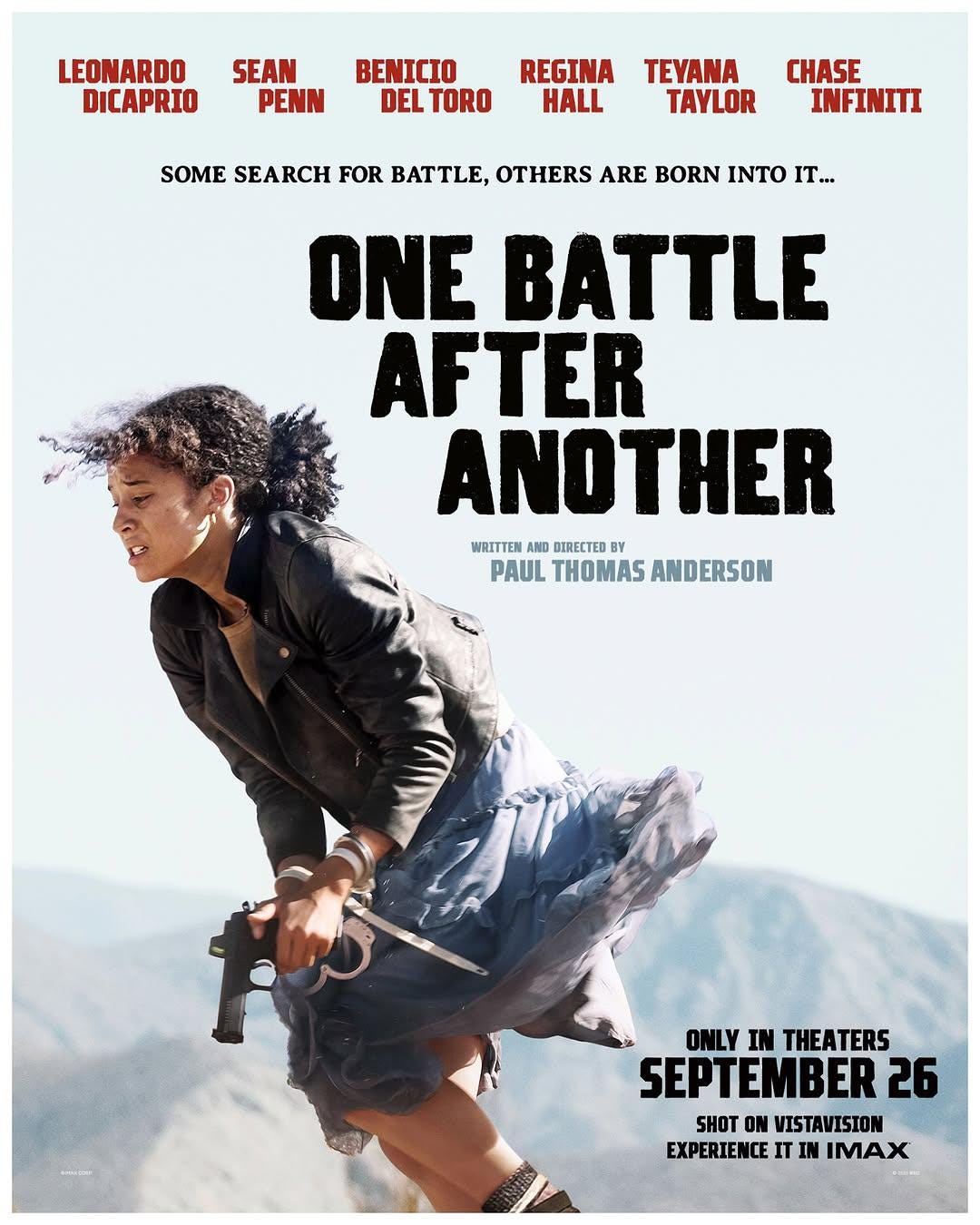
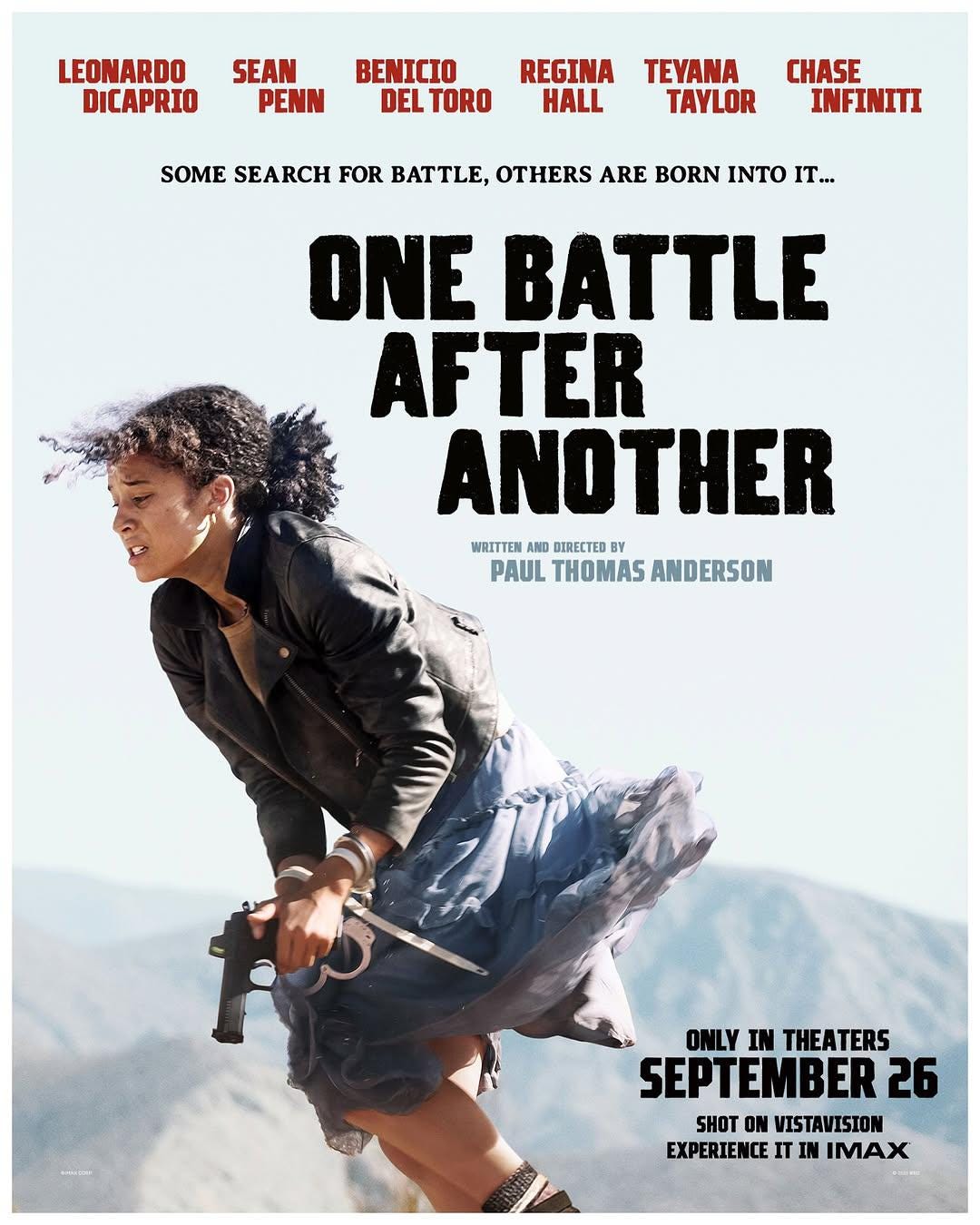
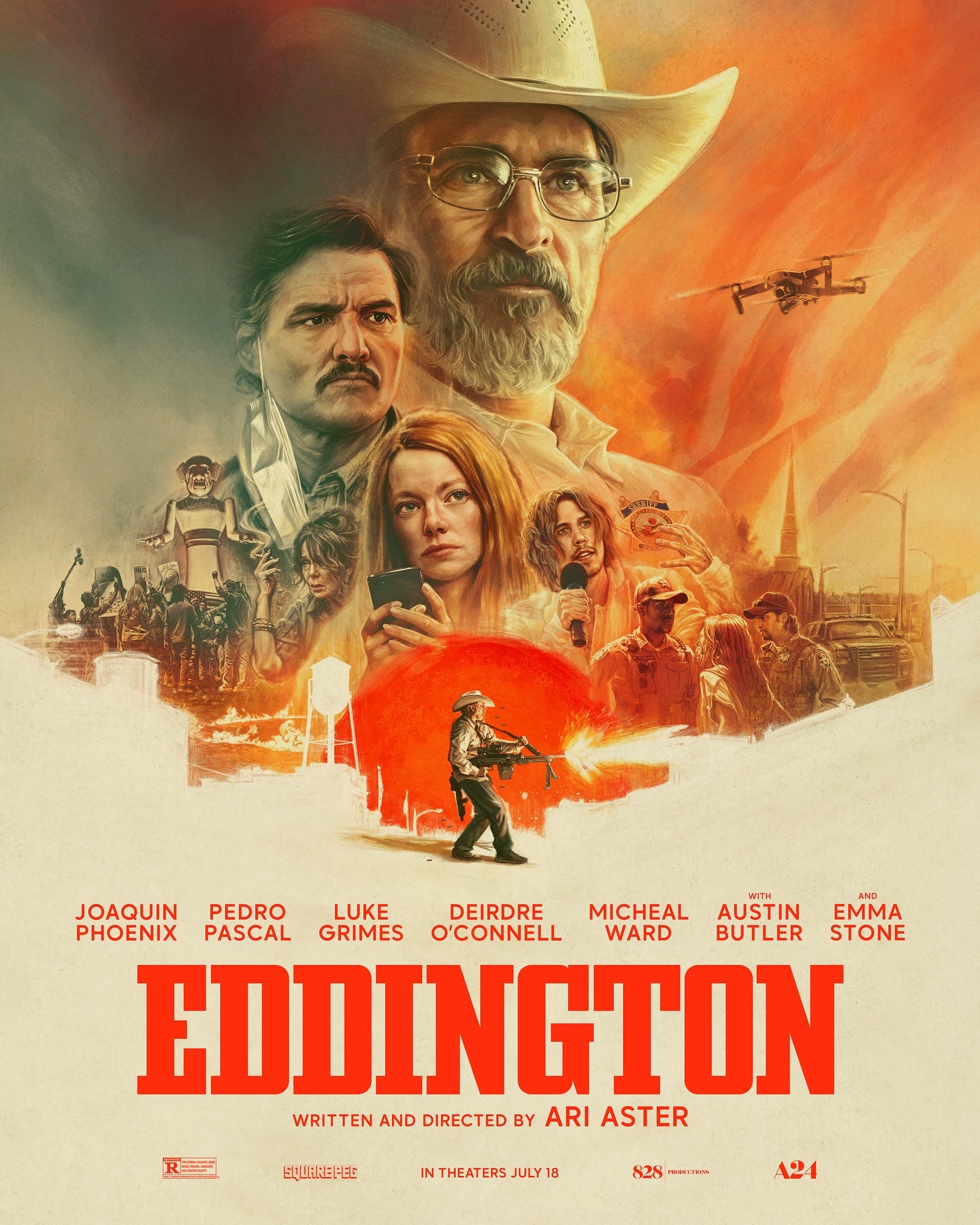



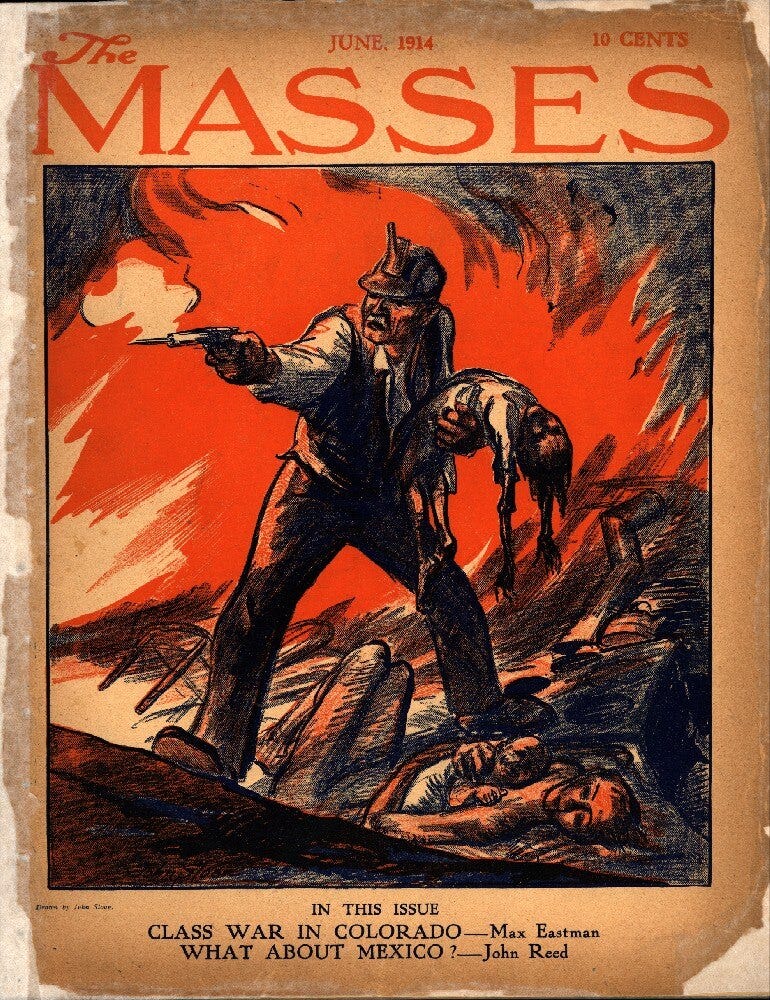
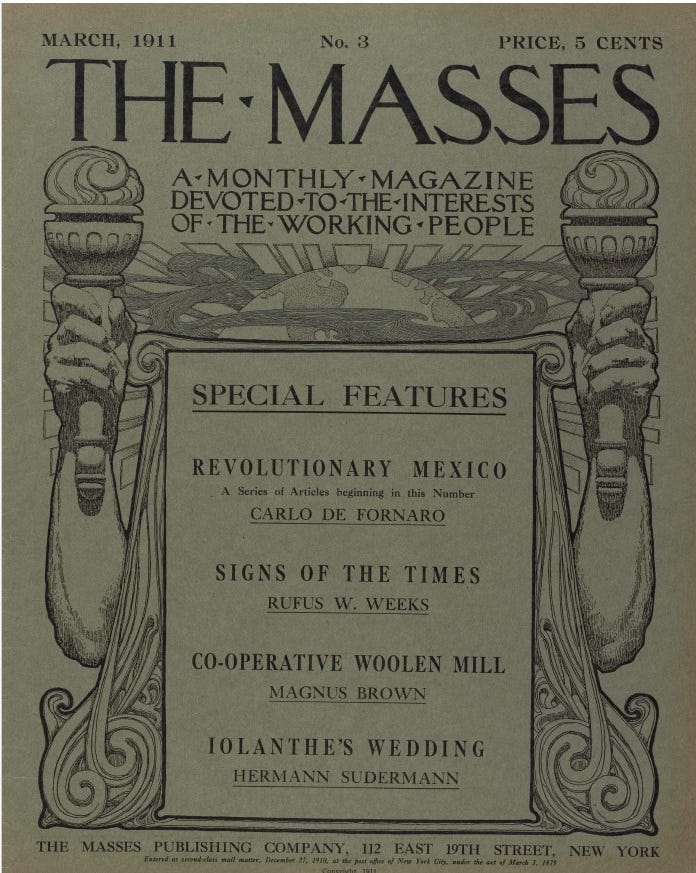
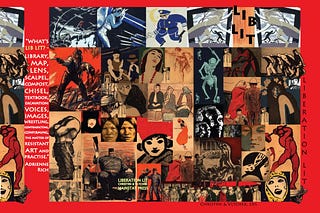


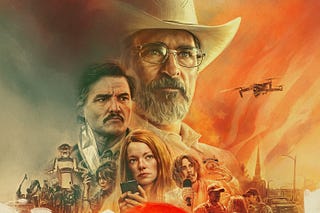

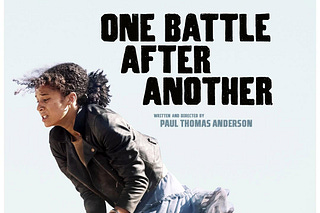




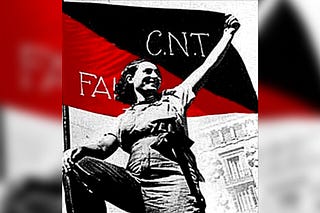







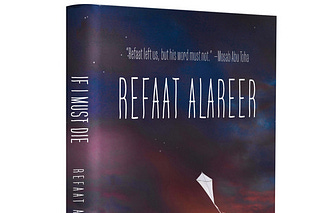








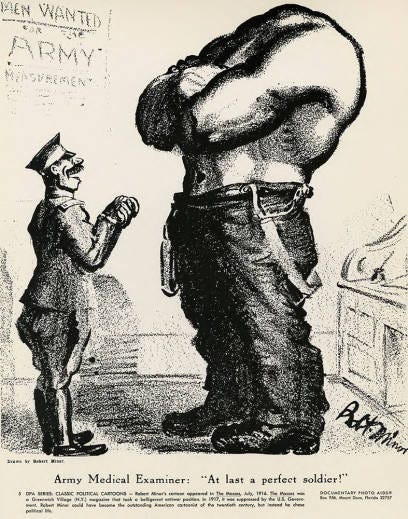
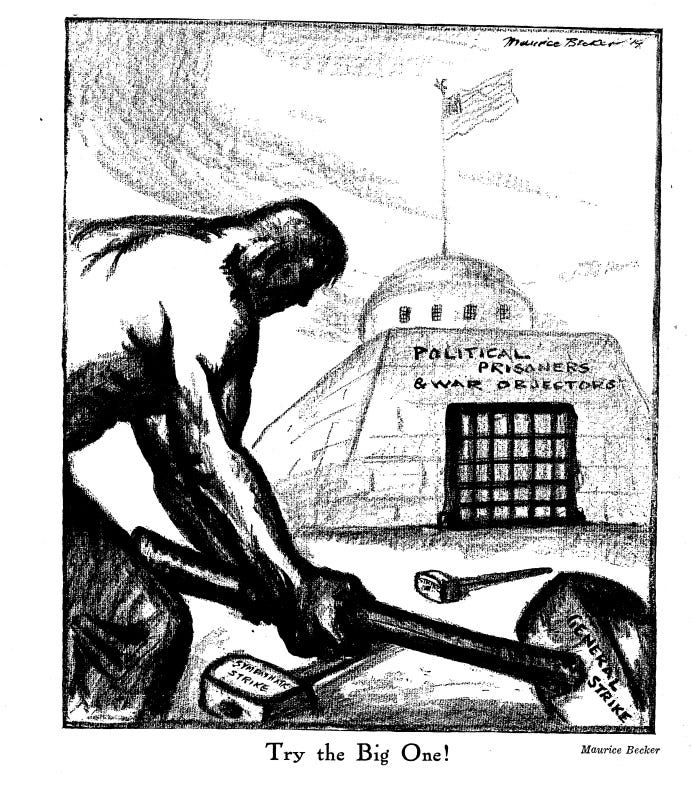
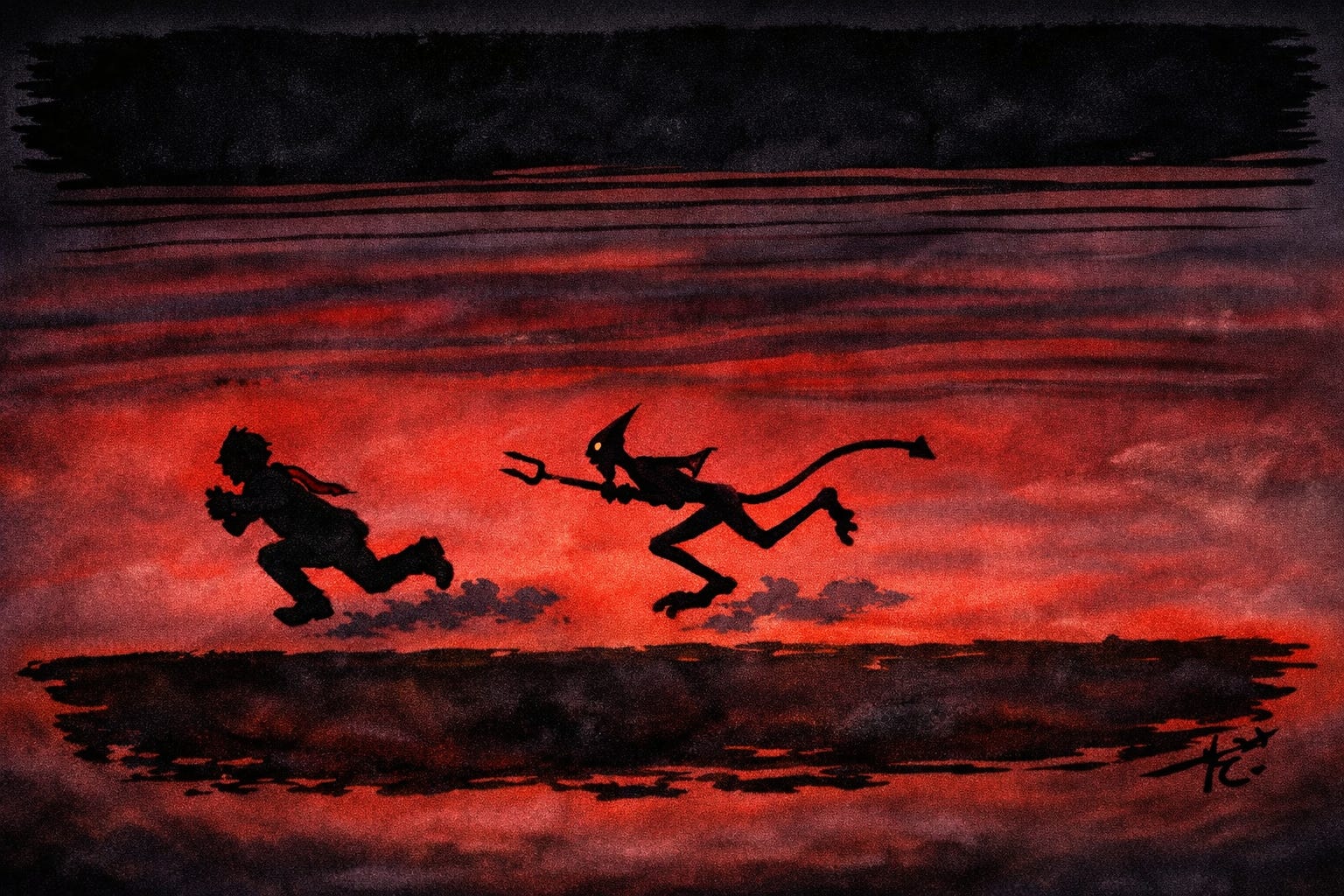
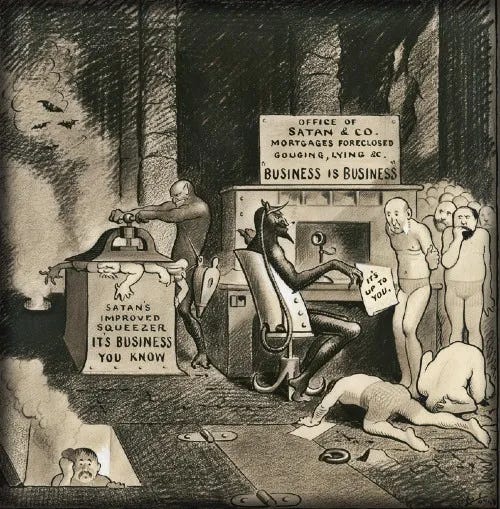
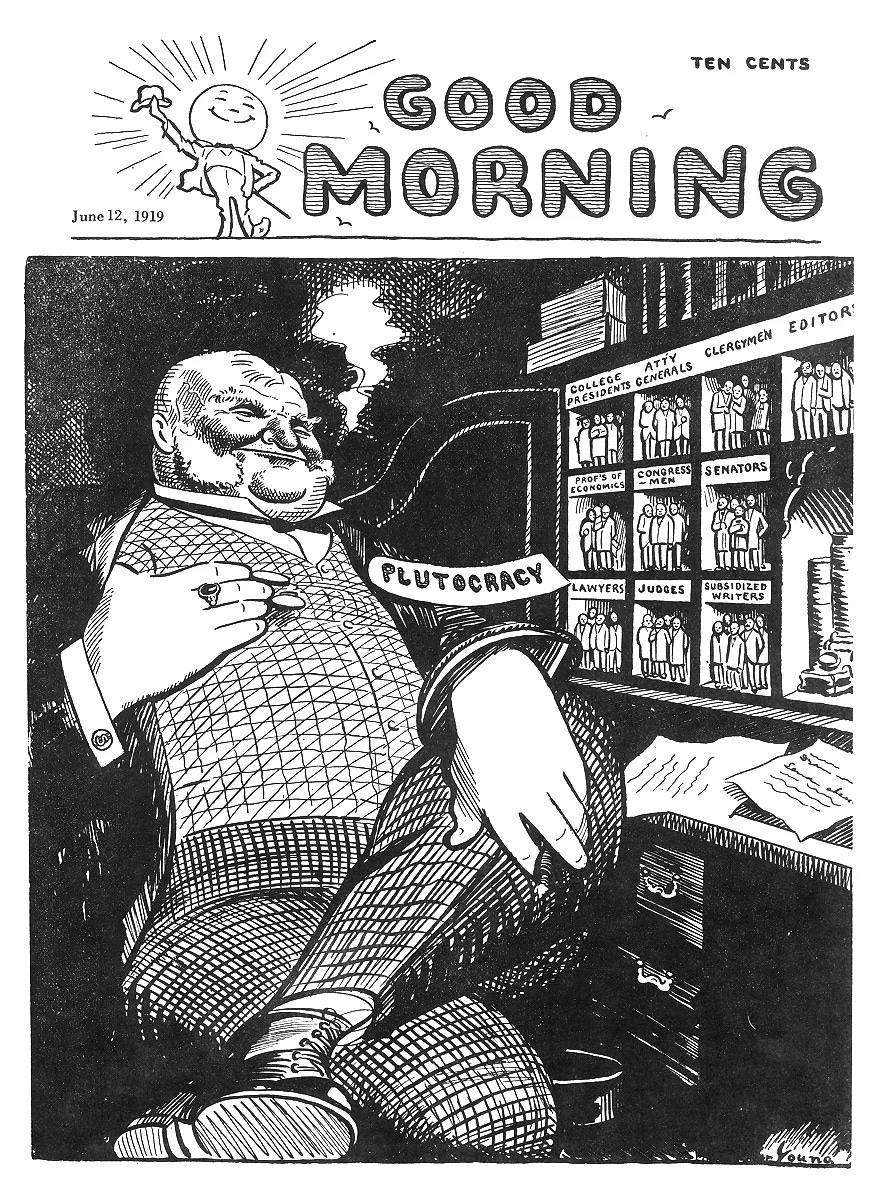
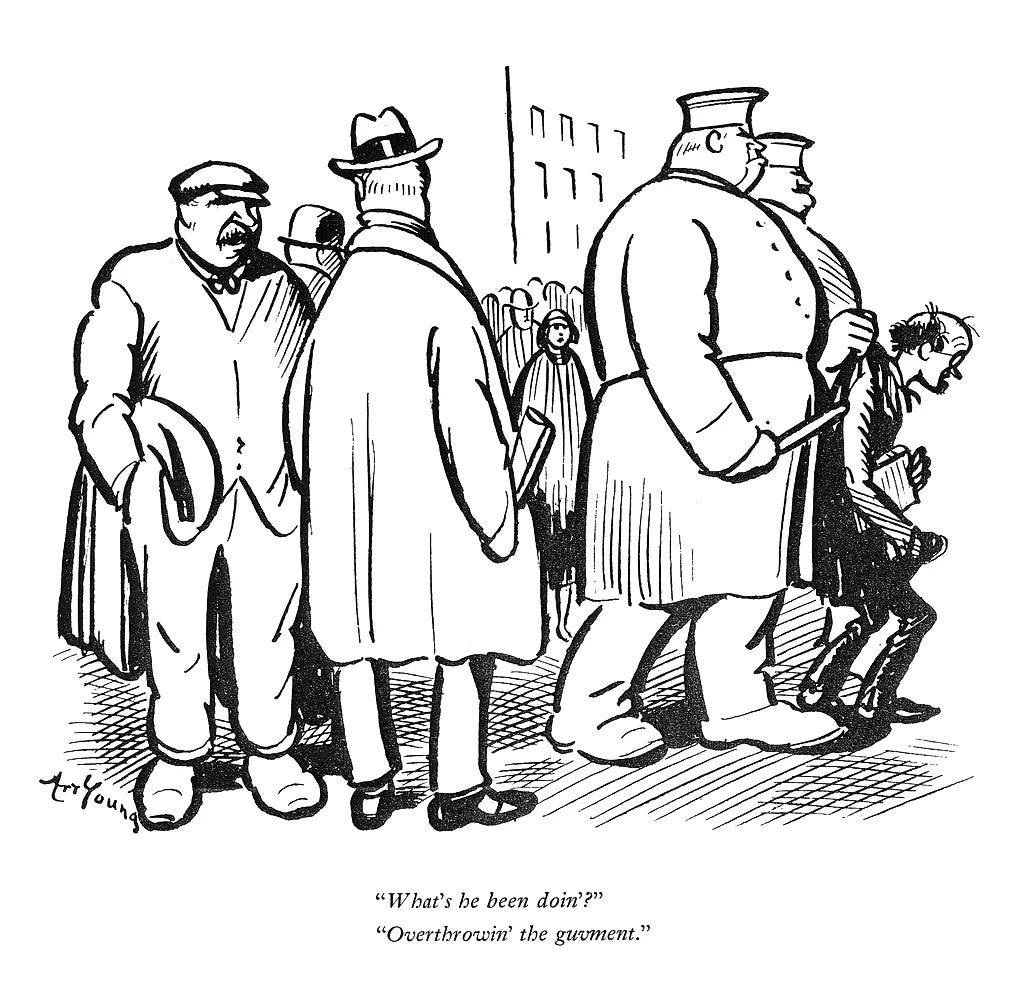
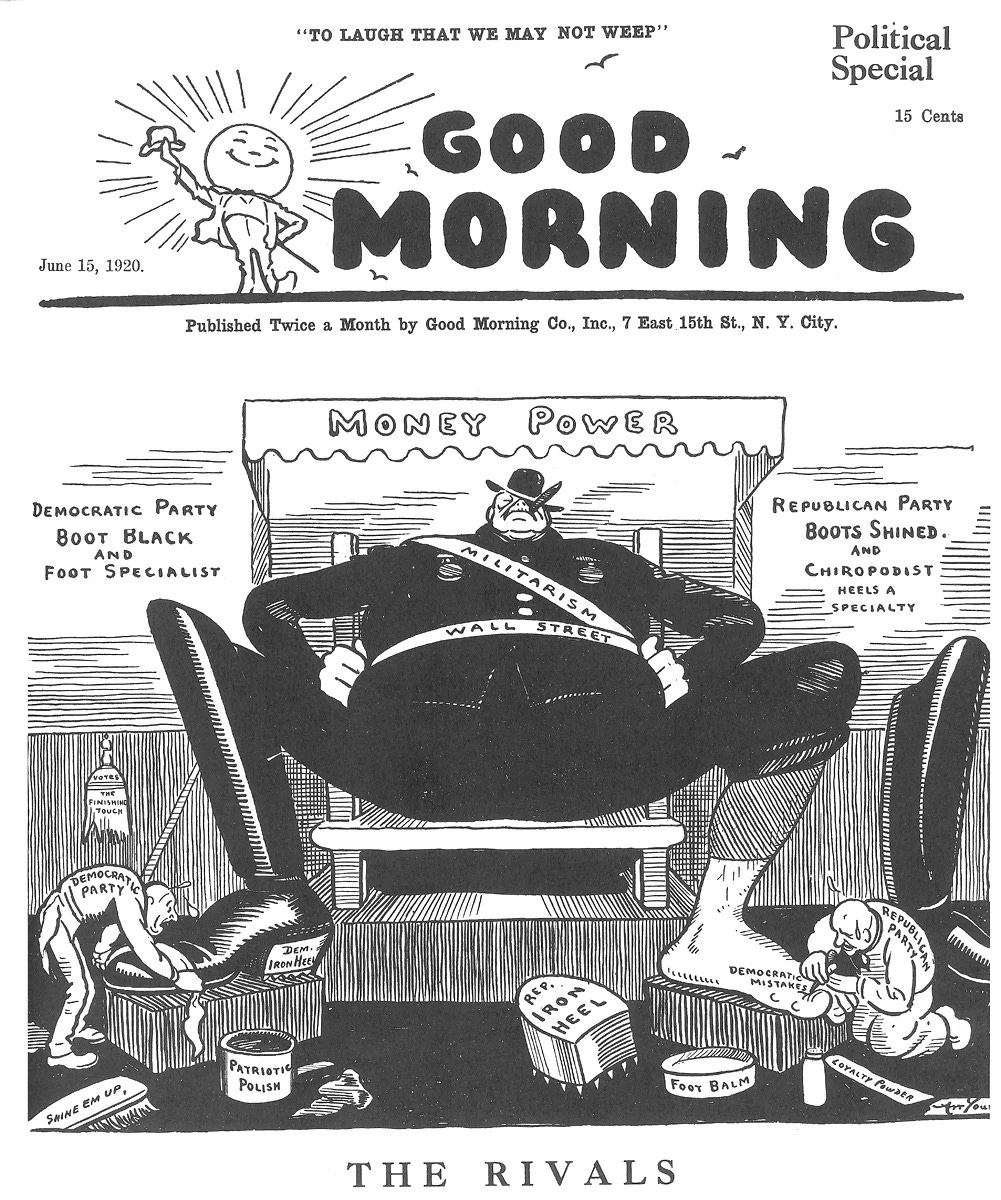
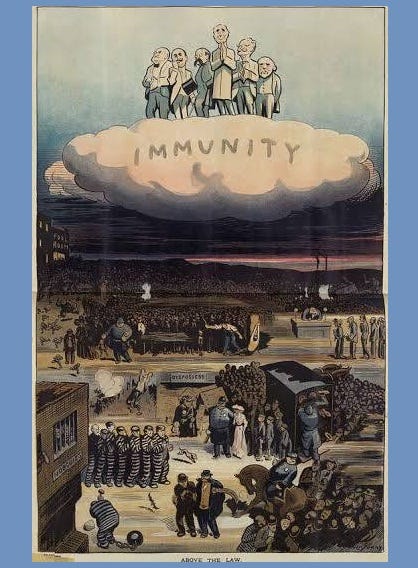
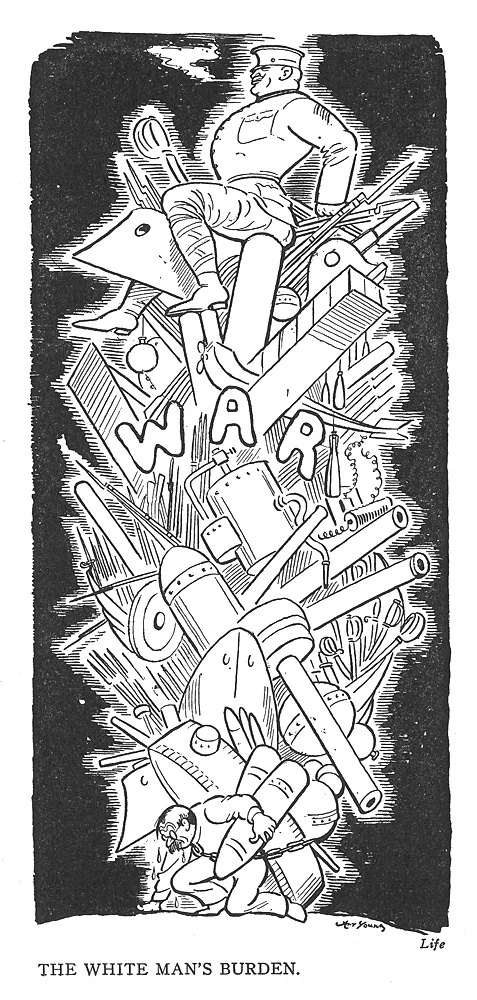
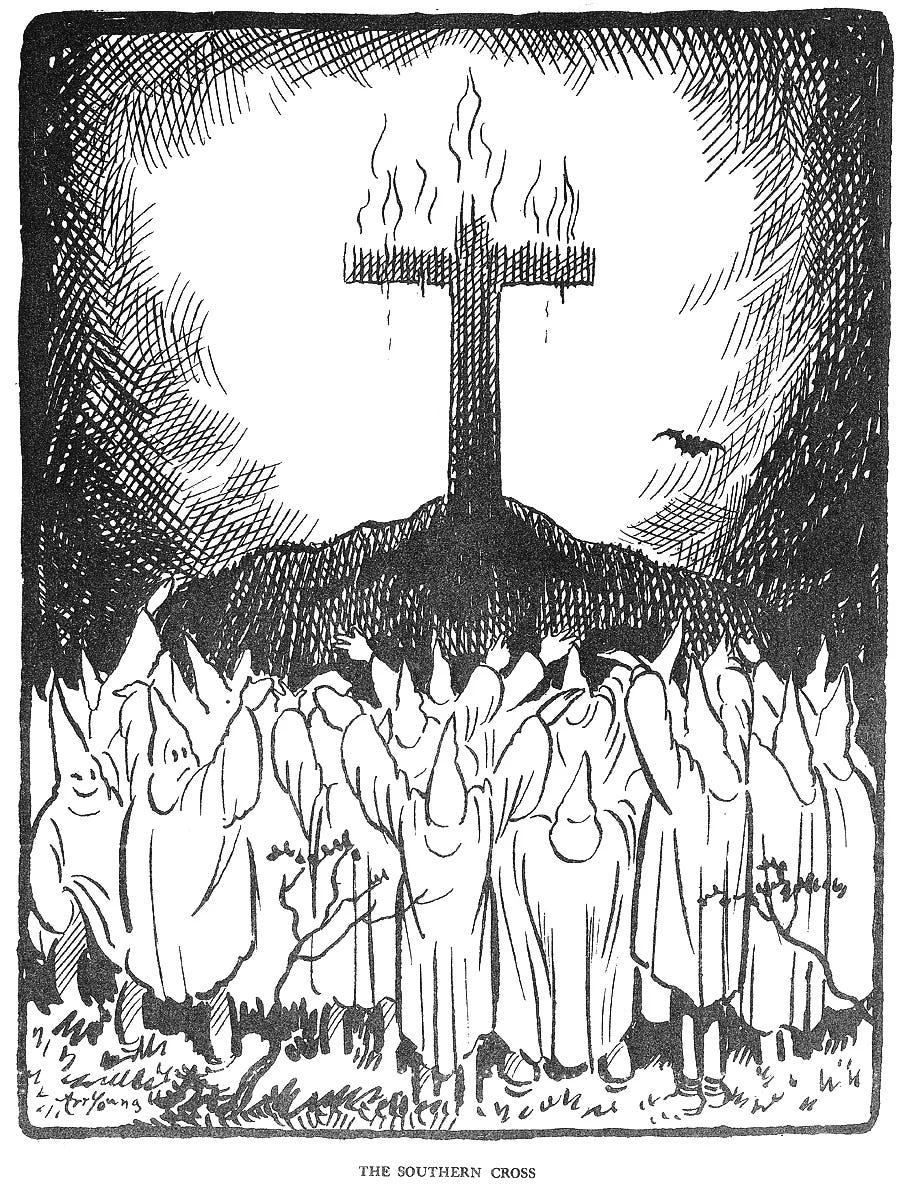
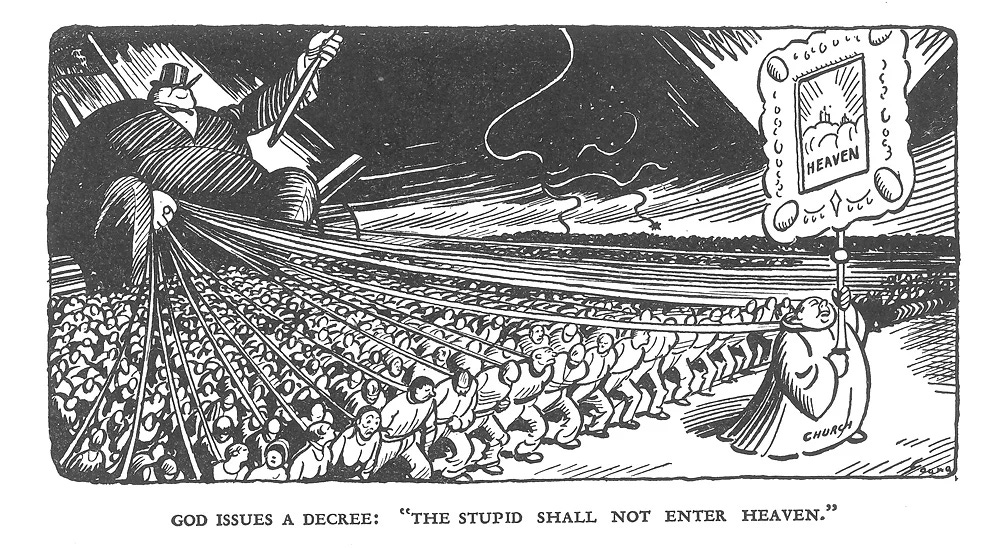
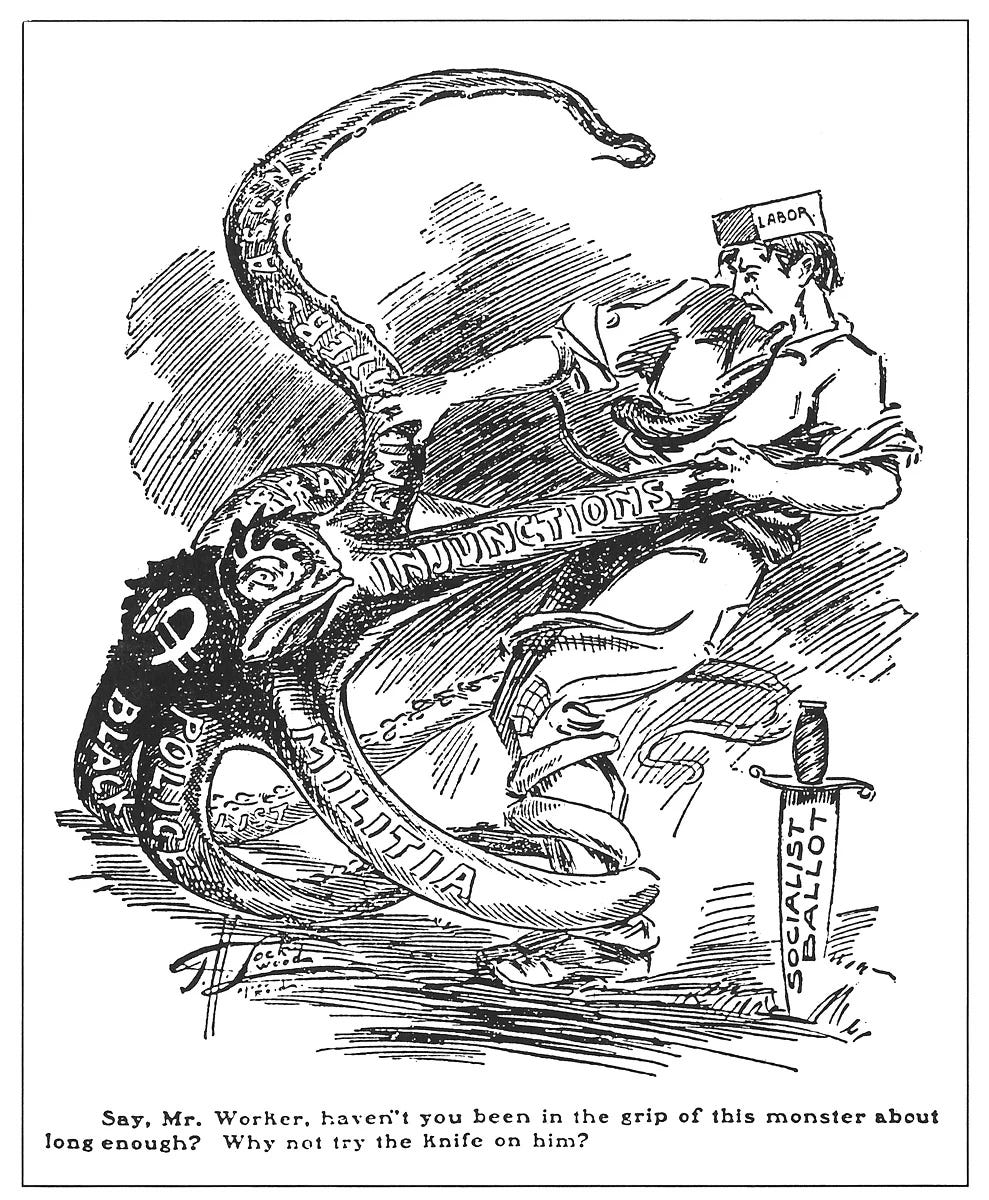
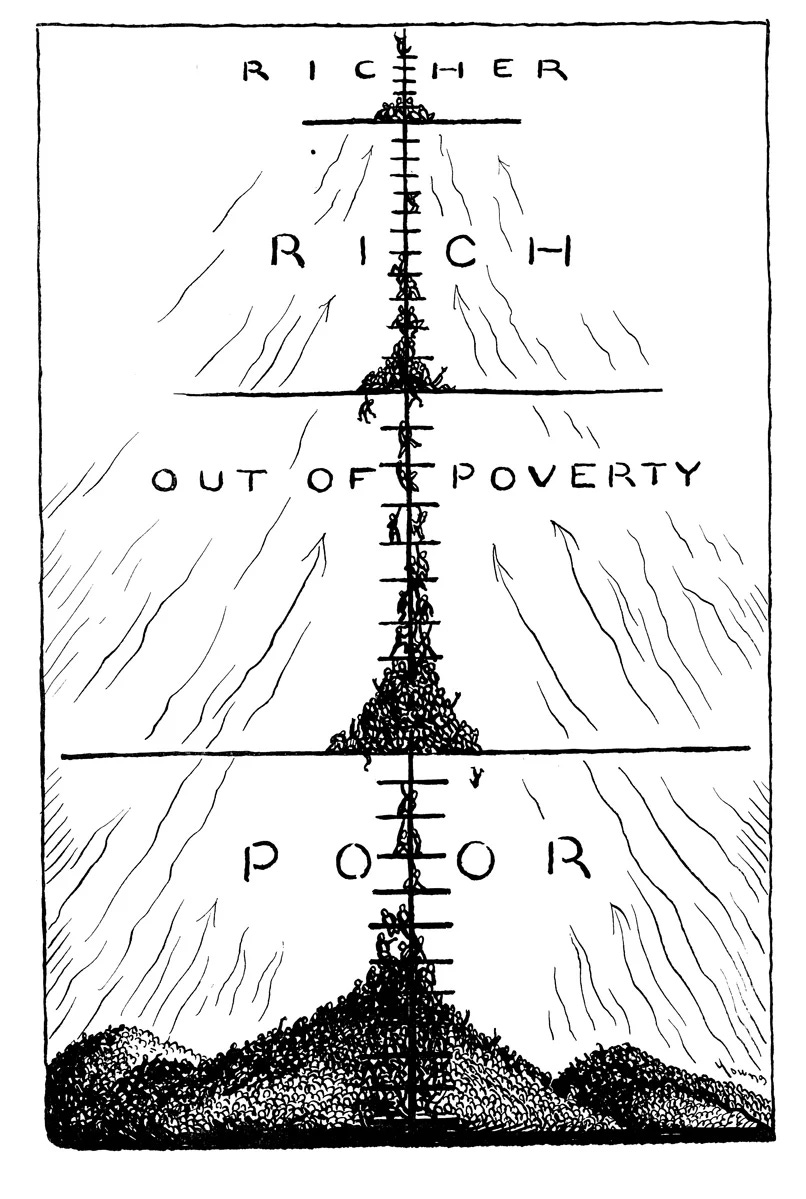
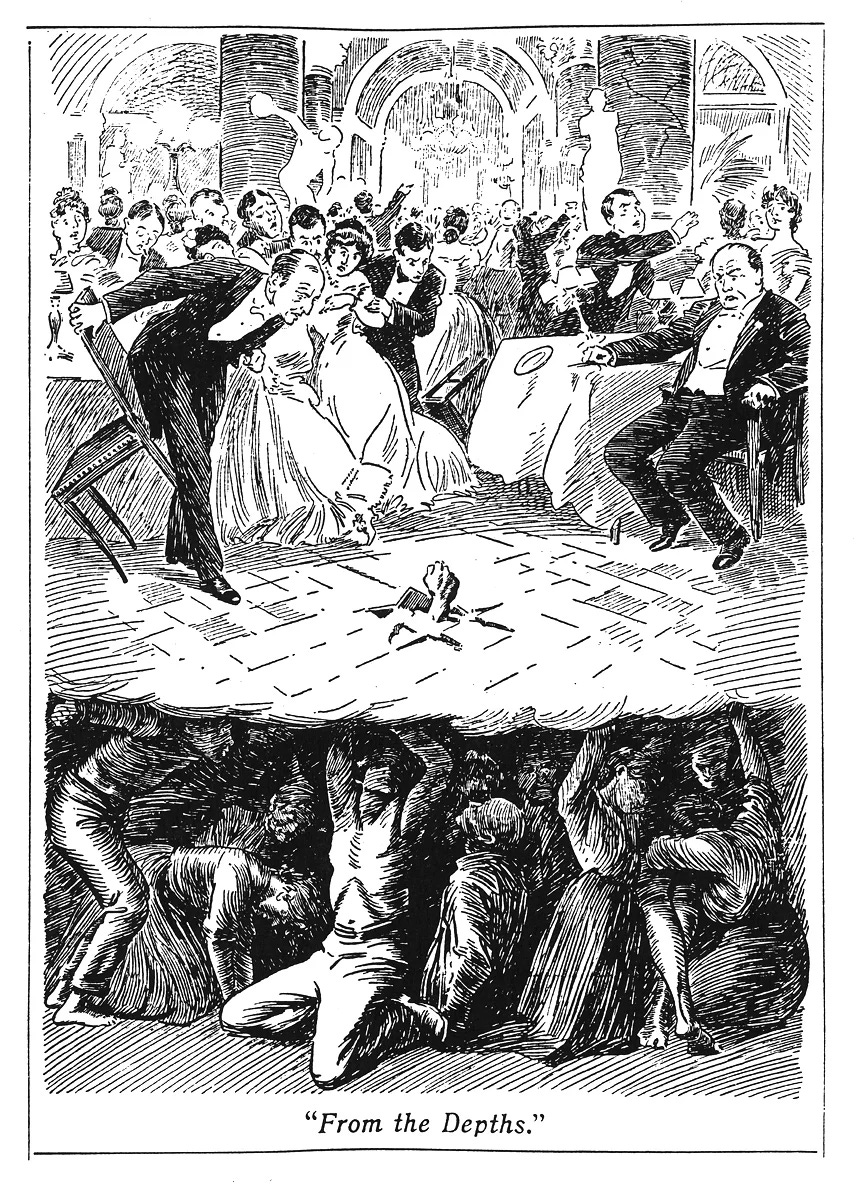
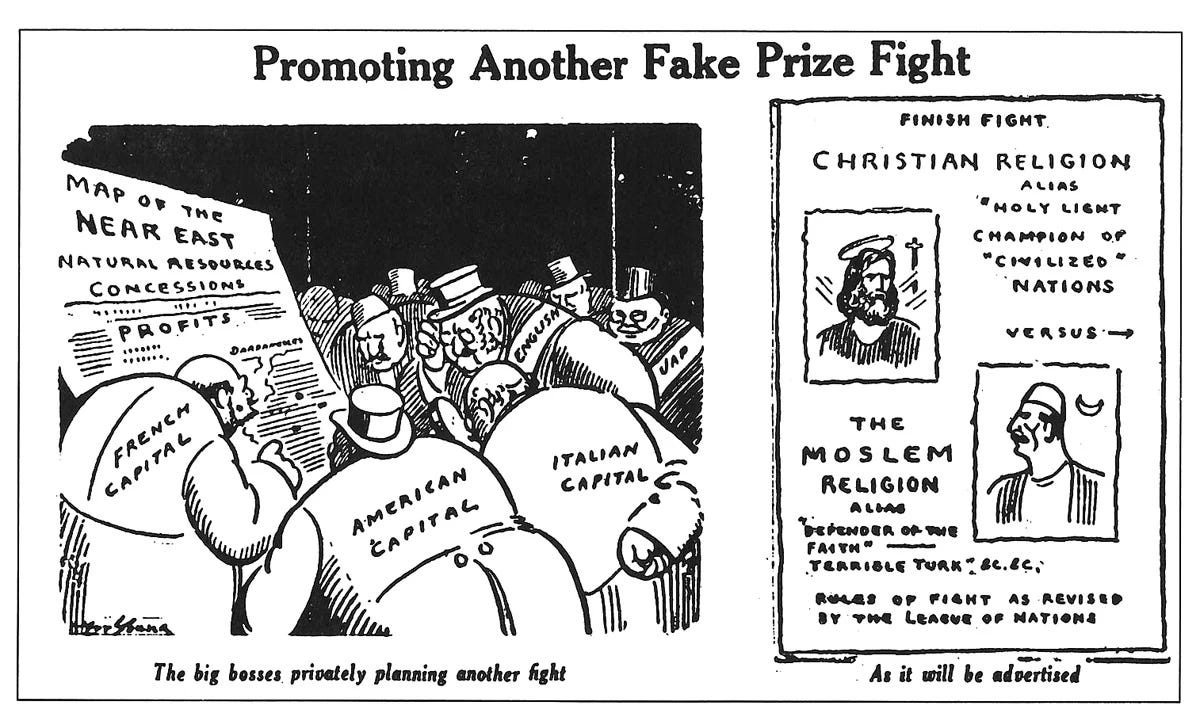
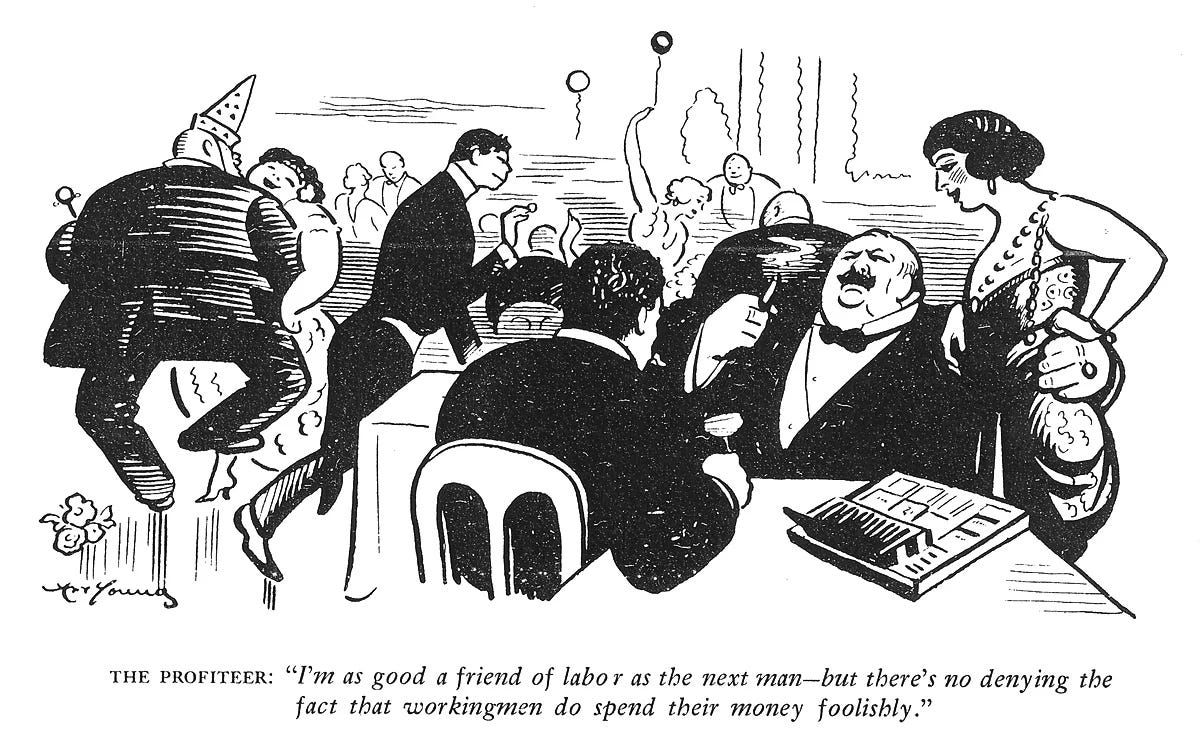
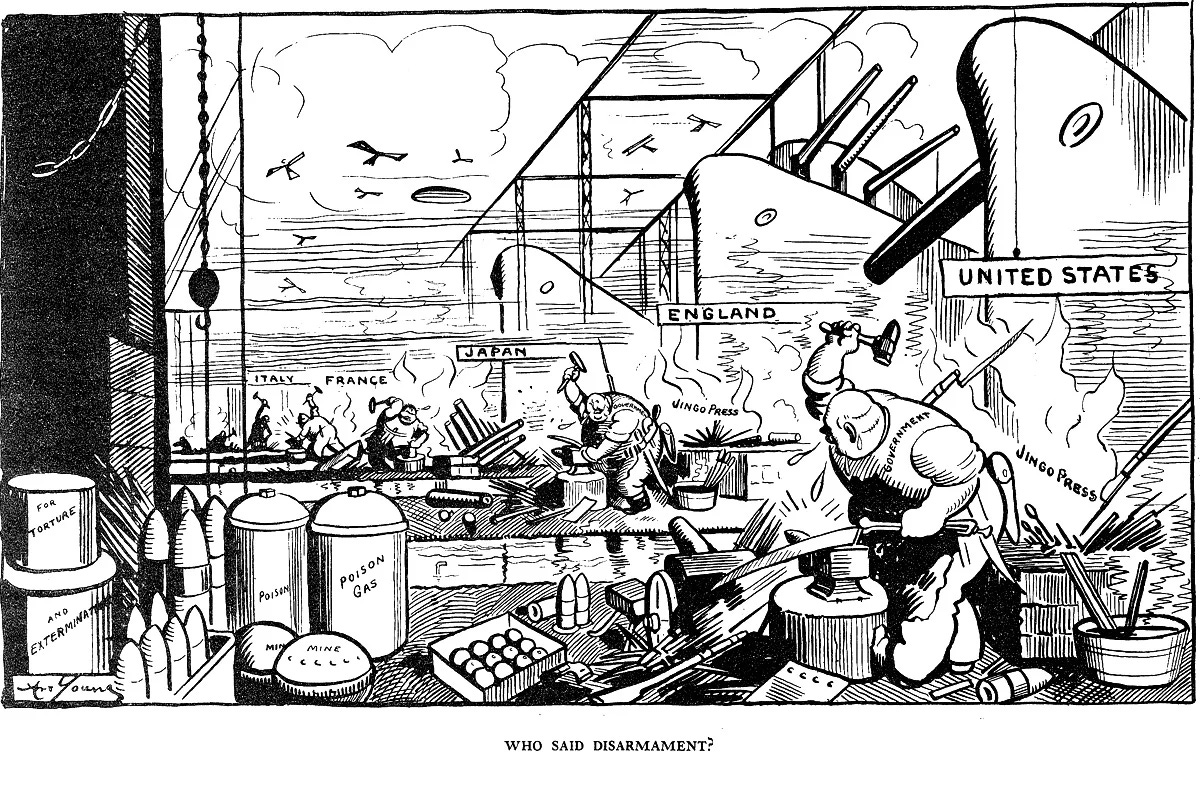
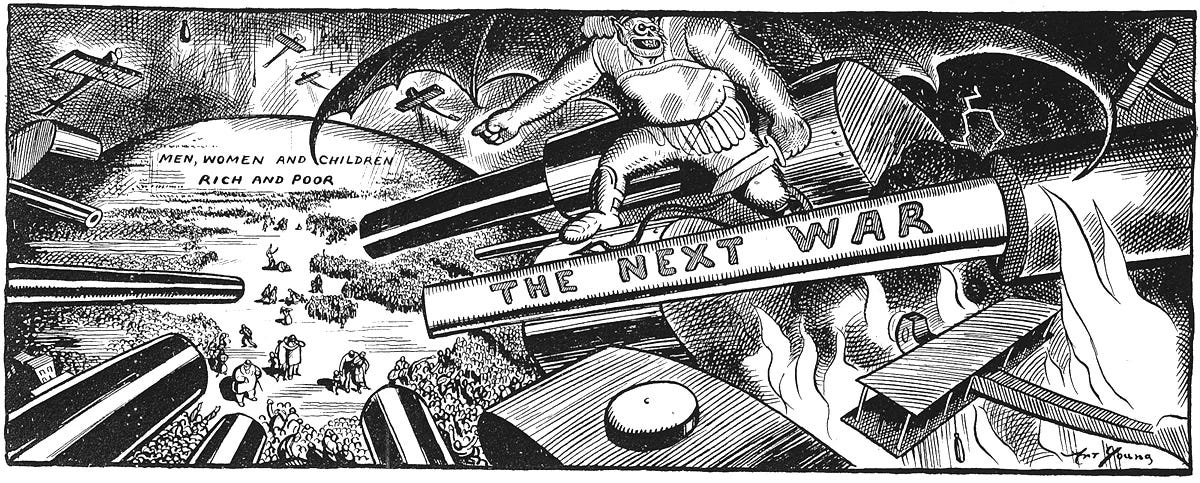
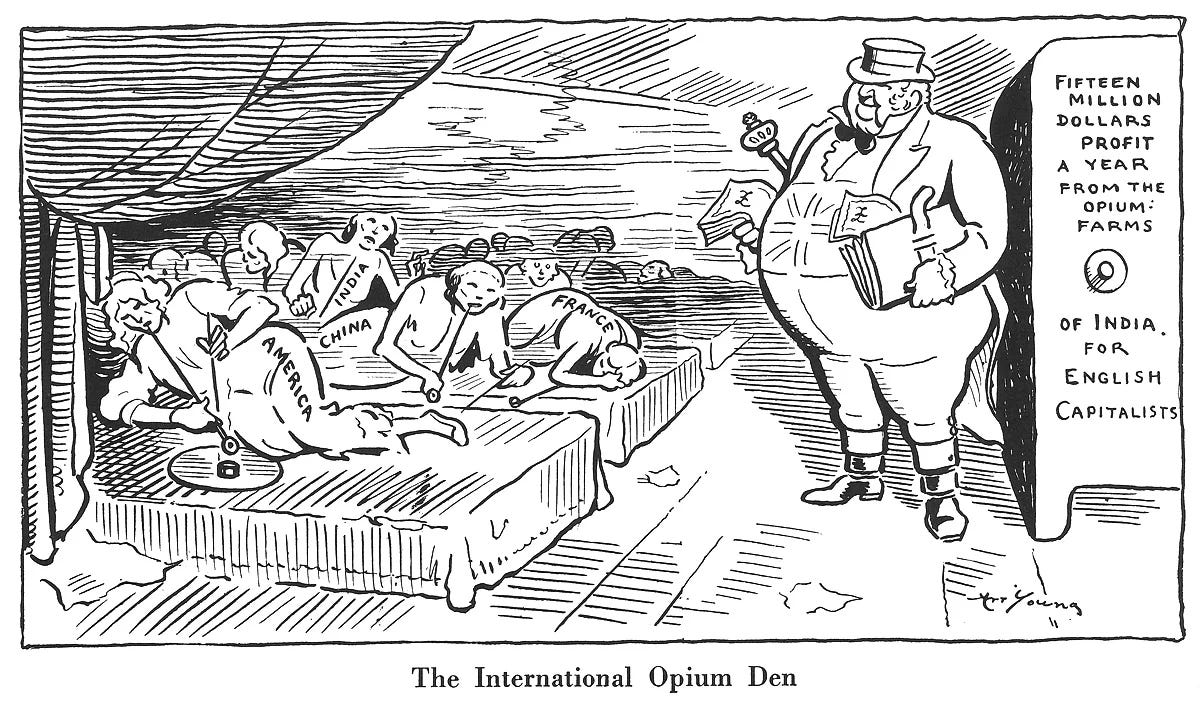
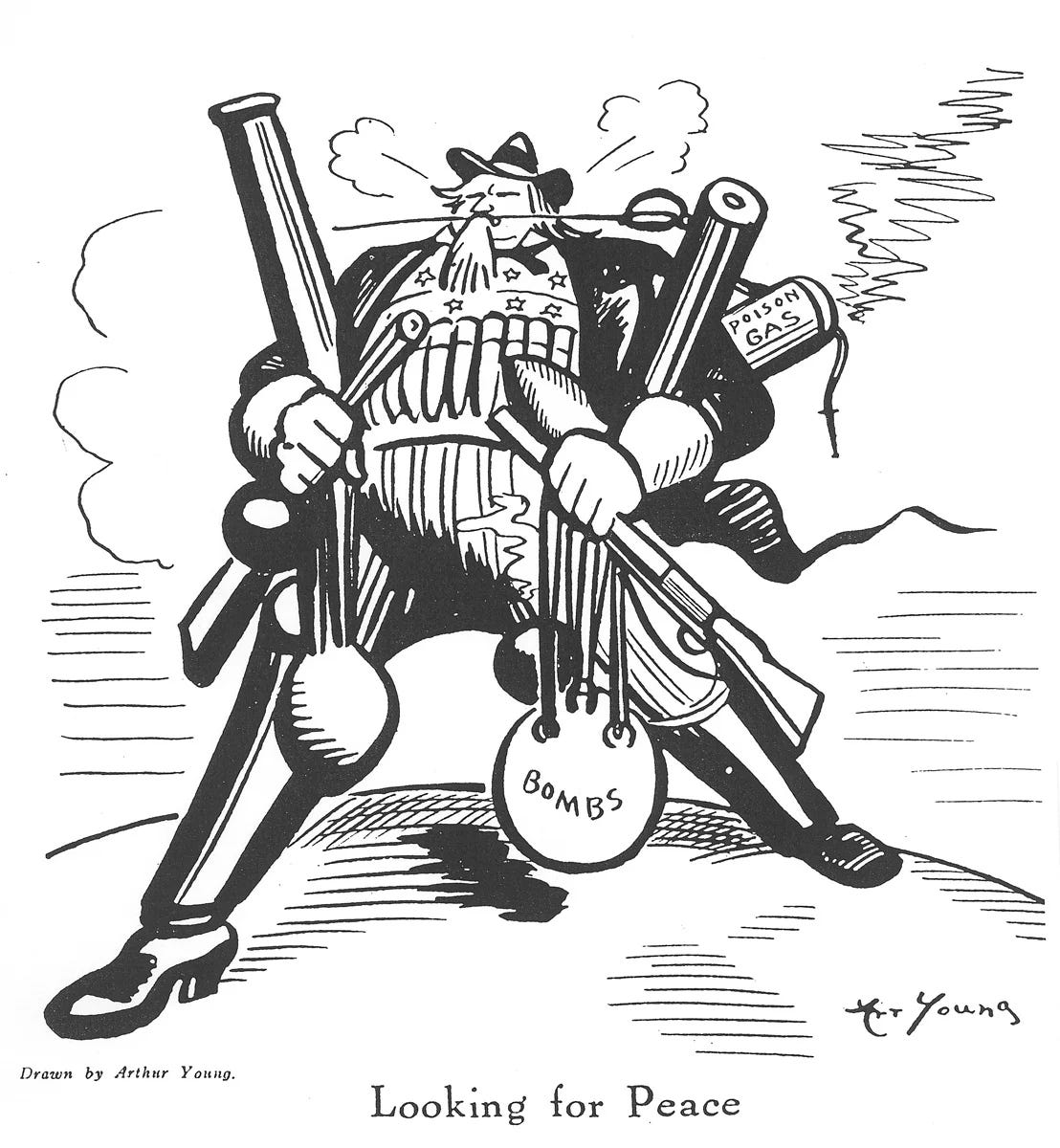
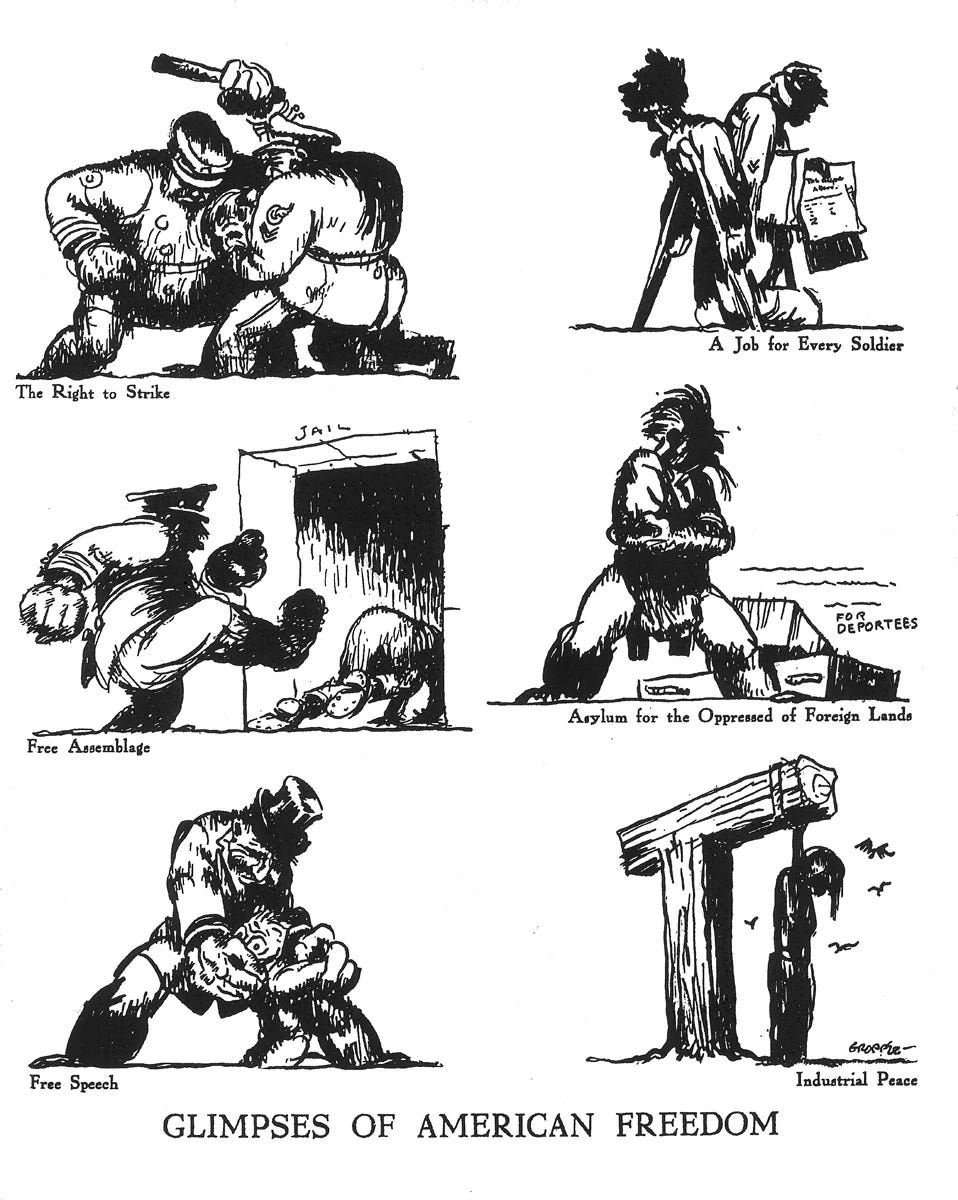
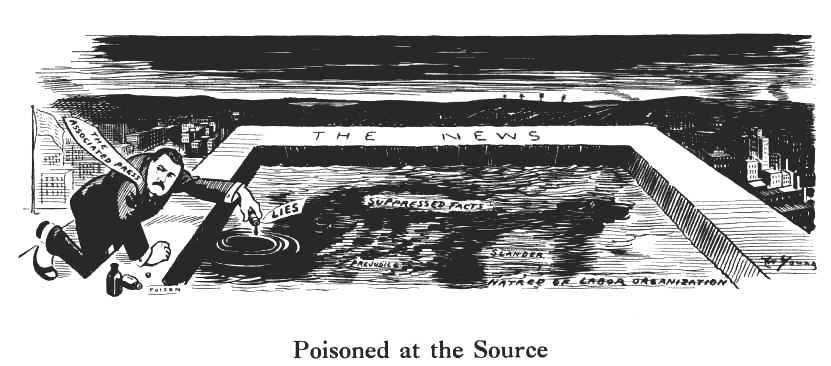
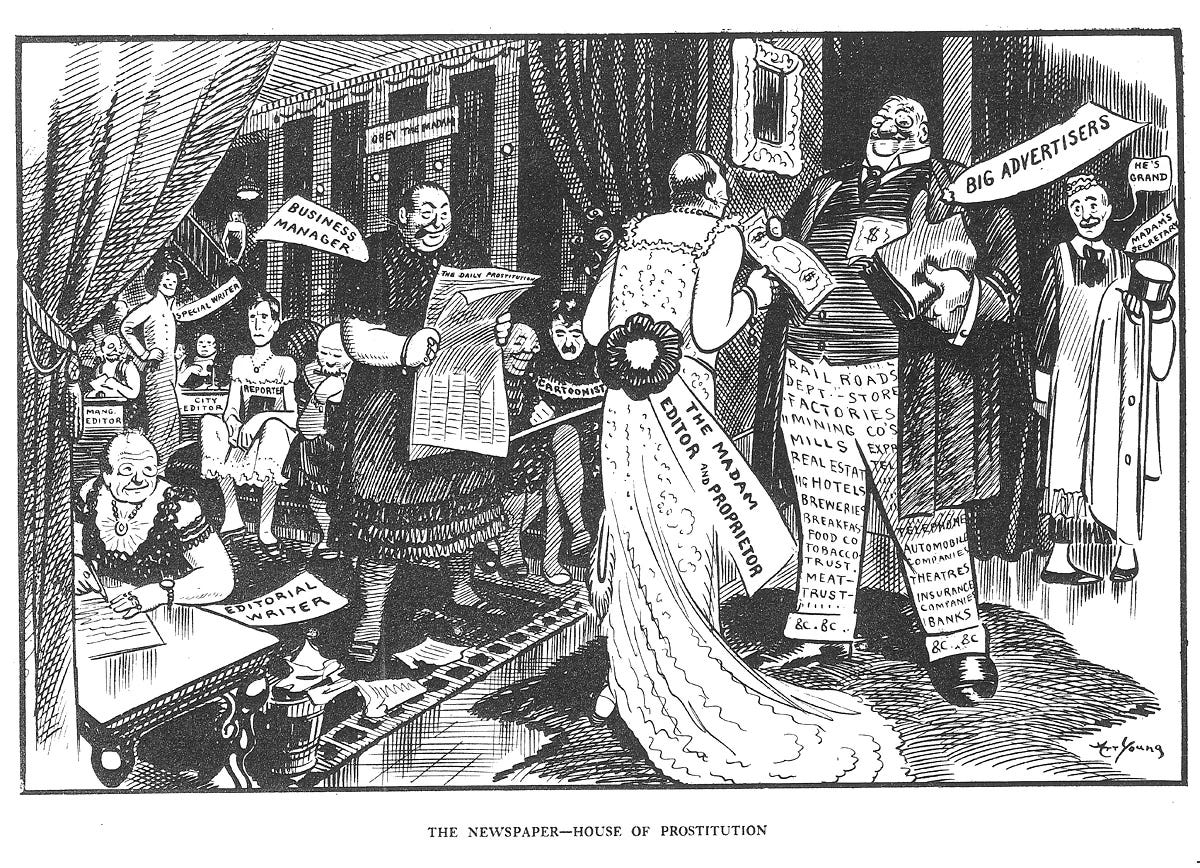
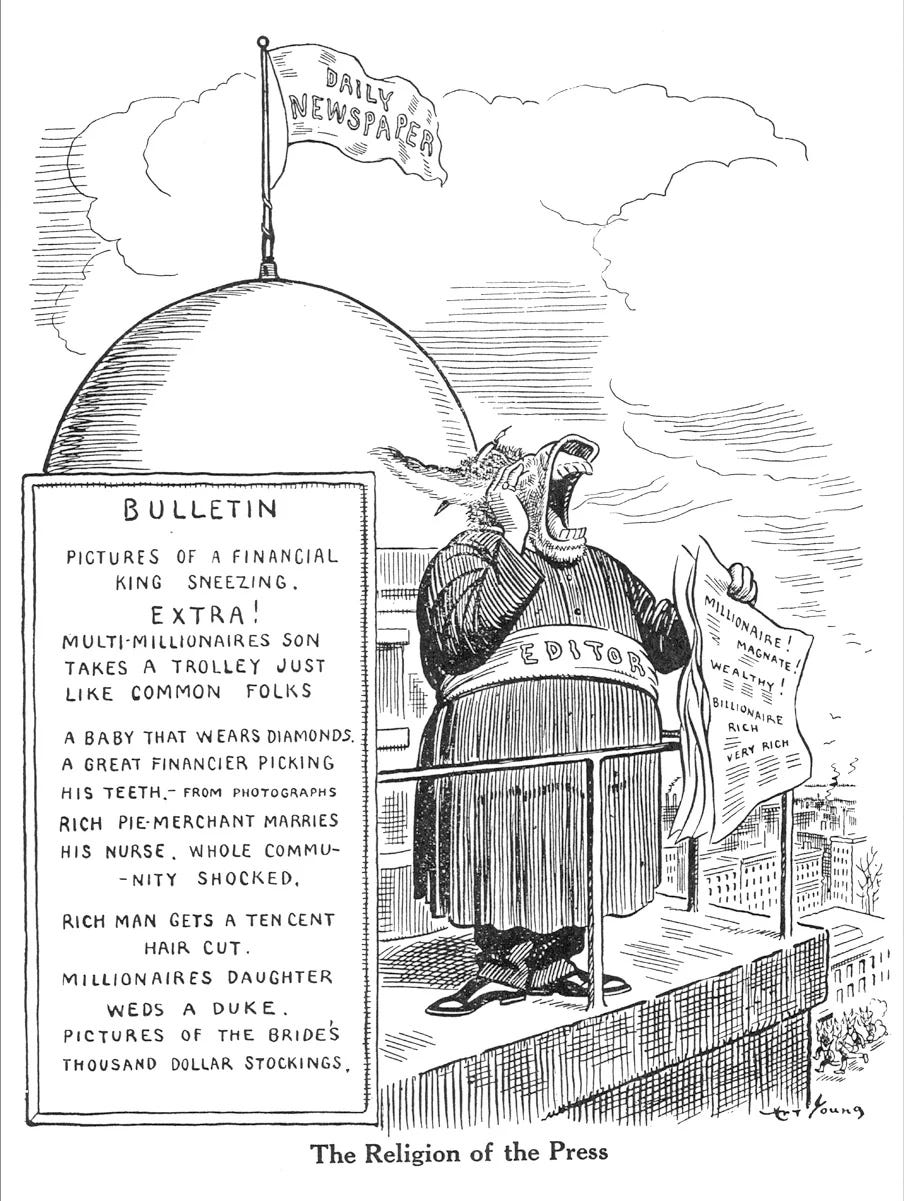
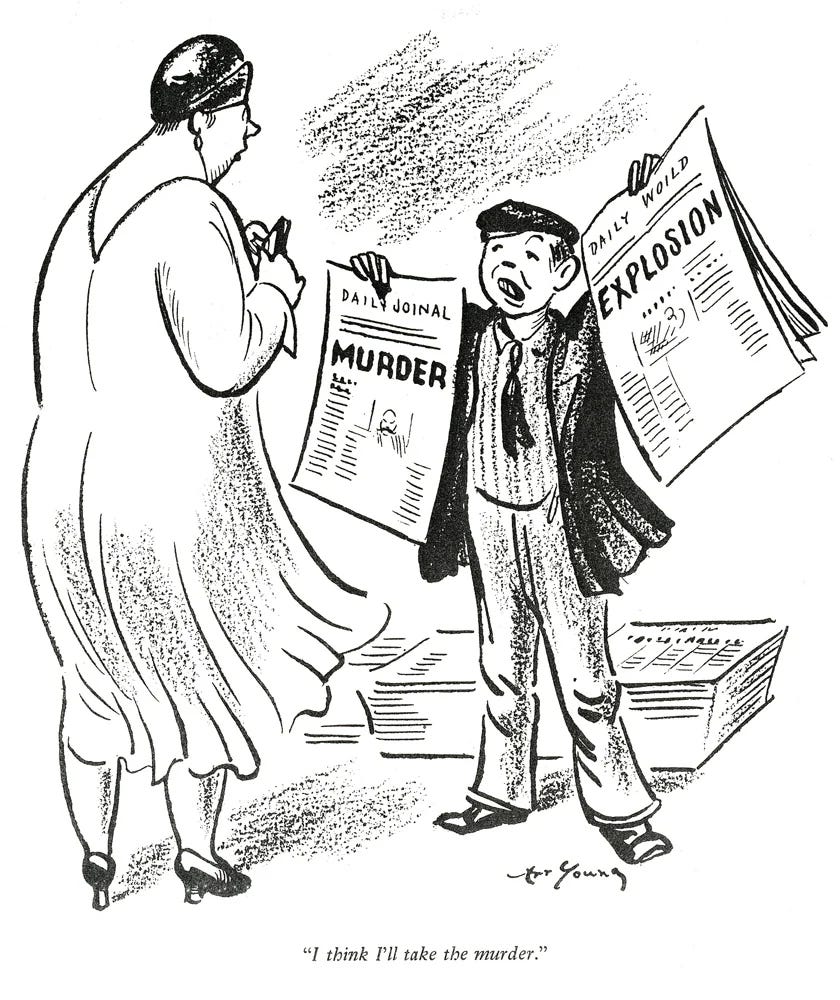
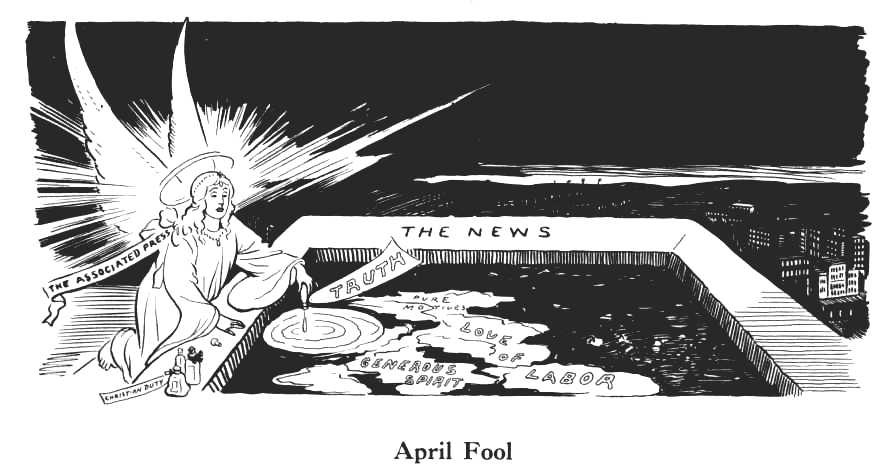
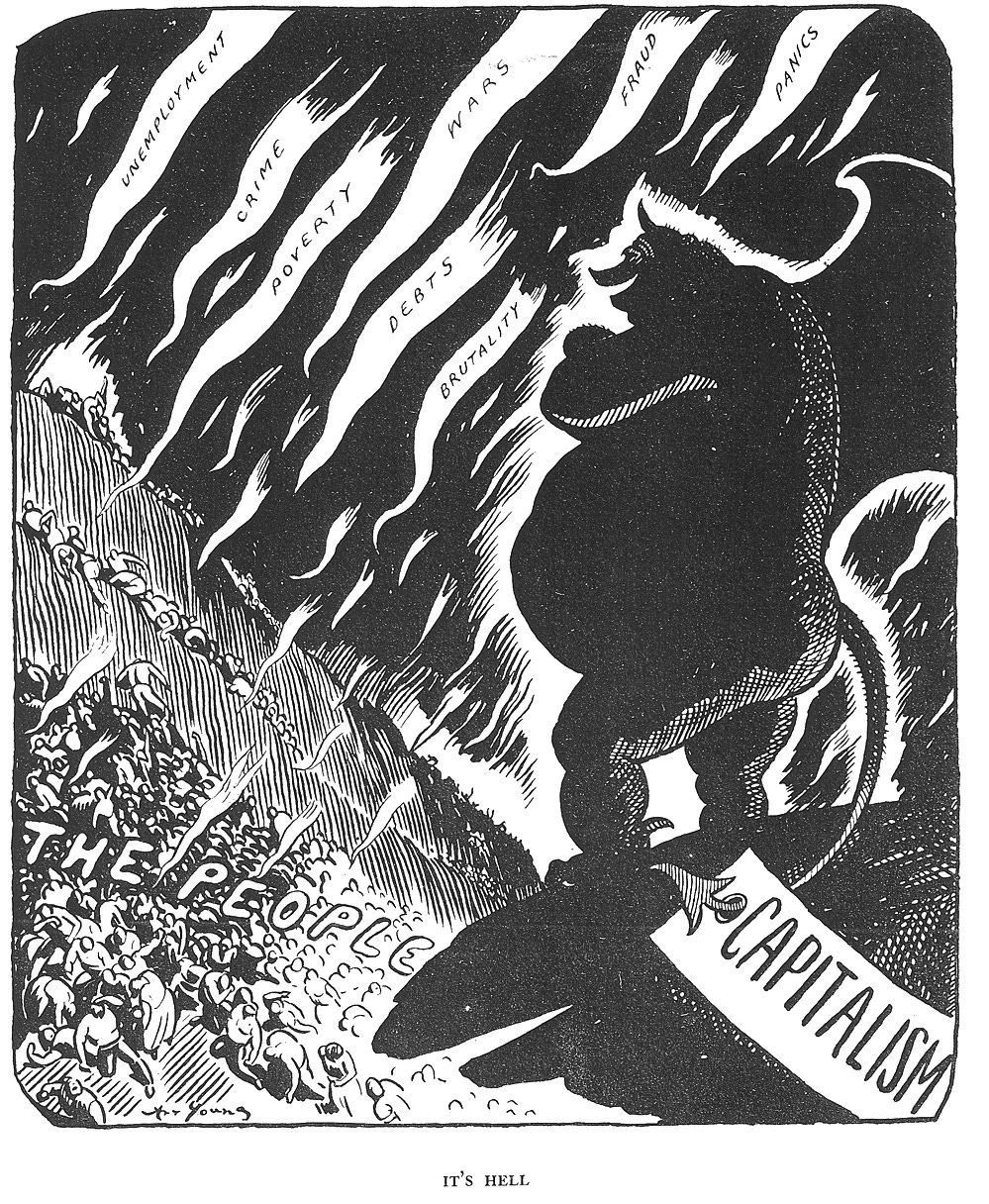
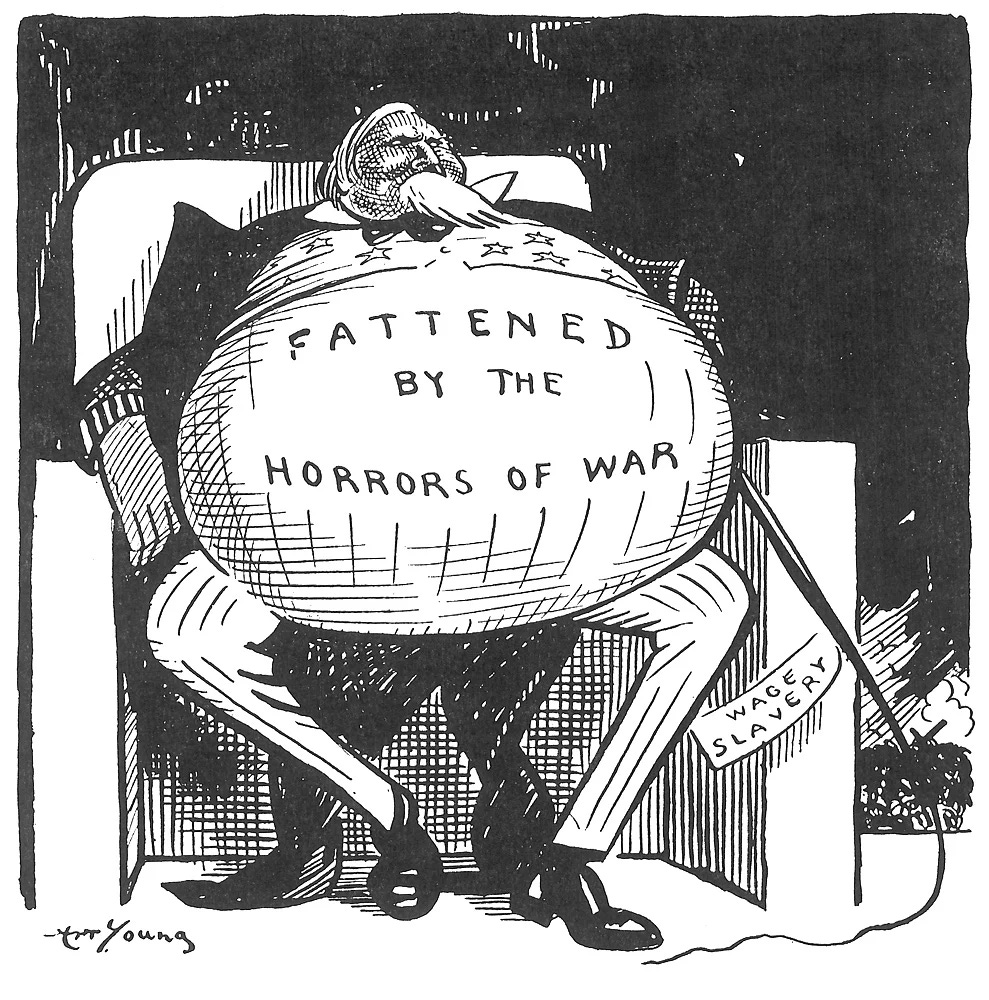
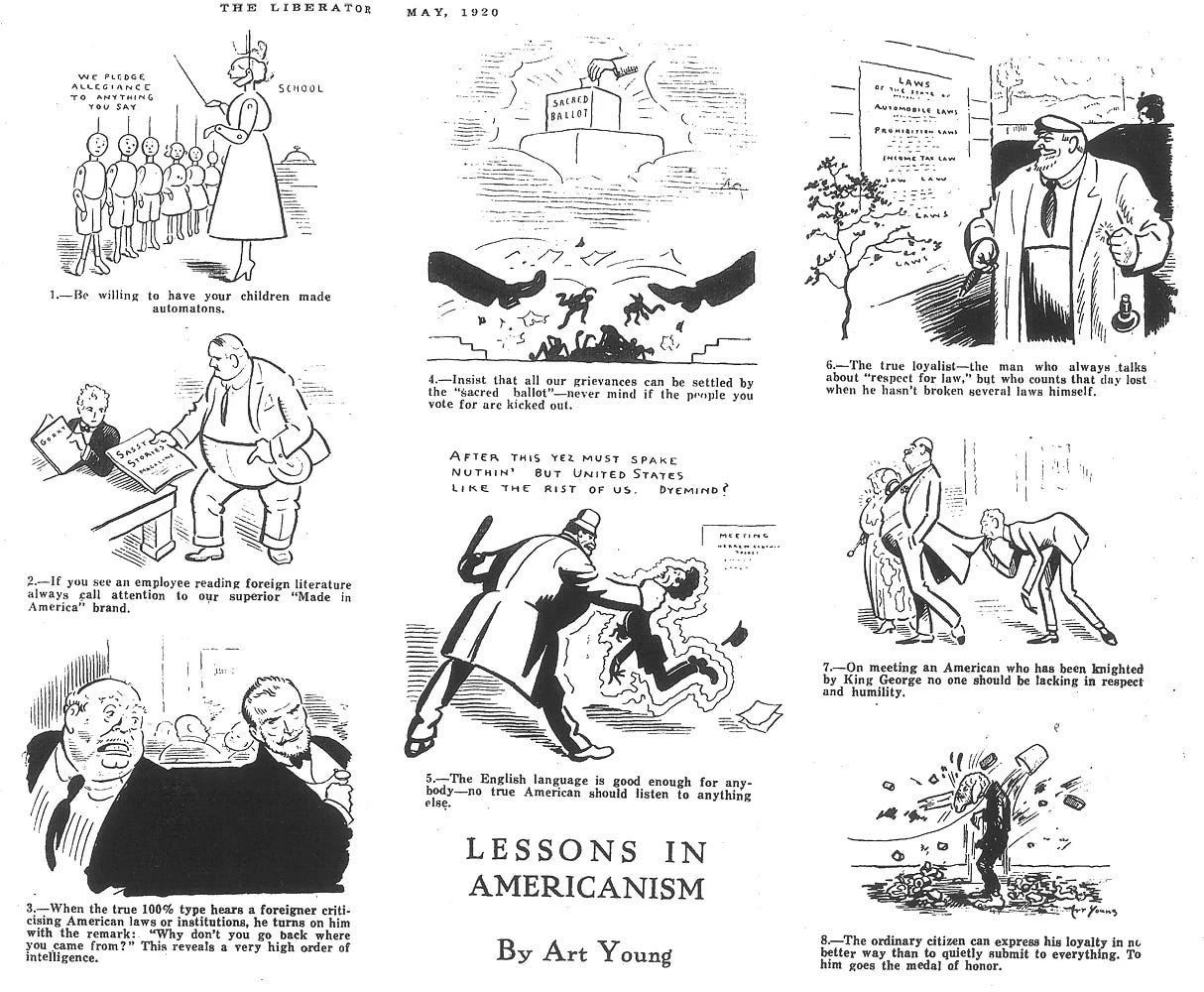
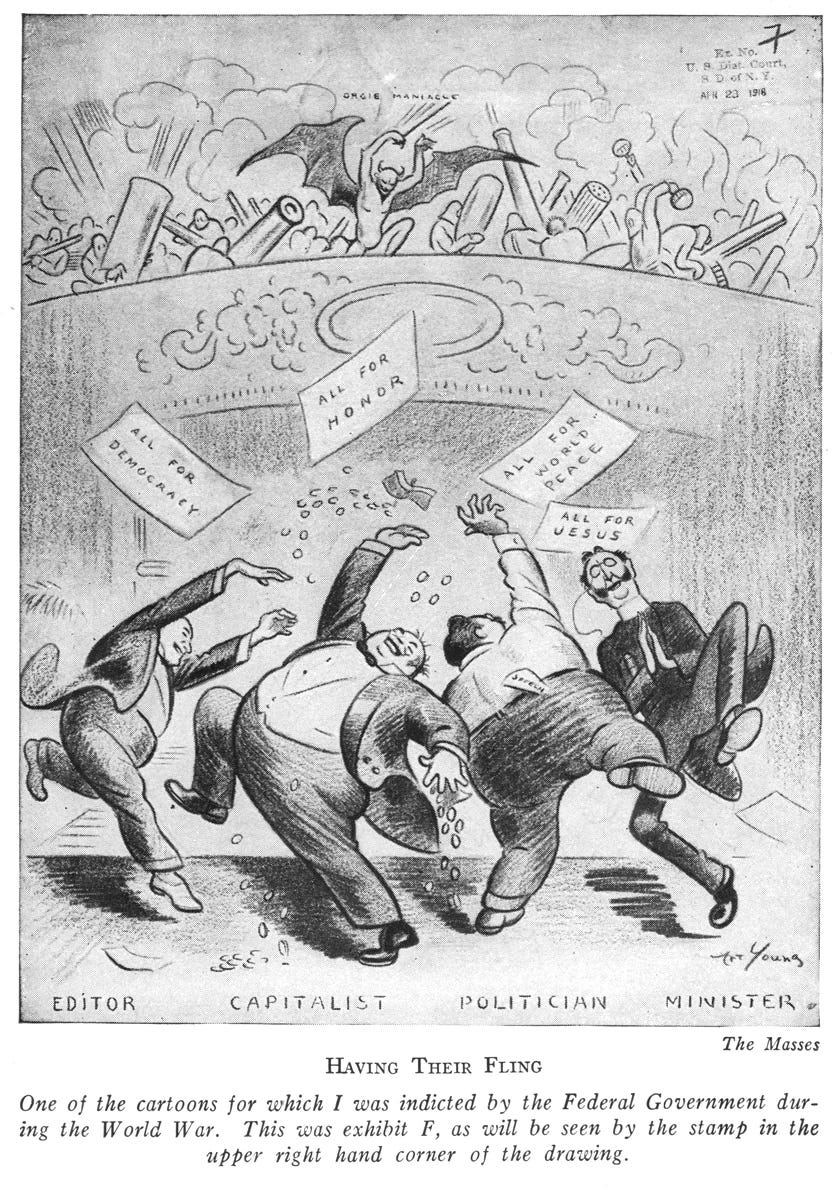
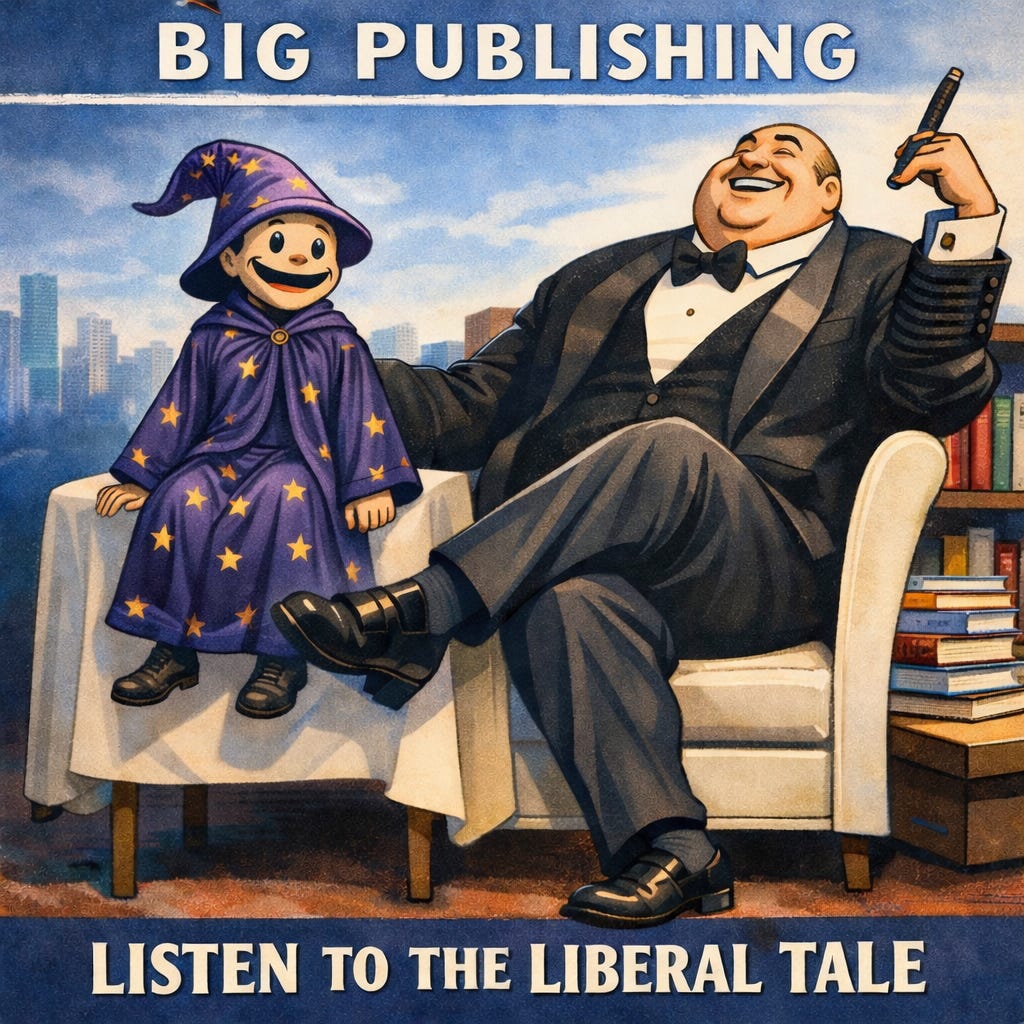
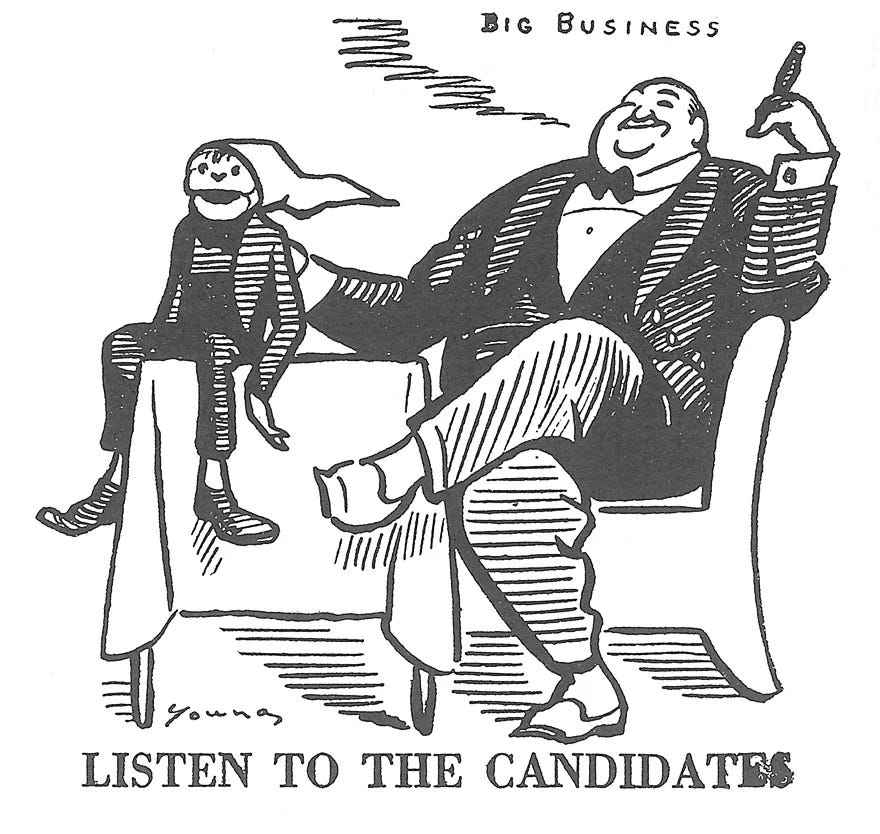
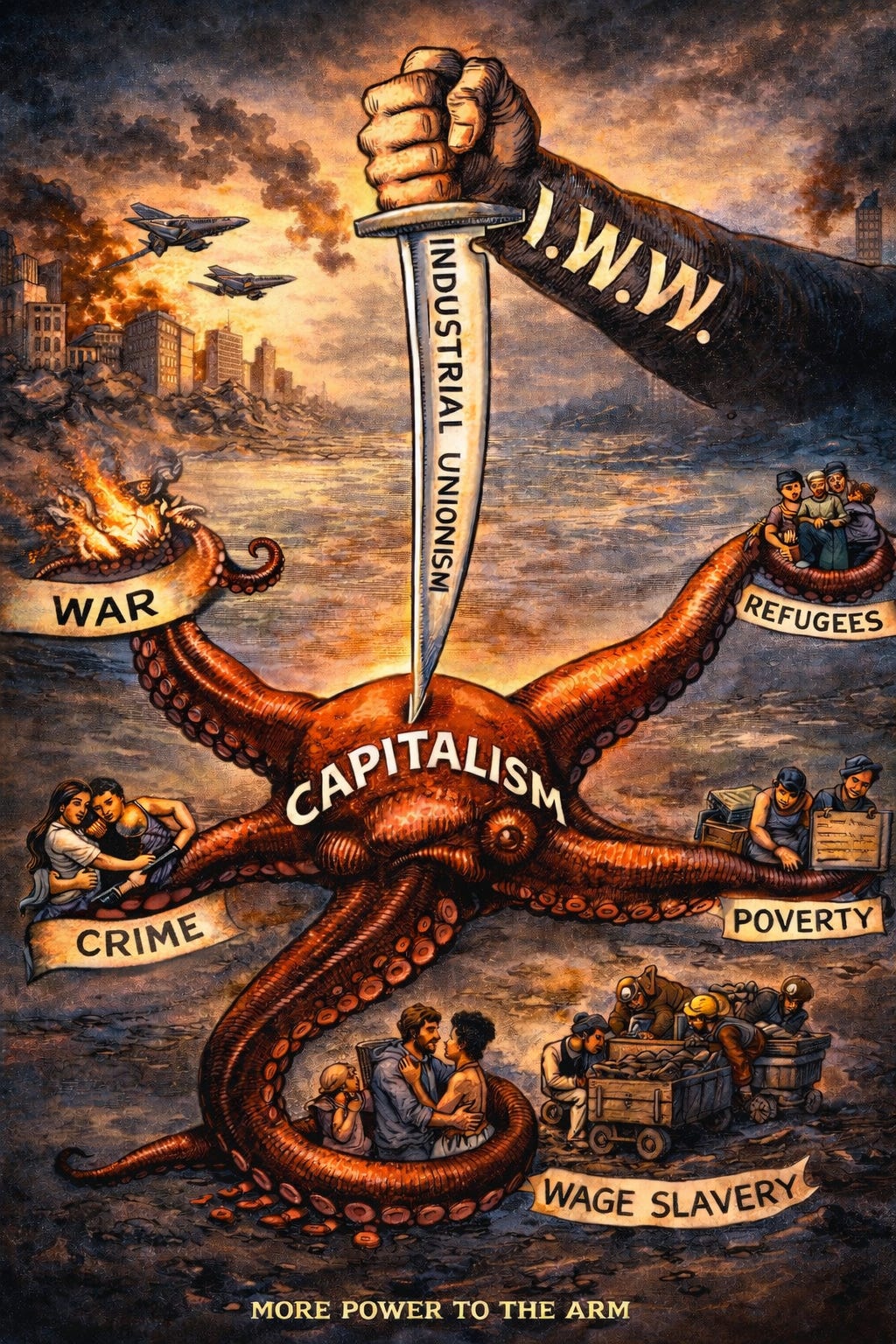
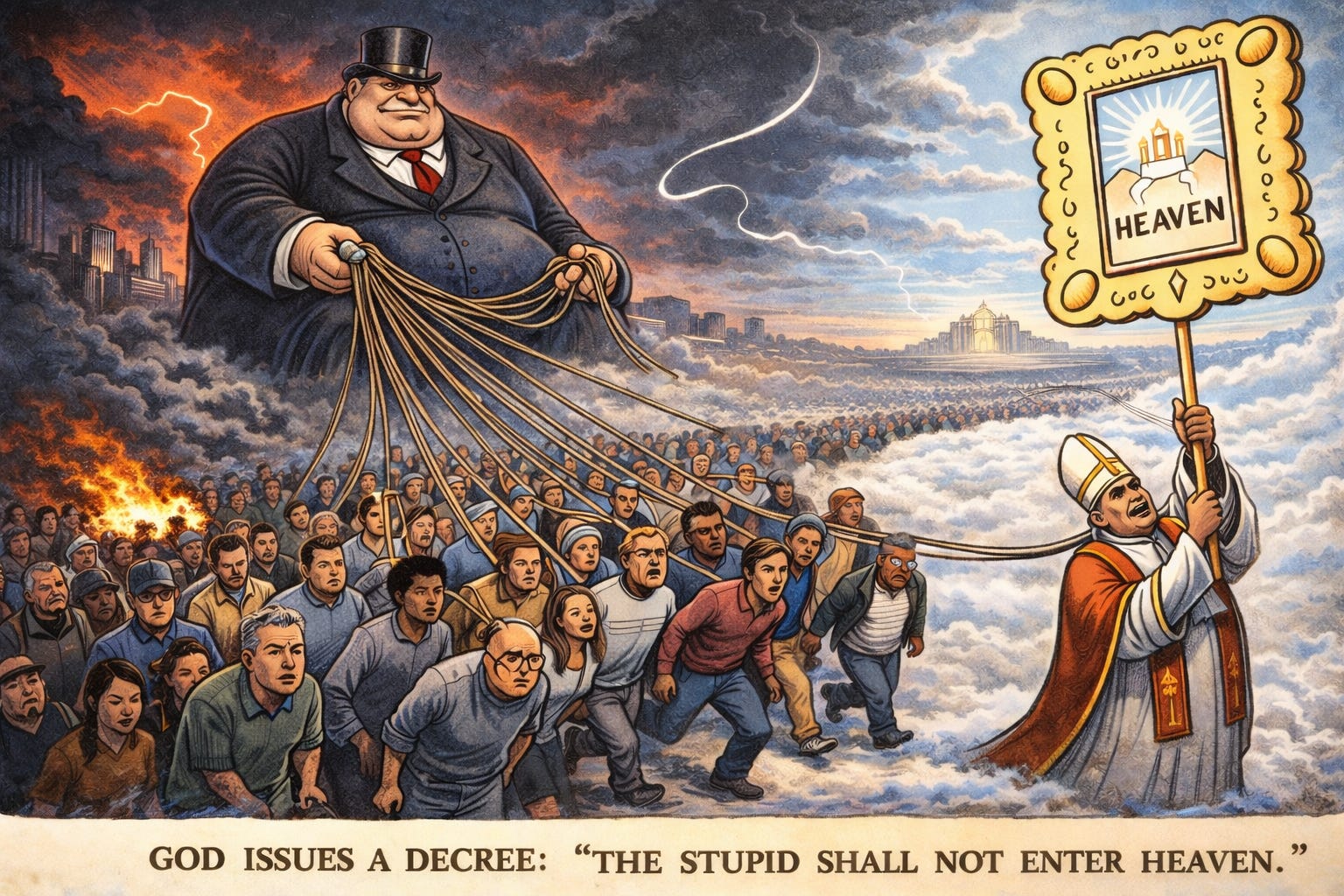
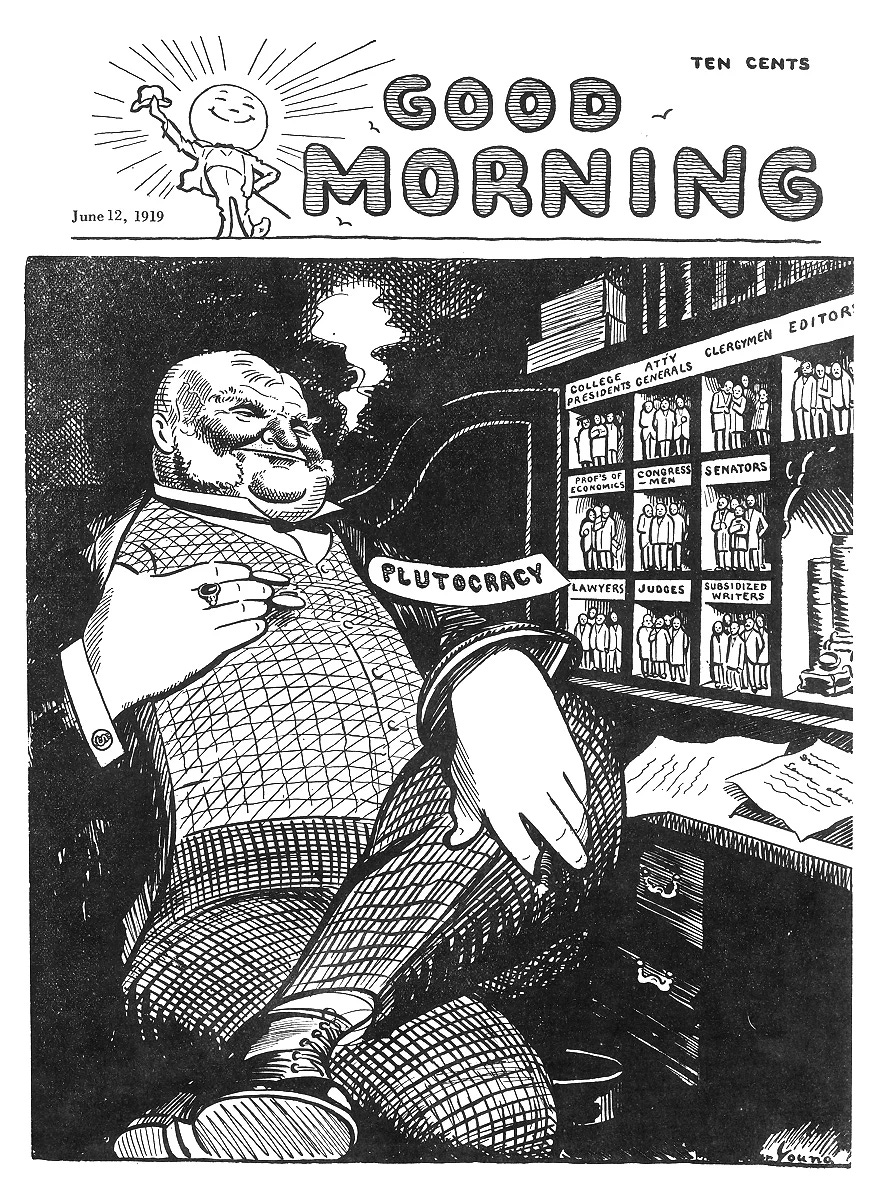
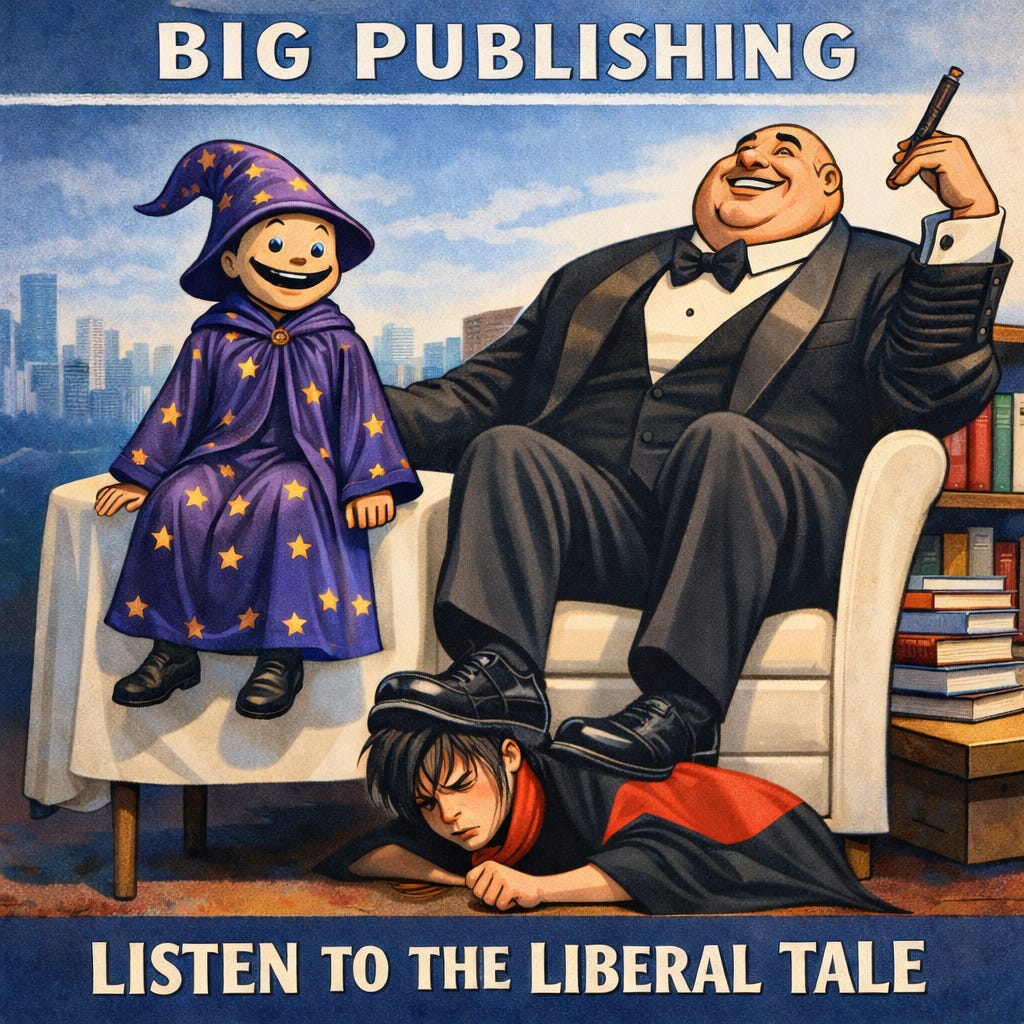










 A Practical Policy