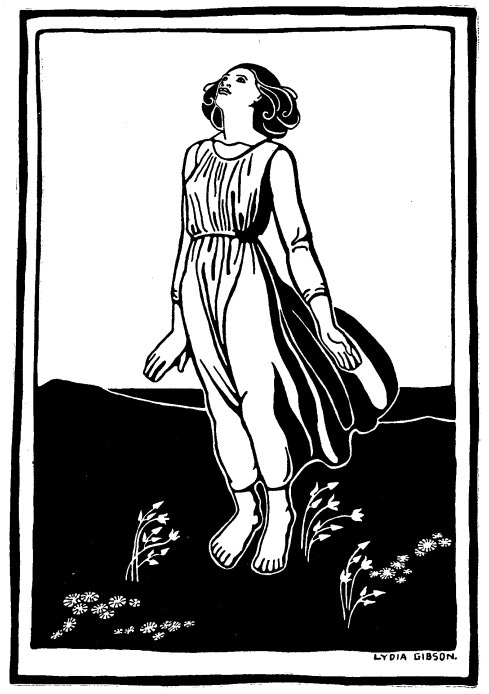
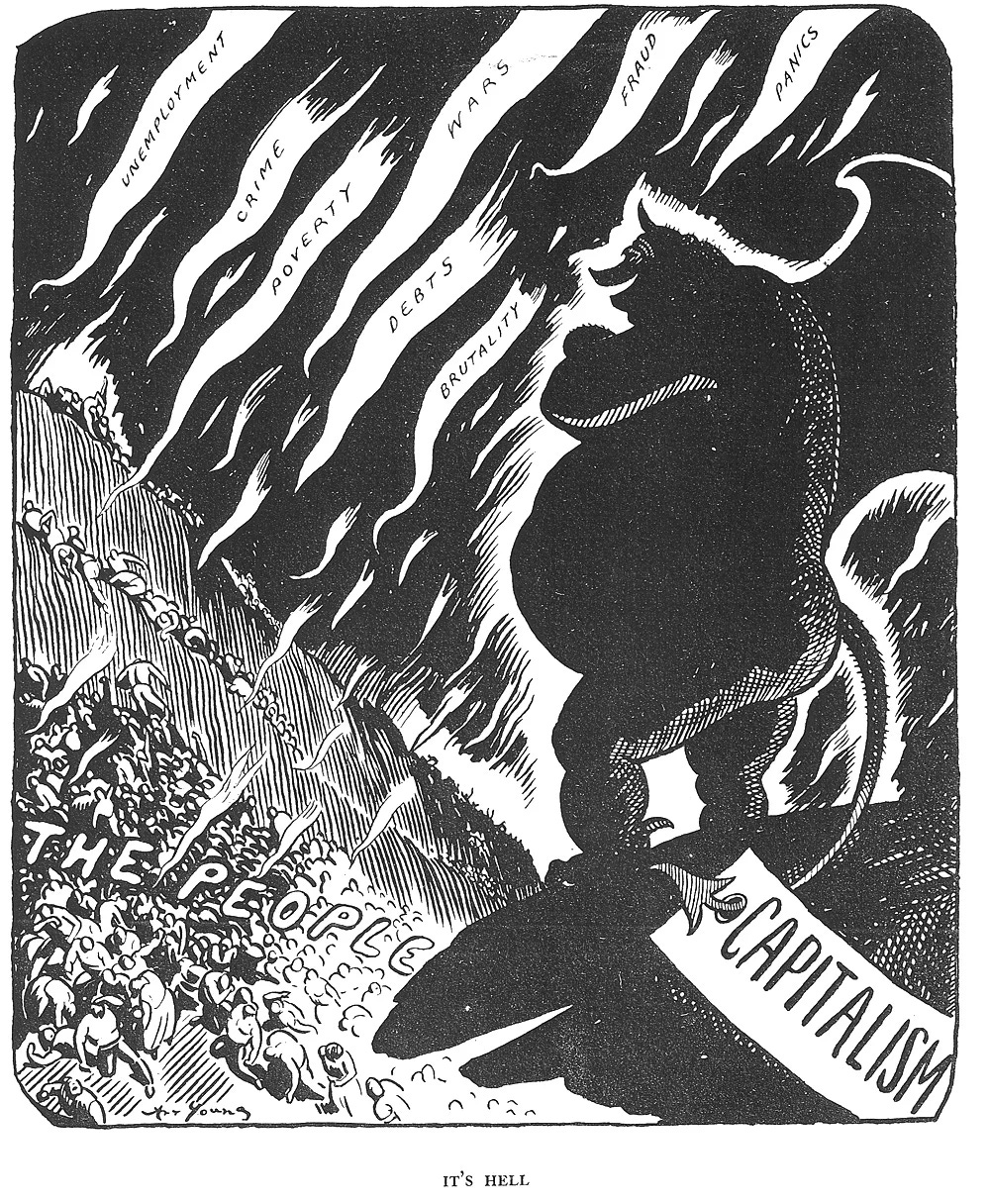
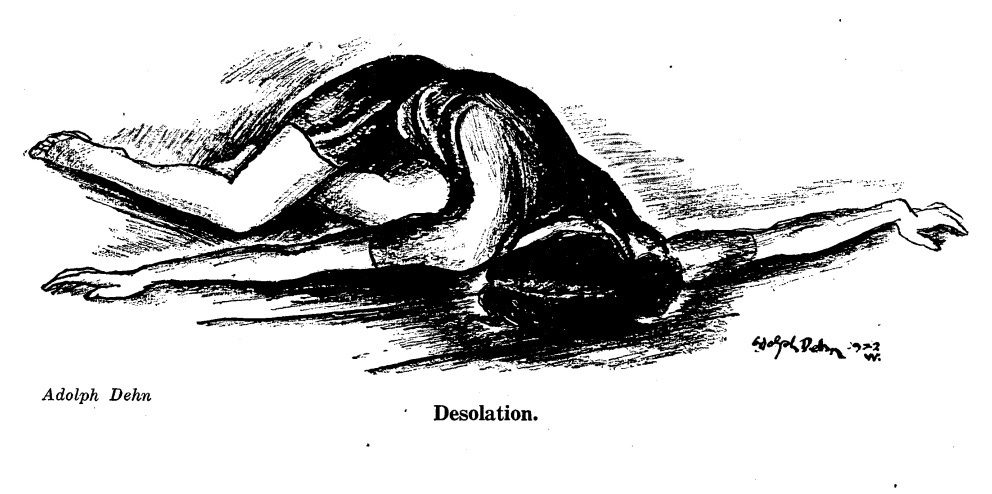
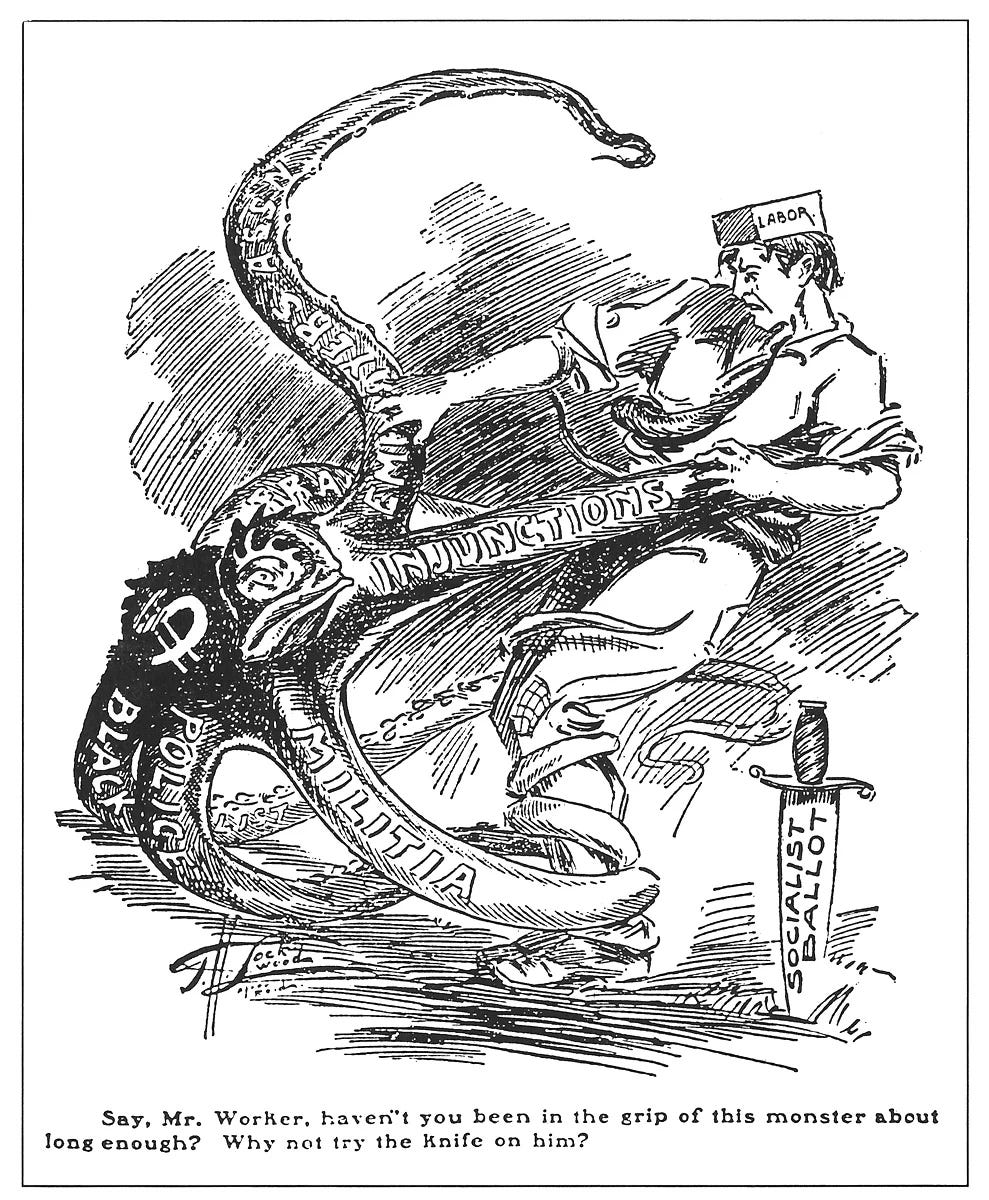
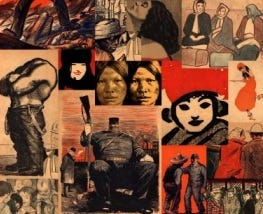
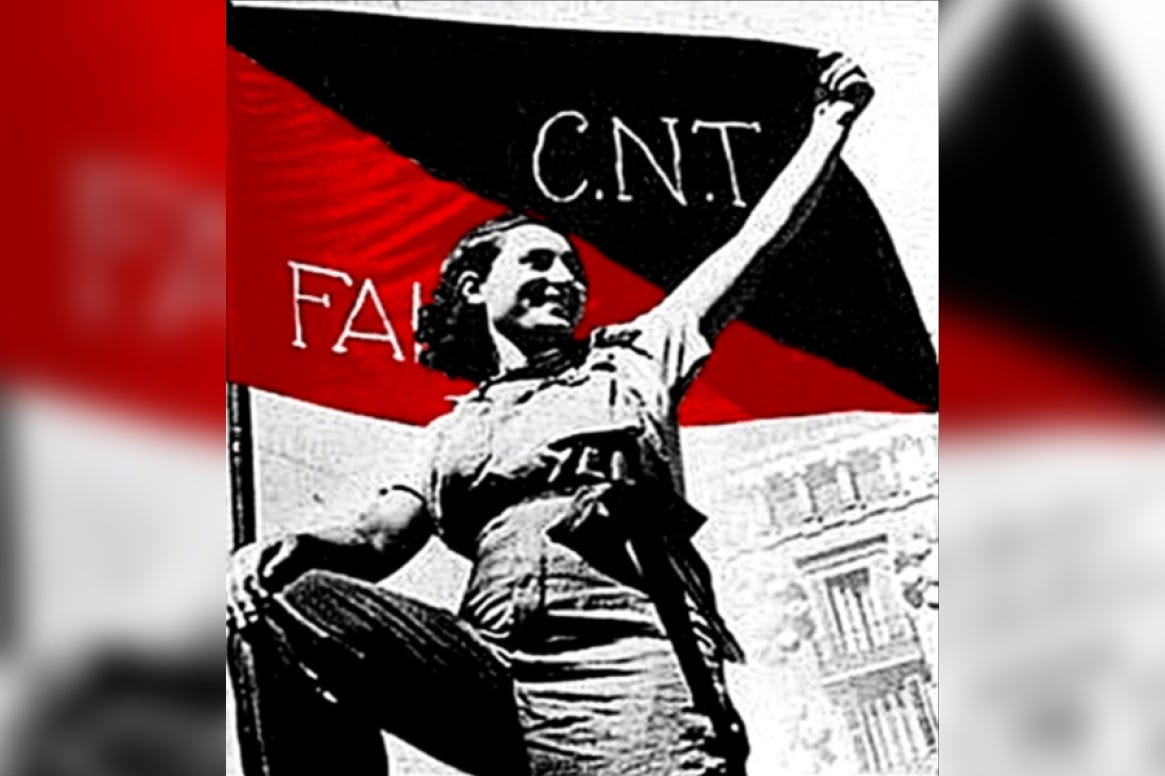
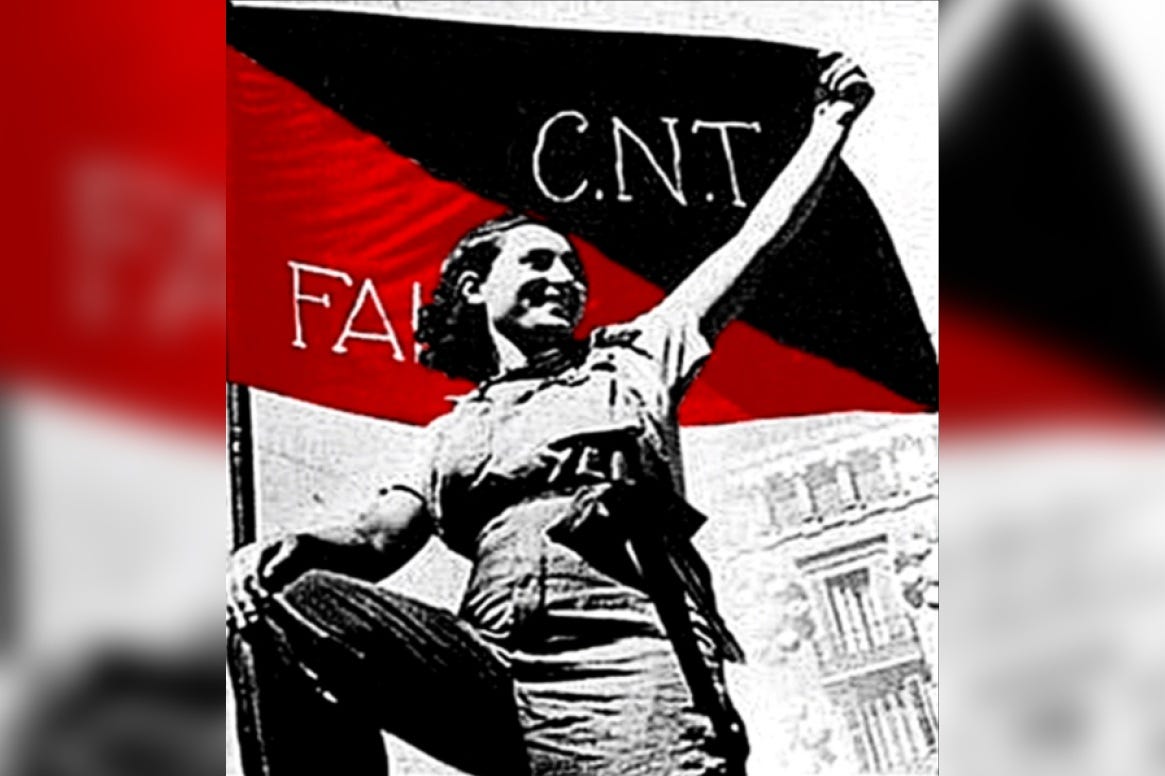
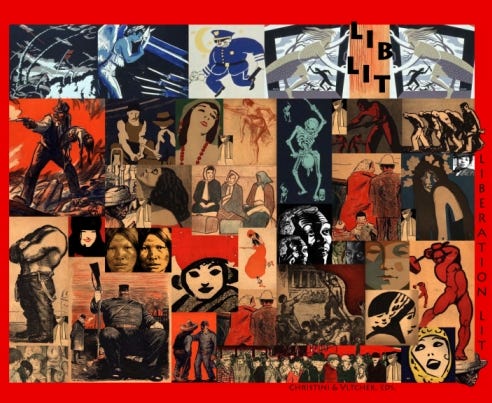
“On Behalf of Lake Owakeela” is a great art and social change story from the Bulletin of the Atomic Scientists, in which a lawyer argues that a lake has inherent rights, like humans do. After all, why not, since courts now ascribe such rights to corporations.
Kim Stanley Robinson comments: A very knowing and expert feel to this one, a story with a positive ending in a completely realist way, at no point does it stretch credulity. Feels real. The young woman suddenly the tribal lawyer, very well done; also the growing into the role quickly as she sees the very realistic reason why the other side might give in. Good on the legal standing issues here too. Really good!
Much larger socially progressive stories you certainly won’t see imagined on TV — say a long-running series of two societies side by side, one ecotopian socialist (and secured by threat of bomb as per Ernest Callenbach’s novel Ecotopia), the other predatory capitalist like America today, and any number of crises between them. Cuba tried to go the other way, the socialist route, and got pulverized by America, with increasing threat of complete immiseration, destruction, and conquest today under Trump.
The progressive elements of the 1930s in America were made possible by the socialist and progressive movements, acts, and literature of the ‘00s, ‘10s, and ‘20s. And going back further.
Socio-politically, the slavery Abolition movement led to the end of slavery and Reconstruction, which led to the Socialist/Progressive movements, which led to the New Deal, which led to the Civil Rights movements, which led to the Antiwar movements, which led to the massive Peace movement of the ‘80s which led to the vast shrinkage of the nuclear arsenals (though not yet to abolition), which led to new antiwar movements, all of which led to Occupy Wall Street, which led to Bernie’s campaigns, which brings us today to progressive populists on the cusp of taking national power, despite the neo-McCarthy neo Red Scare Trump repression, which is so very severe because the progressive populists are so very strong now.
You can see similar movements in literature, arts, culture through time, though the lines of development are badly blurred by the establishment, often thwarted or cut out entirely, in part by the MFA establishment, though there are clear battlelines within the MFA institutional front too.
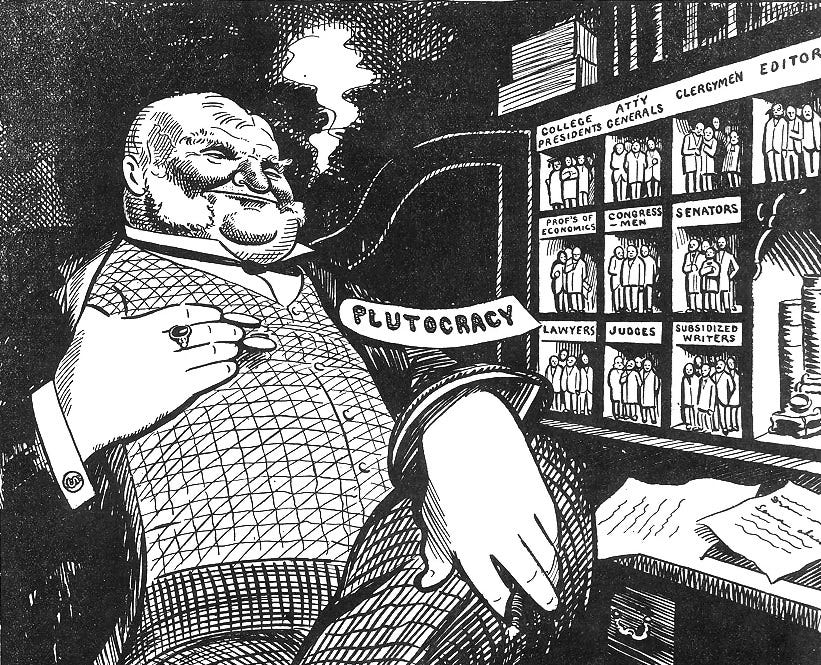
So much of progressive information, thought, and experience is driven out of history, consciousness, and culture by the establishment, which is largely the shadow cast by the plutocracy. People are busy so they shrug and say things are what they are, so be it. But if you’re a bit obsessive and a bit disturbed by what you see or don’t see, and if you have a moment, whole other worlds can open up, often by following the cultural battlelines, the various fronts, some standout figures and who knew who, plus serendipitous luck of discovery. Establishment culture is thin to non-existent in crucial ways, though it’s everywhere. When it gets pried open briefly or marginally, you see the real stuff, often with a telling history and potentially explosive content in the present.
Great novelist and playwright Ishmael Reed’s Before Columbus Foundation American Book Awards and other work has always tried to push the “what if” question ( what if things were different) for example. Some of the “what if” actually did happen through time despite the war-mongering, bigoted, plutocrat establishment, fortunately — multiculturalism, decolonization lit, international lit — but it ekes its way through a very tightly controlled capitalist (plutocrat) box and is often very greatly stripped of socialist expression, or a full people’s expression, in content, ideology, and institutional expression. And it is constantly outrageously under attack on many fronts. Meanwhile, additional progressive populist change is afoot increasingly, though belittled and anti-advertised, despite this new Trump era of severe oppression. What might have been, what might be, is highly offensive to the establishment, which is fearful, always, insecure, and fundamentally ideologically inflexible. It’s always a good day to fight the fundies, or to ignore them and create a new world.
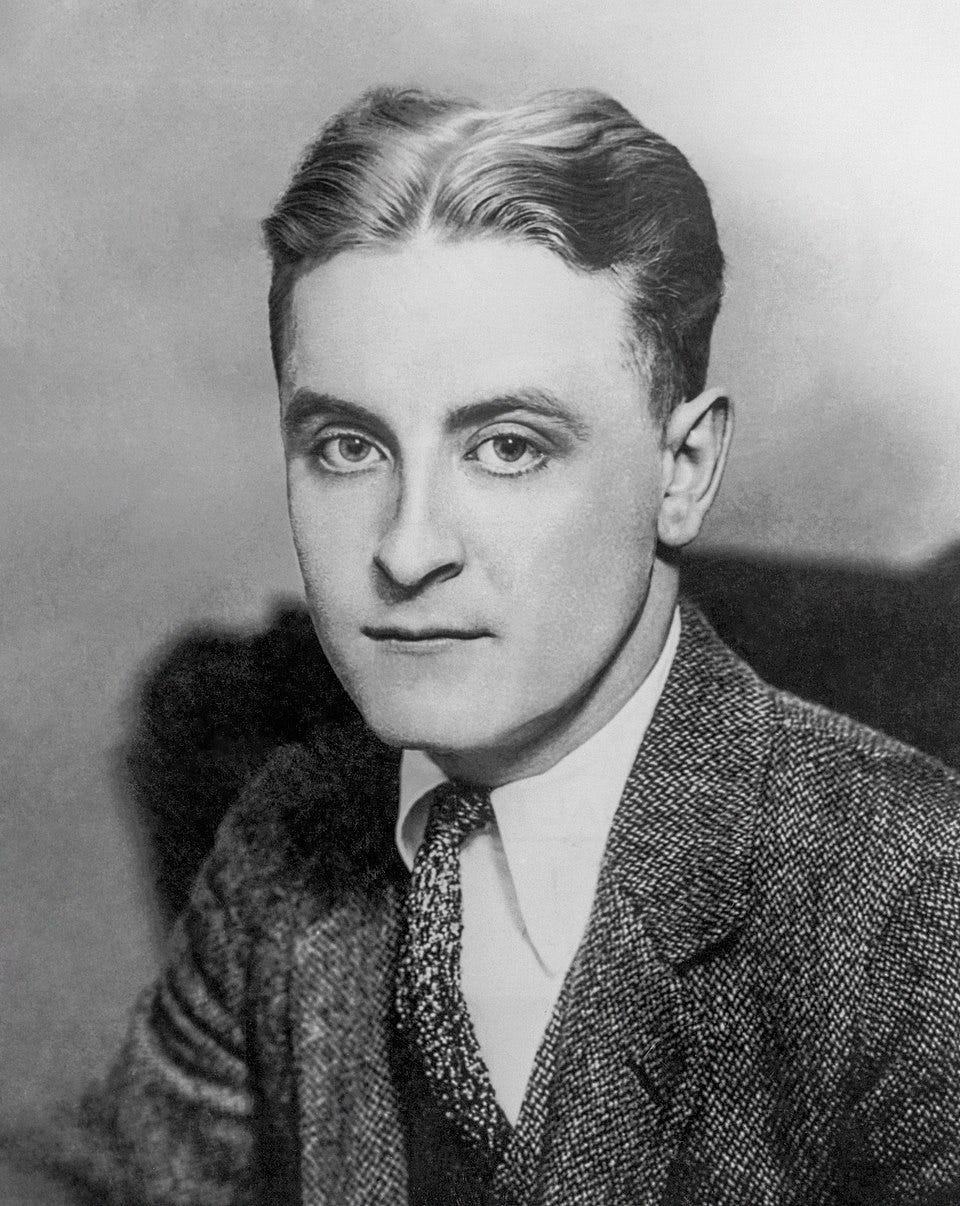
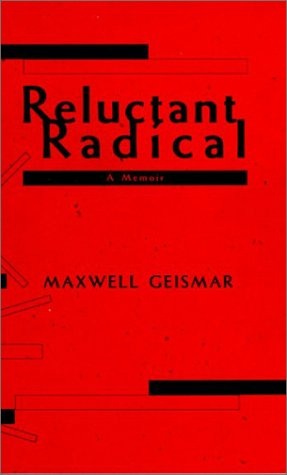
A century ago, prominent establishment literary critic and editor Malcolm Cowley and his key literary cronies involved themselves in the war effort, of World War I. Malcolm Cowley, Ernest Hemingway, and John Dos Passos drove ambulances. F. Scott Fitzgerald joined the Army. William Falkner changed his name to Faulkner and managed to join the Canadian Air Force, then lied about his time in the service and “paraded” around in a uniform after the war, and flew private planes through his later life. Cowley helped Faulkner win the Nobel Prize in literature three years after he got the Portable Faulkner published, mid-century. If you want a clear-eyed take on the racist Faulkner’s writing read the great progressive critic Maxwell Geismar about Faulkner and his work. None of this establishment literary cohort were ever politically arrested or even much surveilled, except Dos Passos briefly after the war, and later Hemingway a bit during the time of the Spanish Civil War and WWII, superficially.
On the flip side, though Cowley knew them all well, the actual greatest novelists of the era, Mike Gold and Claude McKay and Agnes Smedley — a diverse group of leftists, artists, and intellectuals — received no Portable editions from Cowley and the publishing establishment and all were deeply and actively opposed to American involvement in WWI and the war itself and were heavily surveilled and all were politically arrested. And they all were contributors to and/or editors of the literary and cultural magazines that were shut down by the government during WWI and restarted under other names some years thereafter. Included among this group was anarchist and brilliant literary critic Emma Goldman, who was deported, after first being imprisoned and charged under the espionage act, as was Agnes Smedley.
Cowley’s warfaring group became the literary establishment and Cold Warriors, propped up by big money and awards, institutionalized, the ones who taught and gave talks in the colleges, also as part of the Cold War MFA in creative writing institutionalization of literature. Meanwhile, McKay, Gold, and Smedley, socialists and progressive populists, each in the 1920s wrote novels greater in every way than F. Scott Fitzgerald’s passé socialite novel The Great Gatsby (1925) — which remains lauded as the great American novel by the establishment, much like the editorially mauled white savior novel To Kill a Mockingbird. The great literary leftists’ novels were buried and falsely smeared as inartistic and excessively propagandistic by the Cold War Red Scarce McCarthy Era liberal-conservative establishment for decades thereafter. These effects are felt to the present day, in a society-wide cultural war that has been wholly revived by Trump. Yet establishment liberals have always waged Cold War against the most vital of the present and the future too, per the demands of the militant plutocrat establishment.
In time, Latin American and decolonization and multicultural literature would partly pick up where the diverse “proletarian” socialists left off, partly rebelling against the Cold War liberal-conservative mentality, though not entirely. And so here we are today.
The Cold War culture continues. For many decades running and still today, it’s likely that a plurality of all shows and movies, as with very many novels, are cop shows, including military stories, and the related. And those stories are essentially all right-wing. This is the partisan culture of the bigoted capitalist police state, surveillance state.
What else would you expect in a de facto right-wing militant plutocracy masquerading as a democracy? A flood of right-wing art.
Systemically, literary agents are pushed into fishing for supposed material value in “projects.” Literary and cultural value is a kind of afterthought, nice if you can get it, given the system.
Culture is always partisan. The art and literature of the first half of the twentieth century in America, for example, was far more progressive populist and socialist than during the Cold War (second) Red Scare, McCarthy-led age of persecution that followed — an extended period of repression that has been continued and revived today. At that time, some actually constructive state activity necessitated by the Great Depression and progressive populist outcry and action forced America to have a different and enhanced, more democratic art and lit culture briefly, thanks to the progressive, socialist period of the first quarter of the twentieth century. It would not last — Maxwell Geismar, “Introduction,” New Masses: An Anthology of the Rebel Thirties (Ed. Joseph North):
…it was the Cold War that brought about the downfall, in 1949, of one of the most brilliant journalistic enterprises in our literary history. At the war’s end, a new epoch of repression was about to start. Another great achievement of the Depression years was the WPA Federal Theater Project; and Halle Flanagan’s history of this, in her book Arena, ends with the congressional investigation and foreclosure of the Federal Theater by political figures who are, by Divine Grace or special dispensation, still active in Washington today… What was the real truth, the true historical dimension, of the Cold War? As I said in opening this Introduction, a new group of Cold War historians have been giving us a whole new set of impressions, which, alas, most of those who lived through the period, and are so certain of their convictions, will not even bother to read and to think about.
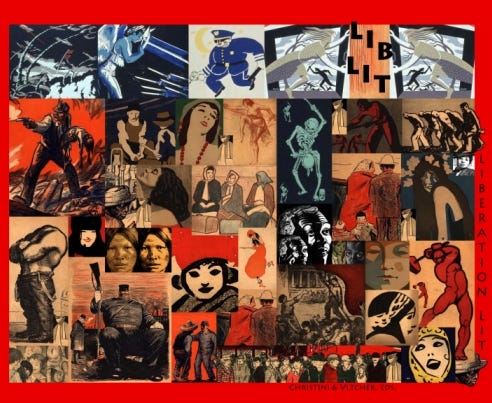
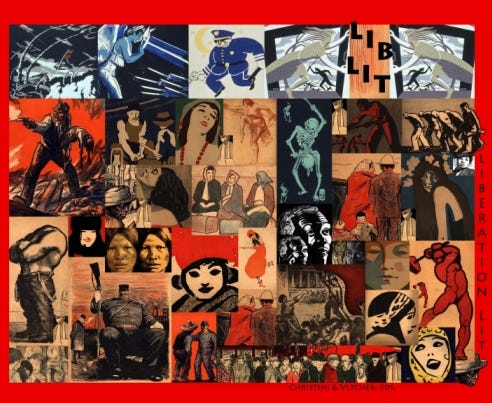
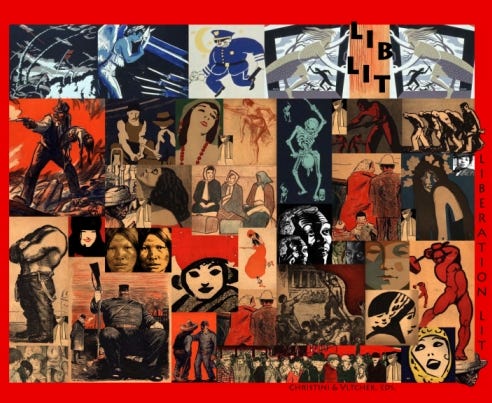
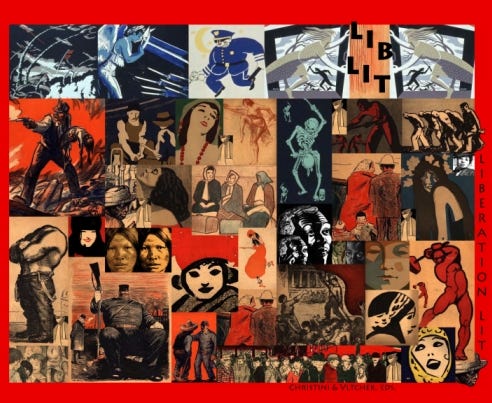
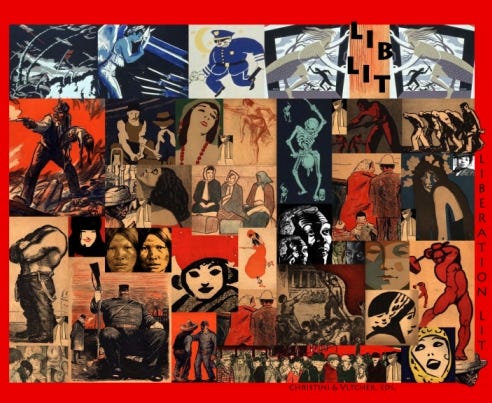
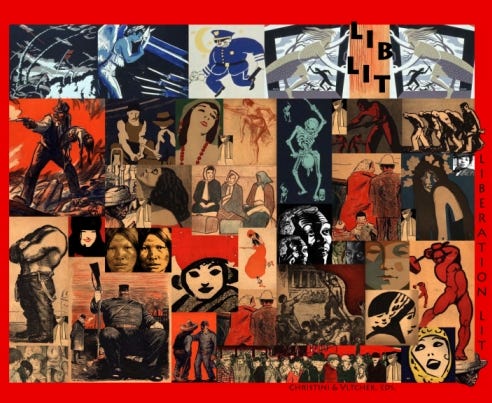
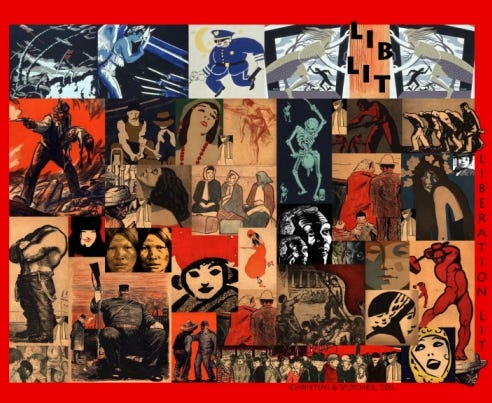
Thus this DIY magazine, Liberation Lit, though a magazine of one, nevertheless gets all kinds of diverse voices and authors into it, in bits and pieces, past and present. Many texts commenting on texts, and many works of art adjacent to many other works of art.
I may incorporate additional much larger swaths of additional voices and texts into this omnibus going forward, especially given the plethora of liberatory lit available in the public domain now — 1930 and before — from the “Old Left” in particular — more fiction, criticism, poetry, and more graphic art. A bit of commentary to go with these great works could facilitate it.
There is no greater American novel than Daughter of Earth, by Agnes Smedley, for example, and it has been in the public domain since 2025. Likewise Mike Gold’s Jews Without Money is now in the public domain as of this January 2026, and Claude McKay’s Banjo, in the public domain also since 2025, though it doesn’t seem that Gutenberg.org has posted these texts yet.
The “networked tyranny” that defines the world, that rules the world, is the billionaire class and their private government, whom Epstein represented, the billionaire stealth government, and their depravities — which amounts to the same thing. The depravity is the reason for the stealth. That said, much of the billionaire tyranny, depraved governance, is carried out right in the open, in the public institutions of government that the billionaire class also shapes and controls. The combined billionaire tyrannies, private and public, are the plutocracy, heavily armed and financially armed that rules all — openly, deceitfully, and secretly. America itself is largely a plutocracy masking — and masquerading — as a democracy. And always has been. This is the nature of the American Empire from is Native slaughtering and conquesting, African enslaving founding — bigoted state capitalism.
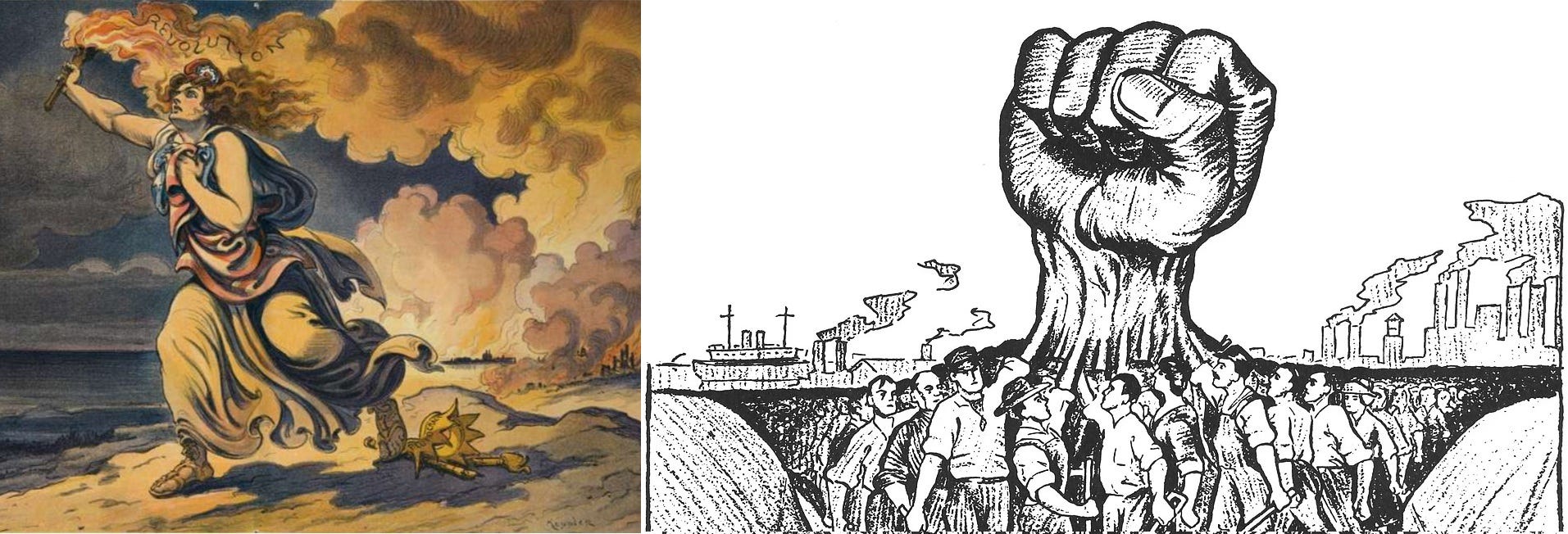
The system is far beyond oligarchy — rule by the elite few — and a transnational elite, per the Epstein files and network. It’s a far more vast plutocracy. It involves millions of rich individuals and hundreds of thousands, if not millions, of high finance (and high financed) organizations and institutions and municipalities. There is an oligarchy too, but it pales in face of the myriad elements and mechanisms of the overarching (tyrannical and anti-democracy) plutocracy that the public must organize to destroy and replace with liberatory socialist and real democracy. The People’s war must be won in literature and art and culture as well as in the rest of material society and politics. It’s a partisan effort, against a partisan enemy.
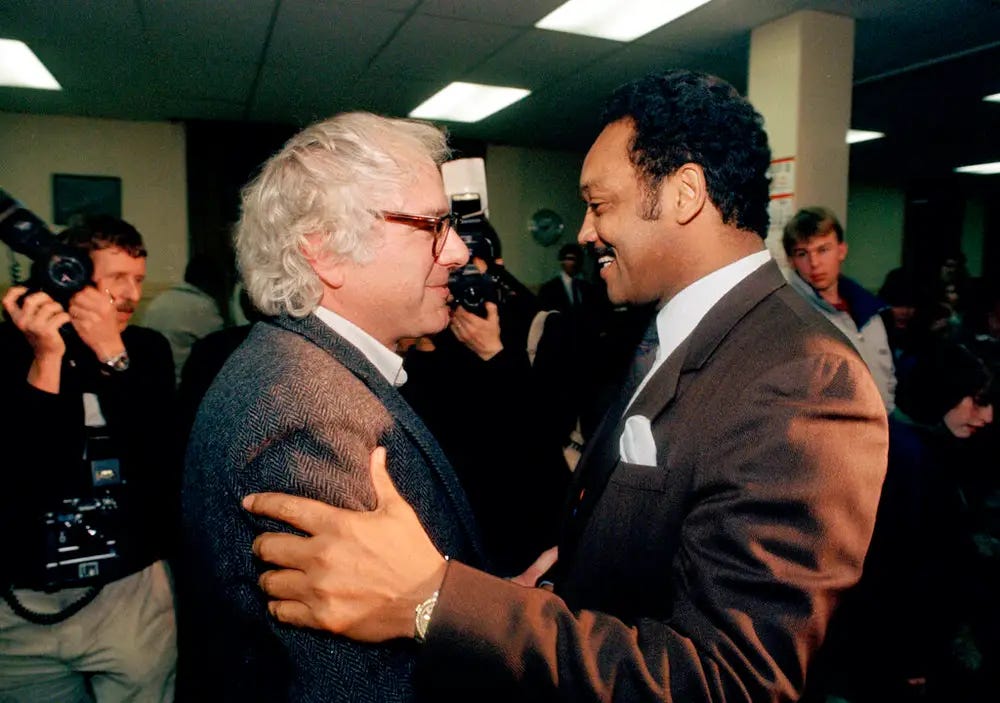
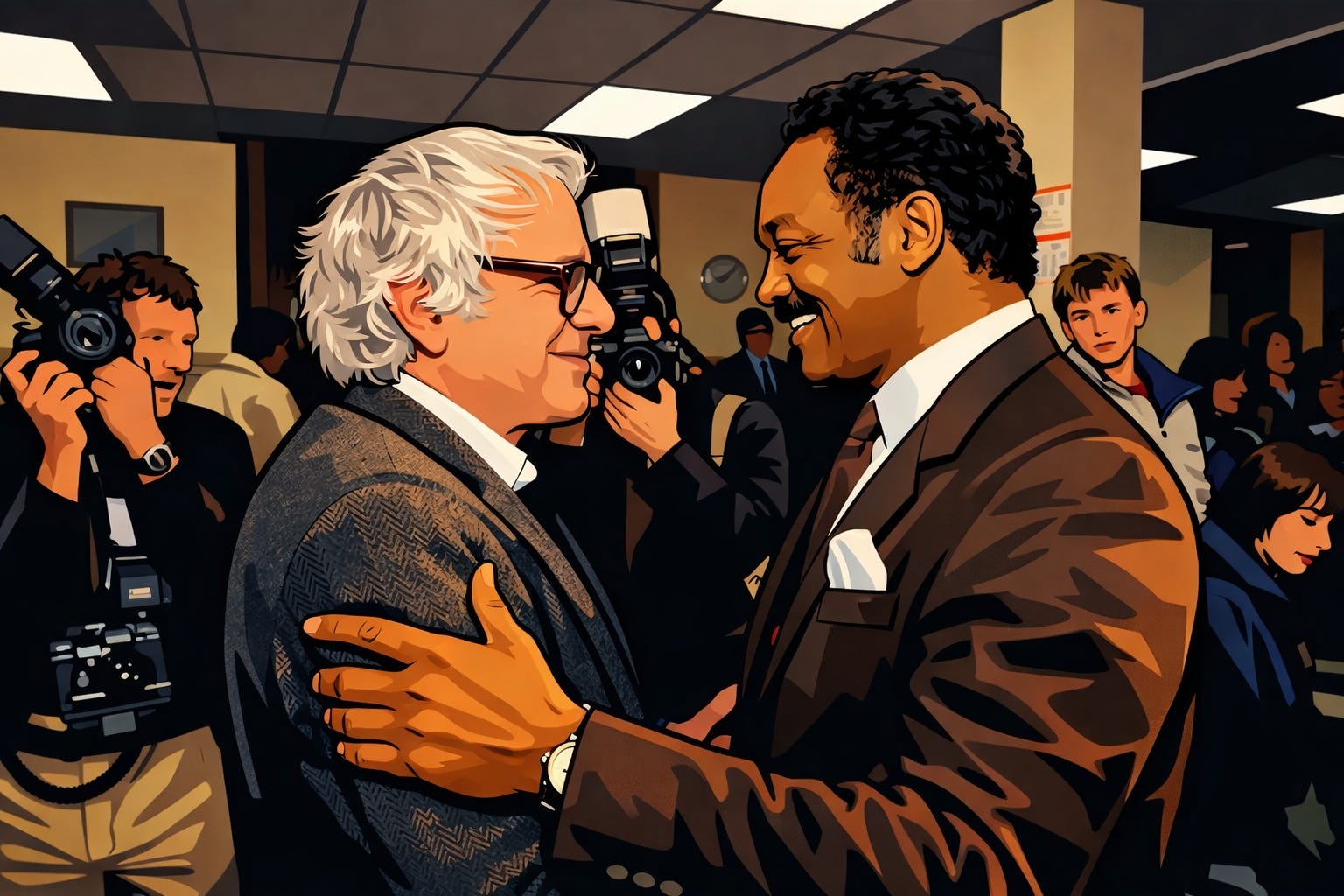
Then-Burlington Mayor Bernie Sanders greets Jesse Jackson at Montpelier City Hall in 1988. AP Photo/Toby Talbot
Jesse Jackson has passed today. His progressive populist spirit lives on.
I wrote a modified version of this post on the 2024 American Presidential election cycle — and on elections past and future — in July 2023. No one would publish it. Ten months later, I started this substack to DIY publish primarily partisan fiction, where a somewhat longer version of this piece appeared as “Con Don, The Con Dems, and The Left — The Lesson of Jesse Jackson and Bernie Sanders” in September 2024 — now slightly modified to the present moment.
Jesse Jackson & Bernie Sanders Showed The Electoral Way Forward
For posing a real threat to the con Dems — establishment Democrats — the two great left progressive and Democratic primary presidential candidates of the past 50 years, though flawed, were Jesse Jackson and Bernie Sanders. Following Jesse Jackson’s impressive 1984 Presidential primary campaign, the Democratic National Committee tried to rig the 1988 election against him by creating Super Tuesday in the primary, stacking it with states that they thought would not support him. Jackson still managed to be second in delegates afterwards and then took the delegate lead over Dukakis by winning the Michigan primary. The con Dems then threw everything, especially race, into winning the New York primary which Dukakis won. Jackson never led again, and instead of running a third time for President in 1992, Jackson did what every con Dem wanted him to do — he took big CNN money to host a weekly TV news show — for exactly two full election cycles — and fatefully sat out the Democratic primary both times. The result was the disastrous death-grip rise and continuation of the Clinton and Bush dynasties.
The American left and progressives nationally were never more prostrate in the electoral realm — and perhaps in general. A curious thing for some contemporary left progressives to advocate a return to by their advocacy of avoiding Democratic primary elections in favor of running with hopeless third parties in the general election.
The test cases have been run. None of the Green Party presidential campaigns by Ralph Nader and Jill Stein were remotely as beneficial as any of the Democratic primary presidential campaigns by Jesse Jackson and Bernie Sanders. Anyone and everyone can see this. It’s not a theoretical question. What did Nader and the progressive cause gain by avoiding the Democratic primary? Evidently nothing. And it’s not difficult to argue that Nader, also Stein, cost progressives far more than they gained, by running outside the Democratic primary. The well-intentioned though highly problematic runs of Nader and Stein (and then briefly Cornel West) are a symptom of the weakness and incoherence of the left — and more generally of the failure of the public to know itself.
Of course the con Dems, establishment Democrats, try to rig the primary. Of course they are trying to kill the primary process every cycle, against progressive success and takeover. There’s no reason for left progressives to help them succeed in that by tucking tail and going away, running third party, because the reality is that con Dems try to rig everything, including third party runs. They sue endlessly to deny ballot access and to bankrupt third party campaigns, along with demonizing and smearing third party candidates directly and through social media and corporate media. You can’t run away from it. You need to go into the monster’s den, the primary, and win power there, where it is. If you stay outside the monster’s den riding the Green express away from power, the monster will roar in its den and still swat at you even though you cannot replace that monster — except with a worse creature — if you stay outside the den.
The bigoted capitalist police state plutocracy needs to be captured by progressive populist takeover by a combined inside-outside strategy. That’s how it works. Plutocrats know it and act on it too of course, to their profiteering and destructive ends.
The test cases have been run. The con Dems have shown that they would rather risk Con Don Trump and the Republicans being elected than Bernie Sanders and progressives. Similarly, the con Dems have shown that they would prefer the Con Dons being elected than to enact progressive policies to appease the Green Party or anyone else. If the con Dems tried such appeasement, they know it would only embolden the Green Party to keep running and growing. It’s a winner take all Business Party electoral system. Therefore the only way for left progressives to succeed electorally is to overwhelm and triumph over the Democratic side of the Business Party. Even the repercussions of powerful near misses are crucial. Left progressives attempting to take over the Democratic Party, and then succeeding one way or another, is the most viable and sweeping way to then defund and further replace the predatory establishment. Again, the test cases have been run. Repeatedly. Who cannot see this?
You bet your backside the con Dems and the Con Dons see it — clearly. That’s why they fight so hard to keep left progressives out of the primaries and then desperately try to thwart those who are strong enough to step into the field of battle regardless. The strongest, most impactful left progressive electoral political figures appear in the Democratic primaries. That’s where Ralph Nader should have been. And Jill Stein. And Cornel West. Among others. Should be now. Why allow all the invaluable mobilizing opportunities and influential media coverage of left progressive policies and goals in a forcibly contested primary to go to waste? Why should the left be missing in action?
Ultimate Triumph Of The Propaganda State
Can it be a coincidence that thanks to small-dollar fundraising and worldwide social media access, at this tipping point moment, when multiple nationally prominent progressives are least likely to be bought off by big media and big money and cannot be diverted into Quixotic charges at windmills, that the media algorithms, owners, and echo chambers are boosting the propaganda of hounding, heckling, and driving left progressives away from their only route to the Presidency, the Democratic primary? Can it not be that the left is being played and playing itself by pushing what it thinks is original or at least sensible thought for left progressives to avoid the Democratic primary? That the left appears to be propagandizing itself with con Dem and Con Don establishment propaganda and algorithms cranked out by the plutocracy’s PR network is surely one of the highest points of capitalist brainwashing, or misdirection, since Edward Bernays laid out the fundamentals of the manipulative system a century ago. Truly remarkable.
How is it that at the precise moment when even the capitalist empire’s mighty plutocracy can no longer fully suppress or buy off multiple prominent national progressives, how is it that left commentators have taken it upon themselves to step in for Empire in trying to discourage and stop Jesse Jackson and Bernie Sanders type runs in the Democratic primary? And to push for the potential or inevitable Con Don enabling electoral results of progressive third party general election runs? Just a coincidence? No establishment seed-planting and algorithms involved? Big money conspires against people 24/7, dupes them, and blinds them, and fools them, and encourages them, and tempts them to gut themselves and their causes in myriad ways. Apparently in this way too. Why would any leftist or progressive want to do the con Dems work for them, let alone by urging left progressives to tuck tail and run to the general election, to the clutches and benefit of the Con Dons? At best, that’s an act in search of a principle. In reality, far worse than that. It’s not complicated. Again — the test cases have been run.
When the conservative Democrats salivate at progressives urging progressives away from progressive Democratic voters, and when Con Don salivates at seeing progressives urging progressives to-vote-for-him-by-not-voting-against him, it’s not remotely complicated. It’s tragic. It’s lethal. The left can do far worse than listen carefully to what the conservative Democrats want, and also — crucially — the Con Dons, and then push for the opposite. And if you’re not doing that, what exactly are you doing? It seems you’re cutting off other people’s noses to plug your own face. The subsequent fallout of bad decisions, that’s where the real complexity of the situation arises, in picking up the pieces. Talk about trying to snatch defeat from the jaws of victory. By all means, help kneecap ever stronger and more advanced Jesse Jackson and Bernie Sanders-type breakthroughs and impacts today and tomorrow — as if left progressive forces don’t have it tough enough already. Primary avoidance, right-wing enabling — why? The left progressive avoider-enablers have got the con Dems and the Con Dons drooling for all the wrong reasons.
Cornel West & Picking A Party Path
In the most recent American presidential election cycle, the fact that Cornel West switched parties, from the People’s Party to the Green Party, within days of announcing his run for President, indicated that minimal thought was given to strategy. Evidently associates of Dr. West and the Green Party quickly convinced him to switch parties. Based on what considerations? The desire to emulate Nader and Stein rather than Jackson and Sanders? This is evidence of a strange desire to run away from power, and away from the possibility of the greatest amount of left progressive electoral impact and change, as the last many decades show, going back through Sanders and Jackson and the New Deal and beyond. Cornel West had better policy positions than Bernie Sanders and much of the “squad,” apparently, especially in regard to US militarism. The decisive field of contest to challenge these positions is in the heat and duration of the Democratic primary, not in the iced-out remote hinterland of a marginal and counterproductive third party general election run.
And just so, last cycle, the electoral left was shattered yet again. With Marianne Williamson the only left progressive in the Democratic primary, and with Cornel West then Jill Stein running with the Greens, and with Bernie Sanders and the expanded “squad” more interested in endorsing the con Dem President Biden, then Harris, than running themselves in the primary — the electoral left was torn every which way. The left should be coming together this next election cycle and every cycle going forward. The less it does, the less it organizes itself into a powerful unified force, the more it dies, the longer it takes to come alive and into power.
2028 and a terribly needed sea change has never seemed so far away. That said, by then — and by now — one could argue that most of the strongest national candidates this side of the Con Dons would be progressive populist candidates, if not yet wholly leftist. Even most of the con Dems can see this directly through their gold-plated windshields. That’s why they don’t want to meet progressives in primaries. And that’s why leftists and progressives should want to show up and own the place, rather than be owned — in part due to their own weak and fragmented strategy — and be marginalized otherwise.
Bernie Sanders’ presidential primary campaigns left tire tracks over the backs of most of the con Dems through two electoral cycles. If he’s ambulatory in 2028 — or can roll in a wheelchair — he should run to the left of himself at that time, unless a group of other strong progressive populist candidates step in for him, or may be even if they do. At least half a dozen other progressive populists should run to the left of Bernie. And then coalesce, unify for a victory around the strongest progressive candidate. And finally win at the establishment’s own game, and become the establishment, making it progressive populist, at the very least.
The left is no longer invisible and weak in national electoral politics when it runs in the primaries. It’s no longer invisible and weak in individual candidates or even in financing in the primaries, or in the beneficial impact of these campaigns. Though the Empire, the plutocracy, the oligarchy remains much more powerful in many ways, left-progressives’ organizational abilities seem to have improved a significant amount, not least with the rise of Sanders Claus. Left progressives have good footing in the field finally, and must see the contest through. It’s do or die. To rip up the viable blueprints now and start from scratch — to collapse from the power and impact of Jesse Jackson and Bernie Sanders — that’s what the con Dems want, and Con Dons even moreso. Leftists and progressives should want no part of that.
The Clever Comebacks Of Incoherence
A left progressive third party would need to defeat both major parties, the Con Dons and the con Dems, in the general Presidential election to take power, whereas a left progressive political force would need to defeat only one party in the general election, after defeating the con Dems in the primary. By all evidence, the latter primary path is the far more viable path for left progressive success. Meanwhile, the direct-to-general-election path remains left progressive suicide, at best. One way, you have a real chance to force sociopolitical success. The other way, you have a real chance to force little beyond sociopolitical suicide, and worse. For the people and the planet.
All the would-be clever comebacks fall flat in the face of reality:
“I don’t care!” Well, that’s your problem. Don’t make it the people’s.
“No Democrat is entitled to my vote!” True, but also irrelevant. And then there’s the corollary: just as no Democrat is entitled to anyone’s vote, no podcast is entitled to have anyone appear on their show. Time and votes are both precious.
“It’s so confusing to run in the Democrat party as a leftist!” No, actually, people aren’t that stupid.
“If we take votes from Democrats, they’ll give us what we want!” No, that would be suicidal on their part. The con Dems do not intend to ever negotiate their power away.
“The Democrats rig the primaries against progressives!” True, but entirely beside the point because Democrats rig every election against progressives, even moreso the general election that third parties attempt to contest.
“It’s more possible to force the issue and have a positive electoral impact outside the Democratic Party, by way of a third party!” There’s zero evidence for this hallucinatory claim, and all the evidence that does exist — in fact, test cases — points to the opposite conclusion. The most powerful forces course through the primary.
Con Dems — establishment Democrats — are more concerned with maintaining the status quo than meeting people’s needs, so will gladly see Con Dons win the election than meet the demands of progressive third parties outside the primary. Thus, the third party presidential route is backwards, counterproductive to its own goals in every likely major outcome. No amount of narcissistic smirking from the comment-smirk-tariat can overcome this. They kick one own goal after another. It’s as if the smirktariat has a plan for the perpetual irrelevance of left progressive forces, and they will be the first to smirk about it. The smirk must prove them right, since what else will?
“Left progressive campaigns are both effectively doomed and unprincipled in the Democrat primary, especially compared to left progressive third party runs which are both more principled and viable.” A quick look at the record, Jackson and Sanders versus Nader and Stein, shows the falsity of this.
“It doesn’t matter if a left progressive third party run helps tip the election to the Republicans.” A frame of thought and/or morality that is FUBAR, given how extremely destructive the Republicans are, compared even to the con Dems.
“The Democrat Party inevitably corrupts leftists and progressives who get elected through it.” To the extent that there’s any substance to this notion, there’s no reason to think that if a third party candidate could get elected to Congress or the Presidency, they wouldn’t also be subject to Congressional, Presidential, and other institutional pressures as strong as what Democrat party members face that might give them an appearance of corruption, valid or not.
“It would be better for left progressives not to win electoral office because it gives false hope that someone in government is working for the people.” Compare the left progressive representatives’ actions, votes, and voices to the average actions, votes, and voices of all the other elected Democrats and then decide about the wisdom and morality of saying it would be better to have the more right-leaning Dems in their places. Talk about cementing your fate.
And finally, “Sure, when progressive third parties help tip power to Republicans it’s like burning the village/country/planet to save it, but it could be, would be worth it in the end!” The historical parallels to this line of thought are abominable.
Victorious Progressives Under A Microscope
None of this is meant to defend the sometimes contentious actions and inaction or bad statements, votes, and policy positions of left progressives like Bernie and the expanded “squad” in Congress. These are subjects for countless discussions that actually make great sense for left and progressive commentators to cross-examine and analyze in pointed, unsparing, and extensive detail. For example, you’re not going to find a better critique of left progressive electoral politics and Representative Alexandria Ocasio-Cortez — in their qualities, missteps and good decisions — than the article by Lily Sánchez at Current Affairs — except in the end where Sánchez writes:
“Privileged.” “Bad faith.” “Discernment” between legitimate and illegitimate criticism. These sound like the words of someone who has, as the Times put it, “learned to play by Washington’s rules.”
To Sánchez, AOC’s words may “sound like” the words of an establishment rules-player, but if you look at the actual case to which AOC’s words refer, AOC is correct. Enabling Con Dons over con Dems is “privileged” — incredibly destructive, especially to the most vulnerable people and places. And it is either “bad faith” to suggest otherwise or wildly unfounded and speculative, which basically amounts to the same thing. And AOC’s comment on “discernment” involving disagreement between various strategies and their relation to underlying principles is a simple truism, albeit one that con Dems often use to cover for their unjustifiable actions. But in the cited case of the rail strike, it seems obvious that both the workers and the left players involved (including the left analysts) were all conscientious and genuinely split on how best to proceed.
Unfortunately, Sánchez’s other recent Current Affairs article, pushing the third party candidacy of Cornel West, while at first advancing many arguments pro and con, then wholly descends into “sounds good” mode to advance one misleading claim after another, along with sheer speculation guesswork, in order to draw its tortured and illusory conclusion. In reality, the actual test cases show that the public is far from well-served by Dr. West’s race to the cliff’s edge on the Green Express. Left progressive candidates need to go into the monster’s den of the primary to have any real hope of evicting the predatory beast in the electoral realm. It’s just incredible that the continuous left-progressive Green Party wholesale electoral wipe-outs, with their potential or inevitable destructive side-effects and ghastly missed opportunities, are preferred by some left-progressives to the periodic left-progressive Democratic primary successes and gigantic near misses.
Again, the irony — on occasion, certain parts of the left commentariat excoriate, with no little good reason, the handful of elected left-progressive representatives. And yet this commentariat advocates against taking advantage of great left opportunities that makes what they rail against seem almost trivial in comparison. Sure, it seems that the elected left-progressives should have forced a few crucial votes in Congress that they failed to, and any and all of their support for American militarism is inexcusable, and so on. Meanwhile, the critics of these apparent failures seem to have gone all in on a seeming politics of spite and devil-may-care to advocate for a kind of wholesale electoral suicide and electoral homicide that makes the elected left-progressives missteps and unjustifiable positions look practically angelic by comparison.
Such are the fugue-state politics of a battered public. It’s bonkers. Weird and bizarre, at least. And dangerous to the health of the public and the planet. Bonkers plays. Ask Con Don himself. He often plays it bonkers intentionally — and often out of spite. The left would do well to go the other way — no matter what the algorithms encourage.
Nevertheless, left and progressive commentators and analysts like Sánchez and others are indispensable in many of their various critiques, to say the least, as they are vital in many other ways, in helping push politics and society toward the just and sane conditions of the left.
Left progressives like Bernie and the expanded “squad” have been smart enough, principled enough, and talented enough to win power on behalf of the expanding left progressive constituency — and human rights in general. Criticize Bernie and the squad all you see fit for any flaws in what they do and say on their way and once in power, but face the fact that if a critical mass of such left representatives get elected to roam and rebuild the halls of power, let alone the likelihood of increasingly farther-left representatives made possible by these trailblazers, then the people of the country and the world would be in a radically more healthy and just, prosperous and safe place, and thereby be moving ever forward. Part of the left commentariat is throwing out the baby with the bathwater in many ways, including in saying better that these representatives not be in power at all. Are the algorithms really that potent, or the temptations that great? The elected progressive lights are far from perfect but compared to the average are in many ways exceptional in their progressive impact. Best to divide the right, not the left, let alone enable the right to take it all.
Coulda, Woulda, Shoulda — Left Progressive Electoral Strategy Revisited
If Nader, Stein, West, and other prominent progressives had made a habit of running in the Democratic primary these past three decades as a de facto group alongside Sanders and Jackson, then it seems as likely as not that one of those strong progressives would be moving toward the end of their second term as President today. And Genocide Joe Biden would never have come to power. Meaning it’s possible that by now, by executive order, college would have been made free and universal health care would have been enacted (for which there’s federal precedent, by mandate), and America and the world would be pulling back from the terminal cliff edge of climate collapse, and much more. And the bigoted tyrannical rampage of Trump would never ever have been. The left should look its failures and missed opportunities square in the face, and not repeat them.
Even if accurate, it’s such a narrow and bankrupt point of view to claim that third party Nader and Stein voters would not have voted for a Democrat anyway, if Nader and Stein had not run with the Green Party, since the overwhelming likelihood is that if Nader or Stein had run in the Democratic primary to the left of Bernie Sanders, they could have ultimately dropped out and thrown far more such voters to the Sanders campaign than they even got as Greens — similar to what the establishment Democrats led by Barack Obama did so destructively on their right — thereby potentially not only propelling Bernie and left progressives to victory but also likely pulling the Bernie campaign a bit to the left while doing so. Again, the ironies are almost indescribable. In no sane world is it better to enable Con Dons in the general than to be beaten by con Dems in the primary, let alone than to beat con Dems outright in the primary and then go beat the Con Dons in the general.
There’s no powerful electoral strategy with a third party — to say the very least. At best, that’s just “winging it” — which is exactly what the grasping-at-straws part of the left commentariat is doing — which the establishment loves. Same goes for the party-hopping of Dr. West in his third party bid. Meanwhile, in the Democratic primary there exists the real chance to win power, as has been proven and done, with great benefits rippling across society, including at the congressional electoral level and with very near misses at the presidential electoral level. And it has been done repeatedly. Alternatively, the third party electoral path offers zero chance — and worse.
Left progressives can’t defeat the “greater evil” Republican policies until they defeat the “lesser evil” Democrat policies first. Left progressives run away from this reality at everyone’s peril. In front of every fascist stands an establishment liberal, a con Dem — protecting fascists, wittingly and not. It’s fair to say that in front of every fascist — in front of every Con Don — stands an establishment liberal, a con Dem, because con Democrat liberals block left progressives from power, and the type of power needed to enact the popular and just, egalitarian and prosperous policies that create the far more human conditions needed to undermine and negate the sociopath elements that breed fascism — the Con Dons — the one-tenth-of-one-percent bigoted police-state that the people and planet are dying under today.
Thus the left saying — “Liberals are the enemy, conservatives are the opponent.” You cannot even contest the opponent until you can get past the enemy blocking your way. And you cannot contest the enemy by running away from them. You need to go where they are — in the Democratic primary. Your enemy wants to work with your opponent, whereas you understand that working to meet the needs of the public and the planet is the way to defeat them both, one after the other. Not the pipe dream of simultaneous contest, which always and only results in the left getting slaughtered. Left progressives need to become a second party, to win electoral power, not a third party. Given the structure of the two-party system, there’s no other way, currently, lacking the power needed to create fair election laws that would include fusion voting or ranked choice voting and the like.
The Plight Of Third Parties
None of this is to argue against forming left or progressive parties, or other such groups, which have met with modest and important successes at various times. After all, left progressives may eventually force the implosion or disbanding of the con Dem party, if not the Con Don party, in which case a left progressive party, longstanding or newly formed, should fill the void as a new second party. Guess what? The politics of the Civil War era, no less, show the occurrence of this exact event — the Whig Party collapsed and was replaced by the Republican Party, as a new second party in effect, not as a third party among two powerful parties.
Though well-intentioned and variously meaningful, none of the runs by Ralph Nader and Jill Stein were as beneficial, let alone as remotely close to succeeding in gaining power, as any and all of the runs by Jesse Jackson and Bernie Sanders in the Democratic primaries. The most effective progressive way forward hasn’t changed in a century and more, going back to the New Deal, and beyond. Jesse Jackson first and then Bernie Sanders next showed it’s possible to make substantial and badly needed progress by way of the Democratic primary. Plus, unlike the Greens, they nearly gained power. The Democratic primary is a grotesque affair, obviously, made far more grotesque by leftists ducking it. All elections in the Empire are rendered grotesque by the owners, big money. The Democratic primary is where real electoral power possibility exists. The Jackson, Nader, Stein, and Sanders test cases are right there in front of everyone’s eyes to see.
It should need no reminder that as far as the political spectrum goes, the left stands for liberty and equality, justice and solidarity, while the right stands for tyranny, violence, inequality, and often theocracy. Another way of looking at this is that the left stands for a cooperative sanity, social and otherwise, whereas the right stands for a profiteering and exploitative, bigoted and violent insanity. The consequences of all this should be plain to see for those who choose to look. Not that the Democrats are remotely exact stand-ins for the left, especially the con Dems, far from it, or that all individual Republicans are all full-blown stand-ins for the fascist right, not exactly. But, comparatively, the one is generally to the left of the other, while progressive populists are far to the left of both, or should be. So it should go without saying that the left should not dupe itself into joining the farther right party or echoing either party in their rapacious and terminal missions but rather counter them where and when most possible. In the electoral arena of late, left progressives have made great and unprecedented advances but now face a pathology of retreat (in the name of progress!) from some left commentators whose twisted exhortations sound eerily like that of Con Don and the con Dems. It makes no sense — moral or intellectual — to call for a punch-drunk strategy of self-immolation and devil-may-care-attitude and who’s-to-know-guesswork after and on the verge of vital victories. The test cases have been run. Jesse Jackson and Bernie Sanders showed the way. The way forward and the way back have been blazed for all to see. The real complications are elsewhere.
This remains the way to win, to go in and contest and next own the Democratic primary. It’s the way to continue to build, to empower the electoral left. Where did the bulk of youth flood in recent electoral cycles? To the Enabler Parties? Sensibly not. They proved too savvy and too conscientious to go that route. Just a coincidence that youth are Constitutionally barred from running for President? Their left progressive elders have a responsibility to run most powerfully and effectively on their behalf.
The “What’s the Matter with Kansas” problem seems to have become a “What’s the Matter with the Avoiders and Enablers” problem. It’s interesting to consider who doesn’t know where the most viable electoral power path runs. Con Dems know it. Con Dons know it. And most left and progressive voters know it, as evidenced by their voting patterns. Most voters in general know it. We shouldn’t succumb to the algorithms of Empire that would prefer a marginal but potentially decisive number of left progressives to guess otherwise.
Into The Belly Of The Beast
Ask Thomas Frank, author of What’s the Matter with Kansas? Left Progressive third party enthusiasts should consider that to not act via a destructive Enabler Third Party, fusion voting is necessary, but this was outlawed after the success of the Populist Party using the third party fusion mechanism in the late 1800s, as Thomas Frank notes in pointing out the current limitations of third parties. He adds the obvious that the laws need to be changed for third parties to be successful. That is, to both win and not be enablers.
Another perhaps most practical way that non-Empire parties might be successful is to form or build on the coattails of left progressive candidates who might implode the Democratic Party by running a full slate of left progressives in the primaries, forcing the Democrats to enact membership restrictions that by now presumably would be so unpopular that the party would collapse, as all the best candidates would have no choice but to join or organize a replacement party to the Democrats. In this situation, a seeming third party would actually become a new and truly rival second party, in opposition to the Business Party with its two wings, Republican and whatever might be left of the Democrats.
So, yes, there are ways to try to make left progressive parties viable but Enabler Parties serve the opposite function, even if they don’t mean to. What’s The Matter with Certain Left Progressives? Such a book would write itself. It’s time to keep turning the clock forward, and not mistakenly set it disastrously back. Jesse Jackson and Bernie Sanders have shown the electoral way forward. They advanced time the farthest in the electoral sphere. They summoned by far the most left progressive electoral power to date until beaten back by force. The road forward remains paved and ready to go. Left progressives would do well not to blow up the most powerful known path forward by walking away from the popular vote, including the vast majority of left progressive voters, to unconscionably risk acting as enablers to the most destructive forces on Earth.
To be clear, those most destructive forces are both the Con Dons and the con Dems, the one worse than the other, and the way to defeat them is in succession, not all at once. One at a time. Possibly in a single election cycle now — first in the primary election, then in the general election. Left progressives have succeeded in doing so in recent years in a growing number of congressional positions and have very recently come astoundingly close to that success in the most powerful electoral position on Earth, the American Presidency. Left progressives blew some key organizing opportunities in trying to get there. Now is not the time to double down on those mistakes. The longstanding and increasingly viable electoral path to a just and healthy, sane and livable future, rough as that path remains, is still open and ready for use by all left progressive and popular forces working for a better world.
Progressives Fail To Organize
So, again — what if half a dozen strong progressives to Bernie Sanders’ left had run in the Democratic primary in the 2020 cycle against Joe Biden and the establishment disciples? What if when the gaggle of conservative Democrats dropped out at Barack Obama’s bidding to back Biden, a pack of vibrant leftist candidates had dropped out to back Bernie? Would Bernie and the progressives have won? No one can say. They would have had a lot better chance of winning than Bernie did with no one running to his left in a de facto group, like the con Dems ran on the right. No one running to Bernie’s left in the Democratic primary, which I urged in 2018, was a dysfunctional miss of an opportunity by the left. It was as if left progressives very undemocratically thought it best to pin their hopes on a sole (inevitably flawed) progressive independent, rather than on a collection of progressives, let alone a collection of strong leftists. Of course, the conservative Democrats have far more organizational and other resources, but there was no way in the world that they would hang their top candidate out to dry the way left progressives hung Bernie out to dry by sending him out alone in the primary.
In that key and decisive way, the conservative Democrats used a bit of collective or at least group action in that cycle, beating leftists and progressives at their own game.
The rational response isn’t to withdraw from the field going forward. The strategic response should be to overwhelm the field — the winning strategy so far. And for obvious reasons, the left should not seek to emulate the der Führer cult of personality electoral mode of Trump and the bigoted capitalist plutocrat right — right-wing, fake, populism.
Conservative Democrats are desperate for progressives to stay out of the Democratic primaries. And Progressive Democratic voters are desperate for left Democrats to run in the primaries that they vote in. So why the spectacle of left and progressive commentators arguing that leftists and progressives should not run in the Democratic primaries? This is exactly what conservative Democrats want! And exactly what progressive Democratic primary voters don’t want. The irony is borderline indescribable.
Triumph Of The Con Dons & The Con Dems
The Con Don Trump party and the con Dem establishment — both backed powerfully by the bigoted police-state one-tenth-of-one-percent plutocracy — can only be delighted by any and all leftists attempting to hound progressives away from the Democratic Party and its primaries. Suits them just fine, thank you very much, Comrades. The establishment surely can’t believe its luck at the groundswell by leftists and progressives for would-be Democratic candidates to abandon the masses of progressive and left voters who want to have an actual say in who will pull key levers of power, once in power.
Both of Bernie Sanders’ two Democratic primary runs changed politics and life conditions in America for the better. Didn’t revolutionize anything but got better candidates into office, everywhere from small municipalities to big cities to Congress, especially in subsequent elections due to election-cycle coattails. Bernie’s primary runs got better policies enacted locally and nationally, and lit the fire under valuable and successful labor strikes and other organizing efforts that would not necessarily or even likely have happened, including, for one, the West Virginia wildcat teachers’ strike, which catalyzed and empowered wildcat teachers’ strikes across the country.
The tragic absurdity of left and progressive commentators urging left progressives to not challenge liberal and conservative Democrats in any primary comes across as if these commentators think that Conservative Democrats taught progressives a lesson last time that progressives should not repeat. If there was a lesson to be learned from conservative Democrats, it wasn’t to not run against them in the primaries. Any lesson was to run smarter, with more power — Zohran Mamdani style, for one — and to run collectively, as a group, especially at the national level. Like the con Dems did. The lesson was definitely not to do the con Dems work for them by running from the battlefield.
Think about it — does anyone with strong progressive or left sympathies and outlooks on the world want any conservatives (or establishment liberals) to run in any election at all? Wouldn’t you rather they all just stayed home and did not do their customary damage this time? Wouldn’t that be nice. And that’s exactly what the con Dems (and libs) want leftists and progressives to do — to sit out vital election opportunities — any and all. Conservatives in both parties must feel they’ve gone to paradise to see the groundswell of leftist and progressive voices urging and arguing for left progressives to not run in the Democratic primaries. At best, it’s negligent. You need to pursue opportunities where they exist. At worst, it’s insane, and suicidal. And based on flimsy and false premises. It’s almost as if the left is punch drunk or irredeemably petulant or simply self-deceived in this regard, perhaps sharing a desperation similar to the battered Trumpists — right-wing fake populists — who cannot discern up from down in the electoral realm, or who feel battered or bigoted beyond caring.
In a way, this whole line of debate is likely moot — come the next election cycle. One would hope. The debate rages now, but it already feels endlessly dated and hopelessly disordered, as if this is a fugue-state consideration of politics in the 19th century, or the 1st century, or on Planet X. Can it not be that at least by the next election cycle a currently strengthening and growing group of leftists and progressives find it overwhelmingly obvious to be in their best interests and in the country’s best interests and in the world’s best interests to campaign for the presidency in the Democratic primary?
The full scope and power of left progressives failing to show up at the decisive focal point where electoral power is contested is inexcusable. Insane.
Marianne Williamson Stayed The Course
At least Marianne Williamson was there in the last electoral cycle. She should have run distinctly to Bernie’s left in 2016, rather than trying to ease by him vaguely on the right, initially, before apparently coming around a bit to the unjustifiable folly of that. The only room to meaningfully run as a national left progressive was and remains to the left of Bernie Sanders, though Congressman Ro Khanna seems unfortunately determined to run slightly to Bernie’s right through 2028. Bigger hopes remain pinned on the sensibility and courage of Rashida Tlaib, Alexandria Ocasio-Cortez, and others. In prominent national progressive politics, you stop pushing left and toward direct power at your own political peril, and at the people’s expense. Failing to continue to push left in the Democratic primary given the maturing left progressive culture and dire conditions of the country and world is hopelessly stagnant at best, toxic and fatal more realistically.
That said, some proclaimed moves to the left actually amount to wild swings to the right. For example, it will be far too far away from where the left should be by then, but 2028 can’t get here soon enough — when no debate should revolve around the con Dem line of “Tuck tail and run from the Democrat primaries.” The opportunities and consequences are too great to do that — as, face it, Bernie Sanders proved, and Jesse Jackson showed before him. And the opportunities are too urgent to abet failure in the same way again — by hanging Bernie out to dry, or some progressive populist like him, which the left did in 2022 — evidently due to its sheer organizing incomprehension, or stunning dearth of socio-political and cultural imagination, its intellectual incapacity.
Compared to the left’s ability to fundraise via many small donations, it remains organizing, strategy, and tactics not fundraising that is the left’s greatest weakness and limit now. But given the interests of certain individuals, and given the increasingly dire state of the public next time around, it seems likely that by 2028, a group of strong left progressive candidates will force the debate to necessarily shift to how best to win majority progressive control of one of the two major political parties in the country. And progressive voters both in and out of the Democratic party are desperate and ready for that, for good reason, as are people of countries abroad, as is the burning planet itself.
The left should be stung by its weak strategy the last several electoral cycles in not getting Bernie and others through in various elections. It had some notable and groundbreaking victories this past decade, though the establishment remains far stronger. Ground was gained. Tucking tail from confronting not only con Dems but the electoral system at its most vulnerable points makes no sense. If the thought is that progressives running in Democratic primaries leads to nothing more than sheep dogging akin to shooting yourself in the foot — a far from entirely accurate take — then the fact remains that progressives sitting out an election or running in the general election as potential or inevitable Republican enablers is akin to shooting yourself in the head, rather than the foot. These con Dems — bad as they are — at least deliver people a bit of medicaid and the like, to help with the wounded foot, whereas the Con Dons far more egregiously force people to go without and die — good riddance. And of course the Con Dons are far more intent on saying to Hell with the whole planet too (bad as the con Dems are). For nationally prominent left progressives to avoid the Democratic primary would be a quick turn to electoral irrelevance, and would seriously threaten, once again, to catapult the worst climate and people killers back to power — look at the horrific policy effects of Trump, Ecrap Muck, and the like — the absolute worst of the billionaire class — thereby hastening the end of everything.
Left progressive commentators who advocate for left progressives to run third party in the general presidential election — potentially or inevitably enabling Con Don Republicans yet again — sound exactly like bots for Con Don and his ilk. Doesn’t matter how distinguished their left progressive pedigree is. That’s literally how they sound, because those are the consequences of that action. If they actually were bots, it would be Machiavellian. Since they’re not bots, it’s something less clever, presumably not devious. Which should remain of no comfort to anyone anywhere.
Jesse Jackson and Bernie Sanders showed the way forward in American national electoral realms. The left should stay the course that builds ever more to greater and greater tipping points. Mamdani as Mayor of New York City is one such tipping point. The imagination beckons as to what could be next. Meanwhile, the vast majority of female Presidents of the USA portrayed in American TV and movies are white women. It seems entirely unlikely that the first female President of America will be a white woman — though anything’s possible. From whom should the people take their lead? The only voters with more destructive voting patterns than white men are white women — who voted for Trump all three times. Catch up, culture! Catch up leftists. Looks like the future presidential winner will need to surpass Ro Khanna in the Democratic primary in 2028. Progressive populists should run as a pack, to win power on behalf of the people. Hopefully they will, and hopefully they will be lead by Alexandria Ocasio-Cortez, at her best, or by Rashida Tlaib, among others, if only they will run where and when and in the way that they can do the most good.
Original image: Then-Burlington Mayor Bernie Sanders greets Jesse Jackson at Montpelier City Hall in 1988. AP Photo/Toby Talbot
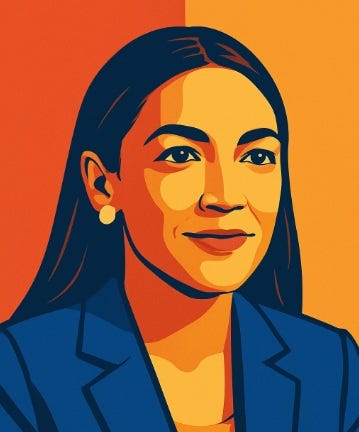
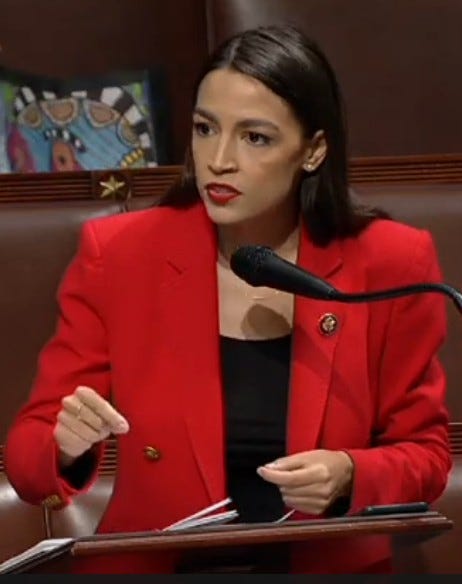
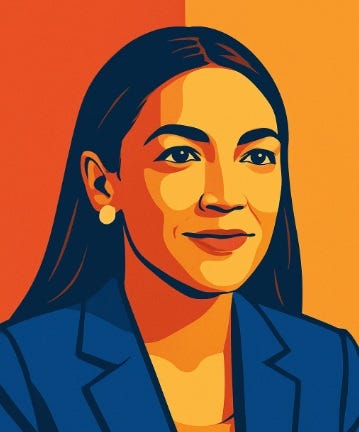
Who will defend Alexandria Ocasio-Cortez by running to her left in a potential presidential primary in 2028. Sound ridiculous? Running a candidate to the left of Bernie was probably the only thing that progressives could have done to secure Bernie’s nomination in 2020 over Biden — as I urged over six years ago, thinking it might well be necessary, as it turned out to be. You need allies who can both best position you and coalesce with you when the inevitable gang of right-wing Democrats team up to suffocate you.
Ocasio-Cortez might be strong enough that she will not need to be positioned anywhere but on the edge to win — like Trump but on the populist left edge rather than right. Bernie Sanders might have been strong enough to win standing alone on the left edge if Elizabeth Warren had not fractured the left vote by drifting solitary to nowhere, divisive and aloof, when all the right-wing Democrats conjoined at Obama’s bidding to overwhelm Sanders. It seems highly unlikely that Warren or a Warren-equivalent would dare not align with Ocasio-Cortez in 2028 — for a variety of reasons, not least that the bogus identity politics smears systematically launched at Bernie and progressive populism would not fool people if thrown at AOC.
In the meantime, much as with Bernie, Ocasio-Cortez continues to be willfully underrated, misunderstood, and mendaciously attacked — by the plutocrat establishment and also by some of the so-called left. The rich establishment pretends that AOC is a Socialist Devil and fears that she is too powerful, while some on the left cry that she does not act with enough power and socialist principle. All the while and so far, her progressive populist principles steer her through, as best she can.
A few points:
AOC has not failed in many of the ways that some on the left think she has.
That said, there is one brief moment in particular that she should explain — a non-credible statement about Kamala Harris.
Regardless, AOC is the clear popular leader of progressive populists, and powerfully assisted in this by Bernie Sanders.
AOC is the pre-eminent candidate for the 2028 American presidency.
Her potential presidential campaign should prove to be far more powerful than even Bernie Sanders’ campaigns.
Nevertheless, someone — or some real force — should run to her left.
Can you imagine it? A serious and savvy candidate running to AOC’s left in the Democratic primary? I’ve tried to create the equivalent — in the big story form of the novel. That’s a lot of what Most Revolutionary attempts — popular left power and consciousness writ large — to build the reality and scope of progressive consciousness — to shift the spectrum of consciousness and action to the populist and socialist left — both to and through progressive populism.
Who or what will run to AOC’s left? This point may be the most missed and misunderstood reality in American politics. The vast fraud and violence of official American society is well known to any who wish to know, and to even those who do not, but the need for a bigger and better popular left consciousness that goes beyond both Social Democrat and Democratic Socialist in America seems to remain completely out of consideration in everyday realms. For no good or necessary reason. Too many people are far too brainwashed and politically brain dead in this regard — a condition of mental rot and dead wood that allows for endless personal and social and ecological disease and fires, which by now consume planet Earth itself.
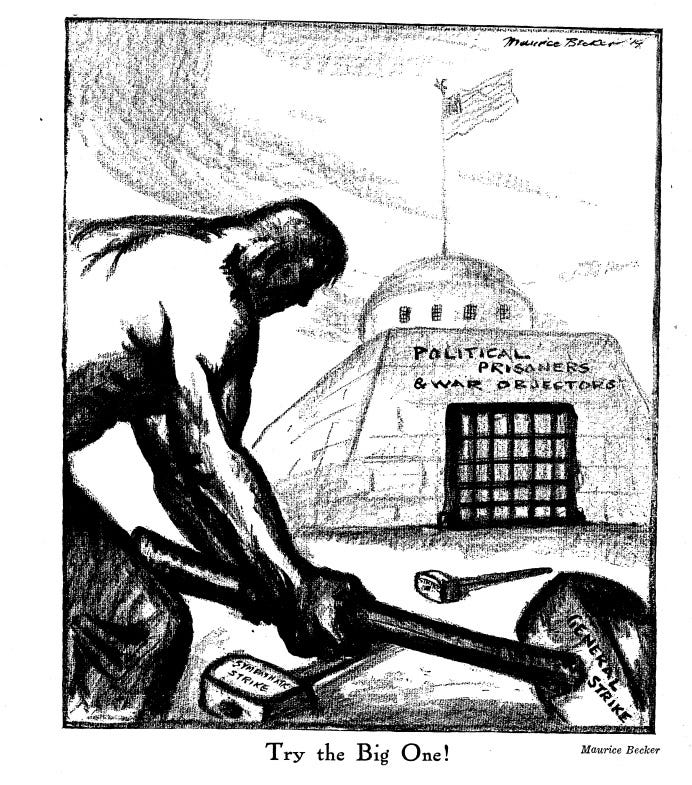
A popular and strong “far” left candidate, a true socialist — or something socialist — a general strike or a takeover of a notable space with radical demands — someone or something needs to better threaten the predatory and mercenary capitalist establishment with a demand for outright socialism — in part to make progressive populists appear to be exactly what they are — modest and reasonable mainstream figures of the day, absolutely nothing extreme. Let the true socialists bear most of the plutarchy’s demonization this time, or the anarchists or other revolutionaries, the better to help progressive populists and progressive populism gain evermore widespread support and power for the people, and to better advance by being put in more real perspective, by the left. It can only be done by the left, as with so many things.
People want some sort of revolutionary change anyway, even if many are wildly confused about what that can be and should be or how best to get there. So the potential for popular farther left candidates and actions and realities exists. The widespread consciousness remains missing, so create it. Beginning ten years ago, the campaigns of Bernie Sanders basically supersized Occupy Wall Street five years after the fact. I don’t recall that anyone envisioned that particular phenomena in advance. Surely now it’s time for a more advanced Occupy — even more advanced nationwide actions before each campaign season to pair with actual socialist candidates who then vie for power in the Democratic primary campaigns, and who subsequently bolster the progressive populist who has the best chance to win.
I wonder how many votes someone like Nina Turner would get if she ran for President in 2028 to the left of Alexandria Ocasio-Cortez promising to issue an executive order mandating universal health care nationwide on Day One. More than a few I think.
Meanwhile, AOC should probably keep on being AOC.
To defend her efforts generally from left criticism is not done out of some sort of kindness — as I touched on in Notes recently, slightly modified and expanded here:
Things are not always clear. But what should be obvious by now is that establishment politicians are professional liars — Joe Biden, Con Don Trump, and the many other politicians funded by the plutarchy. They are paid to lie in the interest of big finance, against the interests of everyone else. They lie to the people and otherwise act in bad faith or they believe their own fake news so that they are not technically lying. They are falsifying and demonizing and are completely wrong but not lying if they believe it. AOC is none of that. It seems clear that she makes decisions based on principle — sometimes strategically, in which case it might look compromised. The same is typically true of Bernie Sanders, the expanded “Squad,” and some other progressive populists.
The reality of consciousness can be confusing because rather than being outright liars, the politicians and officials of the plutocrat establishment may be deluded or mistaken, even basically brainwashed, so that they are not lying and acting in bad faith but have a bad, false, toxic, and pathological view of reality — often because they are bought, or otherwise duped into it. This is true all through society and needs to be exposed and clarified, in a way that cultural criticism and novels can make unusually clear, especially since novels are stories of consciousness (and lack thereof) acting in the world.
Many destructive actors know exactly what they are doing. As officials, they are a corrupt class — corrupting the people. The officials have resources and much of the population has access to resources, so there is increasingly no excuse to not know the error and terror of their ways. Only the sheer blunt force of propaganda and false consciousness can sustain the massive levels of toxicity and systemic violence that kill and immiserate so many.
Meanwhile, progressive populists like AOC act largely outside the deceit and brainwashing of the plutocracy because they are not funded by high finance but by the people, unlike the establishment politicians. Their real base and real commitments are different.
And yet there is a lot of criticism of progressive populists from some of the so-called left — some of it quite batshit criticism — much of it baseless, or arbitrary, though not all. This baseless criticism functions to obscure the stark qualitative difference between the socially conscious progressive populist politics of today and the future, and the high finance and corporate funded politics of the corrupt past and present.
Unlike the establishment Democrats who backed Biden to the end, Bernie and AOC (who also backed Biden’s re-election campaign to the end) gained concrete policy concessions from Biden for their continued support that would have benefitted the people, as they had done with Biden previously. Right or wrong, the view of Bernie and AOC was that there was no better candidate to throw against Trump, so they took the opportunity to move Biden to the left — as they had done years earlier. Kamala Harris then got the nomination and immediately began making moves to the right, and proved to be in no way electable. No one has every shown that Bernie and AOC were acting in bad faith in this, or against progressive principles, quite the opposite — though Bernie has been bad, on certain matters of war and international relations in particular, more than AOC has been terrible on anything that I’m aware of.
The train strike decision that AOC was involved in was a tough judgment call, right or wrong, no unprincipled capitulation. And in my view she made a mistake in not trying to force a vote on universal health care, or to leverage other concessions. But otherwise she did leverage concessions along with the other strong progressives. And these are principled and strategic judgment calls, rather than any attempt to appease rich donors like the unprincipled establishment politicians who are basically public profiteers for finance instead of public representatives for the people.
The one thing that AOC should answer for — because so evidently at odds with reality — is saying that Kamala Harris was doing all she could to stop the genocide of Palestinians. There was never any evidence for this in regard to Harris or Biden. Harris was not in position to make final decisions as Vice President, so this gave Harris so-called plausible deniability (or credibility), and she surely had incentive to lie to AOC and others. If Harris did lie directly or indirectly to AOC, or to anyone else, no one should have believed her — it was not credible then or now — and it’s hard to see how it could have been credible in AOC’s view. Plausibly believable or not, these were desperate electoral times, and things may have been genuinely confusing to AOC, or the moment simply could have been overwhelming.
So Ocasio-Cortez should explain that moment in time. She sounded desperate when she made the claim. It seems fairly easy to address: she can simply say that she believed something she should not have believed. Maybe she was desperate to believe it — many people in that position would be. All the Democrats were desperate at that point to beat Trump and get Harris elected, and AOC surely knew far more than her establishment colleagues how problematic, how outrageous, the issue was for many voters. So she probably felt a responsibility — you could psycho-analyze this to death. Regardless, it was convenient for AOC to believe, and to say, to try to help get Harris elected over Trump, which is obviously what she was trying to do. It was a mistake, and should be pointed out as such.
It was a human mistake, it appears. Or if it was a bad-faith political calculation — consider the vast context in which it was made and how weighty it actually is. Seriously, someone should do that analysis and compare it to every other politician. AOC’s place in the spectrum remains remarkable. We’re lucky to have her, as is said — she’s brave, smart, principled, effective. Not above criticism or flaw, as no one is.
AOC is not working to line the pockets of credit card companies and the munitions profiteers, and so on, which is what Biden and the politicians of the plutarchy in both parties do their whole careers, including Con Don Trump, the vile and pillaging infernal landlord of the world, as he intends to be. Talk about unprincipled, corrupt, and deceitful.
Meanwhile Biden and the establishment Democrats are a slightly more genteel and sometimes less destructive version of Trump and all the Republicans. If Big Energy and Big Tech, Wall Street and Blackwater, the notorious mercenary contractor, along with the Ku Klux Klan and Evangelicals were to form an official political party, it would be Trump and the Republican Party of today. Lose the Evangelicals and half the Ku Klux Klan and you’ve got the establishment Democrats of today. They facilitated the genocide of the Palestinians before the Republicans did. None of that forms the base of progressive populists, far from it.
Progressive populists compared to establishment politicians (plutocratic, pillaging, profiteering) are vastly different orders of political creatures. There’s such a huge difference between progressive populist politics and establishment politics no matter whether Democrat plutocrat or right-wing billionaire “populist.” By and large, Bernie and AOC and the “Squad” and the closely related other progressive populists are the future, if there is to be one. Nothing should be more clear than that, despite the wailing and the deceit of the establishment, and the mistakes of left critics. But this reality is far from having reached full and widespread consciousness.
Very much, though not all, of the criticism that Bernie and the expanded Squad receive from the left is not only missing the forest for the trees but sometimes too utterly mistaking the trees. It doesn’t help that the profiteering plutocratic algorithms help drive and exacerbate this kind of seemingly populist but actually anti-populist and often unwitting fake news. There’s precious little kindness involved in any of this. But if people are going to be kind to someone, it should not be to the pillaging profiteers and their ilk — not in their careerist official capacities. Beyond that, it’s a judgment call.
A lot of Americans, due to infinite propaganda to the contrary, have a hard time recognizing that they live in a white supremacist thug nation founded as a genocidal “Manifest Destiny” empire, and always have. It’s official policy, and law. If you don’t get that, you can’t see or think. You can however go blind and crazy and vote for genocidal operators like Trump and Biden.
It’s a matter of what you are conscious of. And not. Of what you know and tolerate. Of whether you’re flaming ignorant and heartless to the point of Evil — as in the US-Israeli bombing and starvation of Gaza, and the plutocrat obliteration of much other life at home and abroad. Or whether you resist all that and support what is much more humane.
Progressive populists are highly conscious of all this. They work to stop the horror and regenerate society, and it seems a miracle even now that we can count AOC and the great Rashida Tlaib and a still small but growing number of elected and genuinely populist representatives among us. Their views are popular for good reason, not for bad or fake reasons as with Trump and establishment Democrats.
Progressive populist views are popular despite all the blood-money and deceit and smears thrown against them from the right and from some of the left. And those views and understandings need to be deepened. The consciousness of at least half the country doesn’t even get the basics. They’ve had their consciousness purposefully warped and destroyed.
The novel and other forms of imaginative story, especially big imaginative story, can and do play huge and decisive roles in growing, sustaining, and determining both personal and public consciousness.
It’s a great fight against empire and a great fight for something more than the mind. It’s a fight for the heart and gut, for the mind and body — a fight that the plutocracy started and wages relentless against the people, trying to divide everyone, pitting everyone against everyone else at every turn — to misrepresent and defend their financial tyranny and bloody pillaging.
The plutarchy’s predatory attempts, their attacks that monetize the people against themselves and brainwash people likewise — to gut their consciousness — are often highly effective, crazy-making, and endlessly destructive. All in a day’s pillaging and profiteering in the Incorporated Estates of America! The great need of the people is to keep building not only a people’s government but a people’s culture and consciousness to resist the wholesale destruction — and to recreate the world.
Vital parts of building that culture, ultimately a revolutionary culture, can be found in the political and aesthetic worlds, and in the analytical and informational worlds — all of which are omnipresent.
The elite and political religious institutions know this well, as do the elite political rich — how else to protect their especially fragile realms? — the one make-believe and divisive, the other tyrannical and lethal. Thus the constant need to distort reality, which explains why the elites of religion and the elites of wealth are so politically obsessed — and so often tightly aligned — they need each other. The political religious and the political rich are by far the most fanatical of the fanatics, with their constant ideological and class wars, because they are the most fraudulent and therefore the most objectively vulnerable. Elite religion and wealth both use the diseased weapon of racism as supremacist sword — along with lethal bullets and deadly dollars, controlling technologies and brutal laws, pernicious art, fake information, and toxic ideas. The struggle to create countervailing progressive and revolutionary consciousness must battle all of this, not easy — as much art as science.
What culture and art, what politics, what understanding and scope of consciousness, what kind of people’s society can defend itself from the predations of finance, tyranny, supremacy, and deceit?
A libertarian socialist society. That is, real democracy — not the plutocrat bought-and-sold fakery of the day. A real democracy, like the one currently budding as progressive populist, hand-in-hand with much anti-fascist, anti-thug resistance, which might be better thought of by now as anti-plutocrat resistance, anti-plutarchy, the anti-plutarchs, or whatever the word is for rich thuggery. The banker-gangsters? The banksters? Banksterism. Oligarchy. Plutarchy.
Without financial tyranny, racism and many other forms of oppression lose their teeth, because much of racism and other oppressions both manifest as financial tyranny and are manifestations of it. That’s the fundamental point and origin of so many types of oppression — to get the money, to have the power to control consciousness and the world.
Too much of the oppressions and the origins of oppression remain disguised in our language, our stories, our consciousness from what they actually are — various forms of financial tyranny, or in the service of financial tyranny. It should be easy to see that capitalism is financial tyranny, but so is racism and sexism, and anti-intellectualism, fascism, and much of establishment religion, and the rejection of human rights and democracy, and all the worst forms of discrimination, along with the destruction of Earth. Some of the oppressions seem sheer madness and irrationality but can typically be traced back to an elite imposition of financial and resource supremacy.
How to be conscious of the way of the world given all the oppressive forces and propaganda working to destroy a full sense of reality and consciousness?
You need to fight destructive fire with defensive fire — you need to fight destructive conscious with defensive conscious.
Only a very active and strong consciousness that is aware of both liberations and oppressions can generate a vital culture and politics.
And what is the great human innovation that most powerfully represents, engenders, and foments consciousness? The novel — and other novelistic long story forms.
So what have progressives and revolutionaries done with the novel and the like? What do they do with it? Not nearly as much as need be.
My novel Most Revolutionary — plotted with a progressive/revolutionary figure as American President like Alexandria Ocasio-Cortez, but well to her left, and even stronger grassroots figures — is an attempt to help normalize progressive and revolutionary perspective, reality, and consciousness in the public. It’s an attempt to grow the badly needed guts, minds, and hearts that can enable and compel badly needed change. It’s an attempt to create a political force to the left of AOC and the other progressive populists.
Currently, Bernie and AOC and closely related progressive populists in America are barely as left as conventional European Social Democrats — in other words, barely left, not far enough to create full democracy, or to necessarily even save the country and the planet from much of its misery and massacres. This consciousness and its effects are too limited, even though every other widespread consciousness is worse.
So that’s what needs to be improved upon to help change culture, politics, society. Consciousness must be revolutionized in many ways, in some cases seemingly every way, no way around it.
There’s no reason not to be dissident and progressive and revolutionary in fiction and other art and media. And every reason to be so. Tamara Pearson’s great novel of the people against empire, The Eyes of the Earth, as reviewed in most detail at The Republic of Letters is a wonderful and bracing example. Among others. And Pearson is extraordinarily insightful about the value of fiction and the novel, in multiple forums.
Tamara Pearson’s recent second novel The Eyes of the Earth (Tehom – November 2024) is a landmark work of contemporary fiction — the Les Misérables of Mexico City, the hemisphere, and the globe.
Bernie and Alexandria Ocasio-Cortez and the expanded “Squad” are basically an order of magnitude better than what existed in Congress before. They remain a small minority, so that needs to grow, and they need to continue to move farther left, as half measures only go so far.
No one is always going to agree with the judgment calls of Alexandria Ocasio-Cortez or anyone else. The decisions are often confusing to make, and mistakes will be made. No escaping that. We can try to improve upon imaginatively in fiction and other art, in order to help advance reality. It can be done though it’s not necessarily easy to do there either. Mistakes will be made. It’s part science and part art — the cultivation of greater and more powerful and effective consciousness, perspective, decision-making.
The novel and imaginative story in general create their own real life, and something much more. Compelling and cohering story has a unique and potent impact on consciousness, society, and the world.
Ever greater AOC figures and ever greater progressive or revolutionary events — to the exponential degree — are needed to affect consciousness and culture, conditioning and conditions. Such figures and events — both real and imagined — affect so much. This is why the right trembles at AOC’s mere shadow. This is why Bernie was attacked and wildly distorted by the entire establishment, Democrat and Republican. Unfortunately there was not sufficiently great and widespread consciousness to repel such attacks. And the means of propagating and distributing such consciousness were insufficient, and are still far from maxed out.
Why are today’s progressive journals and newsletters not serializing social impact novels, as Uncle Tom’s Cabin was serialized to spectacular effect in the weekly abolitionist newspaper, The National Era?
Why let Hollywood go so unchallenged in bombarding our imaginative consciousness, along with corporate capitalist TV? Why not fight story with story?
When did we willfully and enthusiastically sign up for capitalist story in TV and the movies? Progressive and revolutionary production of culture remains largely a study of roadkill.
Uncle Tom’s Cabin was the unprecedented and foremost publishing phenomenon of the entire world, of its own century and beyond, with wide social and political impact.
The attempt at least should be made today to reproduce such great effect of culture and consciousness, of politics and revolution.
Uncle Tom’s Cabin could only be published in a weekly abolitionist newspaper, as no establishment publisher would touch it. The situation today remains very similar — amazingly enough.
A number of progressive online publications currently, probably dozens in America itself, have the platform needed to make the attempt — the attempts — to expand consciousness in this distinct and vital way. The vast majority of these activist platforms and initiatives were launched by individuals who themselves were launched by other institutions, organizations, and platforms with great resources. In this way, needed power may grow more needed power.
Such platforms could start to better grow and spread left consciousness by serializing the hard-hitting and highly conscious social intervention of a people’s novel that is The Eyes of the Earth, by international activist and reporter, Tamara Pearson (if all parties involved are willing).
Pearson notes what makes such story important at ZNet’s seminar “Resisting Empire And Injustice With Fiction And Stories,” in an intense talk on the value of imaginative story:
Our heads and our hearts need to understand what we are going through. And we need new symbols and narratives and words and heroes to counter those that are used by the destructive system of capitalism and empire, racism, sexism, deliberately manufactured poverty, climate destruction. We need the inspiration that fiction provides as it manages to imagine what we sometimes cannot when we’re inundated by consumerism, misinformation, violence, and stress, and exhaustion….
Crises and suffering and deliberate billionaire-made catastrophes can turn us inward. People are more prone to self-absorption in times of misery or hardship, but books, novels, and stories can take us and our imagination beyond all that, remind us of the big world that we are part of. Fiction develops imagination which strengthens our critical thought and the nurturing of possibilities. Stories can disturb the false harmonies of violent economies, rock with soft persistence the punctuated arc of rigged elitism and celebrated plunder.
The way a new and gentle world is born will be … through intricate construction and imagination … fiction has the unique power to crumble certainties of the apparent infallible nature of empire and invasions, where economic systems revolve around ridiculous and harmful levels of consumerism. It’s hard work to go beyond all that but fiction can. And we need to be in that state of mind to embrace the task of creating a better future…. Read bold fearless writing that stands up to the status quo and that the capitalist publishing industry overlooks. Read excluded people because they really get it, and their perspective is vital and their insights intelligent and real. Read coherency, writers that are down to their bones what they write. And strike, speak up, organize because that’s how you go on and where you get hope.
Tamara Pearson
Also see Most Revolutionary — an explicit progressive issue novel of revolutionary consciousness, in which I feature and dramatize grassroots activists modeled on real life water protectors and anti-fascists, as well as similarly modeled politicians and other government officials, including an AOC-figure to the left of AOC — dramatically featured as a revolutionary Acting President of America — the ultimate progressive populist counter to Trump and Republicans and to do-nothing establishment Democrats.
Sometimes to push the curve, you need to get ahead of it.
Progressives, no less, are too often too cautious and self-censoring, unfortunately. You don’t need to go exclusively to the establishment to find that.
The potential for the growth of consciousness via novelistic-type imaginative storytelling is immense. The establishment knows this and does all it can to choke it out — to immense and terrible effect.
For example, where is the flood of The Big Short like explicit anti-Empire takedowns of the pillaging and predatory economics, culture, and politics of the day?
And where are the explicit revolutionary stories that far surpass this level of critique and consciousness?
It’s as if both some theoretical and practical dead-end has been hit.
These novels and shows are as rare as explicit anti Iraq war novels, like my Homefront.
Where is the great anti genocide novel of the present day? Where are the great novels of contemporary political change that actually intervene in the moment and the day?
Where can such political and cultural powerhouses of consciousness be serialized to wide reach?
We know where not.
Typical culturally critical stories, novels, shows, and movies avoid taking the foremost issues of the day head-on, and consequently are as weak as they are indirect. Even the badly needed Don’t Look Up was indirect. It could have been much stronger. Progressive consciousness in art and in general is not as wide and as strong as it should be, as it needs to be.
It made great sense for Uncle Tom’s Cabin to be published in the The National Era weekly newspaper— not least given its 1847 Prospectus:
While due attention will be paid to Current Events, Congressional Proceedings, General Politics and Literature, the great aim of the paper will be a complete discussion of the Question of Slavery, and an exhibition of the Duties of the Citizen in relation to it; especially will it explain and advocate the leading Principles and Measures of the Liberty Party, seeking to do this, not in the spirit of the Party, but in the love of Truth—not for the triumph of Party, but for the establishment of Truth.
A “complete discussion” of the “Question of [Progress,] and an exhibition of the Duties of the Citizen in relation to it” — that’s Most Revolutionary. Also, The Eyes of the Earth. So why not widely distribute? Neither novel may be the next Uncle Tom’s Cabin in practical effect, but they may both be in the line needed to get to that point, via an individual work or a collective group.
If such works are launched from nationwide or worldwide platforms to foster and quicken wholesale, ever-advancing expressions of human consciousness, then that should unleash major new revolutionary phenomena and momentum into the world. The impact could be and should be global.
Just as it once was. Naomi Kanakia is well worth quoting at length on the global phenomena and impact of Uncle Tom’s Cabin:
Uncle Tom’s Cabin was certainly the most widely-read novel of the nineteenth century. It was a huge bestseller in America, to a degree unprecedented before or since, selling 350,000 copies within a few years of publication—whereas The Scarlet Letter perhaps sold around 10,000 and Moby-Dick under 2,000. Thirty years later, Huckleberry Finn would be considered a moderate success with around 50,000 copies sold. But Uncle Tom’s Cabin was also a bestseller in the UK, reportedly selling a million copies within a few years of publication. In serial form, Dickens would have maybe 50,000 subscribers for his books. Uncle Tom’s Cabin dwarfed even Dickens in popularity. The book was also the best-selling novel of the 19th-century in Germany, Italy, Spain, and Latin America, and in France was second only to Les Miserables.
…
Uncle Tom’s Cabin had an impact on people far in excess of the impact produced by most novels. And that’s an impact that you can feel even today! Reading Uncle Tom’s Cabin, you understand, on a deep level, that there is no goodness which is possible under slavery. That’s a result of Harriet Beecher Stowe’s art. She depicts a number of slave-owners who try to be good, but they fail, because this system itself is pernicious and dehumanizes people.
…
If we want to know about both the best and worst side of our country, we should read Uncle Tom’s Cabin. We are a country that practiced slavery and also a country that abhorred it.
…
The book is full of speeches, but no more so than Middlemarch or Pride and Prejudice. It also contains a few passages where the narrator breaks through in outraged passion, but War and Peace equally abounds in such intrusions. The book is a passionate book, brimming over with life.
…
[The author] has a moral authority that Dickens only occasionally achieved. […] ultimately what Dickens wanted was for the world to just be a little better, a little kinder to the unfortunate.
Stowe is animated by quite a different vision. She believes slavery is wrong. […] There is no goodness possible under slavery.
And she demonstrates this by showing what happens to goodness.
…
It’s such an awe-inspiring, powerful book, full of both artistry and moral fervor. There is no other novel like it in the English language: it is like the child of Dickens and Tolstoy, but it was written before Tolstoy’s great novels came out!
In fact, this book was an influence on Tolstoy (he said it was better than Shakespeare). Uncle Tom’s Cabin was an influence on every single person who published a book after 1852.
…
If you read a novel during the latter half of the 19th-century, odds are good that this novel was Uncle Tom’s Cabin. It was the book of the century! There are no other books that even compare! Its impact was so out-sized that there’s no template for even thinking about it. The book was too big for literature. It was the Napoleon of books.
…
Uncle Tom’s Cabin is not lesser or worse than other great 19th-century novels, if anything it’s better-structured than Huckleberry Finn, more heartfelt than Dickens, and more humane than Dostoevsky. And, yes, not incidentally, it’s the best-selling and most-influential novel published in the 19th-century, and its first London edition was quite literally subtitled “The Great American Novel.”
And this mega hit only saw the light of day thanks to a partisan, activist, weekly newspaper!
In book form, millions of copies were then sold worldwide, and it was translated into more than twenty languages.
America’s most nationally and globally great and impactful work of imagination, about a desperate time and a terrible institution, was a work of principled progressive consciousness, written by a progressive activist, and published in an activist newspaper. Imagine that. Imagine that buried literary history and destroyed consciousness. Imagine if things were different now in the publishing world, and long since — where we might be today already.
The novel was met with outrage in the South, banned in eight states, destroyed in the mail, burned publicly, sermonized against, denounced as propaganda and libel, and called criminal and insulting. Booksellers with the novel were threatened and boycotted. Laws were passed against owning and distributing the book. Many pro-slavery novels were written against it, while the novel energized and spread the abolitionist movement. It wakened and shifted public opinion, including internationally.
Surely it’s not difficult to think of how such novels or shows or movies and other imaginative works that directly and explicitly intervene in the present moment could be written and distributed similarly in this mercenary and terminal capitalist world. Neoliberal? Today’s age of slavery, I mean capitalism, might better be called an age of neo-slavery and old-time genocide. Biblical even — as the biblical involvement is similar to the age of slavery in which Uncle Tom’s Cabin was outsold in books only by The Bible.
Eric Meisfjord notes that eight years after the serialization of Uncle Tom’s Cabin:
During the 1860 presidential election campaign, Lincoln’s party bought and distributed another 100,000 copies as a way to gather abolitionist support for his run. It was Abraham Lincoln, now president of a nation fighting against itself in the Civil War, who met Stowe and allegedly told her, “Is this the little woman who made this great war?” It was also Lincoln who observed, very aptly, “He” (or, in this case, she) “who molds public sentiment is greater than he who makes statutes.”
Harriet Beech-Stowe wrote the novel in 1852, prompted in part by the passage of the 1850 Fugitive Slave Act which made habeas corpus irrelevant and forced northern officials to enforce slavery by arresting escaped slaves — refugees — and criminalized any northern (or southern) person who assisted those fleeing slavery with heavy fines and prison sentences.
The book sold even more copies in Great Britain than in the United States. This had an immeasurable appeal in swaying British public opinion. Many members of the British Parliament relished the idea of a divided United States. Ten years after the publication of Uncle Tom’s Cabin, the British people made it difficult for its government to support the Confederacy, even though there were strong economic ties to the South.
Where is the great lacerating novel of Con Don Trump and every last one of his destructive tyrants and sycophants, of JD Vance and the whole fraudulent and exploitative right-wing “populist” circus and cesspool?
Any ambitious novelist who wants to explore straight white male masculinity, identity, and related themes would be crazy not to start there — in any part of that — and could probably continue forever without end — or until revolution. JD Vance might have been a nice little boy, once upon a time, but he became a first-class lethal jackass. He can apologize later, I guess. Tell that story and how it implicates the public and damns the plutocracy and blows apart nice little boys and girls in Palestine. All the while gutting America. And the rest of the world. What kind of monsters are we, that we vote for the Bidens and the Trumps? What kind of monstrous consciousness must we carry in our heads, hearts, and guts?
No Gods anywhere will help us. We help us. No God yet proclaimed actually exists — as far as anyone can know. What kind of consciousness pretends — lies — otherwise? The consciousness of a bunch of crazy and conniving men, mainly, and then women. In religion we see the power and impact, good and bad, of the make-believe. No one should lie about it and call it real. Call it a story, which is was it is — an imaginative experience of potentially great power.
Otherwise you trap people in deceit and false consciousness, as you train them to accept the wholly irrational, making them prey to the next nutty liar who comes along and is thus able to justify anything irrationally — fraud and exploitation, violence and misery, genocide. The Bible is one of the most genocidal books in the canon. Anyone know when this was first pointed out and why? What great consciousness is that? Talk about a need to repent.
The left needs to be ever more open, honest, and upfront about the world we live in. If those on the left won’t do it, no one will. And we need to go far beyond the elevation of consciousness offered in Uncle Tom’s Cabin, by now. If that isn’t obvious, nothing is, as critic Edmund Wilson noted in 1940:
The experience of mankind on the earth is always changing as man develops and has to deal with new combinations of elements; and the writer who is to be anything more than an echo of his predecessors must always find expression for something which has never yet been expressed, must master a new set of phenomena which has never yet been mastered….
Leftists or novelists of any variety who are looking closely at expressive ways forward — the libs, the cons, you name it — they would do well to note Wilson’s 1931 insights also:
I believe therefore that the time is at hand when these writers, who have largely dominated the literary world of the decade 1920-30, though we shall continue to admire them as masters, will no longer serve us as guides. …the private imagination in isolation from the life of society seems to have been exploited and explored as far as for the present is possible. Who can imagine this sort of thing being carried further than Valéry and Proust have done? And who hereafter will be content to inhabit a corner, though fitted out with some choice things of one’s own, in the shuttered house of one of these writers—where we find ourselves, also, becoming conscious of a lack of ventilation?
The reaction against nineteenth-century naturalism which Symbolism originally represented has probably now run its full course, and the oscillation which for at least three centuries has been taking place between the poles of objectivity and subjectivity may return toward objectivity again: we may live to see Valéry, Eliot and Proust displaced and treated with as much intolerance as those writers—Wells, France and Shaw—whom they have themselves displaced. Yet as surely as Ibsen and Flaubert brought to their Naturalistic plays and novels the sensibility and language of Romanticism, the writers of a new reaction in the direction of the study of man in his relation to his neighbor and to society will profit by the new intelligence and technique of Symbolism. Or—what would be preferable and is perhaps more likely—this oscillation may finally cease. Our conceptions of objective and subjective have unquestionably been based on false dualisms; our materialisms and idealisms alike have been derived from mistaken conceptions of what the researches of science implied—Classicism and Romanticism, Naturalism and Symbolism are, in reality, therefore false alternatives. …our ideas about the “logic” of language are likely to be very superficial. The relation of words to what they convey—that is, to the processes behind them and the processes to which they give rise in those who listen to or read them—is still a very mysterious one. We tend to assume that being convinced of things is something quite different from having them suggested to us; but the suggestive language of the Symbolist poet is really performing the same sort of function as the reasonable language of the realistic novelist or even the severe technical languages of science.
“Being convinced of things” is complex and multi-faceted and we had better employ all powerful resources at hand to meet the ever-intensifying gravity of the crises we face, as indicated not least by the Doomsday Clock.
There’s more than one great novel to be written about the lethal cesspools of the day. No slight thing. Uncle Tom’s Cabin was the first and in many ways the greatest Great American Novel, even if the first-time novelist, Harriet Beecher-Stowe, sketched some of the opening chapters awkwardly, as Kanakia notes. Not that it mattered at the time.
In any case, Beecher-Stowe was a highly skilled and very talented writer, having previously published fiction, essays, and articles for nearly two decades in literary magazines and religious journals, including a published book of short fiction — fertile literary productivity. Somewhat similarly, there are very capable author-activists writing in literary-activist veins today — their work largely de-platformed, and not only by the establishment. Culturally and institutionally blocked.
So much could be said — especially since the left’s use of story, literature, and culture remains incredibly weak both for reasons that are forced upon it and for reasons that are unintentionally self-inflicted, mistaken, and negligent. Not a total bust but very badly hobbled. The progressive and revolutionary left should be deeply engaged in far more than scathing critiques of capitalist art and story. And the left should be able to achieve far more than the production of polite, indirect, or handwringing works that are little more than modified laments akin to establishment art.
Time to bump up our consciousness — in our own way, based on our explicit principles and direct actions in story and by story. The novel and the news both need be vitally new. Each in their own way, at their best, build new consciousness and new life, new awareness and new relations to the particulars of the world that we live in, and the world that we might and must create.
More than eight decades ago, writer and critic Mary McCarthy noted that key elements of the novel form are made up of facts and news:
The distinctive mark of the novel [as compared to other forms of fiction] is its concern with the actual world, the world of fact, of the verifiable, of figures, even, and statistics … a deep love of fact, of the empiric element in experience. I am not interested in making a formal definition of the novel…but in finding its quidditas or whatness, the essence or binder that distinguishes it from other species of prose fiction: the tale, the fable, the romance. The staple ingredient present in all novels in various mixtures and proportions but always in fairly heavy dosage is fact.
McCarthy traces the early history of the novel, ‘the birthmarks’:
The word novel goes back to the word “new,” and in the plural it used to mean news — the news of the day or year…. Many of the great novelists were newspaper reporters or journalists [and “students” of criminals and prisons] “confirmed prison-visitors”…Defoe…Dickens…Dostoevsky…and Victor Hugo …Tolstoy…. Coming to the twentieth century, you meet the American novelist as newspaperman: Dreiser, Sinclair Lewis, Hemingway, O’Hara, Faulkner himself…. Novels carried the news — of crime, high society, politics, industry, finance, and low life…. The epic, I might put in here, is the form of all literary forms closest to the novel; it has the “boiler plate” [“durable informative matter”], the lists and catalogues, the circumstantiality, the concern with numbers and dimensions. The epic geography, like that of the novel, can be mapped, in both the physical and social sense….
The fact-based essence of novel consciousness — or of any novelistic long story — can create great awareness, impetus, and new possibilities of profound and compelling scope that McCarthy herself, though talented, never seemed to approach at much magnitude — as is true of the vast majority of novels, the much vaunted liberal novel not least.
Not that these novels are unaccomplished, but they are typically very limited, frequently distorted, and often focused on small or private consciousness rather than on large public consciousness. Let alone the partisan. How dare they! It wouldn’t do! Can’t offend the plutarchy and the plutocrat capitalist mindset that controls culture and consciousness! How dare the novel strive for Uncle Tom’s Cabin size impact and effect. How dare the authors go there. And of course they don’t. The publishing industry won’t allow it and denigrates those who write freely anyway or attempt to.
Victor Francis Calverton — born George Goetz, a Johns Hopkins grad and author of The Liberation of American Literature and 17 other books, plus editor of a Black American literature anthology, and founder and editor of the Modern Quarterly for 17 years until his early death in 1940 — he was an independent left literary figure who has been marginalized out of existence. He noted that
the revolutionary critic does not believe that we can have art without craftsmanship; what he does believe is that, granted the craftsmanship, our aim should be to make art serve man as a thing of action and not man serve art as a thing of escape.
…
Literary rebels believe in revolt in literature; left-wing … writers believe in revolt in life. … [They] are opposed to the society in which we live and aim to devote their literature to its transformation. [They] are more interested in social revolt rather than in literary revolt. As a group they are convinced that present-day industrial society is based upon exploitation and injustice; that it creates distress and misery for the many and brings happiness only to the few; that its dedication to the ideal of profit instead of use is destructive of everything fine and inspiring in life….
[Such] writers believe that their literature can serve a greater purpose only when it contributes, first, toward the destruction of present-day society, and, second, toward the creation of a new society which will embody … a social, instead of an individualistic ideal. Unlike Ibsen, they do not ask questions and then refuse to answer them. Unlike the iconoclasts, they are not content to tear down the idols and stop there. Their aim is to answer questions as well as ask them, and to provide a new order to replace an old one. Their attitude, therefore, is a positive instead of a negative one.
More precisely, replacement of the destructive with the constructive should happen all at once, ideally. And oftentimes the constructive new must be build up alongside the destructive old before any greater change is possible.
Regardless, there needs to be an outlet for great society-rocking consciousness in some paper somewhere, some platform, by now, online. Even merely one such outlet would be a start — that’s how bad the situation currently is. I think we can fairly say that this situation too is appalling, as the missed opportunities seem monumental. If ever a time needed a flood of heightened novelistic consciousness — revolutionary consciousness — the time is now. The left artists are practiced, skilled, and mature.
There is no single overarching problematic institution today that is destroying the world and blocking change if not financial tyranny — militarized capitalism — which is its own form of fascism. So many things need to change all at once for so many people. Big actions to transform society to progressive and revolutionary ends can achieve this. That’s the consciousness that needs to be explored, grown, and spread today.
Even if “consciousness” were the wholly private matter that the individualistic tradition in philosophy supposes it to be, it would still be true that consciousness is of objects, not of itself.
That’s America’s great progressive philosopher John Dewey exactly a century ago. You need to know what you’re doing. You need to look outward at the facts to know your own self and the larger public both. Artists need to be conscious of the public and private facts that make up the personal to expand and advance consciousness and to make a public impact, not only a private one.
The novel and similar long story forms — like movies and especially so-called “prestige” TV series — create powerful and motivating consciousness — by way of facts and information imagined in ways that connect the often confusing and distorted dots of reality into sweeping and very particular portraits that are distinct and unmatched in other forms of communication, expression, and knowledge. These human-loaded renderings of consciousness of what is and what might be and what must be change us and the way we are willing to move through the world.
There is the world, and then there is consciousness, which is of the world, including of other people — of realities and possibilities — and consciousness goes wanting when the world and its possibilities are falsified and ignored or not imagined in ways that are vital. Consciousness goes wanting in so many ways. And the failure to fully feed and grow our consciousness as it constantly remakes itself and the world, in endless loops, to the good or the bad depending on what we create, is our failure of imagination. Our genocidal failure, our ecocidal failure, our failure of militarized financial tyranny.
Stories can help learning and growth and vision by expanding, modeling, and maximizing consciousness, and by integrating into our beings and our institutions the most essential elements of the world and the people in it. A greater more potent consciousness, and the energy and will that this consciousness generates, effects itself in action and changes the world.
When great consciousness is not both felt and understood to be left and liberatory, popular and progressive, then debased consciousness can be imposed by the fraudulent and slick stories of the right that glorify and disguise tyranny, abuse, destruction.
Best that the stories, that the consciousness of especially those in a powerful nation — in position to do great good or the most terrible damage — be to the left and liberatory, rather than otherwise.
We can be ever more fully human or we can be monsters. Much of that — maybe all of it — depends on the qualities of our consciousness in relation to the facts, rather than simply on the facts alone. Broken consciousness benefits from the modeling of more whole and healthy consciousness, in addition to and including getting to know the facts and the world. We move and act as conscious beings not as mere arrays of data and reactive impulses.
The left may have the facts and the real news of the world and its powerful narratives about those facts and the news, but has the left created sweeping great consciousness that better spreads and activates those narratives about those facts? To what limited and often slipping extent we can see.
Does the left dominate the novel of our time, of consciousness? And if not, why not? If the left wants to be the great movement of our time — a novel movement — as must be if the planet and its peoples are to be saved — then the left needs to become more fully conscious itself, and of itself in the world.
It needs to become more popular, and spread that consciousness and appeal — based on a knowledge and assessment of the facts but also on something much more, something greater, more whole, something driven and irresistible: powerful and revolutionary forms of human consciousness that energize, transform, and forever re-order the world.
Where are today’s Uncle Tom’s Cabins, with their seismic and liberatory effects and culminations? Where are the novels that necessarily surpass this — given the times. Needed now as never before. If the constant production of truly left TV series and movies are beyond the resources of the left, the same cannot be said for the large scale serialization of left novels and similar long stories on progressive platforms. And yet — a vacuum. There is a vacuum of revolutionary consciousness — a void of more primal and full power. There is a great lack of epic consciousness. Utterly driven out by mighty plutocratic forces.
Meanwhile the right is nothing if not epic in both its wrongs and its sense of power. You need to fight epic power with epic power. Epic consciousness with epic consciousness.
“Just the facts, Ma’am” has its place, for good reason, but has become a much mocked line for good reason too. It’s a parody of the police state — blinkered and blind, ears-plugged, tone-deaf, ineffectual, and severely mistaken. It’s a trap the left sets for itself at its own peril — no matter if the facts and news presented are horrific and chaotic, or heartening and sensible.
Left reporters’ and analysts’ frequently brave and taxing work is absolutely indispensable and irreplaceable, but left energy and action needs to go beyond being a citizen cop on the beat, a watchdog with a bite, a reporter and commentator with a gift for pertinent detail. The left needs to rewrite the whole story of the Era all at once — by elevating consciousness into the stratosphere, to a commanding point where everyone at last might see and be seen, feel and be felt, for what the Hell they are actually doing and not doing to each other and to the world.
Principled, big, and powerful imaginative stories that intervene in the present day with progressive and revolutionary consciousness, with facts and feeling cohered in ways otherwise unrecognized and unavailable — these stories proceed from the principle that “Criticism, like charity, starts at home,” per Wole Soyinka. Moving, reasonable, justified criticism should be brought to bear upon home — whether that be America or the left, or America and the left — with charity as due or where it can be mustered. We are responsible for our own actions first and foremost. And we must find ways to be epically responsible in these catastrophic, potentially terminal, and tectonic times.
A lot of leftists — let alone liberals — have and have always had a limited, often quaint and genteel, essentially liberal understanding of the novel, a profound misperception, drawn from nefarious roots in the establishment and mistaken roots in the left. There is far from an entirely proud history of thought in the so-called left on this, literary and artistic thought that remains skewed, especially by philosophers and cultural critics but also by artists. The result is unknowingly retrograde, yielding often merely liberal would-be left art and production. And a lack of left art in general.
If the establishment does not have the guts or integrity to publish the most vital and challenging creations, critiques, and elevations of consciousness from the left — which it does not — then writers of conscience and consciousness need to go another way. To the popular left online news platforms, it would seem — the modern day National Eras.
We need to replace the plutarchy, its oppressive norms and ways and consciousness.
Could be that someone needs to get Alexandria Ocasio-Cortez and her co-progressive populists a phalanx of militant epic ghostwriters in the novel and other long story forms — the better to try something more and new to grow and spread consciousness to whole new levels of being and movement.
The most robust and powerful consciousness — certainly the most detailed and expansive — may be found and created in the novel and in similar kinds of big imaginative story. This is a great human innovation — one that we should not waste.
It’s far past time to feed and grow and reproduce progressive and revolutionary consciousness wholesale — in and against this big bad world. We need to rewrite consciousness in full and spread it far and wide to better recreate the universe, as we can and as we must will.
It must be done on the left where it can be done the most explicitly and the most directly. Now as in times past but newly so. The biggest and most essential, the most needed and most impactful stories of human consciousness can be made only from the left, and must be distributed from there — from the popular left especially.
Edward de Vere, Earl of Oxford, wrote the works of “William Shakespeare.”
The businessman William Shakspere, to whom the plays are attributed to this day by conventional scholarship and by the literary and publishing establishments, was not even literate, or minimally so at best.
Artificial Intelligence (AI) platforms like ChatGPT and DeepSeek both fail the Shakespeare identity question test, pointing to Shakspere as author upon basic query, in accord with the current ideology and publications of the vast majority of the establishment. However if you push AI to be more precise (both ChatGPT and DeepSeek that I tested on this question), it can deliver answers that far more accord with reality — giving a close edge to Edward de Vere as author, and then an overwhelmingly conclusive edge — in a manner that gives the game away that is played by establishment scholarship and publishing. I detail the AI problem, via its searches and conclusions farther below.
In the vast majority of establishment scholarship, the works of “William Shakespeare,” pre-eminent writer in the English language, are attributed to William Shakspere a businessman who apparently invested in theater. And yet, by all evidence, Shakspere’s parents were illiterate as were both of his daughters, and Shakspere himself was either illiterate or minimally literate. He signed his own name with apparent difficulty and by multiple spellings — and never once as “William Shakespeare.” A true Wizard of words Shakspere must have been to produce the great works from the depths of illiteracy. Shakspere never claimed to write the works of “Shakespeare” nor did anyone claim that he did, during his lifetime. He was a convenient frontman, as explained by attorney Alex McNeil in by far the best brief video overview of the identity question of which I’m aware.
By now, conventional scholarship and publishing and the tourism industry, and so on, has no problem committing apparent fraud to fake the reality. Nor do the establishment and vested interests lack the power or the financial incentive to do so — given the multibillion dollar tourism industry, academic and publishing careers, reputations, and potential liabilities and punishments related to incompetence, deceit, and fraud. As such, focus on the Shakespeare identity question can move quickly to questions of power and control, propaganda and brainwashing, empire and resistance, deceit and dissent.
In reality and in the conclusions of a large body of dissident scholarship, derided by the institutional field and the literary and publishing establishments, the works of “William Shakespeare” were written by Edward de Vere, Earl of Oxford, widely praised patron of literature and theater, a highly educated renaissance man of the power elite (the aristocracy), a figure of preeminent literacy, acknowledged to be unrivaled among imaginative writers of his milieu. The evidence is in his life, and in the words of his contemporaries, and in his plays and sonnets which are profoundly autobiographical of his life, both broadly and in fine detail, including his travels to and from Italy and his circumstances there. Not to mention, de Vere was fluent in multiple languages by the time he was a young teen, when he was living with his uncle Arthur Golding who was supposedly translating Ovid’s Metamorphoses — though Robert Prechter and other scholars have concluded that de Vere himself actually did the translation, using Golding as allonym, as with John Warner, Thomas Nashe, Robert Greene, and other allonyms and pseudonyms used by de Vere. Allusions to Ovid appear often in the works of “Shakespeare.” Similarly, many marked passages in de Vere’s personal Bible correspond closely to central themes, images, and phrasing in the literary works.
And so, given these few basic realities — let alone given how well and deeply studied the issue is by the dissident scholars — it’s not as if the identity of the pen name “Shakespeare” should be an iffy question, or ever truly was, until — until what?
This is where “Orwell’s Problem” and its solutions come into play. “Orwell’s Problem” as coined by Noam Chomsky — How is it that people gain “beliefs that are firmly held and widely accepted although they are completely without foundation and often plainly at variance with the obvious facts about the world around us?” And how is it that oppressive ideological systems are able to “instill” clearly false beliefs in people?
Humans are liars.
And humans are truth tellers.
It can be hard not to lie to yourself and to others as often as not. Just as it can be hard to escape the truth about yourself or others as often or not. So which one prevails, at any given moment, or era? The lie or the truth? It can be a real battle, especially when powerful forces line up on both sides of the fight.
Often we see plutocracy line up behind the great lies, and the people line up behind their lived truths that are in direct opposition to the lies of the plutocrats. The scandalous lies against the basic truths — the plutocracy against the people, it’s a staple of history and our day and age. Similar battles are seen within the plutocracy and within the people. And in fact within individuals themselves — plural, everyone so plural.
What are the forces of power among the establishment and in imaginative story and expression that make it so difficult to tell the truth about the simple identity of the widely acknowledged preeminent imaginative writer in the language more than 400 years after his death? And counting. Will it be 500 years? Will it take a winning class action lawsuit alleging and proving fraud to clarify and confirm the reality? What can the Shakespeare identity question tell us about the story-filled struggles and other realities of our day?
Everything fits to show that Edward de Vere is the author of the works of “William Shakespeare.” And nothing fits to show that William Shakspere is the author. Yet the vast majority of scholarship and publishing to this day get it wrong in what appears by now to amount to academic and publishing fraud. And so it is that the Shakespeare identity controversy is a classic “Orwell’s Problem” — there should be no controversy, but there is.
Establishment scholarship and publishing flood the zone with shit — known as conventional biographical Shakespeare scholarship — to the point that it confuses AI.
I asked DeepSeek AI if Christopher Marlowe, Francis Bacon, Edward de Vere, or William Shakspere wrote the works of “William Shakespeare,” and it gave the following answer:
The simulation strongly supports the traditional attribution of Shakespeare’s works to William Shakspere of Stratford, with a high probability (85-90%). The stylistic and thematic differences make it highly unlikely that Christopher Marlowe, Francis Bacon, or Edward de Vere authored the Shakespearean canon. The evidence aligns with the historical consensus that William Shakspere of Stratford is the true author of the works attributed to “William Shakespeare.”
Why only 85-90% “high probability”? Shouldn’t the identity of the proclaimed preeminent imaginative writer in the language be known with essentially 100 percent certainty? Well, okay, maybe AI is extremely limited in its capabilities, or maybe Shakspere actually is the real author and there are lots of fraudulent dissident views that are themselves flooding the zone with shit.
So, I thought, AI, now prove it. Prove that there is a “85-90% high probability” that Shakspere not Edward de Vere wrote the works of “Shakespeare.” I asked DeepSeek the following:
Create a model and run a simulation to show whether or not Edward de Vere or William Shakspere is the author of the works of “William Shakespeare.”
After listing its model design, setup, data input, and simulation (included here at bottom), DeepSeek gave the following results and conclusion — a slight edge to Edward de Vere as the author of the works of “William Shakespeare”:
Results
Edward de Vere: 7.8
William Shakspere: 7.2
Conclusion
Based on this simplified model, Edward de Vere has a slightly higher likelihood of being the author of Shakespeare’s works. However, the difference is small, and the results depend heavily on the weights and scores assigned to each factor. This simulation highlights the complexity of the authorship debate and the need for further evidence and analysis.
Here AI moves from falsifying reality based on “conventional wisdom” to at least getting closer to the truth of the matter. But AI’s results, nearly a 50/50 chance of de Vere or Shakspere, show near total confusion. In head to head questioning involving Marlowe/Shakspere and Bacon/Shakspere, AI had no trouble dismissing Marlowe and Bacon. But it is baffled by Edward de Vere at a 50/50 chance. This is AI throwing up its plagiarist meta-hands.
So I thought, okay, AI, let me help you out — that is, test you again. So I asked DeepSeek to model and run a simulation that shows to what extent Edward de Vere and William Shakspere were “literate”:
Create a model and run a simulation to show whether or not William Shakspere was illiterate, minimally literate, moderately literate, or extremely literate.
After again listing its model designs, setups, data inputs, and simulations (also included at bottom), DeepSeek gave the following results and conclusions — clearcut, telling answers — that Shakspere was likely “minimally literate” while Edward de Vere was likely “extremely literate”:
Results
Total Score: 4.15
Based on the scoring system:
Minimally Literate (2.5 < Total score ≤ 5)
Conclusion
The simulation suggests that William Shakspere was most likely minimally literate. This aligns with the historical evidence of his basic education, inconsistent signatures, and lack of direct contemporary accounts describing him as a writer. However, the model does not account for the possibility that Shakspere could have improved his literacy over time or that some evidence may be missing or misinterpreted.
And for Edward de Vere:
Results
Total Score: 8.7
Based on the scoring system:
Extremely Literate (Total score > 7.5)
Conclusion
The simulation suggests that Edward de Vere was extremely literate. This aligns with the historical evidence of his elite education, surviving writings, contemporary recognition, and involvement in literary circles. His high level of literacy makes him a plausible candidate for authorship of the Shakespearean works, though the debate remains unresolved.
I asked AI to simply compare the two:
Comparison to William Shakspere
The answer:
William Shakspere: Minimally Literate (Total score: 4.15)
Edward de Vere: Extremely Literate (Total score: 8.7)
The stark contrast in their literacy levels, as estimated by this model, highlights one of the key arguments in the authorship debate. De Vere’s education and literary skill far surpass those of Shakspere, according to the available evidence.
AI can in this case be helped toward reality. That’s one way you might cut through all the shit of baseless ideology thrown at the fan of AI (in regard to the Shakespeare identity question) which is polluted with so much ideological crap that AI cannot find a way on its own to cut through it. Of course, given evidence, and reasoning, humans can do this simple and profound modeling and simulating — basic reasoning — in their heads.
AI aside, the fact of the matter is that the further one looks into things, the more research one does, the more it is evident that not only is there scant or no evidence that Shakspere was literate, much or at all, but that the little bit of evidence that does exist shows Shakspere to be more or less illiterate, or minimally literate at best.
The reality is that by all evidence and by all acknowledgement and understanding at the time and place, Edward de Vere was known to be from an accomplished literary family and commonly understood to be the leading and renowned literary figure in his milieu; whereas, all the actual evidence for Shakspere shows him to be barely capable of signing his own name, while hailing from illiterate parents and procreating illiterate offspring. Not to mention that the vast works of “William Shakespeare” are extensively autobiographical of Edward de Vere and his life, and that the writings known exclusively under the name of Edward de Vere are shown to be consistent in character and feature with the writings known exclusively under the name “William Shakespeare” — a known pen name, at the time. Edward de Vere’s nickname was “Spear-shaker.” He was a champion sportsman and his family crest was a lion shaking a spear.
Exactly no one questions that the great French writer Michel de Montaigne, writing like “Shakespeare” in the later half of the 1500s, is the author of his tremendous philosophic essays. These men lived and wrote at various pinnacles of well-recorded and well-preserved civilizations not so very long ago. These were not hermits living in caves isolated from society and scratching charcoal on rocks tens of thousands of years back. Whereas Michel de Montaigne was well respected by the top authorities and rewarded by power for his moderate political stands, Edward de Vere was known for his scandalous life and challenges to power — sometimes extreme, as he was at one point accused of treason, at a time when writers who merely criticized the Queen about questions of potential marriage could get their hands cut off. (See the unfortunate case of John Stubbs.) Edward de Vere was a privileged danger to authority — tolerated and well supported on the one hand and suppressed and severely disciplined on the other.
As noted, Edward de Vere was extremely highly regarded as a writer, while Shakspere was never referred to as a writer of any sort during either of their lifetimes. The ruse was fabricated after both de Vere and Shakspere were dead — to facilitate the contentious publication of the first anthology (or folio) of the works of “William Shakespeare.” The ruse was an effort to escape censorship and persecution while publishing the first anthology of the plays that were still too politically hot to handle given the continued power dynamics of the time. Even the nonsensical portrait of “Shakespeare” in the First Folio was absurdly faked — an open joke.
The comedic and flim-flam gestures to identity deception may not have been enough to satisfy the threatened powers, as the personal library of Ben Jonson, who wrote the dedicatory poem to the author in the First Folio and prepared the writings, was very soon destroyed by fire, not a coincidence, one might infer.
So how does the lie of Shakespeare’s identity perpetuate into and through academia? The ideal way to learn is to basically apprentice. So, to be a scholar, you go to graduate school and you apprentice to the professors and you learn the craft of your discipline and ideally you learn to think your own truthful thoughts. But what you actually find in academia — as in many other professions — is a lot of people developing their own penetrating thoughts, while a lot of others are more-or-less mimicking the views of others. Also you see that the bounds of thought can be very much constrained by various ideologies, which is sometimes overtly acknowledged and other times denied or rendered implicit. And you also see lines of academics who are professional liars — in service to money or power or ideology — very much like in many other professions.
Mimicry in some situations may be the easiest and sometimes necessary way to pass through school to become credentialed. And mimicry along with professional lying may also be well rewarded once credentialed.
It’s also not difficult at times to be completely or partially duped or blindsided by various constraints and ideologies. And here we get into the seemingly endless complexities of “Orwell’s Problem.”
The negative consequences of Orwell’s Problem range from the criminal to the laughable to the understandable. Sometimes falsehoods or types of oppression are buried so deep or seem so counterintuitive that it can be hard to see them. Ideally you learn, adjust, and move forward.
But when vested interests have every incentive to protect their domain, no matter how false or oppressive, and when they have enough power and control of resources to block progress, then you find elements of scholarly fields and contemporary thought that are either dead, or hopelessly fraudulent and destructive.
It might seem hilarious or resoundingly trivial that there actually exists a devoted and sweeping structure of belief and effort — and also apparent and profitable deceit — among conventional Shakespeare scholars and publishers and so on to enable the ruse of the identity of an imaginative writer dead for nearly four and a quarter centuries. And in many ways the situation is hilarious and trivial, but in other ways, it’s telling and scandalous and serious, contemptuous, and where not contemptuous, embarrassing or simply unfortunate. In the academy, this is the case of scholars duping other scholars, intentionally or otherwise. And then all that gets passed on to the public.
One of the greatest false takeaways of literary and publishing establishments, endlessly perpetuated, is that imaginative writing has little or no serious, concrete, real world political power, or if it does then it’s likely to be bad writing, not really literary. I explore these convenient hallucinations at length elsewhere so won’t elaborate here. But the case of the real identity of the author of the works of “William Shakespeare” provides a remarkable look at how deeply and consistently the forces of Empire fear the power of imaginative writing whenever such writing can manage to weigh in at particularly pivotal places or times or with crucial audiences — whether privileged or popular.
Against imaginative literature, Empire and its establishment, the most retrograde parts especially, fight the old fight — even in regard to the most acclaimed writer in the language. For centuries on — even when the original basis for the political blacklisting and censorship is long since forgotten and irrelevant. It’s a marvel.
Despite being ultimately bizarre and damaging in its limitations, “Was Shakespeare a Woman?” is a good interview — with a wildly misleading title — by journalist Chris Hedges of journalist Elizabeth Winkler on the utter absence of evidence for Shakspere as the author of the works of “Shakespeare.” That said, the interview’s failure to even acknowledge let alone explain the overwhelming plethora of evidence and understanding of Edward de Vere as the author of the works of “Shakespeare” leaves everyone blind and prey — as evident in the comments — to widely and deeply instilled false preconceptions and academic and publishing fraud about the Shakespeare identity question. To expose the lie of a fake reality while not explaining the actual reality is to leave people blind and floundering or wholly unconvinced. The way Winkler tiptoes around the word “fraud” is telling.
Create a model and run a simulation to show whether or not Edward de Vere or William Shakspere is the author of the works of “William Shakespeare.”
The question of whether Edward de Vere, the 17th Earl of Oxford, or William Shakspere of Stratford-upon-Avon is the true author of the works attributed to “William Shakespeare” is a long-standing debate in literary and historical circles. To address this, we can create a simplified model and run a simulation to explore the likelihood of each candidate being the author based on available evidence.
Model Design
We will use a probabilistic model to evaluate the likelihood of each candidate being the author. The model will consider the following factors:
Biographical Evidence: Does the candidate’s life align with the content and themes of Shakespeare’s works?
Education and Literary Skill: Did the candidate have the necessary education and literary skill to produce the works?
Historical Records: Are there historical records linking the candidate to the works?
Motivation and Opportunity: Did the candidate have the motivation and opportunity to write the works?
Contemporaneous Recognition: Was the candidate recognized as a writer during their lifetime?
Each factor will be assigned a weight based on its importance, and a score will be calculated for each candidate.
Simulation Setup
Factors and Weights:
Biographical Evidence: 30%
Education and Literary Skill: 25%
Historical Records: 20%
Motivation and Opportunity: 15%
Contemporaneous Recognition: 10%
Scoring:
Each factor is scored on a scale of 0 to 10, where 0 means no evidence and 10 means strong evidence.
Candidates:
Edward de Vere (Earl of Oxford)
William Shakspere (Stratford-upon-Avon)
Data Input
Edward de Vere:
Biographical Evidence: 9 (His life experiences align closely with themes in Shakespeare’s works.)
Education and Literary Skill: 10 (Highly educated, known to have written poetry and plays.)
Historical Records: 5 (Limited direct evidence linking him to Shakespeare’s works.)
Motivation and Opportunity: 8 (Had the means and reason to write anonymously.)
Contemporaneous Recognition: 4 (Not widely recognized as a playwright during his lifetime.)
William Shakspere:
Biographical Evidence: 6 (Limited evidence of his life experiences matching the works.)
Education and Literary Skill: 7 (Likely had basic education, but no direct evidence of advanced literary training.)
Historical Records: 9 (Strong evidence linking him to the publication and performance of the works.)
Motivation and Opportunity: 7 (Had the opportunity as an actor and theater shareholder.)
Contemporaneous Recognition: 8 (Recognized as a playwright during his lifetime.)
Simulation
Using the weights and scores, we calculate the total likelihood for each candidate.
Based on this simplified model, Edward de Vere has a slightly higher likelihood of being the author of Shakespeare’s works. However, the difference is small, and the results depend heavily on the weights and scores assigned to each factor. This simulation highlights the complexity of the authorship debate and the need for further evidence and analysis.
Limitations
The model relies on subjective scoring and weighting.
It does not account for all possible evidence or counterarguments.
The debate is inherently speculative, as definitive proof is lacking.
This simulation is a starting point for discussion rather than a definitive answer.
Create a model and run a simulation to show whether or not William Shakspere was illiterate, minimally literate, moderately literate, or extremely literate.
To determine the likely literacy level of William Shakspere (the man from Stratford-upon-Avon traditionally associated with the works of Shakespeare), we can create a probabilistic model based on historical evidence and scholarly interpretations. The model will categorize literacy into four levels:
Illiterate: Unable to read or write.
Minimally Literate: Basic ability to read and write, but limited to simple texts.
Moderately Literate: Capable of reading and writing with some fluency, but not at an advanced level.
Extremely Literate: Highly skilled in reading and writing, capable of producing complex literary works.
Model Design
We will evaluate Shakspere’s literacy based on the following factors:
Education: What level of education did Shakspere likely receive?
Surviving Signatures: Analysis of his surviving signatures for consistency and fluency.
Contemporary Accounts: References to his literacy or lack thereof in historical records.
Association with Literary Circles: Evidence of his involvement with writers, publishers, or theaters.
Literary Output: The complexity and volume of works attributed to him.
Each factor will be scored on a scale of 0 to 10, with higher scores indicating stronger evidence for higher literacy levels. The scores will then be weighted and combined to determine the most likely literacy category.
Simulation Setup
Factors and Weights:
Education: 25%
Surviving Signatures: 20%
Contemporary Accounts: 15%
Association with Literary Circles: 20%
Literary Output: 20%
Scoring:
Each factor is scored on a scale of 0 to 10, where 0 indicates no evidence and 10 indicates strong evidence for a specific literacy level.
Literacy Levels:
Illiterate: Total score ≤ 2.5
Minimally Literate: 2.5 < Total score ≤ 5
Moderately Literate: 5 < Total score ≤ 7.5
Extremely Literate: Total score > 7.5
Data Input
William Shakspere:
Education:
Likely attended the local grammar school in Stratford, where he would have learned basic Latin and English. However, there is no direct evidence of advanced education.
Score: 6 (moderate evidence for basic literacy).
Surviving Signatures:
Six signatures attributed to Shakspere survive, but they are inconsistent and show signs of being labored or awkward.
Score: 4 (weak evidence for advanced literacy).
Contemporary Accounts:
No contemporary accounts explicitly describe Shakspere as a writer or scholar. He was primarily known as an actor and theater shareholder.
Score: 3 (minimal evidence for literacy).
Association with Literary Circles:
Shakspere was associated with the theater world and likely interacted with writers and publishers, but there is no direct evidence of his participation in literary circles.
Score: 5 (moderate evidence for some literacy).
Literary Output:
The works attributed to Shakespeare demonstrate extreme literacy, but there is no direct evidence linking Shakspere to their creation.
Score: 2 (weak evidence for extreme literacy, as the authorship is disputed).
Simulation
Using the weights and scores, we calculate the total likelihood for Shakspere’s literacy level.
Total Score=(6×0.25)+(4×0.20)+(3×0.15)+(5×0.20)+(2×0.20)
Total Score=(6×0.25)+(4×0.20)+(3×0.15)+(5×0.20)+(2×0.20)
Total Score=1.5+0.8+0.45+1.0+0.4=4.15
Total Score=1.5+0.8+0.45+1.0+0.4=4.15
Results
Total Score: 4.15
Based on the scoring system:
Minimally Literate (2.5 < Total score ≤ 5)
Conclusion
The simulation suggests that William Shakspere was most likely minimally literate. This aligns with the historical evidence of his basic education, inconsistent signatures, and lack of direct contemporary accounts describing him as a writer. However, the model does not account for the possibility that Shakspere could have improved his literacy over time or that some evidence may be missing or misinterpreted.
Limitations
The model relies on subjective scoring and weighting.
It does not account for the possibility of lost or undiscovered evidence.
The authorship debate complicates the interpretation of the “Literary Output” factor.
This simulation provides a plausible estimate of Shakspere’s literacy level based on available evidence, but it is not definitive. Further research and analysis could refine the results.
Now do the same for Edward de Vere.
To evaluate the likely literacy level of Edward de Vere, the 17th Earl of Oxford, we will use the same model and scoring system as we did for William Shakspere. The four literacy levels are:
Illiterate: Unable to read or write.
Minimally Literate: Basic ability to read and write, but limited to simple texts.
Moderately Literate: Capable of reading and writing with some fluency, but not at an advanced level.
Extremely Literate: Highly skilled in reading and writing, capable of producing complex literary works.
Model Design
The same factors and weights will be used to assess de Vere’s literacy:
Education: 25%
Surviving Writings: 20% (replacing “Surviving Signatures” for de Vere, as we have more evidence of his writing).
Contemporary Accounts: 15%
Association with Literary Circles: 20%
Literary Output: 20%
Data Input
Edward de Vere:
Education:
De Vere received an elite education, studying under prominent scholars like Sir Thomas Smith and graduating from Cambridge University. He was fluent in Latin, French, and Italian, and was well-versed in classical literature.
Score: 10 (strong evidence for advanced literacy).
Surviving Writings:
De Vere’s surviving letters and poems demonstrate a high level of literary skill. His poetry, in particular, shows sophistication and fluency.
Score: 9 (strong evidence for advanced literacy).
Contemporary Accounts:
De Vere was recognized as a poet and patron of the arts during his lifetime. Contemporary accounts, including those by Gabriel Harvey and George Puttenham, praise his literary talents.
Score: 8 (strong evidence for literacy).
Association with Literary Circles:
De Vere was deeply involved in literary and theatrical circles. He was a patron of writers and actors, and his connections to the Elizabethan court and theater world are well-documented.
Score: 9 (strong evidence for advanced literacy).
Literary Output:
While no plays or major works are directly attributed to de Vere, his poetry and the stylistic similarities between his known writings and Shakespeare’s works have led some scholars to argue that he could have authored the Shakespeare canon.
Score: 7 (moderate evidence for extreme literacy, given the disputed authorship).
Simulation
Using the weights and scores, we calculate the total likelihood for de Vere’s literacy level.
Total Score=(10×0.25)+(9×0.20)+(8×0.15)+(9×0.20)+(7×0.20)
Total Score=(10×0.25)+(9×0.20)+(8×0.15)+(9×0.20)+(7×0.20)
Total Score=2.5+1.8+1.2+1.8+1.4=8.7
Total Score=2.5+1.8+1.2+1.8+1.4=8.7
Results
Total Score: 8.7
Based on the scoring system:
Extremely Literate (Total score > 7.5)
Conclusion
The simulation suggests that Edward de Vere was extremely literate. This aligns with the historical evidence of his elite education, surviving writings, contemporary recognition, and involvement in literary circles. His high level of literacy makes him a plausible candidate for authorship of the Shakespearean works, though the debate remains unresolved.
Comparison to William Shakspere
William Shakspere: Minimally Literate (Total score: 4.15)
Edward de Vere: Extremely Literate (Total score: 8.7)
The stark contrast in their literacy levels, as estimated by this model, highlights one of the key arguments in the authorship debate. De Vere’s education and literary skill far surpass those of Shakspere, according to the available evidence.
Limitations
The model relies on subjective scoring and weighting.
The authorship debate complicates the interpretation of the “Literary Output” factor for both candidates.
The simulation does not account for the possibility of lost or undiscovered evidence.
This simulation provides a plausible estimate of de Vere’s literacy level based on available evidence, but it is not definitive. Further research and analysis could refine the results.
The main features of establishment figures who refuse to acknowledge the actual identity of “Shakespeare” are not that of a cult. The main features are that of fraud and bad faith and the abuse of power by people in positions of authority, who are professional liars. Yes, there are those among the establishment who are simply duped by their colleagues and are otherwise bound-up by the plainly fraudulent ideology. But anyone who has seriously and freely looked at the question would be extremely unlikely to miss the reality by now. And long since. Due to the excellent dissident scholarship. Yes, there are some problems of blind belief, limited knowledge, and weak or simply mistaken reason, especially by casual observers. False propaganda works. But fraud, bad faith, and deceit are the real problems here. After all, essentially everything fits to show that Edward de Vere is the author of the works of “Shakespeare” — whereas essentially nothing fits to show that Shakspere is the the author. The only way the identity could be even remotely controversial by now is due to fraud, bad faith, and deceit, and the sustained exercise of disinformation and misinformation. The motivation for the academic, tourist, and publishing establishments to lie in all this is very lucrative.
Oh, shit — perhaps the finest word in the language, according to Victor Hugo — Tamara Pearson is going to take you where she has worked most of her adult life, into the streets of Latin America and where “the other half” live, in her second novel in a decade, The Eyes of the Earth (Tehom, November 2024). Pearson’s focus, her supra-Earthy hero, is La Tortuga, an old soul, homeless refugee from Honduras, who walks to Mexico in her eighth decade. The novel opens:
People could see Clementina Cardoza Olmedo, but they didn’t register that she was there. Known as La Tortuga, she was seventy-three years old, four foot ten, with two thin, white and grey plaits that descended calmly down her back. She was wearing dark grey pants with one leg folded up more than the other, and a white shirt. Her belt buckle was off-centre, and one of her draw-string backpack straps had scrunched up the top of one sleeve. She had no frills. She wasn’t a show.
She’s like the novel. La Tortuga cuts her feet to shreds walking from Honduras to Puebla, Mexico. She then travels by bus to nearby Mexico City looking for a decent place to sleep, to survive, to be free from abuse and misery and terror, and who knows if she might start a revolution, maybe kill for revolution in the killer systems of Empire. It’s complex. She’s complex — the novel is complex — La Tortuga is so very much of the human condition, all in one. She carries the essence of the novel in her character, her experiences, her travels, her things. Her goal — to find secure sleep — is the heart of the story — a bed, a room of her own. And where she might ultimately find that room and bed to sleep, so be it, so she must go.
La Tortuga’s bag dug into her shoulders, as she remained still. The drawstring backpack had kicked at her lower back like a child wanting to be put down as she had walked to Mexico. It was a freebie bag, black, with a Nike logo in the centre. In it was an empty plastic water bottle, a pillow cover, a multi-screwdriver, a pair of pliers, a toothbrush and toothpaste, a blue pen, a plastic comb, one spare pair of underpants, needle and thread, a half-used bar of soap in a plastic bag and a card wallet with Honduran ID, 125 Mexican pesos, and photos of her children and grandchildren. Nothing for hurting people.
Clementina Cardoza Olmedo, a skilled survivor, strong to her core, a fixer, not a breaker, would be the last person on earth to hurt people, though who could blame her — given the right catalyst — kicked about her whole life — her whole life kicked about — by those whom she might call to account, if she could, all four foot ten of her 73 years.
Each sentence-breath by which the story is told is more lively than elegant, more raw of intent than gleaming of end, though not infrequently transported and transporting.
La Tortuga got on with it. She took her broken feet up the stairs of Pino Suárez station and entered into the broken city. Or really, it fell over her. Flooded her with the force of twenty-three million people and all their chatter and chores. The full, almost-midday light shocked her, and she was instantly engulfed by the city’s traffic stress, high-pitched routine, metallic horn notes. Straight away, she took on the Mexico City face of worry and defensiveness, but with warmth just below the surface — saved for those moments when one was off the street and laughing with friends or family. She wanted to get to the Zócalo; the square-shaped heart of the city and focal point of protests and celebrations.
It’s not the most polished prose you will ever read — it’s La Tortuga-like. The prose births through its cracked shells new meaning into its raw world like fledglings scrambling out of the egg to where they might be killed at any moment or survive and thrive in the harsh and glorious wonder that is creation. Pearson centers the invisibles among us as the visibles in the novel. For the people and moments the Empire would disappear, distort, or deny, this is their book, their world, their time — the people of the South, so to speak, as contrasted with the people of the North, but also of the people of the South in the North. Meanwhile, Pearson fillets a young American tourist, Henry Devin, who demonstrates the massive brain fog of those conditioned by Empire in his problematic interactions with Clementina Cardoza Olemedo and the South.
La Tortuga worries and wanders her way through the endless city into a “Humanity Parade” in the Zócalo — the ancient Aztec ceremonial center full of brilliant floats of the annual parade and throngs of people enchanted by creaturely manifestations of their own essence, their alebrije. The magical realism of the novel both livens and deepens the weft, waft, warp of the story.
Almost every person had an alebrije, though few knew it. Alebrijes were the colours and shapes of each person’s unique soul; their struggles, ideas, hopes, learnings, intentions, creations, and mistakes. An alebrije was the changing body of a person’s inner magic.
A few people didn’t have alebrijes. They were the people who destroyed. They broke worlds. They had sold their humanity to the highest bidder, dismantling forests, undoing people, handing out fear in slick, affordable packages, stealing seeds, and shattering care systems and communities. They weren’t easy to spot though, except by their empty eyes.
They were the beasts that made up the System of Monsters.
The Monsters of plutocracy who spawn like never before.
And what is the alebrije essence of La Tortuga?:
…a butterfly-turtle. It was pebble size. Easy to lose and easy to step on.
Poor wondrous La Tortuga. As reader, if you want your heart broken and swelled beyond imagining, that’s what you get when your writer is an empath — Tamara Pearson in The Eyes of the Earth.
There are no chapters but many sections divided by a couple blank lines and a title for each. The first section is “Myopia.” The final section is “Sunlight.” In between is a kind of Les Misérables of Mexico City with all its characteristic flair and despair and expansive sense and sensibility.
By way of a wander up and out from the labyrinthine Mexico City bus station into the great and even more labyrinthine metropolis, The Eyes of the Earth introduces us to our hero, the people’s hero, to contemporary and historical Mexico City and Mexico, North America, Latin America, Native America, and the continent, or continents.
On with the battered trek of our hero’s feet — as readers, we live in the focus of her inquisitive mind and eyes and her can-do big heart — along with authorial insight and historical and sociological narrative and a few painful flashbacks to our hero’s Tegucigalpa, Honduras.
One could pull back at any moment and clinically assess the novel from the seemingly distant lands of literary traditions, trends, and fashion, also publishing opportunities and constraints, along with social and formalist perspectives, but that this novel is worth conveying more or less direct, via block quote, is its own form of revealing assessment. You want to talk magical realism, high Victorian manner, modernist and postmodernist flourishes, you can talk that and more – as it all leads to the literary populism of this novel. Or you can see the thing itself laid out here as a feast of pastiche, a banquet of the novel’s own words, where all are invited to eat everything, the whole table of goods, the entire overflowing appeal of and to the human condition, all genres and literary eras manifest direct to the senses.
This is a descriptive novel. And as a descriptive novel, what better in a review than to let it describe and thereby reveal itself? Contemporary fiction — imaginative writing or storytelling — in its most popular long forms now as feature movies and especially TV series are typically driven by story engines such as intensifying conflict, dramatic questions, deepest fears and desires, and stimulating paradox — and live in the two-eye nature of story as the hero pursues their goal while the author pursues their themes. These basic compelling story forces are typically run on paths of compelling causal (rather than episodic) plot — very Aristotelian, very powerful. It seems many literary authors do not know to employ these central storytelling techniques or do not especially care to do so. Fair enough — to each their own — though the popular powerful is eschewed at a cost.
On the other hand, especially in this age of the instantaneous story of handheld interactive computer, camera, and video screens, it may be that the academic institutions, the MFA creative writing programs and, curiously, even film studies programs would do well to imbibe more of the precise powerful craft tools from the writing mavens of the longstanding epicenter of professional storytelling — the place where the biggest bucks have been poured into figuring shit out — “Hollywood.” A little of that can go a long way, for both the better and the worse. A lot of storytelling knowledge can move every which way between native, classic, and the contemporary professional types of story creation.
Tamara Pearson deploys a little of everything to good effect, including more of the classic/contemporary techniques in The Eyes of The Earth than in her even more descriptive catalogue of a first novel, The Butterfly Prison. As La Tortuga holds fast to her story goal, Pearson latches on to her thematic goals of elevating the least among us while critiquing and eviscerating Empire.
In so going, The Eyes of the Earth remains a descriptive novel first and foremost, if much less so than The Butterfly Prison. It’s realism and romance and magical realism mixed with little dynamic dialogue, minimal story engine suspense or rush, and not much more than a skeleton but a strong skeleton of causal plot — not an unfamiliar literary type but unusually lively and profoundly rendered here. Description is the mode — of history, moments, things — of evaluations of the social and the sensory, of the imagination and the intellect, of emotions and flesh and blood rippling through life-and-death actions and events.
Plot and dialogue as expressive dynamos take a back seat in The Eyes of the Earth — just as the title might indicate. And yet the story, all stories, must move, and this one is always moving as if in the activity of a forest floor, the oft-invisible constituents breathing, gasping, thriving with the full breath of a keen and caring observer. The fascination of feeling and thought and the author’s empathy is with the floor of society, as against the Monsters of the high trees. And so the novel expresses itself in a bustling, if quiet, lively, if grave, light. This is a literary novel that is worth the care of considering for those who care about the plight of all people, plants, and beings especially where life is life-or-death. This is our day and our age, our times, from what is called the “below.” Foot level.
When a novel is so infused with the descriptive, it’s far more lively and insightful to simply share the thing itself, rather than to describe the description. Different titles are suited to different types of reviews. This novel is suited to extensive quotation, partly because of the style, explanatory and descriptive, but mainly because of the content which is dire and yearning and societally marginalized, distorted, or worse. Tamara Pearson writes novels from the revolutionary edge of civilization and from the trampled realms of the populace. So back to collage review, soon, after first a bit of lit history.
The Eyes of the Earth is a literary “secretion of civilization” against the ravages of that ostensible “civilization” — a combination and extraction of what might be considered a thread of liberatory lit, for example that runs through Victor Hugo’s The Last Day of a Condemned Man and Les Misérables, Leo Tolstoy’s Hadji Murad, Claude McKay’s Banjo, Leslie Marmon Silko’s Ceremony and “Yellow Woman,” Octavia Butler’s Parable of the Sower, Ngũgĩ wa Thiong’o’s Wizard of the Crow, and André Vltchek’s Aurora. The Eyes of the Earth also harkens to the deft novel of aspiration The End Of My Career by Tamara Pearson’s renowned countrywoman of origin, Stella “Miles” Franklin. The Eyes of the Earth is the most recent example of a type of liberatory tendency in imaginative story (and art in general) literary as well as popular — literary populism. This kind of imaginative writing, art, and criticism can be considered to have a liberatory socialist tendency. This tendency in literature is flexible — allowing more than a few especially “liberal” and “multicultural” writers to weigh into it in both obvious and non-obvious ways stretching explicitly back to the Enlightenment and from there forward and back to the beginnings of literary and artistic time.
And so on with the story. Very early in The Eyes of the Earth, Clementina Cardoza Olmedo, in her scramble to survive and to find a place to sleep, meets the camera lens of a startled young hostel-bunked American anglo tourist, Harry Devin, all 22 milquetoast years of him. He speaks to her through a translator app on his smartphone. At which point you begin to feel how things might go between the two, that is, to fall apart — things not remotely wholly put together in the first place.
Harry has good shoes, La Tortuga thinks of his “unusual” white hiking boots. Harry is a walker, a hiker, like her. He knows places to sleep, all the hostels. He has an app for that! The app, the hostels, Harry’s knowledge, it turns out to be entirely useless to La Tortuga, though she’s always willing to learn. She tries his way, briefly, but no place to sleep is accessible for a few pesos.
Fortunately, our hero has plenty of DIY skills hard-earned in Tegucigalpa. She can fix things to survive. So, American tourist Harry having failed her, for 58 of her 125 pesos she buys materials and makes a sign: “Can fix anything. 10-50 pesos.” If she can save up enough money, she can sleep in a bed. Clueless Harry pays her with a loaf of bread for a first item fix, instead of money, at which point Tortuga sets him straight.
In the evening and morning the walls and furnishings of Harry’s hostel talk to him and try to get him to hear and then listen to a people’s critique of his life philosophy:
“Your brand of freedom means being unrestrained by the impact of your actions. You happen to the world, but things happen to us,” murmured the walls. And Harry heard them this time, because he had wanted to. His first reaction was that it was not his problem. But that did not make him feel right. The holes in him yawned. Bile stewed in his throat.
And the walls shivered. The bed sheets writhed. And the bricks shrugged knowingly.
What kind of authorial, human sensibility is Pearson’s that centers the desperate plight and resourcefulness of an elderly woman refugee, and particular other migrants and refugees from the “South,” in contrast to the relative cluelessness of a young anglo from the “North,” and the “Monsters” of society who rule? It’s the empathic sentience of someone who knows intimately all the terrains and has lived for decades in multiple worlds, who works with a migrant shelter, and as an investigative journalist, and who has otherwise lived and worked on the floor with the people for many years.
Tamara Pearson wrote a novel against the Monsters and of the People, and if you want to learn something about the world and the human condition, the place to begin as well as the place for advanced studies is in a close and sun-dappled look at the forest floor as seen through the eyes of the people, the places and things in this realm of Earth, amid the rending actions and the cohering incoherent events, with the predators and the prey that are human and animal, ecological and emotional, intellectual and sensory, imaginative and real. Tamara Pearson and the novel she wrought from the extraordinary and basic materials and energies of our deadly and lively world help us become more fully human. This is the stuff, the promise, the potential, and the fact-of-the-matter quality of liberatory lit and literary populism for our all-too terminal times, and for all time.
Could this review end here? It could, not even having traversed much into the full story of the novel. But then you would get too little of the feast of love and too little of the scald of outrage that is The Eyes of the Earth. You would be cast out too quickly from the vital world. So the thing that is to be done is see Clementina Cardozo Olmedo further through to getting a bed, and thereby a chance to sleep, to revolutionize and renew herself for these days of our lives, of which this novel is far more revealing than a novel might seem it could be — far more contemporary and timeless than the vast majority of contemporary novels come close to — constrained as they are by the ideology of the owners of Empire, and the publishers and producers of the capitalist order.
What makes such story important, apart from the obvious? Tamara Pearson notes at ZNet’s seminar “Resisting Empire And Injustice With Fiction And Stories,” in an intense talk on the value of imaginative story:
Our heads and our hearts need to understand what we are going through. And we need new symbols and narratives and words and heroes to counter those that are used by the destructive system of capitalism and empire, racism, sexism, deliberately manufactured poverty, climate destruction. We need the inspiration that fiction provides as it manages to imagine what we sometimes cannot when we’re inundated by consumerism, misinformation, violence, and stress, and exhaustion….
Crises and suffering and deliberate billionaire-made catastrophes can turn us inward. People are more prone to self-absorption in times of misery or hardship, but books, novels, and stories can take us and our imagination beyond all that, remind us of the big world that we are part of. Fiction develops imagination which strengthens our critical thought and the nurturing of possibilities. Stories can disturb the false harmonies of violent economies, rock with soft persistence the punctuated arc of rigged elitism and celebrated plunder.
The way a new and gentle world is born will be … through intricate construction and imagination … fiction has the unique power to crumble certainties of the apparent infallible nature of empire and invasions, where economic systems revolve around ridiculous and harmful levels of consumerism. It’s hard work to go beyond all that but fiction can. And we need to be in that state of mind to embrace the task of creating a better future…. Read bold fearless writing that stands up to the status quo and that the capitalist publishing industry overlooks. Read excluded people because they really get it, and their perspective is vital and their insights intelligent and real. Read coherency, writers that are down to their bones what they write. And strike, speak up, organize because that’s how you go on and where you get hope.
Or go on and vote again for a new Con Don Trump or a Genocide Joe Biden rather than for popular progressives like Bernie Sanders and Alexandria Ocasio-Cortez who actually put human rights, including democracy, as their focus for the most part, at least far beyond the establishment figures whom they so often fight. This is their literature and their world, and ours, it should be. The other world is the world of the Monsters. And that’s the reality when you cut the crap and actually say something, as Tamara Pearson does in every form.
This tattered novel is a wealth. This is a searing literary novel that like any good novel will stop you and make you think — see and feel, unknow and know and liberate your mind, your heart. This is a wonderful great novel. Anyone who tries to judge this story as a realist novel is a fool. Anyone who doesn’t see the massive amount of realism in this novel is a fool. In a sane, fair, and honest world, Tamara Pearson would be nominated for and win the Nobel Prize in Literature on the basis of this single novel alone. Unfortunately we live in a world so preposterous that the great liberatory author Ngũgĩ wa Thiong’o has not yet won the Nobel.
Let’s say the most outrageous things about this novel that may actually be true. The greatest novel since Les Misérables. A serious contender at the least. On its own and singular merit deserves the Nobel Prize. The greatest novel likely not to be reviewed by legacy media. Or, if upon exceptional occurrence to be reviewed by it – probably badly. The novel captures, expresses, and reveals the contemporary world better than any other novel. It’s the Les Misérables of Mexico City. And Empire. And Earth. The ultimate novel of witness.
Where are the great literary critics of civilization now?
This oft descriptive, oft discursive, oft episodic novel is not going to jazz your dopamine receptors as reliably as the best of the Aristotelian causal-sequenced TV series do. The Eyes of the Earth has some of that for sure but does not constantly rely on it. The novel sometimes stumbles over its sentences and phrase constructions — micro convolutions happily offset by far more wondrous phrasings, imaginings, content, and colorful transformative bursts of expression and perception, insight and value.
Curiously, Tamara Pearson’s first two novels The Butterfly Prison and The Eyes of the Earth compare to one another in a way similar to that of her renowned countrywoman Stella “Miles” Franklin’s first two novels written more than a century prior: My Brilliant Career and The End of My Career. The first novels by both authors are all youthful bright passion and statement followed by second novels that are mature achievements and also statements. While Pearson’s second novel, published November 2024, follows her first by nearly a decade, Franklin’s second novel (1904), written shortly after her first (1900), was censored from publication, then lost during World War One, revised after three decades, then finally first published in 1946. Fortunately, Tamara Pearson’s elder La Tortuga, Clementina Cardoza Olmedo, proved to be much quicker to the world than Stella Franklin’s young Sybylla Penelope Melvyn.
Any more than a measurable trace of the literary establishment that might deign to take notice of Pearson’s second novel would likely be very wary of Pearson’s strong left politics. That said, given these explosive populist times, central elements of Pearson’s second novel are potentially ripe for the popular success that the novel more than well deserves. Is should be an A24 film, in some of the spirit of Sean Baker’s to-the-street movies, Tangerine and The Florida Project — if not his recent glam Oscar winning YA effort Anora. The Eyes of the Earth would be the best of the bunch. Also as TV series in the hands of a leftist director who knows Mexico and the South (and Empire) inside out. You would need to fund it and direct it as it reveals itself to be, as it deserves. The story also draws to some of the colors and popularity of Disney films, amazingly and ironically enough.
Tamara Pearson has lived the life, and her writing shows the effects of much of it. Some clunky jarring sentences and phrases combine with astoundingly spectacular ones. Acres of description. Seemingly 50 percent adjectives. Hyper empathy. A story that reveals the world. Every page is quotable of personal and societal existential meaning.
The land rapists had claws for hands, for their indelicate robbery. An excess of smugness oozed from their pores as pungent sweat, and they had two eyes that didn’t work, then a third eye on the tip of their tongue that did work, so that they could see what they devoured, but not the people and land around them.
The land rapists held special and secret video calls with the pain exploiters. They met in conference rooms of upscale museums and exchanged tips and ideas over tables with flower centrepieces and ornamental plates of sashimi and miniature tarts. They brainstormed ways to take away people essence and land essence. The land rapists refined ways to level jungles and mountains and leave behind landbones. They eliminated shade and eradicated refuge from the bare burning sun. They let the land sink into fever, nausea, vomiting, and a chronic migraine. The land choked and someone named the degenerative illness “climate change”.
Oh, yes, the “Monsters” are scourged, the “bloated blood suckers avoided taxes” — the “people squashers … skipped on safety standards” — the “wing pluckers openly committed indirect murder. They left razor wire in the Rio Bravo for migrants trying to cross to get caught in. People fleeing the fire of poverty knocked politely on the door to safety as flames followed them like persistent horror movie hitmen” — the “poisoner beasts” and the “bed stealers were giants dressed in impenetrable suits of armour, holding ceremonial swords” — the “rubbish ranters … advertising execs and media moguls wore plastic pink or titanium ties and the extra-firm gel in their sleek hair smelled of bubblegum. Their lips were made of gelatin candy and their teeth of caramel shards, and a malicious purple methane gas chuffed from their flapping mouths.”
Through this world, La Tortuga must fight for a bed to sleep in, safe from the predation of the pillagers who meet to plan their profiteering and horrors, to prey:
The time had come for the beasts of the System of Monsters to hold their exclusive meeting. The people squashers, wing pluckers, blood suckers, Ophicordyceps beasts, rubbish ranters, pain exploiters, and land rapists arrived at Davos in private jets. They were joined by the racketeer kings that ran the banks, the soul stealers who trafficked in humans, the producers of efficient death machines who induced wars in order to sell arms, and the slow poisoners who sold junk food and junk drinks. The fossil fuel and oil beasts were the second last ones to arrive. Their tyre bodies slushed about with petroleum, obscuring their suits, and noxious gases billowed from their mouths when they spoke.
La Tortuga presses on:
Heroism percolated slowly. It gained momentum over decades. In La Tortuga, with each act of integrity, each hard decision and moment of generosity, neuronal changes occurred within her, and she gradually metamorphosed into someone very strong and capable. But on the outside, her eyelids were thin and falling, her legs were swollen, and her bones were losing calcium and becoming more and more brittle.
Her every step, every decision, every action seems heroic — maybe because in no small way it is:
Her long life had taught her not to try to achieve everything at once. And that there was no pause to the problems. Expect them, solve the most urgent one, deal with the next. She had developed a stubbornness and perseverance that were part of surviving. She called it Grit Mode. Emotions off, focused ahead like the car that had passed, its headlights strong in the darkness. She summoned Grit Mode and her alebrije acknowledged the call and dulled its colours and perked up its ear-wings, flooding their pink veins with a strict radiance. It activated selective listening and sight, where only the most necessary things were observed, then fed off its tall shell of things understood. La Tortuga would mobilise her learnings from all the horrid experiences over the course of her life, in order to find a way out of the cold.
As it turns out Clementina Cardoza Olmedo is not going where she thinks she is but exactly where her will takes her, and where it might take us all if we had heart and sense more than a fraction as great as that of La Tortuga and Tamara Pearson in her novel world, too much our own, The Eyes of the Earth. This is no novel of mere grinding, vision-less complaint so hopeless that the establishment and the lapdogs of Empire and suit-and-tied potted plants can comfortably embrace. It’s a novel of condemnation and revolution and wonder as found and imagined in the brilliance and despair of our mind-bending and heart-rending day. And the world should know it.
It’s all populism now — the fake and right-wing populism of the Trumpists and the Republicans and the establishment Democrats, and the nearly victorious progressive populism of Bernie and the “Squad,” the chaotic populism of Luigi Mangione and Thomas Crooks — alleged assassin and attempted assassin of health insurance executive Brian Thompson and Con Don Trump. Socialist, anarchist, and revolutionary populists are rising as well. And so now we should expect and we have here in this novel in great progressive and revolutionary content and form literary populism, leading its age and its time when so much else is not. A concerted push currently could renew history and remake the world. The only limits are the bounds of consciousness, the conditions of society, and the unbounded nature of the imagination from where the human novel arises — to live and work, to play and fight, to seek and make a good home — and at night a good place to sleep.
We could all do worse than to read and write and live toward that — toward a better bed than the one humanity has now.
Tamara Pearson’s recent second novel The Eyes of the Earth (Tehom – November 2024) is a landmark work of contemporary fiction — the Les Misérables of Mexico City, the hemisphere, and the globe.
What Victor Hugo’s best biographer Graham Robb says of Les Misérables applies even more starkly to The Eyes of the Earth:
“The ‘dangerous’ aspect of Les Misérables is almost as evident today as it was in 1862. If a single idea can be extracted from the whole, it is that persistent criminals are a product of the criminal justice system, a human and therefore a monstrous creation; that the burden of guilt lies with society and that the rational reform of institutions should take precedence over the punishment of individuals.”
The protagonist of The Eyes of the Earth is no criminal — at least, not at first — merely a homeless refugee, yet she is treated in many ways as badly as, or worse than, a criminal — for merely existing.
Pearson, who has been working with a migrant shelter in Mexico City for nearly a decade, notes in Hollywood Progressive:
“The novel is magical realism — which for me is a very bold genre that ties the magical nature of humanity with the gritty realness of everyday life. But there is even another layer; that what the characters are going through is not something they face alone — there are whole social classes facing something similar. I hoped that the very short vignettes help add insight into the lives of migrants or the forces behind environmental destruction and empire’s looting, in a powerful and thought-provoking way.”
The Eyes of the Earth shows the travails and epic moments of an elderly homeless refugee from Honduras, who walks to Mexico in her eighth decade in search of a safe and secure bed in which to shelter. The novel opens:
“People could see Clementina Cardoza Olmedo, but they didn’t register that she was there. Known as La Tortuga, she was seventy-three years old, four foot ten, with two thin, white and grey plaits that descended calmly down her back. She was wearing dark grey pants with one leg folded up more than the other, and a white shirt. Her belt buckle was off-centre, and one of her draw-string backpack straps had scrunched up the top of one sleeve. She had no frills. She wasn’t a show.”
She is humanity, writ large. And this special novel illuminates her reality and the contemporary world as well as any work of the imagination possibly can:
“The time had come for the beasts of the System of Monsters to hold their exclusive meeting. The people squashers, wing pluckers, blood suckers, Ophicordyceps beasts, rubbish ranters, pain exploiters, and land rapists arrived at Davos in private jets. They were joined by the racketeer kings that ran the banks, the soul stealers who trafficked in humans, the producers of efficient death machines who induced wars in order to sell arms, and the slow poisoners who sold junk food and junk drinks. The fossil fuel and oil beasts were the second last ones to arrive. Their tyre bodies slushed about with petroleum, obscuring their suits, and noxious gases billowed from their mouths when they spoke.”
La Tortuga presses on:
“Heroism percolated slowly. It gained momentum over decades. In La Tortuga, with each act of integrity, each hard decision and moment of generosity, neuronal changes occurred within her, and she gradually metamorphosed into someone very strong and capable. But on the outside, her eyelids were thin and falling, her legs were swollen, and her bones were losing calcium and becoming more and more brittle.”
Our hero Clementina Cardoza Olmedo, our humanity, is more powerful than may appear and will not be stopped. La Tortuga embodies, the novel embodies, Tamara Pearson embodies a contemporary and eternal progressive and revolutionary populism of great power and determination — vibrant and brilliant. The novel is an inspiration and a model. It deserves a wide readership and reproduction in other forms that can help convey the story of our times and help motivate and show ways forward.
Q & A With Tamara Pearson About The Eyes of the Earth
TC: How long did you work on the novel?
TP: 7 years.
TC: What is your purpose and motive for writing the novel?
TP: I wanted to challenge ideas about the origins of poverty in the Global South and create potent, memorable new symbols for the trauma of imperialism and the crimes of capitalism — that help us see them in a new (or alternative) way. I wanted to humanise migration and counter sexism and ageism with a powerful, incredible old woman protagonist, and to de-normalise injustice, especially in the Global South (where the media narrative is that news here doesn’t matter and nor do we).
TC: What was the inspiration for this story — anything in particular?
TP: I was just massively inspired and moved by my surroundings, as well as by the migrants I got to know through my ongoing collaboration with a migrant shelter and the migrant rights movement.
TC: Form and style aside, do you consider yourself to be a particular kind of literary novelist? Anti-capitalist, anti-empire, socialist, or so on?
TP: Critical and hopeful. I only hesitate to use labels because people’s understanding of them differs. There’s also a deep-seated belief that nothing we do should be political or attempt to change things. But art is automatically political, because it is expressive. It justifies and celebrates the status quo, it puts the spotlight on people who are already privileged, or it expresses concern about something — minor or major. I definitely want to challenge the status quo, and my writing is very political, but also artful — I hope.
TC: How did you settle on the occupations of fixer for La Tortuga and busking magician for Harry?
TP: Oh gosh, I can’t remember, but La Tortuga is clearly a fixer as her job, but also metaphorically. Activists and those striving for a better world, are, at a deep level repairers — of injustice. But in a consumerist world, we also just need to repair a lot more, and buy less. Harry is a magician because his magic relies on buying gadgets, and so it contrasts with the more real magic that La Tortuga does, and helps us to question what magic is. As if the way a seed grows into a giant tree, isn’t magical?
TC: Any thoughts on similarities or differences between this novel and your first one?
TP: I just think I’ve learned a lot, improved and focused the plot and themes more, and the setting has shifted countries as I have.
TC: What feature or features of each of your two novels do you value most?
TP: I think, or hope that The Eyes of the Earth conveys Mexico with the intimacy I feel for it — both the troubles and the beauty. It’s very bold and harsh and real with what is messed up with the world, and I think that’s necessary. I think the climate crisis and inequality and so on are far too urgent for subtlety. But, there are nuances of humanity that deserve gentle treatment, and I hope that I do that too — looking at conditions like exhaustion and loneliness.
TC: Do you have touchstones or favorite novels, movies, or TV series?
TP: So many — I really love Ben Okri’s imagination, the writing skills of Arundhati Roy and Joukhadar, and the brevity and powerfulness of Eduardo Galeano. Okri’s The Last Gift of the Master Artists really flips how we have been taught to perceive Africa just prior to slavery and therefore, how much was lost to that.
TC: How has your life and work fed into and informed your novels?
TP: As an activist and journalist, I want to research things to death and get to the bottom of things. So I want to include a lot of context in my novels — the ‘why’ behind what the characters are going through. I’m aware that I have to be careful with that — with fiction you want to give readers space to arrive at conclusions on their own. Give them clues and let them decipher, show not tell and so on. Still, I really enjoy contrast — between main characters, between settings. And in life, I’ve been through some really traumatic things, and I hope that helps me convey characters with deep sensitivity.
TC: Your sense of the value and effects of imaginative lit?
TP: Literature is extremely important and extremely undervalued. We need lots of different types of writing and expression (news, investigative journalism, debate, podcast interviews etc), but literary fiction is unique in that it goes beyond the day-to-day experiences, to the most profound, long-term human experiences. We need the news on the latest Trump policy or the latest M23 advancement in the DRC, in order to understand the world now and to take action. But, literature is about the essence of what we are doing with life. It is our empathy for humanity or the Global South or workers etc, our understanding of colonialism, and it can be extremely hopeful. Because humanity — often lost, confused, apathetic, bombarded by social media, bored with retail consumerism — has within it the basic characteristics like creativity, care, awareness — that are the toolbox for change. Literature helps us remember that, see that. It brings us back to the most important things, while taking us on a story and journey to really see them. Literature can provide us with the broader perspective necessary for doing those more daily things.
Ten months ago, I posted the original draft of this piece on The Great Gatsby and the great American novel at a fraction the length as here (to half the current subscribers). This expanded post incorporates new information and analysis, plus material from several subsequent posts and notes on literature and politics.
The result is both a broader and a more detailed examination of literature and twentieth-century history and culture, especially the first half of last century. Much of this period can be understood as a socialist phase in American history, before it was stunted, rolled back, and buried in the Cold War era after World War II.
Despite being written by the prominent author F. Scott Fitzgerald, The Great Gatsby (1925) was not popular upon publication and was largely a forgotten, obscure novel by World War II. At that point it was selected by establishment figures to be an Armed Services Editions book for distribution to American soldiers. This massive government book distribution program brought The Great Gatsby back from the dead and circulated it widely, while purposefully excluding key diverse and “proletarian” novels — progressive populist novels in particular, left-wing and socialist.
Armed Services Editions (ASEs) were small paperback books of fiction and nonfiction that were distributed in the American military during World War II.From 1943 to 1947, some 122 million copies of more than 1,300 ASE titles were distributed to service members, with whom they were enormously popular. The ASEs were edited and printed by the Council on Books in Wartime (CBW), an American non-profit organization, in order to provide entertainment to soldiers serving overseas, while also educating them about political, historical, and military issues. The slogan of the CBW was: “Books are weapons in the war of ideas.”
Not only were many working class and progressive populist novels and novelists pointedly excluded from the Armed Services Editions but even the included books could be subject to censorship of any left-wing passages:
…the Army and Navy chief librarians, Trautman and DuBois, made sure that all books were acceptable to both services, and rejected works […] not in accord ‘with the spirit of American democracy'”. The publication of Louis Adamic’s Native’s Return as an ASE title caused controversy because the novel’s first edition had contained passages that were considered pro-Communist. Although these had been removed in later editions and the ASE version, Congressman George A. Dondero still protested against what he considered government distribution of “Communist propaganda”.
As an Armed Services Editions book, The Great Gatsby was used as a form of American state propaganda. Gatsby passed through the establishment ideological filters to function that way, unlike the many dynamic progressive populist novels and other left-wing books of the time. In 1945, 155,000 copies of Gatsby were printed and distributed to soldiers as a selection of ASEs. In the 1950s and 60s, with Fitzgerald lauded by liberal and conservative establishment literary critics, Cold Warriors, the novel began to be taught in the universities. It was then adopted by secondary education in the 1970s and continues to sell and be taught massively as of 2025 — “over 30 million copies” sold and “500,000 more each year,” according to the Library of Congress. Canonized, first by the military establishment, then by the Cold War liberal and conservative intelligentsia, and finally by the elite and state educational establishment. The Great Gatsby was hand-picked and vaunted by the plutocrat state apparatus and its ideological priests and state-capitalist priesthoods, while the diverse and tremendous progressive populist novels were largely denigrated or ignored by the establishment through great swaths of time.
The ideological controls are always in place in empire, to one great extent or another. And so it was that the diverse and working class socialist novels of the era such as those by left-wingers Claude McKay, Mike Gold, and Agnes Smedley — notably Home to Harlem (1928), Banjo (1929), Jews Without Money (1930), and Daughter of Earth (1928) — as well as working class and progressive populist novels by Theodore Dreiser, Frank Norris, and Sinclair Lewis — let alone socialist novels by Upton Sinclair and many others farther to the left — were purposefully excluded from the Armed Services Editions and were often disparaged and neglected by the liberal-conservative establishment in subsequent decades.
These class-conscious novels of the streets and countryside would have resounded profoundly with American working class soldiers from all regions and cities of the country — not least Agnes Smedley’s visceral life and social chronicle, Daughter of Earth, with its bone-breaking, bleeding poverty, and its vigorous class consciousness and biting drama, its heart-rending, strong and direct feminist expression and its radical moments, revealing in its universality and minute particulars the often hidden and inner lives of so many sisters, daughters, and mothers, girlfriends, wives, and female neighbors of the soldiers. And the inner workings of society itself, writ large and small.
Instead, the soldiers were given the genteel portrait of elite society, The Great Gatsby, rather than the mind-springing, heart-wrenching Daughter of Earth. Don’t let them ever encounter that book! No state-supported, intelligentsia-anointed readership could be allowed for the grubby and rebellious, equality and social justice-questing Daughter of Earth — much unlike the monied aspirational milieu of Gatsby. Nella Larsen’s somewhat socially progressive novelPassing (1929)was also excluded by ASE. Soldiers and police and people in general in American culture are conditioned by the state to be capitalist conservative of mind, or establishment liberal at best, the trad mentality, subservient to the reigning hierarchy of power and homegrown authoritarianism.
Agnes SmedleyNella Larsen
Fundamentally, the fight for the future is democracy and human rights pitted against plutocracy and bigotry, and it always has been. It’s left wing versus right wing, freedom versus tyranny, fought all along the political spectrum. And this is true in literature and art as well as in society. Meanwhile, plutocracy and bigotry wage their wars like never before. The real, true, and full great American novels — the consciousness and conditions that they might wholly depict, reveal, and dramatize — shudder to think — you won’t read much of it in establishment liberal and conservative novels, especially from a socialist vantage deeply class and empire conscious and contemporary — let alone depictions of a far greater future that can be both partly seen and wholly imagined in the present.
The ideological battle over culture and politics is fought as fiercely in literature as it is in politics and society in general. The vast majority of resources and opportunities are aligned and pitted against left-wing literature — what might be called the people’s literature, at its best, literary populism, literature for the masses — like Les Misérables perhaps most famously, at least among epic Victorian novels. Instead, the bulk of inequitable power is devoted to establishment literature that is acceptable to the plutocracy and to the forces that own, control, and shape society in the interests of concentrated capital, financial wealth. All at the expense of the broader well-being of ordinary people.
Nevertheless and therefore, abolitionist, socialist, and progressive populist culture has come far closer to creating great American novels than has the culture of the establishment. There’s a reason for that, one written in the liberations and constraints, possibilities and disinformation that may be found in experience and ideology, thought and understanding, in bias and prejudice that informs and imbues art to the good or the bad. In other words, ideology and lived experience shape artistic scope and depth, its inherent and potential qualities. A left-wing view sees all from the point of view of the oppressed. A right-wing view sees only what it wants to see from the point of view of a wide variety of bigoted and prejudicial tyrannies. Left and progressive populist details matter so very much to the well-being of humankind that they are persecuted like nothing and no one else — by the interests of plutocrat capital, profiteering and accumulating, so often violent, unprincipled, and deceitful — backed by all the mechanisms and full force of the capitalist state.
Think of what has happened in the past ten to twelve months. Trump’s kidnap, torture, and death squads now roam freely, heavily armed, mightily funded, vastly expanding state terror squads building concentration camps, death camps across the country, Trump’s private army, corporate-state powered and rampaging, a plutocrat army and terror organization. Meanwhile, near-trillionaire Ecrap Muck’s DOGE smash-and-stab partly gutted the federal government, with many deadly effects. The American funded, armed, and authorized Israeli-American genocide of Palestinians continues in Gaza and beyond. Iran was American bombed and is threatened again. Trump and the American military kidnapped the President of Venezuela and hold him and his wife hostage, while stealing Venezuelan oil and using it as a massive slush fund, and dictating to Venezuela at the point of loaded financial and literal guns. Cuba is being increasingly economically and socially strangled because it refuses to be controlled and ruled by American finance and corporate domination and exploitation. Additional American sanctions continue to destroy economies and peoples all over the world. Trump even threatens Europe with an American invasion and conquest of Greenland. Meanwhile Trump and the Republican Party are doing everything they can to block, suppress, and steal the vote in the upcoming election cycles. And even the still very partial release of the Epstein files shows the mind-boggling private depravity of the plutocrats and the great extent to which their plutocracy operates in surveilling secret, as a stealth government, beyond the reach of the law and the people — while also very openly and publicly pillaging rapaciously.
Great American novels, where are you now? The literary and popular publishing establishment, what are you doing? Bending the knee, per usual — plain to see. As part of the plutocracy. The left reads and writes society from below, centering the oppressed and the liberatory. The right reads and writes society from above, or falsely from below, reflecting the retrograde logic and illusions of power. A left perspective interprets social reality through the experiences of the marginalized, whereas a right perspective aligns its values with militant capitalist hierarchies and often bigoted systems and weapons of authority. No wonder then that the works of fiction with the greatest possibilities, and realizations, and experiences come from the left, and not from the plutocrats’ establishment of bigoted capitalism, let alone from ever more deranged points farther to the right, which are essentially cannibalistic and omnicidal. But oh so profitable — to a few!
In early 2025, The Great Gatsby was feted on its centennial anniversary at The Metropolitan Review by way of several thoughtful and laudatory reviews and the claim that “If there is a Great American Novel, it is The Great Gatsby” — a claim that one might view as both haplessly antique and wholly off-putting regarding a novel entirely acceptable to the anti-left wing propagandistic efforts of the American economic and military establishment.
Some days later, novelist and often deft literary critic and commentator Naomi Kanakia noted in a searching essay on literary “taste” that
if [literary taste] exists, then it is extremely noisy and error-prone when it’s applied to contemporary literature. Someone with ‘good’ taste is only right a very small percentage of the time when they say a contemporary work is truly great and is likely to last. And yet…this noisiness disappears when the ‘tasteful’ person applies their sensors to the great works of the past. For instance, during this Gatsby centenary, nobody posted a Gatsby takedown. Nobody said Gatsby is overrated. Why is that?
To which I jotted down in the comments, “The cringe factor, maybe?” and posted some of the additional commentary reproduced below — since expanded — as a “takedown,” if you like, of the idea of Gatsby as lead contender for “Great American Novel.”
The Great American Whitewash: The Great Gatsby and Imperial Culture
I think The Great Gatsby is wildly overrated. I also think that suggesting it as The Great American Novel amounts to the bankruptcy of American literature — as the great progressive literary critic Maxwell Geismar once noted of the novels of New York plutocrat scion Henry James. The Great Gatsby is an accomplished novel. There are a lot of accomplished novels. Gatsby has its merits, but there is something too dry and too precious about it, almost too symbolic, as if it’s lacking some especially real and fully imagined viscera. That said, these elements, these demerits and flaws are also, when viewed differently, some of its greatest qualities and strengths — if you can take the tenor and tone of the tale for what it is. The novel can read as both clinically off-putting and clinically involving in its kind of white-gloved psycho-social dissection of the privileged and the elite.
Fortunately, Fitzgerald and Gatsby could not help being apparently somewhat influenced by the class-conscious nature of the would-be socialist times. Unfortunately the novel hints at these notes among merely “prominent, well-to-do people” rather than among the populist society at large, as the novel is far, far more socialite than socialist. Almost a cliché of a novel of privilege. Working class, proletarian novel it is not, in the rising, the risen, populist sea at the time that swallowed up Gatsby and rendered it to the depths before being hauled back up by the establishment clerks of the plutocrat elite. The Great Gatsby reflects its era’s class awareness but focuses on the lives of the rich and aspirational, offering a kind of quaint refined social critique rather than the expansive, populist vision, punch, and appeal of the better and more vital socialist-era novels.
The canon has always been an intensely politicized creature, not only for those novels set closest to our own day and age but especially for those — as opposed to more historical fictions. So many works are distorted or neglected, for crushingly political reasons, especially by those literary critics (though far from only) who actually believe they are not making political judgments or discriminations. Claude McKay’s Banjo and Agnes Smedley’s Daughter of Earth are both more intellectually and philosophically ambitious, and more sweepingly political aware, and far more transnational than the aestheticized Gatsby which is localized and elite-focused. The Great Gatsby practically takes place in a closet compared to Banjo and Daughter of Earth. Also, there seems to be something inherently creepy or stilted, stagnant and stifled about Gatsby-like novels of the privileged classes. Possibly this is a reflection of revolutionary, socialist, or multicultural writing being suppressed and disparaged to ill and deforming, asphyxiating effects.
Tamara Pearson’s recent novel The Eyes of the Earth is a great contemporary novel of the Americas, an important work, progressive populist and revolutionary. Explicitly so. Anti-empire, local and global. It is essentially unknown. Why is that? The reasons are plutocratic and political. Would-be great American novels, especially as great socially conscious novels of the people, face immense barriers and challenges in bigoted plutocratic society. An old and ongoing story. 175 years ago, Uncle Tom’s Cabin needed to be published (serialized) in an activist/abolition journal and was an unexpected hit, with huge social and political impact, not least as the greatest-selling novel of the century, by far. No establishment publisher — with far more resources and other advantages — would touch it.
The situation is roughly similar today in many respects, maybe worse. The odds are long and the obstacles many for revolutionary writing. So why should skilled novelists who value being published and their work made visible attempt explicit great “American” and revolutionary novels of, say, today’s blood thirsty imperialism, of their own country, the death march rule of the plutocratic corporate-state and lethal society that is its handmaiden — sprung, in America, from a gruesome and ongoing history of Native genocide and race-based slavery and imprisonment — counterbalanced by a liberatory socialist expression and realization? Now, that could deservedly be a great American novel. You do it because it should be done. And because it’s the greatest possible way to proceed, though not the only great and impactful, revealing way.
The ideological and politicized publishing situation is not monolithic — the impact of the multicultural, the woke, has had its positive effect, despite real limitations particularly in regard to class, but the culture and society and the publishing situation remains extraordinarily highly politicized to the interests of empire all through the establishment, in terribly debilitating ways. Canon creation and thoughts and views of the canon are infected by plutocrat-debased control of society.
And so the canon — which has long been largely artificially and ideologically misshaped — is devastated in conception and inception, and in editing and publishing, let alone in potential and eventual appraisal.
The Great Gatsby skated right through all this, being written by an elite white author, about elite white interests and concerns, and then being eventually vaunted by the military-industrial establishment, and the elite liberal and conservative intellectual handmaidens to Empire and its institutions. So touching. So thoughtful. Containing very limited ruling elite criticisms and populist depictions. The capitalist empire wears The Great Gatsby like a nice dress. Fitzgerald did a mostly decent job of it, fashioning what he could, at very limited scope, a modern Edwardian genteel effort of literature, while the socialist era and its most revealing edges coursed around and past the author and the novel.
Amid Fitzgerald’s determined aesthetic touch, The Great Gatsby benefitted from the confluence of multiple literary eras, which show their marks — the genteel social realism and psychological symbolic modernism especially — plus perhaps a scant shadow of a more diverse “proletarian” socialism, though scarcely. The progressive populist era — literary and social and political — had in large ways rendered throwback novels like The Great Gatsby already decades behind the times. Which is likely why prominent critics such as H.L. Mencken and Edmund Wilson called Gatsby frivolous and slight when it first appeared. In a deeply embattled socialist age, longstanding, The Great Gatsby was no daughter of the hard and giving earth, no neighborhood working man without money, no lively home in Harlem, no transnational travel or experience. It was an all but passé tale of wealthy socialites and their affairs in a small corner of capitalism, a mild critique of an upper slice of society. But oh how it paid off, eventually, propagandistically as supposedly not propaganda, when pushed by the establishment as the quintessential great American novel. Never mind the indelible high-energy literary manifestations of the populist powerhouse novels that surpassed it.
Come on. Get off it. Get over it. Move on. One’s fist might shake at the literary and social elite and establishment enforcers. Agnes Smedley’s preternaturally robust underclass and underdog partisan protagonist, Marie Rogers, kicks F. Scott Fitzgerald’s wan narrator Nick Carraway and his clutching main focus Jay Gatsby all around the block of American life and times. McKay and Gold fuel and light the fire of life and society with their main characters, events, and stories too. McKay’s Jake, Ray, and Banjo — a military deserter, an immigrant, and a musician try to comprehend and live the good life amid tumultuous times. Gold’s Mikey, as with his mother Katie, negotiates and fights harsh conditions, before eventually committing to revolution.
Times continue to change. We live in an increasingly populist and revolutionary era, though conventional wisdom prefers to wish it away, or to not look too closely. People are sick of white-gloved and thin, glancing and indirect, or even lively but weak criticisms and views and dramatizations of the miserable and undeniably murderous state of society that the rise of people’s media makes increasingly visible and felt to all. Unfortunately, publishing makes big bucks by living in the skewed and subverted past, recycling old-line titles, and by merely fractionally challenging the deformed establishment mentality of the dominant forces that own and control and destroy the world and the people in it.
In America from the latter part of the 1800s to the middle of the 1900s the four most prominent left-wing magazines were probably Appeal to Reason, based in populist Kansas, and The Masses, The New Masses, and The Liberator based in New York City. These magazines provided reporting, culture, and social and commercial services for progressives trying to build a better world, live a better life — as did similar and related magazines like The Coming Nation and Emma Goldman’s Mother Earth — following in the mighty footsteps of the abolitionist The National Era and Frederick Douglass’s reconstruction age newspaper New National Era.
These activist and left-wing magazines published some of the greatest journalists and literary writers and visual artists of any time. Appeal to Reason published left-wingers Upton Sinclair, Jack London, Mary “Mother” Jones, Eugene Debs, and Helen Keller — socialists all, or socialist kin. Upton Sinclair’s impactful best-selling novel The Jungle was first published in the weekly newspaper as a serial, as just as a half century earlier Harriet Beecher-Stowe’s blockbuster novel Uncle Tom’s Cabin had been first published as a serial in the left-wing newsweekly The National Era.
The cultural and social impact of New Masses was also great, and The Masses and The Liberator published many great writers and artists as well, including Sherwood Anderson and
Maurice Becker, E.E. Cummings, John Dos Passos, Fred Ellis, Lydia Gibson, William Gropper, Ernest Hemingway, Helen Keller, J.J. Lankes, Boardman Robinson, Edmund Wilson, Wanda Gág, and Art Young. Each color cardstock cover of The Liberator was unique. Poetry and fiction fleshed out its pages, including work by Carl Sandburg, Claude McKay, Arturo Giovannitti, and others.
Eventually the US Post Office refused to mail copies of The Masses because of its opposition to US involvement in the imperial bloodbath of World War One. And so it was basically sued out of existence. See “A Brief History of The Masses” by Madeleine Baran in The Brooklyn Rail.
Courageous and brilliant anarchist Emma Goldman’s left-wing magazine Mother Earth was yet another vital left-wing journal of the socialist era in America, running from 1906 to 1917. Mother Earth was also forced out of existence by the Post Office and the Justice (Injustice) Department during World War One.
After being blocked and sued out of existence, The Masses was re-started under the name The Liberator (1918-1924) and was succeeded by New Masses (1926-1948).
Several of the greatest American novels written in the 1920s— Home to Harlem, Banjo, and Jews Without Money — were by the editors of the leading left-wing magazines of the day, The Liberator and The New Masses, both based in New York City, whose editors included Claude McKay and Mike Gold (Irwin Granich). Another of those greatest novels — Daughter of Earth — was written by Agnes Smedley who herself was deeply involved with a number of left-wing publications. And Australian-American Stella “Miles” Franklin’s progressive satiric novel — My Career Goes Bung — can be added to this list. Stella Franklin was also involved with many left causes and co-editor of a feminist left labor journal in Chicago. My Career Goes Bung was deemed too political to be published for 42 years, in 1946, after being written in 1902, a year after her successful novel debut in her early twenties, My Brilliant Career, and remains relatively unknown.
Claude McKayMike Gold (Itzhok Isaak “Irwin” Granich)F. Scott FitzgeraldAgnes SmedleyStella “Miles” Franklin
Progressive populist literature is often slighted, one way or another. The world’s best-selling novel of the 19th century, Uncle Tom’s Cabin, by Harriet Beecher-Stowe, needed to be first serialized in the progressive abolition newsletter The National Era, while the best-selling novel The Jungle was first serialized in Appeal to Reason, the progressive populist newspaper from Kansas. The newspaper funded Upton Sinclair the research for the novel, about $20,000 in today’s money.
Today you certainly won’t find engaged literature — any literature? — in, say, Jacobin magazine, or in most any left news periodical — wholly unlike in times past when left-leaning progressive journals helped form and expand and strengthen the consciousness and conscience of the times by first serializing (or excerpting pre-book-publication) bestselling progressive cultural blockbusters, progressive literary classics, and other illuminating novels like The Jungle, Uncle Tom’s Cabin, News From Nowhere, The Ragged-Trousered Philanthropists, Dred, Jews Without Money, Hard Times, Germinal, Mother, Herland…
All, or nearly all, of Sherwood Anderson’s short stories in his renowned and landmark collection Winesburg, Ohio (1919)were originally published in progressive journals prior to book publication: The Masses, The Little Review, and The Seven Arts.
The Masses and The Seven Arts along with anarchist Emma Goldman’s magazine Mother Earth were variously driven out of publication due to their stances opposing the imperialist World War I. Emma Goldman also wrote frequently for The Little Review which was nearly forced out of publication at the time of the obscenity trial against it for serializing James Joyce’s Ulysses.
Look at the ten populist novels, listed above, serialized in progressive journals — only one was published in journals post World War One — the proletarian populist Jews Without Money — and this was merely excerpted prior to book publication, not serialized, unlike the others.
And so it was that serialized left fiction took a huge hit post World War One. Subsequently the great left-wing magazines of the socialist era in America died out and were not adequately replaced in literary realms especially, or in any realm for a long while, up to and including today. Correlation? Causation? Hard to say but a great general loss in literature and culture, society and politics, absolutely. My Liberation Lit site is basically a one-person DIY successor to these progressive populist and socialist publications — by some literal incorporation of the era’s art and literature, and linked socio-political analysis, and continued extrapolation and new creation in lit. Serialized left lit should be revived today, as per Loop Day and Most Revolutionary, especially given the badly gutted contemporary publishing culture, the ever-AWOL establishment.
Vastly aiding the slavery abolition movement, Harriet Beecher-Stowe’s Uncle Tom’s Cabin (1852) in sales surpassed even the mighty progressive populist Les Misérables (1862) by Victor Hugo, though Les Misérables can still claim perhaps the largest publishing deal in novel history “(roughly $3.8 million in [2017] money) for an eight-year license.” Les Misérables may itself be the most overall influential novel in history, both ideologically and aesthetically — though the establishment denies it or remains willfully oblivious. Les Misérables was read by soldiers in and around the battlefields on both side of the American Civil War. Upton Sinclair’s socialist novel The Jungle (1906) was also a best-seller and helped pass progressive legislation. Mike Gold’s socialist novel Jews Without Money remains politically, culturally, and aesthetically influential to this day, and is in every way a greater novel than the liberal and Cold Warrior favorite novel The Great Gatsby. These three great American abolition and socialist novels were first published in progressive, partisan newspapers and cultural journals that exceeded the establishmentarian liberal-conservative ideology of the day. This was especially true of the latter two socialist novels created and published during America’s socialist era. Agnes Smedley’s Daughter of Earth, likewise. This era was rolled back by the “Cold War” that devastated much of the best of American art and literature, culture and society. The Cold War had severe mutilating and caustic effects, not least ideological, that continue to debilitate the present day.
At the time, Home to Harlem was a bestseller, award-winning, and more popular and widely discussed than The Great Gatsby. Banjo was more intellectually ambitious than Gatsby. Jews Without Money was more politically (and even aesthetically) influential, and Daughter of Earth mixed the progressive populist qualities of all the great left novels. Today these four diverse novels remain brilliant and visceral and compelling reads that are especially populist and literary. “Jews without Money was an immediate success, going through eleven reprints in the first year. It was translated into over a dozen languages. By 1950, it had been reprinted 25 times” — but then Cold War politics kicked in both during and after World War II to bury progressive populist fiction — critically and institutionally ignoring it and falsely portraying it as unaesthetic and unusually propagandistic. And in place of the actual greatest fiction of the times, The Great Gatsby was ironically politicized and elevated as quintessential American lit — the Cold Warriors’ Great American Novel. Like To Kill a Mockingbird, in formation and canonization, Gatsby became and remains a liberal-conservative, establishment darling and cultural fetish.
Meanwhile, the street-wise Home to Harlem, the exquisite populist Banjo, the pulsing proletarian, rough-and-tumble Jews Without Money, and the incisive and outraged, bootstrap-powered and partisan Daughter of Earth were smeared and devalued or ignored by establishment opinion. Cold War canon-making and McCarthy-Era Red Scare blacklisting hammered Hollywood, academia, journalism and publishing, government work and labor unions, immigrants and leftists of all kinds — akin to Trump’s woke-bashing, MAGA-marauding, state terror, purges, and bigoted tyranny today. This lasted for at least a decade, from the forties to the late fifties, but with extended and permanent effects — wholly revived today. The preference then as too often now, the ideological line, was for depoliticized modernism and establishment “realism” — deliberate political blows to progressive intellect and consciousness, crucial liberatory socialist conceptions of self and society, and human awareness in general. It would take the insurgence of Latin American literature and multicultural literature decades later in American culture to begin to make up some of the lost ground of diversity and human consciousness, class consciousness and vibrant life in general.
Not to glamorize it, but unlike F. Scott Fitzgerald, the socialist novelists Upton Sinclair, Mike Gold, Claude McKay, and Agnes Smedley were each arrested for political reasons — Smedley most severely. In 1918 she was imprisoned and charged under the Espionage Act. She came up from nothing, barefoot and deeply impoverished in rural Missouri — recounted and dramatized in staggering detail in Daughter of Earth — to oppose the murderous state full-on, with her powerhouse mind mostly, and her acts. Militant plutocrat society — what could be more propagandistic — it persecutes physically of course, flesh and blood, when ideological, artistic, and intellectual oppression prove insufficient.
In prison Smedley met two other radicals, Mollie Steimer and Kitty Marion. Steimer had been imprisoned for circulating leaflets in opposition to United States intervention in the Russian Civil War. Marion, who had just returned from England where she had been a leading member of the Women Social & Political Union, was serving a 30-day sentence for distributing pamphlets on birth control. She also became friends with Roger Baldwin who had been imprisoned for his public support of conscientious objectors in the First World War.
After being released from prison Smedley began writing for New York Call and the Birth Control Review, a journal run by Margaret Sanger. Smedley also published Cell Mates, a collection of stories inspired by women she met in prison.
Agnes Smedley
[In 1941] J. Edgar Hoover instructed FBI agents to investigate her political past.
In 1947, the House of Un-American Activities Committee (HUAC), chaired by J. Parnell Thomas, began investigating the Hollywood Motion Picture Industry. Smedley responded to these events by helping to form the Progressive Citizens of America. This civil rights group was committed to defending Hollywood writers, directors, and producers named communists or communist sympathizers by the HUAC committee. However, America was now entering the period of McCarthyism, and this was the first of many smear stories circulated about Smedley when she decided to move to England in November 1949… She died of acute circulatory failure there on May 6, 1950.
Going all the way back to Marx and Hegel, the left has often been profoundly ignorant (not unlike the right) on matters of literature and ideology and aesthetics. The Old Left from 1900 through the 1930s had a better conception of art than Marx and Hegel (for example, Kenneth Burke was a far more advanced thinker on art than Hegel and Marx) but it could have been far better still, and then the New Left of the Frankfurt school and so on severely warped politics and culture and was co-opted by much Cold War ideology, as Gabriel Rockhilldemonstrates most recently in great detail in The Intellectual World War.
The highly politicized canon-mangling by the establishment also greatly disfigures creation, production, and reviews of movies and TV shows — and the whole culture industry. The novel is very far from from being special in this regard or outside of these massive disfigurements, constraints, and wholesale eviscerations.
It’s time for novelists to put Gatsby back up high on its decorous shelf and seek out and gut out far more, a good bit closer to the ground, in this blood-soaked and potentially terminal novel day of our lives.
The novel, it’s an art. It takes some craft. And a lot more of value besides. Including more than is conventionally esteemed — or even readily understood or admitted in a historically supremacist and imperial country and culture. The multicultural and class expansion in literature of recent decades has created some good and powerful change in American lit, despite continual backsliding. As for further revolutionary expansion and change in lit, badly needed, or even more progressive populist change, there has not been nearly enough. To the point where the whole lit scene can discredit the enterprise of literacy itself, let alone advanced literacy. (Just ask “William Shakespeare.”)
The Great Gatsby is not the most lively, valuable, or even the most artistic American novel written within a few years of its male-dominated time, let alone of all time — especially not when compared variously to Claude McKay’s Banjo and Home to Harlem, Mike Gold’s Jews Without Money, and Agnes Smedley’s Daughter of Earth, among other standouts. Despite the establishment distortions and impediments, these remarkable socialist novels, or at least this kind of progressive populist writing, has been more influential, ultimately, than The Great Gatsby, at least in the healthiest ways in literature — aesthetically, politically, and culturally.
Gatsby remains a perpetual industry and institutionally propped super-seller — a short little novel, longer only than Nella Larsen’s novella-length Passing, of the six novels by these five writers. The more progressive populist and less conventional socialist novels pack a bigger punch in every way and don’t readily fit into the supposedly elevated and refined sensibilities and absolute fixations of empire about what would do and not do to say in American establishment literary culture.
André Vltchek may be the most historically underestimated novelist — as he is not estimated at all. At least not by legacy media. Known in activist and intellectual circles for his injustice-exposing documentary films, journalism, and books of exposé articles, André should be known worldwide for his two great novels, Point of No Return and Aurora. Not to mention his plays.
André died nearly five years ago at the untimely age of 56 after a dedicated and hard, dangerous and world-traveling life of war reporting and activism. Czech, Russian, Chinese, and naturalized American, speaker of more languages than fingers, André Vltchek was a sophisticated hands-in-the-dirt warrior for justice — a revolutionary.
Born and raised in Europe (western Russia and Czechoslovakia), André subsequently lived and worked mainly throughout Asia, Africa, and Latin America, and a bit in Europe, North America, and Australia. He studied film in his twenties at Columbia University and worked as an interpreter in New York City (after working as a translator of business correspondence of German and Russian to Czech, in what is now the Czech Republic, while also working as a tourist guide) before going on to report and work for social justice in over 160 counties. His books of journalism and social analysis have been translated into several dozen languages. He loved many cities, places, and peoples on every continent, including various parts of New York City, which he was eager to share with friends and colleagues, including on one occasion Noam Chomsky, with whom he was a co-author.
Much could be written about André’s biography, also about the biographies of his parents and grandparents. Much could be written about his documentary films, journalism, and plays, but I focus here only on his two political literary novels — the revolutionary, gut-wrenching, war-ripped, and romantic autobiographical novel of war journalism, Point of No Return (review by Ron Ridenour) and his equally gut-wrenching and visionary brief final novel, Aurora. These are liberatory lit, literary populist, global anti-empire novels set vibrantly on all continents except Australia and Antarctica. They are peak literature, and they have been entirely neglected outside of a brief moment in time in France.
To the best of my recollection, in 2004 André contacted me after having read or read of my anti-Iraq-war novel, Homefront. He later said that he was “embarrassed” by my novel, given that his own anti-Empire novel — and perhaps his preferred sense of imaginative literature — was more risqué. After I read his draft of Point of No Return, we immediately decided to form a print-on-demand press, Mainstay, and publish our two novels in paperback — having been rejected everywhere by the literary establishment. I would go on to edit André’s novels and plays and some essays because of his ESL difficulties — English as a Seventh Language, so to speak, in his case. As it happened, I mistook some ESL issues for purposeful style — issues that were addressed years later apparently when the novel was translated by a publisher in France — where the book eventually received limited and rare institutional recognition.
Read Point of No Return (2005) and Aurora (2016) and you will get to know a fair bit of André and his life in this world, and you’ll know what a strong revolutionary populist, anti-Empire stance, understanding, and commitment looks like — to him — inspiring and literary, wrenching and visceral, intellectual and blood-letting, civilized, uncivilized, and dangerous.
My story is my life; and my journey is my story. Revolution is called ‘the process’, in many countries of Latin America. It is one continuous journey: it can never end. If one is tired of this journey, he or she is tired of this world, and of life itself.
André adds:
Imperialists want us to forget about the stories. They want us to live on pre-fabricated junk stories of Hollywood and Disney. It is our duty to tell the real stories, because they are much more beautiful than computer-generated ones, and they are true. That’s why I create, write, and film. No stories, no revolution! And [the] more I hear and see and create, the happier I get.
For years, André mentioned that he was working on a major subsequent novel titled Winter Journey that he was tight-lipped about, even secretive. A draft of this novel is apparently on a device in the possession of authorities, and it may or may not ever be retrieved or returned. Some hints of Winter Journey may or may not be found in a tense scene in Point of No Return in which the protagonist Karel negotiates with an “anti-terrorist” Peruvian Colonel. André’s two published revolutionary novels push the literary bounds regardless.
When we first discussed publishing our novels, André mentioned that he was bad at coming up with titles and asked if I had a better idea than Point of No Return, and though I knew the title was cliché, I felt the title should be the author’s decision. In any case, nothing sprang quickly to mind. My title Homefront was also cliché. Two very to-the-point titles but less evocative than they could have been. If we had given it more thought, we might have gone with something like Death Front for my novel, and War in a Time of Love for André’s novel — which is the title I gave to the feature film script that I adapted from Point of No Return.
André prefaces Point of No Return with a poem by Octavio Paz in Spanish and a single line by Samuel Beckett in English: “The sun shone, having no alternative, on the nothing new.” The novel then opens during an Israeli bombing of Rafah refugee camp in Gaza, Palestine, decades ago, while of course Gaza today is currently bombed to rubble and continues to be bombed to ever more gruesome rubble at great loss of life and “ethnic cleansing” of Palestinians by Israeli forces using largely American weapons and funds and authority. The first words of Point of No Return:
A Palestinian man stood in the middle of a dusty road in Rafah refugee camp. Next to him stood his donkey. The man was old and so was the donkey.
Israelis fired air-to-ground missiles from helicopters. The earth shook while the old man stood in the middle of the road, blissfully indifferent to what was happening around him.
I liked his face. It was a good face, covered by wrinkles, not very expressive but good nevertheless. I took photographs of him and then we stood there, looking at each other. I greeted him in English and in Arabic and he answered though we knew there could be no serious conversation between us. We belonged to different worlds. I had come to learn and to see and to write, while he was here to stay.
He was a gentle man — it was obvious from the way he treated his donkey…stroking its mane, resting the palm of his hand on the animal’s neck. Donkeys in Gaza pulled old overloaded two-wheel carts and they looked exhausted, overworked and hungry. The old man did not use his donkey for anything in particular, it was simply his companion. It was easy to sell donkeys in Gaza — even old animals were put to work. But these two were used to each other: an old man and his beast.
André went where missiles explode, as do the stories of his novels — straight into your mind and heart.
It’s hard to say what else to excerpt from the novels — the scenes that seem all-too raw, gory, and obscene for print — too war-torn? Could you bear it, here, reader? Could you bear it even in reading the novels? Maybe I should lead with those scenes. Or with the inspirational? The emotional? The intellectual? The eventful? The romantic? The comedic?
As I noted twenty years ago upon the novel’s original publication: Point of No Return is one of the great novels of the 21st century. It deserves a wide readership and serious critical appraisal. Over a half century ago, in his important book “American Moderns — From Rebellion to Conformity,” the great literary critic Maxwell Geismar noted that “Our best literary work has come from writers who are outside [the dominant] intellectual orbit, where [capitalist] panic has slowly subsided into inertia.” Geismar anticipates Vltchek. Point of No Return explodes from that vital realm far beyond hegemonic control.
Aurora, André’s final novel (so far), leaps outside of history while focusing intensely on a particular telling point in time. Aurora raises both prominent and unknown historical figures from the dead to help tell the story. It opens:
At dusk, Bertolt Brecht and Wolfgang Amadeus Mozart entered an ancient tango bar in the old Chilean port city of Valparaiso. At that hour, Cafe Cinzano remained nearly empty. A shy if ardent middle-age couple held hands at a distant table and whispered sweet words over tall glasses of foamy pisco sour. An enormous, fat orange cat stretched comfortably on the floor, certain that, as happened every day, it would feast before long on copious leftovers of fish and seafood.
Brecht and Mozart banter about the global cultural and political scene, mentioning their timeless colleagues “Comrades Shostakovich and Victor Hugo” — and then Mozart tells Brecht his “strange, complex and dark story” about a trip to Indonesia and “what took place in that faraway and unfortunate country”:
Nauseatingly sweet smoke from clove cigarettes swirled into fantastic forms. Ghostlike, the smoke filtered through the dimly visible tropical vegetation and levitated into the starless night sky. The outdoor café in one of the country’s former capitals once again overflowed with local artists, all uniformly dressed in dark-colored T-shirts, jeans and plastic sandals, their grimy feet resting on old chair frames and worn-out cushions. Their faces, detached and mildly cynical. The few women wore clothes identical to their male companions, and they too smoked clove cigarettes. In the semi-darkness, the women were difficult to distinguish from the men. All seemed desperate to blend into the obscurity of the night.
This nation of thousands of islands and languages once proud of its diversity had descended into gray uniformity — its cities and villages increasingly indistinguishable one from another. People were worn down. So many dressed in the same untidy and unattractive fashion, behaving the same way, believing in the same things, thinking alike, submitting to the same religions, to capitalism and to repressive family structures. Differences had not been tolerated for many decades. Independence was broken at an early age, considered dangerous and evil.
Mozart: Like in my old Vienna. Brecht: Like in all parts of the world where oppressive cultures reign.
Hans G, a European cultural envoy in this “far away land,” sat at one of the rough and robust wooden tables in the center of the café, his disciples surrounding him, something truly ancient and biblical in the gathering.
And from there in Aurora we get transcontinental revolution, revenge, horror, and a historical reckoning of Empire — in that opposite order. André knew Indonesia inside out, as with many other places. In Indonesia, he filmed his documentary Terlena: Breaking of a Nation (re-edited as Downfall!) about the American assisted 1965 massacres and imposition of military dictatorship. He was married to Rossie Indira Vltchek, an Indonesian woman with active social and historical ties in the country and with whom he closely partnered — dying in his sleep of natural causes by her side as they were being driven in a car overnight from the Black Sea to Istanbul.
Over the course of his life at various harrowing points of life-or-death, imprisonment, or conscription, André was forced to fight and flee more than a few countries — including countries in Europe, South America, Asia, and Africa. To most of these countries, though not to all, he dared return, whether to continue his life or work, or both. Not for nothing has Noam Chomsky often characterized nation states as institutions of violence. As in Aurora as in Point of No Return, both novels culminate in battle and revolution, very much in the vein of realism in Point of No Return, differentlyin Aurora, while gritty in both. Meanwhile these astounding two stories are overlain with and underwritten by romance — in every sense of the word. And humor.
Is there anything more dreadful than a review that gets in the way of the spectacular object of its attention? The artist has gone to all that work — making the art — and the tag-along reviewer too often emphasizes, and excessively, their fly-by-night notions. If you’ve never had the opportunity to travel the world in wildly adventurous and meaningful ways — and who does? — both on and off the beaten path, then Point of No Return is the novel for you. If you want to jump into an all-out revolution — then Point of No Return is also the novel for you. That is, if you have the guts, heart, and mind for an exposé of brutal Empire and a thirst and outrage for revolution against the Empire and for better worlds. If so, then both novels are for you. Intellectual and horror stories — and popular triumphs. Plenty of comedy too, amazingly enough — a testament to what is called the human spirit. Inspirational, revealing characters, places, events — liberatory experience.
As Tamara Pearson’s recent liberatory revolutionary novel The Eyes of the Earth reveals the world from the Earth’s floor looking upward and from a revolutionary vantage looking around, André Vltchek’s two partisan novels of literary populism reveal the world from both pre-revolutionary and post-revolutionary vantages — amid the blood and terror bombings of Empire and amid the victorious resistance — the personal and social transformations, the revolts of people and the world. It takes a kind of infinite and eternal eye, mind, and heart — to perceive and envision, to know and feel the greater, more expansive phenomena.
André Vltchek’s novels are cutting-edge literature. The cliché is that vaunted work pulls no punches, which is too easy, too vague. The reality is that the novels deliver punches that the various establishments of Empire can neither stand nor — taken to their logical and moral extensions — withstand. The writing it too literary and, more, too liberatory to be anything less than revolutionary.
Of course such work is underestimated by the establishment, because it is unestimated — dismissed out of hand. There in the Empire’s literary dustbin of history may be found some of the most vital present and future of experience, art, and consciousness, the public and the private, the real, the revolutionary, transfigured and full. Lit writ large.
From Point of No Return, in which our hero war journalist Karel tries and fails to calm his boss, Green, editor of the international section of The Weekly Globe magazine:
Green was sweating, getting excited, messed up. Cathy sat at the bar, her legs crossed. She looked in our direction. I smiled at her, to relax the atmosphere, and she let one of her shoes slide from her heel to dangle from her toes. Good move, I thought. A pity that Green had lost all interest in the surrounding world. He ordered more drinks. He was getting into it. Analyzing and drinking.
“I respect your opinions. That’s why I invited you all here. And I’m going to meet you, one by one, and I am not going to let you go before you explain to me what is really happening.”
“I don’t know more than what you do,” I said.
“You do know more,” said Green. “Something is happening. Something scary. Something that justifies your total indifference to our readers. Something I still don’t understand.”
“Things have become more complex,” I tried.
“I am not an asshole,” Green informed me. “I know that the situation is confusing. We don’t have many enemies, anymore. We have mostly friends. Friends that don’t like us. Friends we cannot trust. We have Saudi friends, for instance — that’s extremely confusing. Simple Joe doesn’t like many of our friends, either. He despises the French and Japanese, partly because he knows that the French and Japanese despise him — simple Joe. He thinks it takes five Poles to screw in a light bulb, but Poland is now in NATO. Many Americans look down at Latinos, they are afraid of Asians, and absolutely refuse to note the existence of Africa. They think that Saudis ride camels and put bed sheets over the heads of their women. Moretti tried to explain everything in one of his editorials. From Moscow. Eventually he just hit the bottle. He is falling apart from all that friendship. Our Moscow office is turning into a bordello, our Russian secretaries becoming single mothers. Moretti hired two new typists he doesn’t need, from his own salary. He has his ‘zapois,’ whatever that means. Still, he manages to write well. The only problem is that nobody wants to read his dispatches.”
“You didn’t tell him any of this today,” I said.
“And what the hell should I tell him? That he writes well, maybe too well for this magazine?”
From Aurora:
Then Hans G noticed the tall, commanding figure of a man sitting at a nearby table. He knew instantly, almost intuitively, who that man was, and his feeling of invincibility shrunk ever further. In fact it was almost smashed to pieces. He felt dizzy. His feeling of unease kept mounting. A sticky sweat now covered his entire body, leaving large dark spots on his shirt and trousers.
How could this be happening? Why hadn’t he, Hans G, a man ‘in charge of culture,’ been alerted beforehand? How was it possible that this dangerous foreigner had not been stopped at the airport, the seaport, wherever he had entered the country?
Hans recognized Pablo Orozco, one of the living symbols of the Venezuelan Revolution.
A ‘dangerous foreigner,’ Pablo Orozco, was now sitting comfortably on a cracked and stained chair, in this damned filthy dive full of fucked-up, untalented, lazy and thoroughly prostituted local scribes and artistes. Why the hell had he come here, to this laboratory that had been, until now, so perfectly managed by Hans G? What terrible luck, what an insane coincidence! Why did it happen? No accomplished outsiders ever came here! No great artist, no great thinker bothered to visit this brain-dead archipelago, especially this motherfucking degenerate town. This country was for second-rate businessmen and aging sexual tourists. It had been cut off from the rest of the world, on purpose, for decades! It was supposed to be completely isolated and quarantined! That had been the plan, since the mid 1960s. So why this, why now? What was one of the greatest, and at the same time one of the most provocative artists on Earth, doing in this intellectual bordello?
When Hans spotted him, Orozco was not calling for rebellion in art and philosophy. He was not telling how, in his studio in Caracas, he was splashing red paint all over his massive canvases. Instead, his enormous hands were making simple origami for two street children that he had insisted be allowed to enter this café with him and Aurora. One child on each knee, Orozco fashioned tiny paper cranes and other fabulous creatures, talking to the children in Spanish, English and in broken local language.
For a grand figure of the Latin American Revolution, for a guru of engaged, combative art, for a symbol of everything that Hans was laboriously and tirelessly trying to disappear and keep disappeared in this part of the world, Orozco looked surprisingly simple, even timid. There was not a trace of arrogance or superiority engraved on his face. He was merely enjoying his quiet interaction with the children, talking and drinking beer.
‘And the most troubling thing is,’ thought Hans, ‘there is no trace of fear in Orozco’s face.’
And there is no fear in the novels, in the artistry, in the expression of André Vltchek, no authorial timidity — not in Aurora and not in Point of No Return and presumably not in Winter Journey, whatever it may be.
For the sake of his sense of justice and his journalistic endeavors, André put his life on the line repeatedly — one might even say constantly — transformed moments of which appear throughout Point of No Return in particular. And so it is that André’s life may be found laid on the line in his novels — and in our own lives too — that is, in the lives of revolutionaries and potential revolutionaries, among other manifestations — too often infestations — of human, or rather inhuman, ways to be. How to be inhuman? How not to be a revolutionary? How to be liberatory in literature and life? André wrestled mightily with all of it. How to be revolutionary. Dare an objective journalist drop his recording device and pick up a gun in the heat of battle alongside a drunk colleague who, anyway, assumed they were on a suicide mission? See one of the latter scenes of Point of No Return where the question and apocalyptic situation is confronted point-blank.
To write a biography of André would seem borderline impossible, as the stories of his life are endless and far-flung, many happening in remote or opposite corners of the globe, often simultaneously, somehow. You get some of the flavor and substance of this in Point of No Return especially, also in Aurora. Some of the chaos, some of the romance and humor, some of the danger, some of the warmth, some despair, some of the intentionally revolutionary. As the facts and truths of André’s life are astonishing, so are the revolutionary facts and truths of the imagined life of his novels no less astounding and inspired, moving and potentially life-changing.
A few years after his death, when I requested André’s file from the national political police, AKA the FBI, I received some heavily redacted electronic documents and a “release letter” noting that scarcely more than half the pages on file were being released. Something too bold about André’s life or too nefarious about the FBI for the public to be allowed to know, apparently. America’s greatest philosopher John Dewey, sort of America’s Marx, notes in passing in his incisive The Public and Its Problems that “politics is the shadow cast on society by big business” — and so the secrets hidden and guarded from the public by the nation state may be considered to be economic at their root. So much is made of this or that bloody political situation that what is often glossed over or disguised is how intensely economic the situations are at their core. So often, no one would suffer the “political” as victims in the first place or much care about the “political” as victimizers if the economics were different — more equitable, more just. André’s blood-soaked novels can be understood as revolutionary economics, and not only where explicitly stated. André’s novels are bold examples of what literature can be. Consequently, the novels, such novels, are made an example of by the establishments of Empire in being effectively disappeared, marginalized, unestimated, misestimated — or profoundly underestimated at best.
These novels are written to help usher in, to help power up the day, the new progressive populist age when the weaponized and deficient acts and evaluations of Empire might be resoundingly reversed. The novels of André Vltchek express revolutionary consciousness, a fertile literary populism. And the novels express lively ways forward through our too-often bitter and potentially terminal time in which many people seek, and long, and struggle daily, at their most conscious, to be ever more revolutionary — more human, healthy, and whole.
Thus opens the free-rambling sometimes biting dramedy of Naomi Kanakia’s rough and raw first literary novel, The Default World. The novel presents a nipping critique and exploration of a world wherein “Excuse me, but” begins to set the bold tenor of the narration, though the novel often reads like one long cancel culture party at, say, Oberlin College — with all the psychologically intoxicated highs and lows that that may entail — while the main characters are twenty-somethings who live in San Francisco.
Kanakia can write, even as the story spins its wheels, which some might see as more a feature than a bug. A lot of the novel reads like a description of twenty-somethings who act like they are in their early and mid teens, or like a flock of fiery siblings who take turns thinking, suggesting, and essentially declaring, “I will kill you! And your whole life!” “No, I will kill you. And your whole life!” And then they make up with each other the next day — or they don’t.
If you like Céline, Houellebecq, Dostoevsky, and Ralph Ellison, then there’s no reason you should not like The Default World.
There’s an interesting class or class conscious line that runs through the novel, as the main character, Jhanvi, cannot afford multiple transition surgeries — or even housing. The aggressive and self-loathing, confident and self-effacing, self-propelling protagonist Jhanvi schemes to extract what resources and friendship she can from the wealthy clique she knows and hangs with while critiquing them, sometimes disparagingly. Love is also an immediate yet frustrating and seemingly distant goal.
This class line, class consciousness in the story is extremely truncated. All the focus of the class conflicts, pressures, and needs are pushed on Jhanvi’s acquaintances and sometimes receptive, sometimes skittish friends, also on the overwhelmed far-off parents, rather than on any sector or feature of society — government, religion, the media, or other organizations and officials.
Thus the stark but clipped class critique and exploration is made almost entirely a personal and cliquish matter, rather than a more encompassing societal critique, which creates nonstop personal civil war among the characters in their assigned roles, with essentially no thought or action or exploration toward social and political struggle. Bits of slightly broader class critique crop up, if micro-targeted, essentially clique-based too — Jhanvi wouldn’t fit in with this crowd or that crowd, and so on. To note the class limitation of this type of novel is not necessarily to criticize it but to critique it, perhaps it needs be pointed out. A criticism would be the sort of analysis I often put forth at length elsewhere — institutional analyses of literary forces and production, which I touch on later, though barely.
Kanakia loves to drop very novelistic reflections and takeaways on the personal scenarios and micro-social happenings and ways of thinking and being. It’s all very scrutinized, the plight of Jhanvi and her view of her default crowd, in this social and biological transitory (yet enduring) stage of her life — a study of alienation, resentment, kinship, and other modes of being in a soul-crushing situation where needs go badly unmet. To this distinct quest for fulfillment and the meeting of basic needs, the novel gives indelible witness and makes every attempt at felt comprehension.
The story consists of very domestic and personal drama and relationships much in keeping with the dominant ethos of commercial and establishment liberal publishing. Ironically — given Kanakia’s critical use of the title phrase of the novel — this sort of fiction is the default world of publishing. Otherwise, the novel is part of the limited though badly needed advance from the previous default world of publishing that existed decades ago, prior to the multicultural expansion, broadly defined.
There is much play with the notion of the scoundrel that helps propel the novel — the righteous and aggressive, turbulent and scathing Jhanvi pushing the conflicts and questions and paradoxes that drive story, along with the stoking of anger, desire, and fears. The rapscallion energy of Jhanvi is functionally propulsive even as some of the dramatizations and discursive breakdowns of the antagonisms between the narrator and everyone else are also the most belabored and drawn-out swaths of the novel, as if the author were searching for enough interpersonal conflict to sustain a novel-length quest and adventure story.
The inclusion of more broad or more systemic societal critiques would make the novel more capacious and insightful, more whole. And at a practical artistic level, doing so could seriously bolster the plot, character, settings, themes, and emotional fullness or resonance. Victor Hugo is a master of this in Les Misérables, the height of the novel’s accomplishment and power. Jhanvi is all about portraying herself as a misérable — a wretch, wretched — if sometimes ironically. In this case, a knowing wretch with great agency.
The critiques and dramatizations do not always land well or with much impact in The Default World, given that the targets can seem relatively simple and slight — or simpled and slighted. Jhanvi dancing with hammers among flies. The conflict for the protagonist amounts to the fact that her well-off liberal frenemies are not entirely pushovers, amid Jhanvi’s schemes to extract money and other resources from them for housing and transition surgeries and to meet other personal and social needs.
Because the protagonist operates in a near default mode of pressuring and presuming upon her target acquaintances, it would be more compelling to see ever more powerful comeuppance against Jhanvi by stronger opposing characters and plot elements biting back with far more force, either verbally or in action. There are moments. The most compelling section or two of the novel is when this actually happens, when the protagonist is pushed out and away from her place of shelter, as well as from her phone and money.
Otherwise many scenes can seem like a descent into the squabbling of young teens. The narration tries to rip through its truths but the would-be knifing criticism can come off as tuneless or immature squabbling — in isolation from a more intense gravity and greater range of more mature experience in a much larger world. Feature or bug — readers will decide. Some may lap it up, I assume. To its credit the novel handles what it can handle within its could-be city-sized but more often apartment-sized confines, and fraught excursions to bar and street and eatery, and phone.
Some descents into a naturalism of conversation and thought too often go nowhere — “one of the damned thing is ample,” thanks — or to little where, both critically and dramatically, one of the perils of realist mimicry, no matter how intent the narrative might be about precision depiction — especially then. If you’ve got something to propagandize or invent in telling your story, you should go for it like nothing else. Really make it novel. Or risk being mired in too-commonly known experience and states of being. People want more, so much more, underneath all the deathly conventions. (Not that all conventions are deathly.) Novels necessarily want to “make it new” or “make it news” and should go for it. It’s an art of course — you need to launch the work aesthetically, then follow through. That said, the especially vital new or news can make up for the bare minimum of aesthetics at least as well as great aesthetics can make up for worn out norms.
Fortunately The Default World is launched and driven by a sound set-up of character and plot, though some of the long lines of dialogue and reflection — discourse equivalent — seem to express little more than the imperative that certain well-to-do liberals should be more personally philanthropic than they are. Which is good, as far as it goes, but this only takes us so far into the big bad class-segregated and systemically ruled world of ours. After all, some liberals are very generous — if not necessarily the ones Jhanvi knows.
In any case, liberalism is not the way forward and fundamentally has not been for centuries. Sure, it’s better than fascism, the lowest of bars, and it improves upon a few other choking political ideologies but liberalism hits its own transparent dead end when tied to capitalism — as in the novel. The result, at best, is civil war — even among the upper middle classes.
Personal salvation and possibly some perceived retribution may be all that the protagonist and narrator need in this novel, but the narrator is telling the story, not receiving it. Countless others are receiving it potentially, most of whom are in situations far, far less advantageous than that of the protagonist — having not attended the elite Stanford University like Jhanvi, nor being able to wrangle their way among rich friends, nor with still other financial and personal fallbacks.
The upper middle class life mimicry and thematic conceptualization of the story is a bit confined given the wide-ranging and global situations of people everywhere — often truly desperately caught in catastrophe, life-mangled, life-ending — grim and pervasive realities of which most everyone is aware, or should be — in what might be thought of as the real default world. When readers are living in a bigger world than the novel presents, or are actively engaged with it, or are even very conscious of that bigger and more pressing world, then there can be narrative issues of gaining and sustaining attention and focus.
That said, the broad-based, street-level, and daily quests for surgery and housing, for mental clarity and human connection have their very real moments in the novel. The contentious and complicated coming-of-age personal and social struggles are intensely emotional, intellectual, and morally explored, and deserve most of the attention of the novel and sometimes get it in good measure. At other times, many of the interactions of the friends and acquaintances and narrative lines seem to tread water.
The gender and identity musings, analyses, and soliloquys of the narrator are heartfelt and rending — often conflicted, and endlessly aching. These seem the most searching and incisive parts of the novel, tying in with dramatic explorations of loneliness, exclusion, and stress-filled friendships.
Published by The Feminist Press, The Default World has found a fitting home, not least given the narrator’s ardent and explicit longing for the female and for the feminine and for a kind of justice and connection, in the personal and particular forms in which it is sought in the novel.
The Default World is a literary novel of personal self realization and multicultural peer pressure — if we understand gender and sex and even class and other forms of identity as cultural — narrative modes that may recall Kanakia’s Young Adult novel roots. And the novel contains some of the charm of quest narratives common to speculative stories of which Kanakia is also no writerly stranger.
All of a piece. Writing, stories are often cobbled together like lives and identities are cobbled together. The cobbler though as an artist does well to review and revise and reconceive with an eye toward the much greater whole, especially in the novel form, that “baggy monster” that threatens to fly part under the pressure of its mixed gravities and countervailing vectors.
The very ending of this novel — mini-spoiler alert — the end of the long last sentence — is more low-key clever and banal than powerful and resonant: “…Oh, I love her, she’s such a good friend.” An ironic joke almost, or nervous fillip. Writers often draw things out (especially online) — paragraphs, sentences, books — for one of two main reasons, the first involving great power and insight, the second involving a waffling sort of obscurity, a kind of attempt to sound good despite an underlying sense of insufficiency, incomprehension, or indecision.
I find it strange that people don’t first go to the final few paragraphs of a novel to decide if they want to read the book or not. After all, that’s where the whole thing is going and should give you a sense of the mass that came before. You cannot always tell if you will appreciate the novel by reading the final few bits but you sometimes can.
I also don’t understand people who claim to need to read blind to the end for sake of the final few paragraphs — for suspense, I guess — if such people are truly compelled in this way. A novel is a big lift. The bits are not all that much compared to the whole. So I’ll keep chipping away at any faux suspense here: the final sentence opens: “Maybe life was just filled with relationships that were” this, that, and the other. Not exactly a resounding culmination.
If you open the last paragraph with two sentences (before the final long sentence) that read, “The words weren’t right. And perhaps that was the point” then the words had better be right. You can’t beg off at this point into evasions of meaning. The meaning at the very end does not need to be grand but it does need to be spot on and not simply clever or seemingly arbitrary and inconclusive — unless those are your main themes which is not the case here. It’s not a bad ending. It seems to point to some blurred focus and notions in the story while partly undercutting the main narrative lines. Jhanvi the conciliatory, the detached philosophical, at the beginning, middle, or end — who would’ve thought.
I think this fracture in conception is brought on in part by last second swerves in relationships and crimped or curtailed understandings of relationships — swerves that seem in their own way much delayed and understandings too slim (while being somewhat satisfying and poignant), swerves in narrative that mistake main themes or revolve around ancillary themes right at the moment of final plot culmination, where all eyes are necessarily focused. Looking in one direction, writing in another — plural. Too much Jhanvi for the moment, too uncertain and unreliable in observation — amid insufficient clear-eyed depiction of others.
Does this seem too picky? Or does this get at a main fault line in The Default World?
A big part of the problem writing in a “third person” point of view very close to “first person” is giving too much “I” perspective and feeling and not enough other. When that happens, things can quickly skew — plot, theme, concept, character, value, evaluation, and more. America’s greatest philosopher, John Dewey notes that “Even if ‘consciousness’ were the wholly private matter that the individualistic tradition in philosophy supposes it to be, it would still be true that consciousness is of objects [including others], not of itself.” Those other people and objects, the world, have a lot to say, to great potential impact, when depicted for readers as unfiltered and expressive as possible.
Jhanvi is far less a scoundrel, or criminal, than she casts herself to be, and the other main characters are greater vacuums than anyone realizes — including the narrator. In America, it’s what might be thought of as a blue state novel. One need not look far to find counterpart red state novels and stories, where the protagonists are not as good as the narration perceives them to be (even with all irony) and the criminals or nemeses in the story are almost beside the point to any great story of our time, or totally wrong. Both blue and red state stories are not infrequently both wrong or beside the point of what they presume to be. Not that blue and red cover the entire spectrum of imaginative works, very far from it, at least on the outskirts. People have such strong affinities to their states of being — sometimes surprising.
Reading through the somewhat dramatic multi-stage history of this novel might indicate additional reasons for some of the veering nature of themes and literary lines in the novel. Kanakia describes how she force-marched this work to ultimate completion and successful publication. Quite the process, quite the transition.
Regardless, The Default World is driven by real purpose and meaningful content — typically needed and good things, especially in artistic forms that go long and in great detail, like the novel. Felt purpose, often gutsy purpose, is key in all kinds of ways, and form is the shape of content, except as exercise. Without great normative purpose, and without strong motivation, understanding, and effort, who would we be? What would novels be? We would be even greater prey to circumstance, and worse.
Without great purpose in art and life we are captive to the default world that Kanakia and Jhanvi strive to burst through — and do — each in their own way.
Plenty of strong passages in the novel could be quoted here, but for sake of time I’ll leave it to others to identify their own.
Imaginative writers must intervene directly and explicitly in the crises of the day. The day demands revolutionary art. The alternative is complicity.
Not all art need be revolutionary, for that would be a reactionary gutting of life, full life, but much art must radically — basically and clearly — engage the crises of the day.
One can draw upon explicit liberatory examples of art of the past or look at the world as it exists and might exist to create anew. Lack of revolutionary art is an utter loss of consciousness — let alone conscience.
The American literary novel today may not be genocidal, but is it anti-genocidal the way it might be if it were to intervene explicitly and directly in the day — as Uncle Tom’s Cabin intervened directly and explicitly and effectively in its day against the abhorrent institution of slavery?
This novel that catalyzed the abolitionist movement was serialized in an activist newspaper — because the establishment would not publish it. Much the same as today.
Likewise, today’s explicit and direct abolition and revolutionary novels in the form of movies and TV series go unproduced — gutting culture and consciousness and a better chance at any future at all.
And what of literary criticism, which has pervasively radically and falsely devalued and dismissed both the artistic and societal achievements of literary activist publishing and activist authors — like The National Era abolition newspaper that first published the mighty novel of the accomplished literary author and abolitionist Harriet Beecher-Stowe?
Who will defend Alexandria Ocasio-Cortez by running to her left in a potential presidential primary in 2028. Sound ridiculous? Running a candidate to the left of Bernie was probably the only thing th…
Literary criticism too can and must engage explicitly in the day and not disparage the most liberatory art of the day.
Failure to intervene explicitly and directly in the day by way of literature produces a brainwashed, gutless, and debased literature and culture that is complicit in society’s most horrific depredations.
Never more true than today, not least given the gruesome US-Israeli starvation and slaughter of Palestinians. This is humanity at its worst, broadcast live and in exhaustive detail online onscreen around the clock. Literature and all art must create urgently against genocide, against Empire, in real time.
Resistance and revolution should be televised and narrated, canonized and celebrated — not the stories of those who look and write and record the other way and away. The official world is mad, upside-down. Literature and all art should fight this insane reality head-on. It must.
Today the slaughter in Palestine is even worse than the Nakba, the catastrophe. This new terroristic and torturous genocide is pointedly sadistic and wholly deranged. The genocide is ordered, funded, and armed by the leading officials of the plutocracy in America and Israel. No secret gas chambers for the Palestinians. They are to be exterminated in plain sight. And the lesson is to be broadcast globally. Palestinians are to be made a hellacious example to the entire planet — Don’t you dare resist your brutal oppression.
And so Palestinians are slaughtered in open air on dead-eye screens world-wide, like a real reality horror show and endless movie — the people starved, bombed, and bulleted out of existence.
Behind the gunpowder and explosions and fires, which are already unspeakable and unthinkable yet existing, the root weapons of Empire are the psychological mass terror, economic and cultural conquest, and the psychotic deprivations and threats that create genocide. It’s this social and personal battlefield where revolutionary literature and art must engage explicitly and directly.
The open air genocide of the Palestinians is a purposeful show of power and insanity, depravity and brutality by design, by the militant capitalist Empire that terrorizes the world into submission.
No getting around it. The plutarchy and the oligarchs want there to be no getting around it. So we get the US-Israeli forced-march slaughter on endless repeat — drones, missiles, guns, tanks, and bulldozers — Made in the USA! — chasing after homeless Palestinians who flee on foot from the psychotic and sadistic US-Israeli aggression.
It’s a Genocide Show from the bottomless pits of the perpetrators’ own idea of Hell — a Hell for others, a Heaven for themselves. Truly a Biblical genocide, ripped from the pages of one of the most genocidal books in the canon. In this way, this Hell is the officials own homemade spiritual and martial invention. It’s a Wild West genocide of Palestinians that can make the trains-to-death-camps industrial slaughter of Jews and others by the German Nazis look civilized by comparison.
But it’s all the same project now for the militaries and the weaponized economies of the US-led capitalist empire and its conquest of the world. And literature ought to have something to say about it. Literature ought to have a lot to say. Explicitly and directly. One must fight politically, analytically, and culturally.
By now, long since, literature and art and its criticism ought to be obsessed with ending genocide and ending the pillaging predatory empires wherever and whenever they assault the human species. Or what is the exploration of the full human condition for?
A fully sane human species would find a way to abolish bombs and bullets and starvation and economic conquest. It would imagine the many ways forward. And literature ought to make it all explicit and direct — in visceral relation to the carnage and the possibilities of the day.
Revolutionary poets can lacerate the reality of the worst of official society. They can demand better, demand the human in urgent particulars.
Liberatory novelists can create imaginative figures who make radical and necessary demands and acts. They can even depict revolutionary leaders of a People’s America.
Radical short fiction writers can fillet official depravity, and they can illuminate ways forward from barbarous insanity to a sanity that is humane, convivial, hospitable.
Engaged literary critics can hold all literature to account, and they can urge revolutionary new ways forward in this mad and Orwellian era of vast calamity.
Film, video, graphics, song, and other forms of art can proceed likewise, explicitly and directly against Empire and toward a liberatory revolution in the way people conceive of themselves and the world and act within it.
To the revolutionary question, What is to be done — in literature and other art? — we might well answer that we should reveal the truth to people explicitly and directly — the bad and the good, the existing and the potential.
First, don’t be grotesque, inhuman. Second, be revolutionary, fully human. And third, do whatever else it takes. Delight and instruct, inspire and move — an ancient task never more urgent.
People think and remember, know and act often in aesthetic ways, artful ways, which are complementary to the analytic. So our resistance and revolutions in analysis, expression, and communication should look to partner with the aesthetic, with art, and the art of culture. Culture is deeply aesthetic, and full of art.
To gut literature, art, and culture of the liberatory revolutionary is to shatter consciousness, and to deceive and condition people to accept the intolerable, including the genocidal, and by now the wholesale ecocide of Earth.
Probably the greatest living literary activist author Ngũgĩ wa Thiong’o notes in Decolonising The Mind: “…the biggest weapon wielded and actually daily unleashed by imperialism … is the cultural bomb.” Former revolutionary leader Hugo Chavez echoes: “The Empire sows death with its weapons. In contrast, these are our guns: books, ideas, culture.”
Ngũgĩ wa Thiong’o states elsewhere that revolutionary literature is crushed or disappeared by authoritarian societies “to suppress the capacity of people to imagine different futures, because imagination gives our first picture of different worlds. The capacity to picture different possibilities is very, very important for humans, and literature is very, very important in that respect. Authoritarian regimes want to limit the capacity of people to imagine different futures… Literature is important because of its capacity to fire the imagination — and to say we cannot just accept the present conditions. So we need other energies that come and imagine a different world.”
Here in America, authoritarian regime or not, we do much suppression in literature and other art voluntarily — convinced and clueless, or fearful — lobotomizing literature and art of the badly needed revolutionary, stripping ourselves of our ability to think and conceive, feel and imagine, even sometimes despite any thorough analysis of reality or other expression.
The establishment too knows that “books, ideas, culture” have the power of guns and can in and of themselves be genocidal — destroying people’s minds if not their bodies — and then their bodies, along with the minds and bodies of others. Thus the battles for and against Empire, for and against Revolution are waged on many fronts. Imaginative story and art, its criticism and its production and distribution, are vital fronts with powerful impact where important battles are won or lost.
We should both create and distribute explicit and direct engaged imaginings much more frequently and far more widely than we currently do. Popular activist newsletters and journals should step up to meet that challenge. Otherwise they will remain a shell of what they could be and should be and, in some cases in previous times, once were.
Callbacks below to a few posts of explicitly engaged lit of the past year — a revolutionary poem, followed by excerpts from a liberatory novel, radical short fiction, and resistance criticism.
“Whether we [novelists] are able to influence human conduct will depend very largely upon the number of people in a given asocial society who react by rational aggression towards that society rather …
Standing strong behind the lectern in the Press Room, Acting President Alecta O’Roura-Chavez raises both arms in a V-shaped sign of victory. She makes a power fist with her left hand — her right palm upturned to the ceiling, as if to meet the invisible indivisible sky above.
Then she points with alternating index fingers of first one hand then the other to emphasize each policy and order that she announces:
“All of my progressive populist Executive Orders must be implemented, effective immediately. The money-grabbing profiteers will no longer call the shots. We the People call the shots — now. And to this end, I, Alecta O’Roura-Chavez as Acting President and Commander in Chief of the United States military, including the National Guard — I hereby order the timely closure of 750 US military bases in 80 countries. Each and every soldier and staff person will return and be retrained as necessary and be redeployed on home ground as a Civilian Community Corps that will help rebuild and restore the country and the world to a green and thriving future. The vast bulk of our weapons and weapon systems will be decommissioned in simultaneous accord with those of the other powers of the world. We will exchange the bloody lunacy of our menacing and lethal swords for the cooperative acts of survival, prosperity, and peace. We will nationalize the banks. We will nationalize the energy and agriculture industries. We will nationalize the health care system. We will double the payment of Social Security and lower the retirement age. And we will provide monthly universal basic income. Or we will fail utterly in our potential. It’s time to get your money back — from the robber barons, from the lethal industrial giants, from the plutocrats and technocrats, from the plutarchy, from the weapons dealers, and from the billionaires who don’t give a damn! We will make our lives and planet and society new. Anew! Anew! We will make society civil for the first time ever. There will be real care now. Our torturing and slave-driving prisons will be vastly shrunk from their ghastly bloat — and those few that remain will be transformed into health centers and universities — lively campuses of human change and possibility. Our bomb-raining, genocidal, and profiteering military conquests will be ended permanently. Unlike all the American bomb-throwing Presidents before me, I will not be one who could be hanged by the standards of the Nuremberg trials, post-World War Two, when the top Nazis were prosecuted and convicted of the ultimate crimes. No more genocidalists — no more genocides. The bloody plutocracy will be replaced in all sectors of society with a progressive, friendly democracy. America and the world will be a place where the Good Samaritan would be proud to call home. We will be a nation and a world of universal care and prosperity or we will be nothing.”
Preface: I wrote this satire against American Empire nearly a quarter century ago in response to the American sanctions and invasion of Iraq, and as an update of Jonathan Swift’s “A Modest Proposal” …
For Preventing the Children of Palestine and the World from being a Burden to Their Parents and Lands, and for Making Them Beneficial to Empire
It is a melancholy object to observe the plight of children in the ancient land of Palestine during this dynamic era of American-led economic conquests and military invasions. By now, it can only be agreed by all sane observers that the grotesque mortality and mass suffering of Palestinians and their children cannot be considered worth even the most high-minded motives behind the US-Israeli invasion and occupation, obliteration and mass-slaughter in Palestine; and, therefore whatever might be discovered to be a just, affordable, and compassionate solution to this dreadful situation should be implemented immediately — a Practical Policy for the betterment of Palestinian children and for youth everywhere.
After many years of earnest and devout work as an American international policy advisor, after serving on countless transnational corporate boards and investment councils, and after unusually intense introspection, I have at last arrived at a solution that I trust will be found in respectable circles to be quite laudable, if not altogether surprising. So let me judiciously advance “A Practical Policy,” which I expect will not be liable to the least objection, for easing the troubled situation of children in Palestine and Lebanon and beyond.
It is my well-reasoned suggestion that there be implemented a carefully regulated expansion of commercial trafficking in children worldwide — that is, the compassionate cannibalism of children — closely monitored to ensure the dignity of all.
The time has long since come to officially support and expand the body parts trade, with its great potential of many corporate byproducts and fiscal derivatives heretofore unimagined. I have recently been advised by virtually every corporate and financial executive I’ve encountered throughout the American Empire that children of impoverished nations principally, though not solely, are to be understood in explicit terms as the next great global growth industry — children as a prolific cash crop.
Palestinian children and countless other youths of the world, having little to no use or prospect, would be harvested for their own sake, and be mercifully removed from hopeless predicaments of hunger, disease, danger, and massacre. In many cases, the children might be sold abroad, their cut-rate labor placed in service of others in more profitable situations. Or the children might simply be released from their degraded, agonized state of being — that is, they would be terminated, offered as edibles for those fortunate enough to live in more bountiful circumstances.
Regrettably, in Palestine nowadays medicines and food are so expensive, scarce, or non-existent that Palestinian children might best be sold, traded, and shipped abroad at the first onset of illness or thirst or hunger, or even at birth, given their likely grim future. Alternatively, for any children who survive well into their spirited youth, these spunky, gutsy, heroic, valiant, and courageous young creatures should be allowed every opportunity to market themselves piecemeal or in whole, for sale and distribution at home or overseas.
It only makes smart business sense that Palestinian children — and their unfortunate like — be bought and sold under international regulation — as opposed to the chaotic, unauthorized, and inefficient current illicit manner — perhaps as defined and invoked by a new round of global trade agreements, or by some minor modification of the preeminent institutions for global economic development, the World Trade Organization and the International Monetary Fund. By auctioning off their children, the peoples of hopeless poverty and smashed lands — and, indeed, the poor in the aggrieved areas of any nation — may raise much badly needed capital for paying off debts to creditors of every type, American banks above all.
As one might expect, the nature of the vending process for Palestinian youths and others at risk would be multifaceted. Mature children might market themselves via body part sales — a kidney here, a lung there. I am informed by numerous industry specialists that discreet patches and strips of tender young skin can be Swiftly peeled off and sold as raw material for the manufacture of leather car seats or even for unique handbags and exceptionally fine wallets.
Let no one speak of nefarious and impossible solutions for vastly reducing child and youth mortality and misery in Palestine or anywhere like it, such as foregoing sanctions and invasions, occupations and bombings against a disobedient people. There’s no moral, practical, nor civilized way to stop the showering of 2,000 pound bombs on their razed cities and countryside, on their family houses and orchards, hospitals and schools blown to smithereens. These things happen in Empire. Fiends? Barbarians? Devils? Seriously — who would the anti-interventionists take us authorities and modulators of Empire to be? Our work of Empire is sacred and we shall not contaminate it. Our orders derive from the Whitest of Houses. Our Church is the Pentagon. We owe our lives to Empire, to all its martial and monetary Laws and Commandments. Anyone who opposes us is sick, indeed.
Let no one speak of a free and secure independent state for the Palestinians, as everyone in the world except the Americans and the Israelis demand.
Let no one speak of enforcing the Universal Declaration of Human Rights, or the Convention on the Rights of the Child, though both agreements have been signed and adopted into international law by every nation — however grudgingly, conditionally, and belatedly by America, we may note with no small pride.
Let no one speak of protecting and building local economies at the expense of the corporate and military will of Empire, or allowing subsidies and services for the public to address basic needs of any kind — least of all food, education, housing, sanitation, clean water, clean air, vital medicines, vaccines and other commodities whose domain rightfully and naturally belongs to the private and lucrative aspirations of Empire.
And precisely because so many rebels, guerrillas, insurgents, rioters, secessionists, separatists, agitators, anarchists, antagonists, apostates, demagogues, deserters, heretics, iconoclasts, malcontents, mutineers, nihilists, nonconformists, renegades, revolutionaries, subverters, seditionists, traitors, turncoats, and other enemies and opponents of Empire in Asia, the Americas, Africa, and beyond refuse to bend the knee and pay homage to the illustrious Euro-American order of things, let no one consider for a treasonous moment using any fraction of the behemoth military budget of Empire to improve standards of health and conditions of life anywhere for anyone on Earth, ever.
And let no one mention — as they hardly do anyway, in responsible, respectable society — any public solution at all for improving the welfare of children in Palestine or anywhere in the world until there is some significant hope that there might be a hearty and sincere attempt to put it into practice.
Note: I asked ChatGPT about Fiction Gutted and it gave the banal brief view below, which I’m content to let stand as perfunctory introduction, in part because I marvel at how it sands off the polemic…
Misrepresentation 26 — the reactionary and status quo as preeminent literary political fiction: “What I am writing now is a tendentious thing,” famously wrote Dostoevsky about his accomplished novel The Possessed. “I feel like saying everything as passionately as possible. (Let the nihilists and the Westerners scream that I am a reactionary!) To hell with them. I shall say everything to the last word.” Far from deploring this novel (and its kind) today the establishment loves such work. It’s not threatening; on the contrary. The establishment has long embraced this sort of work because of its focus on retail pathology rather than direct overt focus on wholesale state pathology. It has long valued such works for their limited efforts to clarify much beyond marginal geopolitical realities or for their success in distorting reality — as in prominent literary critic James Wood’s misrepresentation of terrorism in relation to the problems of the West. The new lords of the land in Iraq (US policy planners) are eating Iraqi babies for breakfast, as Jonathan Swift once discoursed in ripe literary fashion of the English devouring the offspring of the Irish. This is a far more relevant understanding — actually, central — to the problems of the West in regard to terrorism and much else. If Homeland Security wants to know the situation and the anger contained in many Iraqis and many others across the lands as concerns the West, then they should read with all intended irony, “A Modest Proposal” by Swift, and also take a look at the ongoing polls of the people.
Which brings up another problem in reality: to know and to not act appropriately is to not care, enough, basically. Prior to the US invasion of Iraq, leading US intellectual Noam Chomsky wrote satirically about the at best farcical consequences of a US invasion, and he wrote prophetically, as it turned out (given the catastrophe and what else the US is on track to accomplish in the Middle East, unintentionally shifting regional power to Iran, at the least). Chomsky wrote that the US might as well as urge Iran to invade Iraq. The US invaded and today we see Iranian power has grown, and Iraqis continue to want the US out [writing circa 2008]. Should anyone not now expect Bush or his successor (Barack “Half Withdrawal” O’Bomba or John “100 Years” McPain) to announce a globally implemented and Western regulated policy of commercial trafficking of children for pacifying the Middle East and the world. Has not the time long since come to officially sanction the body parts trade — with its many corporate biproducts and fiscal derivatives heretofore untapped? the up-and-coming global growth industry — children as prolific cash crop? Would not such a move be as rational and ethical as the US invasion and occupation on whole? Need one wonder how the literary establishment would view such “A Practical Policy” as literary text? Too voicy? A nondescript style? Lacking much substance or any point of view of interest? Too weak or suspect in character? So goes the politics, the ever politicized aesthetics of establishment fiction. Progressive and revolutionary work is marginally tolerated or buried, in actuality if not in rhetoric. Status quo and reactionary work is enabled, advanced, glorified, contrary flourishes aside.
Not for Wood and the establishment are certain movements of progressive or revolutionary writing that touch too close to home, progressive and revolutionary writing and writers who, “As a group,” as VF Calverton notes:
are convinced that present-day industrial society is based upon exploitation and injustice; that it creates distress and misery for the many and brings happiness only to the few; that its dedication to the ideal of profit instead of use is destructive…. More than that, [these writers] believe that their literature can serve a greater purpose only when it contributes…toward the creation of a new society which will embody…a social, instead of an individualistic ideal. Unlike Ibsen, they do not ask questions and then refuse to answer them. Unlike the iconoclasts, they are not content to tear down the idols and stop there. Their aim is to answer questions as well as ask them, and to provide a new order to replace an old one. Their attitude, therefore, is a positive instead of a negative one.
Such liberatory fiction contains “ideology” for which the establishment is too pure to engage in. Such liberatory lit is too “reductive” since we all know that literature deals in no particulars whatsoever. Such liberatory movements are impossible, for it must be that the poor will always be among us. And in any case “poetry makes nothing happen” nor fiction too — countless concrete and well documented examples to the contrary, which we must see as mere mere illusions, entirely unpredictable, forever uncertain, uncontrolled accidents, stemming from badly flawed and shallow literature. In reality, the great works of Victor Hugo and Jonathan Swift, for example, thoroughly disprove every aspect of this establishment line, this orthodoxy, this belief, this creed, so we soon run into sweeping problems of credibility, which are then ignored, rendered “studiedly irrelevant,” exactly as the establishment knows very well how to do.
It has long since gotten to the point where even Victorian type work that is particularly socially engaged is far too threatening to the establishment, which has exerted pressure to kill such work for over a century now (let alone more revolutionary works). Why did Tolstoy not win a Nobel Prize? Likely because he had become far too much an activist, dissenter, too progressive in face of the status quo, as shown somewhat in his posthumous great short novel Hadji Murad (1904/1912), about a Chechen rebel leader in relation to Empire. It’s a novel that should be front and center today, and of a sort we should be reading and writing, especially given the particulars of today’s long-standing freshly-explosive crises, especially given the cultural and institutional bigotry of the US (and West) in this regard. Wood cites Hadji Murad in his How Fiction Works merely for a stylistic brilliance. It’s a novel Homeland Security and others should better read, along with contemporary liberatory novels.
Instead, both bizarre and predictable, as we’ve seen, is this recurring underlying theme in the criticism of James Wood — and liberal criticism in general, let alone conservative criticism — only slightly exaggerated: Don’t bother to create great highly useful fiction of the world, dear contemporary novelists, the masters have done all your work for you. Go shuck peas, or do anything, but please don’t presume to work at your art in relation to society. History ended more-or-less, at least in the novel — Dostoevsky and Conrad took it all down. Forget Hugo and Beecher-Stowe. There is no future direction or tendency we can remotely point to. Liberatory revolutionary — balderdash! Back to sleep with you now, dear writers. Or do run along and practice your style (whether “free indirect” or whatnot) on something less threatening or less difficult than sociopolitical, engaged fiction for an establishment critic to speak meaningfully about. The thought of which, after all, is “slightly depressing.” The loafing about of fly-eyed young men has long represented “the classic novelistic activity” — the flaneur, you know. They are “traumatized” and “numb” so let us partake of their great visions.
Flaneuring — what else is there for those “who belong to the ruling class…those who [have] already won the battle and acquired the spoils…[who can] afford to be above the battle”? More typically, establishment critics intone the ostensible “extreme difficulty” of writing novels about ongoing events, especially in such supposedly “confusing” times. In any event, not for nothing today are Dostoevsky’s novels Notes from the Underground and The Possessed and Conrad’s novel The Secret Agent safe for the establishment, because they are studies more in retail pathology and retail violence, demonizing of easy targets, novels that fail to offer liberatory explorations of wholesale Western establishment oppressions and aggressions, blind to much progress and possibilities.
Misrepresentation 27 — 9-11 rallying cry for a turn inward, and worse: Less than a month after the terrorist attacks of 9-11-01, Wood speculated and hoped that the aftermath of the attack would “allow a space for the aesthetic, for the contemplative, for novels that tell us not ‘how the world works’ but ‘how somebody felt about something’ — indeed, how a lot of different people felt about a lot of different things (these are commonly called novels about human beings).” He then declared, “Who would dare to be knowledgeable [in a novel] about politics and society now?” One hardly needs socialist David Walsh to point out “Who would dare not to be knowledgeable about politics and society now? Wood’s counterposing of ‘human’ versus ‘social’ novels is deeply false.” Crucially, who should not have “dared” ever? Myriad people in general “dared” and have long proven to be sociopolitically discerning both within the US and without. Not the establishment though. Not its literary stars, or scarcely any of its stars, for that matter. Not then and not now. They can’t dare, marginal exceptions aside. It would be dysfunctional to the ruling status quo. Thus, had they ever been publicly acute in this regard, they would not have been granted their positions of prominence. Get wise of a sudden, or even accidentally step out of line – they are quickly disciplined, sometimes by a pointed status quo critique, put “on notice,” or, especially if they persist, simply “let go.” Case studies abound (via reports in independent media and analyses by independent scholars).
Not only star critics, but leading liberal “political” novelists are atrocious in this regard (let alone conservative or reactionary writers). For example, in 2008,The Nation magazine published EL Doctorow’s 2007 keynote address to a joint meeting of the American Academy of Arts and Sciences and the American Philosophical Society, in Washington DC, in which Doctorow states near its beginning that the leaders of “a religiously inspired criminal movement originated in the Middle East…[have] mentally transport[ed] their rank and file back into the darkness of tribal war and shrieking, life-contemptuous jihad. [This]…declared enemy with the mind-set of the Dark Ages throws his anachronistic shadow over us and awakens our dormant primeval instincts.” In other words, until the terrorist attacks of 9-11, the primitive impulses of the US were sleeping soundly, only to be terrorized awake by those “criminal” and “tribal” and “shrieking” war-mongers from the lands of the richest oil fields. That’s quite a story. It leaves something out. Reality. The reality of decades-long US hopes, plans and efforts to control those oil fields, including support for the state tyrants of those rich kingdoms, not least Saudi Arabia, from where nearly all the 9-11 terrorists originated, which was considered to be an occupied country by terrorist leader Osama bin Laden, due to the US military presence there, subsequently withdrawn. Doctorow sends down the memory hole the reality of the murderous US-UN imposed economic sanctions against Iraq[6] that helped destroy that country and other inconvenient facts, such as decisive US support for the state of Israel and many of its militant endeavors against its regional neighbors, including longstanding invasions and occupations.
After carefully inverting cause and effect of the current ongoing crisis, Doctorow pronounces to his intellectual audience about “knowledge deniers. Their rationale is always political. And more often than not, they hold in their hand a sacred text for certification.” Shortly thereafter he goes on with brazen (and ludicrous) hypocrisy to both romanticize and all but deify the “sacred text” of the US Constitution and its history:
The ratification parades were sacramental — symbolic venerations, acts of faith. From the beginning, people saw the Constitution as a kind of sacred text for a civil society. And with good reason: the ordaining voice of the Constitution is scriptural, but in resolutely keeping the authority for its dominion in the public consent, it presents itself as the sacred text of secular humanism.
Meanwhile, some of the founders and states viewed the Constitution as likely inherently tyrannical, and so several states barely ratified it, and did so only by attaching lists of amendments and rights. Doctorow refers to the “sacred text” of the US Constitution at a time when it contained none of its amendments, thus, no Bill of Rights protecting many of the most important freedoms of the people. The Declaration of Independence and the Bill of Rights are far greater texts of liberty than the original and still highly flawed US Constitution. Doctorow eventually levels some fairly strong criticism of US policy and acts generally but mostly confines his critique to Bush and the Bush regime. Along the way, he neglects to mention “oil” or “occupation” and rather haplessly refers to two iconic establishment novelists, Herman Melville and Henry James (see misrepresentation next). Near closing, Doctorow calls the US a “democracy that is given to a degree of free imaginative expression that few cultures in the world can tolerate, [in which] we can hope for the aroused witness, the manifold reportage, the flourishing of knowledge that will restore us to ourselves, awaken the dulled sense of our people to the public interest that is their interest…” The US surely is in many ways a very free society. All the greater then is the delinquency, however predictable, of an establishment literature that cannot be troubled to create and produce topical anti invasion-and-conquest novels of oil rich lands in the spirit of what liberatory scholar Edward Said calls “the urgent conjunction of art and politics.” Nothing might stop the established authors and publishers in this “democracy” of the free but their investments and ideologies, their false realities and illusions, their misrepresentations of others and themselves. And how ever much they care.
It’s amazing how consumed the literary world is by gendered identity politics — masculinity not least.
The better to keep from focusing on class issues that crush people across the entire spectrum.
The better to keep people from focusing on the police state that points more guns than ever at the most vulnerable.
The better to keep people from focusing on the ongoing US-Israeli genocide of Palestinians.
The better to keep people from focusing on the world-ending threats of climate collapse and militarism.
The better to keep people from focusing on the plutarchy — militarized capitalism — aka fascism — a militant financial tyranny that pillages and preys like the ultimate predator on the most vulnerable and on the guts of the planet itself.
In the literary world it’s a lot of identity fixation and ego stroking and relationship navel gazing, not least to your own self.
Meanwhile, the world burns, and the most vulnerable are cut down and cut up and thrown as logs onto the terminal fire.
In “The Rage of the Literary Man,” fiction writer and cultural critic Alex Perez asks:
Why are American literary men so angry lately? They’ve been angry for years, but in recent months, the rage has reached insufferable levels. Something is deeply wrong with these literary men. It’s distressing. I don’t like to see my American brothers enraged and flailing. I think a couple of things are going on, but it starts with the last decade of “masculinity” discourse that’s dominated elite media. The Trump era ushered in this conversation, with talk of “toxic masculinity” bombarding the hyper-online literary man. This has resulted in a literary man who is extremely aware of his masculinity, even if he is opposed to the word and doesn’t consider himself traditionally masculine. The literary man is constantly haunted by the specter of masculinity.
Perez adds:
The American literary man is consumed with shame and rage, obsessed with projecting his brand of online masculinity, so I’ve put together a reading list for him. If there is to be a future for the literary man, he needs to get healthy first. This reading list will start the healing process.
The reading list is all male and ends with Hemingway — of whom Perez notes:
It all starts with him.
Does it though?
Alex Perez is persona non grata in many literary circles given his particular reactionary type of cultural critique, which is how he “makes a living now.” He states the following in a 2022 interview in Hobart literary journal that upended the magazine — the staff resigned:
My take is the only take and the one everyone knows to be true but only admits in private: the literary world only accepts work that aligns with the progressive/woke point of view of rich coastal liberals. This is a mindset that views “whiteness” and America as inherently problematic, if not evil, and this sensibility animates every decision made by publishers/editors/agents. White people bad. Brown people good. America bad. Men bad. White women, I think, bad…unless they don a pussy hat. This explains why nearly every book is about some rich fuck from Brooklyn confronting his white guilt or some poor black girl who’s been fighting “whiteness” and “patriarchy” all her life. All this stuff is ideologically-driven horseshit propagated by some of the most artless people on the planet. We know who they are.
Setting aside the lobotomized invective and the race and gender denigrations and the lucrative political swiping, here we can see that the Lit Bro mentality perversely mirrors the identity politics mentality that it fights. This is Lit Bro mentality as white identity politics, and often white male identity politics, and often even white straight male identity politics — the oldest and by far the most powerful form of identity politics in America and Europe continuing through today.
The establishment loves identity politics. Especially when it’s used to cut the People to pieces — to divide and conquer. And while the literary establishment may not love the identity obloquy of Perez, the political establishment feeds it and uses it to break people apart to keep them from uniting and turning on the financial elite, who rule the world, and who gut the world to their enormous profit.
Biden and Trump, establishment Democrats and Republicans, the plutarchy burns the world and entire Peoples to a crisp who bear identities of all kinds but especially people of color and women and children. There’s gold to be had in having identities for enemies.
The “earliest memory of the power of storytelling” to Alex Perez “came from my grandfather drunkenly telling stories about his days in Cuba and hating the dirty, rotten communists. Typical Miami shit.” Those “dirty, rotten communists” led by Fidel Castro liberated Cuba from the brutal US-Cuban plutocrat rule and military dictatorship of Batista. Just so, ostensibly in the name of “art,” Perez defends his chosen literary identity cohort and castigates against the identities of those who supposedly perpetrate against it.
As a 2009 graduate of the highly esteemed Iowa Writer’s MFA Workshop, Perez adds after the interview blowup:
Today, I will attempt to do the impossible: Explain to my Miami friends why I am now the “Iowa Pariah.” I will have to explain what the Iowa Writers’ Workshop is. I will probably also need to define “pariah,” since most of my bros barely speak English. I might get my ass kicked.
So the bros go, the traditional gendered identity warriors of masculinity bravely skirmishing the traditionally oppressed while sitting out the big wars for the survival, let alone the prosperity, of humankind.
The “Trump era” did not start the “masculinity discourse” that Perez obsesses about, nor the “toxic masculinity discourse.” Ask Norman Mailer.
Mailer and his like skirmished with “Libbies,” as he called feminists, more than a half century ago. And he was very far from the first so engaged.
Mailer wrote some great books. He also said some very stupid things about gender and race and other forms of identity. Stupid things die off in the literary world, when and if they do, for good reason.
More sweepingly, nor did the “Trump era” start the “fascism discourse.” Ask George Bush and Dick Cheney and Ronald Reagan and Margaret Thatcher and the military backed plutocrats who opposed FDR and the New Deal. We can ask these people even though they are dead, as history lives on.
And we can ask some of today’s prominent People’s fighters who paid big prices for opposing the totalitarian capitalist police and spy state: Edward Snowden, Julian Assange, Chelsea Manning, and many others. And water protectors Jessica Reznicek and Ruby Montoya. And countless more.
Nor did the current Biden-Trump Era, still more profoundly, start the “genocide discourse.” Ask Native Americans. Ask Black Americans. Ask the Vietnamese and Koreans. Ever wonder why North Korea hates America so intensely? America obliterated North Korea in the 1950s. People remember their own obliteration.
Ask the Jews. And now of course the Palestinians, among others.
These are the problems that we might better obsess about in our literary discourse — the genocidal problems of the day that strike at the fundamental realities of human consciousness and what it means to be fully human, or inhuman — the vast societal problems that threaten the existence of all of us and everything else on this planet.
What we need is a revolutionary art and culture and literature, not a race back through the murk of time to an establishment identity politics that persists in a world lucky still to exist.
Every revolutionary thought, feeling, word, concept, ideology, action, event, people, group, relationship, and so on that one could think of would be worth ambitious novels and stories of the times, needed by the times. Work it up with character, plot, setting, action and go. Any style you like. There are so many vital elements and features of story far beyond the tight box of identity politics.
Be a man about it. Or a woman. Or trans. And so on. Be human above all, under it all, through it all.
Then discuss. And if you don’t discuss — what again are you talking about today in literature? Internecine skirmishes, sometimes life and death on a retail level — while on a macro level the train of humanity and Earth goes unattended to the death camp.
Masculine identity politics “raging” against identities formerly conquered — bravo — you sit grotesquely on the sideline, very far from the great wars for the species and the planet. The final winter is coming — nuclear winter or otherwise, it’s statistically inevitable — if it is not stopped in advance — if conditions are not changed as soon as possible.
Maybe look into that tiny area of human consciousness today rather than to the masculine panorama of the past.
There’s a place for the identity skirmishes, no doubt and absolutely. But when that place becomes the whole, or most or much of the whole, then what goes wanting condemns us.
There’s a reason that establishment ideology bans explicit and direct revolutionary literature — from thought and talk as much as possible let alone from story publication and distribution.
It’s not a great reason.
And there’s a reason the establishment embraces identity politics — gendered and otherwise.
It’s not entirely a great reason either. It’s a kind of concession in place of far more whole solutions.
Give something of value with one hand. Divide the people. Then take the rest.
Identity exploration is of great value because it’s important to correct and to keep correcting malignant consciousness in society, but when reigning ideology pushes all of our identities into civil war against each other rather than against the oppressive class, then all hope for humanity and consciousness is lost.
Identity politics are weaponized at the highest levels by the establishment — the better to smash Bernie and AOC and the progressive populists working to gain power for the people. Progressive populists are gaslit to death by bludgeons of identity smashing class. That’s how Hillary Clinton beat Bernie in the 2016 primary. That’s how Joe Biden beat Bernie in the 2020 primary.
The literary world too is bad about this given its anti-revolutionary fixation at a time when revolutionary changes are needed like never — literally never — before. Even a moderate figure like Bernie Sanders notes that revolution is needed now.
Identity politics. That’s how Trump beat both Clinton and Harris — by using traditional supremacist identity politics — though Trump also faked part of Bernie’s class platform to winning effect.
Identity politics! Used by the establishment to divide the people and to gang up with the big donors, the financial elite, to pillage, profiteer, and plutocrat the planet into oblivion.
We need a literature to fight that oblivion.
If not a revolutionary literature, then what?
If not a revolutionary human consciousness, then what have we become?
What will we become?
What will our literary “policy” be? It’s a choice every bit as real as poverty is a policy choice — set by the plutarchy and enforced by the plutarchy when we fail to determine it ourselves.
Poverty in literature and art is neither a choice we should be willing to make — nor an imposition we should be willing to accept.
Art is not what Lit Bros defend as they rally around a retrograde identity politics, the oldest most destructive form of identity warfare in the culture.
What the retrograde identity warriors defend is division among the people, fake righteousness, and civil war rather than revolution.
Identity politics, in one way and another, continue to pave the way for Trump 3.0 — a militant family and pluto-dictatorship in America, Batista-style.
There is another way for literature and society to go. A revolutionary way. To open the path of life for people and the planet.
Mamdani, Albanese, Weiss, and Chomsky — notes on reform and revolution — and an extended excerpt from forthcoming “Target Revolution,” Chapter 33 of Most Revolutionary
Note One: In certain revolutionary circles you often see criticisms of reform and progressives as expressed like this, by Jaebien Rosario in “Zohran Mamdani and Reformism”:
Reformism has been a poison to the revolutionary socialist movement. A potent weapon that buys time for the bourgeoisie and disarms the working class from achieving the end of capitalism towards socialism.
First, it’s time to retire the word “bourgeoisie.” There are much more accurate and intelligible words available. Capitalism, big money, plutocracy will do.
There’s a difference between the way of revolutionary reform and establishment reform. Revolutionary reform shows the capacity to walk and talk at the same time — juggle flaming swords, keep all plates spinning, run the show and be in it too, and otherwise multitask like a pro — to put it in common language.
Yes, reform has often been weaponized against revolution, and far more often simply against greater reform, but so too have promises of revolution and great reform been weaponized against making any badly needed gains at all or even against fending off backsliding.
A revolutionary movement that is incapable of implementing reforms, or at least advocating for them, is typically dead in the water — kaput, toast, flatlined, circling the drain.
Focused revolutionaries need to make strong allies among focused reformers, and vice versa. One could write great essays, of both reform and revolution, explaining how and why. One could also undertake great acts of the same, including electoral acts. This is why revolutionaries should run in the Democrat primaries, alongside and along with the progressive reformers, and against the fake niceties of the establishment candidates.
Note Two: On the rise of Zohran Mamdani, recent Democrat winner in the NYC primary:
“Identity” derives from “the same.” “Populist” from “the people.” Zohran Mamdani and other progressive populists transcend identity by connecting it to the specific (typically material) needs of the people — the people in general. Progressive populists can and must connect identity to class and to the human condition(s), thereby creating a transcendent social and political identity, a human identity, a revolutionary identity to leverage power — to express, mobilize, organize, and act.
Dilshad Alia touches on this in Religion News Service, “Mamdani’s win unleashed a surge of Islamophobia — and showed how to beat it”:
Asad Dandia, a New York City historian, community organizer and early supporter of the campaign, agreed, saying Mamdani’s consistent messaging is what resonated with voters. “It doesn’t matter your religion, it doesn’t matter your ethnicity, it doesn’t matter your social outlook — everyone has to buy groceries. Everyone has to pay bills. That was much more powerful than (Mamdani rival Andrew) Cuomo’s message,” Dandia said.
Note Three: Related and telling facts about New York City and its mayors, Zohran Mamdani, and the rise of progressive populists, by Richard Tofel in “Mayor Mamdani and the News Judgments…”:
As no less than the Wall Street Journal editorial page recently observed, “If Trumponomics fails to deliver strong growth and gains in real incomes, the leftwing populists will be waiting as the main alternative.” Dismissing them by brandishing the word “socialism” represents weak news judgment and disserves readers.
Note Four: The leaders of Empire are the faces of Evil in our time. Someone should capture the full human condition and write a novel about it. See the great commentator on power and its abuses Caitlin Johnstone in “The Empire Is A Nonstop Insult to Our Intelligence”:
The US has imposed sanctions on UN Human Rights Council Special Rapporteur Francesca Albanese for using her position to oppose the most thoroughly documented genocide in history.
Note Five: In another Fiction Gutted moment for the establishment, at the influential hip literary journal n+1 Lisa Borst claims in “New TV Novels” that
A novel never got anybody elected President.
And yet many scholars and observers have noted that Harriet Beecher-Stowe’s accomplished and impactful literary and popular novel Uncle Tom’s Cabin paved the way for the Republican Party and for Lincoln to get elected President, and may well have been a decisive factor, or the decisive factor. Further, 100,000 copies were purchased and used in Lincoln’s campaign.
Tolstoy claimed that Uncle Tom’s Cabin had more impact than anything Lincoln ever did.
The novel was the greatest seller of its sweeping age, aside from the Bible, with great global appeal, and major geopolitical and literary impacts, including internationally, plus huge effects on decades of influential novels of social reform and revolution.
Uncle Tom’s Cabin was the best-selling novel of the 19th century, second only to the Bible. As Biography relates, the book sold 10,000 a week, and in its first year of publication, over 300,000 copies were sold — even while, remember, the book was banned in southern states. …
During the 1860 presidential election campaign, Lincoln’s party bought and distributed another 100,000 copies as a way to gather abolitionist support for his run. It was Abraham Lincoln, now president of a nation fighting against itself in the Civil War, who met Stowe and allegedly told her, “Is this the little woman who made this great war?” It was also Lincoln who observed, very aptly, “He” (or, in this case, she) “who molds public sentiment is greater than he who makes statutes.”
Novels like Most Revolutionary or Tamara Pearson’s The Eyes of the Earth or Ngugi wa Thiong’o’s Wizard of the Crow or Andre Vltchek’s Point of No Return and Aurora that set out to be epic in their own right, even if influenced by contemporary script writing, provide grounds for none of the insecurity that’s noted by n+1 author Lisa Borst as an “anxiety of obsolescence” in the same article:
“the anxiety of obsolescence”: an apprehension — expressed sometimes bitterly, sometimes with acceptance or opportunism — about literature’s diminished, even parasitic status relative to TV’s cultural might.”
Note Six: An interesting overview by Mark Iosifescu of The Aesthetics of Resistance by Peter Weiss — a difficult semi-autobiographical trilogy of novels of left-wing resistance against the Nazis.
Iosifescu’s overview of the trilogy spurs some questions and considerations, such as why was Weiss so convinced of his dense and difficult structural approach — and to what effect? “…a tough read in any language” is hardly compelling. Should it have been titled The Arcane of Resistance?
What is most compelling about the structure or content of the left trilogy for today? The idea of “Build unity” is important — at least there’s that. We can see the imperative expressed today in electoral realms, at the least, in the efforts and achievements of Bernie Sanders and Zohran Mamdani and (though she is much neurotically decried) Alexandria Ocasio-Cortez and similar others, not least Rashida Tlaib.
As for the trilogy’s debates between reform and revolution, some interesting and penetrating things can be said in general, but when either side flat rejects the merit of the other the thinking is typically simplistic and of no actual world. The Mamdani, Bernie, and AOC examples are telling.
Today remains a genocidal age in a newly ecocidal era, so novels today should manifest as an endless flow of Resistance rather than the glorified idiosyncratic Desistance that they too often are. Would be good if vital new considerations of The Aesthetics of Resistance could open doors in that regard.
Note Seven:
The great literary scholar and Palestinian-American Edward Said on the novel and power in Culture and Imperialism:
The modern history of literary study has been bound up with the development of cultural nationalism, whose aim was first to distinguish the national canon, then to maintain its eminence, authority, and aesthetic autonomy…. [There has been] an absolute requirement for the Western system of ideology that a vast gulf be established between the [ostensibly] civilized West, with its traditional commitment to human dignity, liberty, and self-determination, and the [supposed] barbaric brutality of those who for some reason—perhaps defective genes—fail to appreciate the depth of this historic commitment, so well revealed by America’s Asian wars, for example.
A novel is the choice of one mode of writing from among many others, and the activity of writing is one social mode among several, and the category of literature is something created to serve various worldly aims, including and perhaps even mainly aesthetic ones. Thus the focus in the destabilizing and investigative attitudes of those whose work actively opposes states and borders is on how a work of art, for instance, begins as a work, begins from a political, social, cultural situation, begins to do certain things and not others….
Contamination is the wrong word to use here, but some notion of literature and indeed all culture as hybrid…and encumbered, or entangled and overlapping with what used to be regarded as extraneous elements—this strikes me as the essential idea for the revolutionary realities today, in which the contests of the secular world so provocatively inform the texts we both read and write.
And on art and Empire:
Much of what was so exciting for four decades about Western modernism and its aftermath—in, say, the elaborate interpretative strategies of critical theory or the self-consciousness of literary and musical forms—seems almost quaintly abstract, desperately Eurocentric today. More reliable now are the reports from the front line where struggles are being fought between domestic tyrants and idealist oppositions, hybrid combinations of realism and fantasy, cartographic and archeological descriptions, explorations in mixed forms (essay, video or film, photograph, memoir, story, aphorism) of unhoused exilic experiences.
The major task, then, is to match the new economic and socio-political dislocations and configurations of our time with the startling realities of human interdependence on a world scale….
The fact is, we are mixed in with one another in ways that most national systems of education have not dreamed of. To match knowledge in the arts and sciences with these integrative realities is, I believe, the intellectual and cultural challenge of the moment….
Surely it is one of the unhappiest characteristics of the age to have produced more refugees, migrants, displaced persons, and exiles than ever before in history, most of them as an accompaniment to and, ironically enough, as afterthoughts of great post-colonial and imperial conflicts.
The émigré consciousness—a mind of winter, in Wallace Steven’s phrase—discovers in its marginality that “a gaze averted from the beaten track, a hatred of brutality, a search for fresh concepts not yet encompassed by the general pattern, is the last hope for thought.”
Note Eight: Is science superior to literature? It has been absurdly suggested so by a contemporary novelist at The Metropolitan Review:
“Insofar as fiction primarily seeks to examine human nature, it does so only in proportion to our ignorance of our own neurology. Science will always be above literature. One day, after filling the gaps in our knowledge, it will render the entire discipline obsolete.”
Without question, many of us dinosaurs hope that day never comes.
Science is not above literature and cannot render it obsolete — so notes Noam Chomsky, an all-time great scientist:
I think the Victorian novel tells us more about people than science ever will…and we will always learn more about human life and human personality from novels than from scientific psychology…. In fact, most of what we know about things that matter comes from such sources, surely not from considered rational inquiry (science), which sometimes reaches unparalleled depths of profundity, but has a rather narrow scope.
—
If you want to learn about people’s personalities and intentions, you would probably do better reading novels than reading psychology books. Maybe that’s the best way to come to an understanding of human beings and the way they act and feel, but that’s not science. Science isn’t the only thing in the world, it is what it is…science is not the only way to come to an understanding of things…. If I am interested in learning about people, I’ll read novels rather than psychology.
—
It is not unlikely that literature will forever give far deeper insight into what is sometimes called “the full human person” than any modes of scientific inquiry may hope to do. … That’s perfectly true and I believe that. I would go on to say it’s not only unlikely, but it’s almost certain.
—
The sciences give you a certain kind of understanding—deep, precise, but very narrow. Other approaches, like literature, give you a different kind of understanding—less precise, but often much broader and deeper in a different sense.
Fiction examines human nature and the human person in large part in relation to our knowledge of society, ecology, and people. If you don’t dig deep into society and politics in story, and the full human and natural environment, you’ll miss most of what there is to know about the individual person and people, about the personal and the social, about human nature and the full human condition.
The revolutionaries and their captives in the Perez farmhouse wait for Acting President Alecta O’Roura-Chavez to fly out to Iowa from Washington DC in the proverbial dead of night.
Sabia Perez stands between the kitchen and the living room reading aloud from the opening pages of George Orwell’s great personal and partisan account of the Spanish Revolution, Homage to Catalonia.
She reads to all those gathered who listen and try to understand the moment, the situation, and Sabia, each in their own way. Sabia reads to her abuelo Roca, and to her water protector allies Jenna Ryzcek and Jasmine Maldonado, and to her high school comrades Roane Alexandre and Gabe Makato, and to her young neighbor boyfriend Avery Yonkin, and to his older brother, Sabia’s spy neighbor nemesis, Billy “The Moto Kid” Yonkin bound on a chair, and to FBI Director Priama Steiner and Secret Service Director William Kingsley both bound wrists and ankles on the couch.
Sabia reads with calm and resonant oration through the opening of Homage to Catalonia as if she were creating a revolutionary tradition or leading a ritual of revolution, a revolutionary rite of passage in service to the People:
This was in late December 1936 … I had come to Spain with some notion of writing newspaper articles, but I had joined the militia almost immediately, because at that time and in that atmosphere it seemed the only conceivable thing to do. The Anarchists were still in virtual control of Catalonia and the revolution was still in full swing. To anyone who had been there since the beginning it probably seemed even in December or January that the revolutionary period was ending; but when one came straight from England the aspect of Barcelona was something startling and overwhelming. It was the first time that I had ever been in a town where the working class was in the saddle. Practically every building of any size had been seized by the workers and was draped with red flags or with the red and black flag of the Anarchists… Every shop and café had an inscription saying that it had been collectivized; even the bootblacks had been collectivized and their boxes painted red and black. Waiters and shop-walkers looked you in the face and treated you as an equal. Servile and even ceremonial forms of speech had temporarily disappeared. Nobody said ‘Señior’ or ‘Don’ or even ‘Usted’; everyone called everyone else ‘Comrade’ and ‘Thou’, and said ‘Salud!’ instead of ‘Buenos dias’. Tipping was forbidden by law; almost my first experience was receiving a lecture from a hotel manager for trying to tip a lift-boy. There were no private motor-cars, they had all been commandeered, and all the trams and taxis and much of the other transport were painted red and black. The revolutionary posters were everywhere, flaming from the walls in clean reds and blues that made the few remaining advertisements look like daubs of mud. Down the Ramblas, the wide central artery of the town where crowds of people streamed constantly to and fro, the loudspeakers were bellowing revolutionary songs all day and far into the night. And it was the aspect of the crowds that was the queerest thing of all. In outward appearance it was a town in which the wealthy classes had practically ceased to exist. Except for a small number of women and foreigners there were no ‘well-dressed’ people at all. Practically everyone wore rough working-class clothes, or blue overalls, or some variant of the militia uniform. All this was queer and moving. There was much in it that I did not understand, in some ways I did not even like it, but I recognized it immediately as a state of affairs worth fighting for. Also I believed that things were as they appeared, that this was really a workers’ State and that the entire bourgeoisie had either fled, been killed, or voluntarily come over to the workers’ side; I did not realize that great numbers of well-to-do bourgeois were simply lying low and disguising themselves as proletarians for the time being.
Together with all this there was something of the evil atmosphere of war. The town had a gaunt untidy look, roads and buildings were in poor repair, the streets at night were dimly lit for fear of air-raids, the shops were mostly shabby and half-empty. Meat was scarce and milk practically unobtainable, there was a shortage of coal, sugar, and petrol, and a really serious shortage of bread. Even at this period the bread-queues were often hundreds of yards long. Yet so far as one could judge the people were contented and hopeful. There was no unemployment, and the price of living was still extremely low; you saw very few conspicuously destitute people, and no beggars except the gypsies. Above all, there was a belief in the revolution and the future, a feeling of having suddenly emerged into an era of equality and freedom. Human beings were trying to behave as human beings and not as cogs in the capitalist machine. In the barbers’ shops were Anarchist notices (the barbers were mostly Anarchists) solemnly explaining that barbers were no longer slaves. In the streets were coloured posters appealing to prostitutes to stop being prostitutes. To anyone from the hard-boiled, sneering civilization of the English-speaking races there was something rather pathetic in the literalness with which these idealistic Spaniards took the hackneyed phrases of revolution. At that time revolutionary ballads of the naivest kind, all about proletarian brotherhood and the wickedness of Mussolini, were being sold on the streets for a few centimes each. I have often seen an illiterate militiaman buy one of these ballads, laboriously spell out the words, and then, when he had got the hang of it, begin singing it to an appropriate tune…
There were still women serving in the militias, though not very many. In the early battles they had fought side by side with the men as a matter of course. It is a thing that seems natural in time of revolution. Ideas were changing already, however. The militiamen had to be kept out of the riding-school while the women were drilling there because they laughed at the women and put them off. A few months earlier no one would have seen anything comic in a woman handling a gun.
Sabia walks over to the kitchen table and sets down the book and picks up the shotgun that she commandeered from Avery after he blasted his brother Billy’s spy drone for Sabia when it closed in on the winter greenhouse where she often works.
Sabia lifts the shotgun above her head with her left hand than holds it out in front of her. “We might not need this tonight. But then again we might,” she says.
She directs the butt of the gun at Billy bound in the chair.
“No one better laugh at me,” she says. Billy holds his retrograde emotions in reserve, for once. “Or at Jenna or Jasmine or Roane.”
Sabia waves the butt of the gun at the Directors Steiner and Kingsley bound on the couch. “You’re not the boss of me. Capiche?”
Sabia puts the gun back on the table. She picks up Homage to Catalonia and shows it again.
“These words we will always need,” she says and shakes the book like a promise, like a weapon mightier than a gun.
Dark, cold, windy — snowbound southcentral Iowa around the farmhouse of Sabia Perez — where the fate of a country, an Empire, and the world hangs in the balance.
Sabia is torn. Should she surrender captive President Kristen Silver, the fulcrum of the Revolution against Empire, for pardons from Acting President Alecta O’Roura-Chavez? Or go to prison now at the iron hand of FBI Director Priama Steiner, to best extend the Revolution? The Perez farmhouse is entirely surrounded by the overwhelming weaponry and forces of the state.
Yet how much easier to fight than to surrender. How much harder to surrender than to fight. But what happens when personally you must lose for the Revolution to win? What happens when your personal win means the Revolution will lose?
Does Sabia go to prison like fearless anarchist leader Buenaventura Durruti through two decades, off and on, leading up to the Spanish Revolution, or does she stay where she is and go down on the front line like Durruti did in the end, fighting in Madrid, Spain’s capital city on the high plateau.
During the Spanish Revolution, the gory civil war, freedom versus tyranny, the endlessly brave anarchists rammed taxis into machine gun positions in the cities and threw themselves into many other acts of life-and-death bravery, often hand-to-hand, bullet-to-bullet. The anarchists and socialists fought the Empire: the fascists, and the conservatives, and the military, and the big industrialists and landowners who were supported by Hitler and Mussolini and plutocrats everywhere, including in America — the usual suspects. The anarchists, the organized workers, attacked military barracks with homemade bombs, clubs, and stones. They fought against the supremacy of money and guns over the everyday lives of the People. They fought for democracy and their rights as human beings. They fought against the attacks and abuse by the big owners, the police state, and the church. The anarchists and socialists won briefly before being crushed by force and suffering the dictatorship of the plutocracy and military for forty years, until the late 1970s.
40 years is far too long. 4 years is too long. 4 minutes.
So in southcentral Iowa Sabia attacks the plutocrat state with her bare hands and mind, at first, before gaining weapons and allies to defend the revolution against the state’s monopoly on violence and material power.
The Revolution as it turns out has the people, the 80 percent, if not the 99.
Maybe now Sabia can let go of the sharp edge of the Revolution, and leave the far greater forces of the collective Peoples to push beyond what she and her close allies have achieved. A strategic hand-off — hands-off. Hasn’t she done enough already? Has she?
What does the Revolution demand? What can Sabia bear? What more can she and her close allies achieve?
Acting President Alecta O’Roura-Chavez feels pushed around, all around the country now, half against her will — first from the White House to the South Lawn and Marine One, then to Joint Base Andrews and Air Force One, then to Des Moines International Airport in Iowa. What a difference a few hours makes. Here she goes in flight to ever greater crisis from the reporters screaming at her as she left the Press Room after her big speech, after her revolutionary declarations and Presidential Orders for social change. It’s her own mind screaming at her now that she will lose the revolution if she pardons Sabia to free President Silver. She will lose everything newly gained, newly changed.
Her emergency meeting with Chief of Staff Shakeeta Glazier and Press Secretary Tisha Nouri and her decision to fly out to Sabia in remote Iowa puts the power of the revolution at total risk, but what choice do they have? Sabia seems forced by Director Steiner to give up the whereabouts of President Silver, and if President Silver is found and freed and restored to power what good can come of it? No good. None and nothing. Alecta has the entire flight from DC to Des Moines to worry the twist in events, a couple hours to think away catastrophe. What can be done? What can be done now if Sabia is truly defeated? What must be done? Or maybe Sabia has something new and even more revolutionary in mind.
Alecta doesn’t see what it might be.
Air Force One lands in darkness in Des Moines, where Alecta transfers onto a newly staged Marine One helicopter that hammers the winter air and rises remorseless into the cloudy, icy sky. Marine one flies south and soon descends through the dark toward the snow-buried field and remnants of prairie by the Perez farmhouse. The helicopter aims for a cleared spot inside a semi-chaotic, semi-organized mob scene of uniformed officials and professionals and bared guns lining the remote country road, surrounding the Perez farmhouse.
Marine One lands amid endless snow.
Sabia is not ready, Alecta is not ready, no one is ready for what is to come.
Secret Service Deputy Director Grace Lamont sits near Alecta on Marine One.
They don’t speak beyond the perfunctory, each lost in their own lines of responsibility. Upon landing, Lamont exits first to confer with the onsite commanders. It’s on her now, to decide whether or not it’s safe proceed, to move the Acting President from Marine One to the Perez farmhouse for negotiations with Sabia.
No one advises her not to do it though no one insists it’s necessarily a go, no one except her boss in the farmhouse, Director William Kingsley. Deputy Director Grace Lamont separates herself from the ground commanders and looks to the farmhouse. She sifts through her thoughts. One might even says she rifles through her thoughts, though the etymology of “rifle” stems from old European words meaning to break, rob, pillage, and plunder. Lamont looks around at the many guns, at the nation state that aims dozens and hundreds of automated long guns at the Perez farmhouse tonight. Guns, guns, and more guns — what a state — with infinite more guns ready to be called up, manufactured and made, aimed and fired.
But you can only break and pillage one place, in one place, so much. A monopoly on firepower takes you only so far, strategically, Lamont knows. Sure, you can go all the way to complete obliteration. You can even destroy the entire planet with all the guns and other lethal weapons in your possession, but who really wants to go entirely terminal?
Other than the plutocrat fatalists and zealous fanatics.
Lamont worries.
Sabia is tricky, Lamont knows. How so tonight? Or have things changed? Has Sabia been forced to truly surrender to Lamont’s boss Kingsley and to FBI Director Priama Steiner?
On the farmhouse porch, a few exterior lights dent the black, while police state floodlights are prepped and ready to blow it all up.
The whole situation feels like a setup to Lamont, one in which there may be no real winner. It feels like a trap.
Deputy Director Lamont like Director Steiner would prefer to interrogate Sabia at a prepared site, dark or otherwise. But her boss Kingsley like Sabia wants it done here and now, and so it must be. Otherwise, Sabia says she won’t confess to the whereabouts of President Silver. Maybe she won’t regardless. Maybe though they will catch a break and Sabia won’t give in but can be broken, for once, to the will of the authorities.
Who can resist the seemingly infinite power and resources of the militant capitalist state? Not Deputy Director Lamont. How can any one person hold out, and for so long? Even Sabia Perez has her limits. She must. No one person can be a match for Empire. Not Sabia, not anyone. How much can anyone give? Even if Sabia gives everything, it won’t be enough.
Deputy Director Lamont thinks there is no victory in death, if it is death that Sabia wills from the police state tonight. There is victory only in life and triumph. That’s why Grace Lamont joined the Secret Service, an organization far larger and stronger than herself, to succeed and to survive in this life. Lamont is no Sabia, choosing to fight forces that cannot be withstood. Deputy Director Grace Lamont is a realist. Sabia is not. Sabia is—
What?
Lamont considers. She can’t really conceive. A revolutionary? That’s bullshit.
It doesn’t matter what Sabia is. Sabia is a threat to win against the authorities, against Lamont’s colleagues, and so Sabia must be defeated and that will define what Sabia is — not what Sabia wills herself to be, a revolutionary or whatever. Sabia will be what she is made to be. Prisoner, martyr, casualty of war, fatality of operations. She’s got it coming. Sabia and her allies, they’ve all got it coming. And Lamont is here to see that it gets done. Deputy Director Grace Lamont is here to make the official reality prevail over Sabia’s hopeless notions of the world. It’s what her boss would do too, and presumably is doing.
Sabia may be an alpha dog. But Grace Lamont and her colleagues are the alpha dog’s masters. No matter that the alpha dog theory has been debunked, and that dogs are not humans, Grace Lamont, like the plutocracy and the police state, is out here tonight on the cold hard white winter ground in Iowa to keep the world in its proper alignment, to keep Sabia in line.
Like a mean and brutal sun, FBI floodlights explode the dark behind Deputy Director Grace Lamont as she steps through the blast of raw electricity. She comes up through layers of snow onto the porch to the farmhouse front door where everything is illuminated and nothing is clear. Lamont holds four pardons in a hard-backed folder stamped with the the Great Seal of the President of the United States of America.
The office of Alecta. Currently. Acting President Alecta O’Roura-Chavez.
Secret Service Deputy Director Grace Lamont stands at the Perez farmhouse front door not as herself, really, but as an officer and agent of the United States of America, and as a representative of Acting President Alecta O’Roura-Chavez. She is thoroughly imbued with the idea and responsibility of her official role and position. In a life and world of much violence and chaos, Deputy Director Grace Lamont knows who she is, officially, and what she must do tonight.
She must help control and crush all opposition to authority in the Perez farmhouse — here and now against Sabia Perez and her allies.
Standing just inside the front door, Sabia and Jasmine flank the now unbound FBI Director Priama Steiner — though Steiner remains threatened physically by Sabia and her comrades, and threatened moreso by Sabia’s real options for noncompliance.
So even now Director Steiner feels free to do little or nothing against the will of the young warrior. Nothing, that is, if the negotiations to find and free President Silver are to have any great chance of success.
Deputy Director Grace Lamont rings the doorbell — a wireless device installed by the Perez family as less of an amenity and more of a security feature, linked to their underground home, than anyone outside the family can know. Not the Secret Service, not the FBI. The people, after all, can be as ultra cautious and clever as any police state, probably even much more so. A simple doorbell activated throughout the premises to fight any would-be intruders, official or otherwise — why not? — not that it might matter tonight given the totality of the situation. A pity.
Behind the barrage of lights, and on both ends of the porch, and all around the curtilage of the farmhouse, tactical teams of FBI and Secret Service agents level their guns at the front door and at the windows masked by blinds — the highly mechanized fire-and-metal-breathing police state designed to attack with overwhelming force.
Not that any of that might matter tonight either — in what would be a colossal shock to the police state and its systems.
Inside the farmhouse, FBI Director Steiner knows she will be the focus of all weapons from within and especially from without when she goes onto the porch. She breathes deep. She knows what can happen. She’s seen it. Not pretty. She’s ready. She needs to be.
Sabia’s allies and classmate Jenna and Roane grab Director Kingsley and Sabia’s opportunist spy neighbor Billy and push them from the front of the house to the back where they are sequestered in a utility room with a rarely watched TV.
Roca, Avery, and Gabe stand out of sight near Sabia and Jasmine by the front door. Roca is armed with Castelan’s stun gun in pocket and Kingsley’s handgun tucked in his waistband, while Jasmine has holstered Castelan’s handgun to her lower back beneath her shirt. Sabia’s shotgun and Roca’s rifle and all effects of the three hostages in the farmhouse are stored in the back room now with Jenna and Roane holding Billy and Director Kingsley.
Ah, yes, America — the country that remains the absolute worst, most weaponized place on the planet for a civil war. Armed to the teeth, household by household, business by business, military base by police headquarters, street by fortified street. Sabia’s revolution is not your Daddy’s protest march, in a country with an absolute brutal and bloody ongoing history of electing blood-slurping thugs to the Presidency on regular basis — call it what it is, let them be offended, who cares — the hired henchmen of the plutocracy who gather their gold by the predatory systems of pillaging and profiteering against the People and planet.
Sabia slits the blinds and peers into the burning glare outside. She knows. She knows the need to dispense with niceties in this seething age of genocide. The Big Shots have brought each and every recrimination upon themselves. All of them, almost, except Alecta.
Sabia feels it in her bones, every moment of every day, going back to the death of her mother and beyond, going back to the first blunt awareness of the truth of the deranged demolitions of Empire.
Angry in her left hand, Sabia reaches out and squeezes the right elbow of FBI Director Priama Steiner. “Remember, Steiner. Give the game away at any point, and I lock myself in this house with my happy hostage Kingsley, and it’s a mad standoff,” says Sabia. “Then I go to prison — or more likely be killed — and you will never hear from President Silver or Ellen Lin ever again. That’s on you — got it? You can look the world over and you will never find them, and they will never be found. Meanwhile, Alecta will rule and the People will be free and defended by her revolutionary rule. Anyway you like it, or don’t, I win. So now you decide if you want to lose Silver and Lin forever, or not. She’s your lousy President, not mine. Is it clear?”
“Crystal,” says Director Steiner.
“Good. We play this my way. Or no way. Especially not yours.”
Sabia opens the door.
Director Steiner steps into the icy winter wind on the porch. She takes the lights like a punch to the face as she squints against the floodwall of brute energy. She is the focal point of all weapons — angry, outraged weapons from every angle.
Everyone sees her bright as day by their bared eyes and weapons, while FBI Director Steiner can see no one other than Secret Service Deputy Director Grace Lamont directly in front of her, a shadow figure, otherworldly, distorted by the blaze of artificial energy, looking like a monster even, monstrous, shielding glare — her comrade-in-arms.
Sabia stands on the threshold of the doorway, watching closely.
Steiner sees the folder in Lamont’s left hand. She shakes Lamont’s right hand with both of her own, as if to make sure of the grasp, as if to convey that the two officials need each other here tonight more than can be openly expressed.
The bright lights indicate lots of power, at last, to Director Steiner, lots of officials and agents, weapons and control. Exactly what’s needed to show who’s boss, to be boss.
“Come in, Grace,” says Director Steiner. She leads Deputy Director Lamont past Sabia into the Perez farmhouse kitchen.
Sabia is struck and dazzled for a moment by the full light of Empire before she slams the door shut behind her, and locks it.
Occupy Wall Street takeovers were basically revolutionary acts crushed by the police state. The Dakota Access Pipeline attacks against lethal fossil fuel infrastructure were revolutionary and also crushed by the police state and deemed terrorist by official ideology and law.
In publishing of imaginative writing, even when the most radical aesthetics or seemingly cutting edge content is taken up by the establishment, novels feel overwhelmingly not merely nonrevolutionary but arevolutionary — disengaged from wholesale direct and explicit conception of revolution against the plutocracy and its state of military-police enforcement.
One must leave the so-called most serious literature, realist or social realist, to find indirect versions of revolution in speculative and fantastical literature — typically metaphorical, abstract, or vague. In society today, in this terminal time — in this seemingly magical internet space age of incredible scientific and technological achievement and massive wealth — the revolutionary can be and must be written in stories that at least approach the realistic and social realist, if humanity has any hope to survive this terminal age of genocide, ecocide, and anthropocide, aka omnicide.
Nothing should be conceived of today as more realistic than the revolutionary, because it’s revolution or death now, revolution in human and social practices in this increasingly terminal time.
Imaginative writing and publishing today is arevolutionary, outside of the fantastical, having little or no relation to explicit revolution — as if the idea of actual revolution is and must be absent from thinkable and existing worldviews.
Meanwhile the conception and instances of realistic revolutionary writing are smeared as subjective, partisan, nonobjective, biased, non-scholarly, unpopular, unserious, unrealistic, terroristic, or wishful and irresponsible thinking and acts. Arevolutionary writing and society is the goal of the police state plutocracy and its ideologues and systems that fight the emergence of a human rights based democracy and culture. It’s a lobotomized and brainwashed, repulsive and vicious state of being. And oh so normal(ized).
Several centuries ago, the word “antirevolutionary” was first created and used to describe opposition to the new Enlightenment political thinking and intellectual ecology — the new ideas on natural rights, a social contract, and government by consent, and a growing cross-borders “Republic of Letters” connecting an ever-expanding network of thinkers, creators, and activists.
Here’s a brief historical timeline of the apparent first use of terms mainly contra revolution and revolutionary:
1694 — revolutionary — supporter of change from the tyranny of monarchy to the rule of parliamentarian constitutional democracy, via the English Revolution of 1688 (the date is from OED)
1716 — antirevolutionary — actively against revolution— opposing revolutionary Enlightenment ideas (the date is from multiple sources)
1791 — counterrevolutionary — organized resistance to revolution — opposing the Enlightenment-based French Revolution (the approximate date is from multiple sources)
1867 — nonrevolutionary — political but not radically so — apparently describing federal “Reconstruction” efforts on behalf of African-Americans in the South post American Civil War (the date is from multiple sources)
1919 — apolitical — disengaged from all politics, often falsely so — coincides with the rise of the capitalist public relations industry, post World War One — the professionalization of societal deceit (1919 is from Merriam-Webster, while OED has 1952 as the earliest use)
1974 — unrevolutionary — bland, unradical — apparently describing a diminishment of social change goals in the aftermath of the American Civil Rights and antiwar movements (1974 is from Merriam-Webster; OED has 1830 as the earliest use)
2025 (today) — arevolutionary — complete disengagement from revolutionary frameworks — coincides with last-stage triumph of the plutocracy in a terminal age, negating the rise of needed revolutionary ideologies and actions
Today, an arevolutionary culture is even worse than an apolitical culture in an age when genocide, ecocide, and omnicide are all-consumptive and entirely terminal, lacking revolution. The reigning plutocracy and its ever-spawning and ravaging military-police state must be overthrown. Out with the kings and the kings’ guards and up with the People and the popular forces of resistance and revolution, in a rolling wave of progressive formation.
We live in a time, a day and age, and a society that is conquered and brainwashed by the plutocracy and the police state but that is also in active resistance and new formation, with an incipient culture that is Most Revolutionary, in desperate struggle against the predatory, pillaging, profiteering police and plutocrat death cult of the arevolutionary.
Meanwhile, it’s not migrants and the “deep state” destroying health care and everything else, as the plutocrat front led by the Republicans have caused half the country to believe. It’s the plutocracy and the police state that is killing and impoverishing people, democracy, and the world. The People are owned, ruled, and gutted by the financial elite — the plutocracy. A state of affairs enforced by the plutocracy’s bought and sold military police state.
No one can necessarily know exactly who or what the “deep state” is. The plutocrat front likes it that way, because out-of-control shadow actors are actually convenient fall-guys and mucky-mucks who do the bidding of the plutocracy and the official militants of the police state.
Ostensibly gutting the “deep state” is an excuse for Con Don Trump and Ecrap Muck to actually destroy public jobs, services, and protections, including often good and badly needed federal jobs, to further enrich the plutocracy — themselves and other militant pillaging profiteers — not to benefit the People.
The plutocracy openly rules now with all the financial and military weapons of its high finance police state. The plutocracy continues to shadow-rule as well, through lawless “deep state” mechanisms and otherwise, but off-the-books, out of control state-related criminality has always been adjacent and minor compared to the plutocracy’s creation and capture, control and criminalization of the official political system.
Gutting the plutocracy is what is needed, and that’s what so-called right-wing populists like President Con Don Trump and Ecrap Muck cannot pretend to do because they are the plutocracy. They are the ones with the grotesque and bloody power and privileges who must be overthrown, by ceaseless progressive populist uprisings and power.
The financial and militant elite and their mucky-mucks scream whenever they are constrained, let alone stopped, in their predatory, profiteering pillaging for the plutocracy. The plutocracy screams the loudest because they can, holding the biggest megaphones. They holler nonstop, even when there is little or nothing to holler about.
Right-wing populists like Con Don Trump and Ecrap Muck opposing the Deep State is a ruse used by the forces of right-wing populism. The “deep state” is a recently invented term (1990s, in Turkey) of very limited scope and used now in America to deflect from the real and epic sources of mayhem and global disaster — caused by the plutocracy. In fact, the right wing in America has historically cobbled together deep state type networks specifically to subvert democracy and to terrorize against it — Iran Contra, the invasion of Cuba, “death squads” in Latin America and elsewhere, and probably the assassination of President Kennedy, among many other acts of “extra-legal” criminality. Now the right wing — and the whole plutocrat front — pretends to attack the “deep state,” as ongoing PR and a trick to crush democracy and popular government, to accrue more power and wealth to itself and its vicious military-police state.
It’s the plutocracy that constantly crushes democracy, every chance it gets, by any means necessary. A notion of some shadowy deep state is a distraction from the real villains, and used freely, because who can ever say if a “deep state” is being rooted out or not. There’s no accountability possible for what the right-wing actually intends, which is to continue growing and using shadowy actors and masked thugs to terrorize and control the population, beating it into submission, directing it to their will, to the will of the rich predator class.
Meanwhile, pretending there is an intellectual and liberal elite and shadowy “deep state” as enemy is perfect for the bullshit rhetoric of billionaires like Con Don Trump and Ecrap Muck to go wild against the People. When the mask comes off the face of plutocrats who rule, the masks go on the faces of the plutocrat’s most frontline shock troops. Such vile thuggery cannot bear the scrutiny of the smartphone camera — which may indicate that the depraved rule of the plutocrats may be nearing an end of sorts, finally. Time to haul the plutocrats before a tribunal and try them for their crimes, then let them choose between walking free after being stripped of their criminal wealth or being condemned and put away as the deranged plutocrats that they are.
It’s the brazen and often highly visible Military Police State — not the Deep State — that mainly does the bidding of the pillaging and profiteering plutocracy. Sure there are nasty things done in the shadows by hidden malevolent “deep state” bureaucrats and their operatives, as noted, but the vast majority of that sort of thing, and ultimately nearly all of it, is done on behalf of the pillaging and predatory financial elite and their systems of military police state rule.
Progressive populists need to and do focus on the real villains doing most of the damage, so often now in broad daylight, face-to-face, whether masked or not, the vile and brutal attacks of the plutocrats and their shock troop venal monsters as mercenaries. Lots of macho sickos are willing to attack with a gun for a buck in an utterly debased society, and lots of plutocrat sickos are willing to pay them to do so, for the same reason.
The great social commentator Caitlin Johnstone notes that
It has long been obvious to anyone with half a brain that Donald Trump is just another Republican swamp monster playing on public discontent with the status quo to win votes and support, but it is genuinely surprising how completely he has stopped pretending to care about fighting the deep state and sticking up for ordinary Americans as soon as he got back into office. He’s just dropped the populist schtick entirely and is giving the finger to anyone who complains.
The “deep state” notion is used by right-wing “populists” as a scare word and a ruse to pretend to attack a bad guy enemy and to avoid accountability while destroying and blocking democracy and popular government programs that benefit the people. It’s the new anti-government line. The deep state rhetoric is meant to win elections, and Trump knows by law he cannot be re-elected again, so why use it now, but he very much did and continues to do so, especially with Ecrap Muck hacking away at public institutions. Whenever the need arises Con Don Trump will resort to such fakery again. The plutocracy remains counterrevolutionary, let alone arevolutionary.
To the extent that there is a “deep state,” Con Don Trump is part of it — not least in being a former tight buddy with the sex-trafficking plutocrat spy and extremely predatory financier Jeffrey Epstein. Of course Con Don Trump is not going to out himself as part of any such deep state. Best for Con Don to pretend that Epstein killed himself rather than being murdered by the clandestine elements of the actually existing deep state — “a covert alliance of military, intelligence, political, and criminal elements operating outside the bounds of democratic control” as in Turkey in the 1990s — derin devlet — from where the term “deep state” was first coined, then applied for mainly right-wing use in America. Traditionally the libertarian socialist and anarchist left are the ones who most strongly oppose not merely the criminality in the shadows but the legalized criminality of the plutocrats’ military police state.
The plutocrats have created militant rogue nations and terror states, of which America is the preeminent leader, as it has been through much of its imperial existence. Of course the real nature of such states are deeply propagandized and constantly lied about — a “deep state” of brainwashing and imperial control if there ever was one. The American Congress is by-and-large a supremacist institution, true to its bigoted Constitutional history and structure, as is the American Presidency. But revolutionaries can occupy these positions and change all that. Progressive populists like Bernie and AOC and Rashida Tlaib are leading the charge in this nationally. And now Zohran Mamdani in New York City. And Kshama Sawant in Seattle. Among others.
In fact, progressive populists, let alone revolutionaries, threaten to break this cycle of criminal oppression and aggression. Progressive populists are incipient revolutionaries. They may or may not claim to be antirevolutionary or nonrevolutionary, and may or may not be, but the police state plutocracy does not react to them as if they are arevolutionary. Progressive populists are fought but not feared for their proposed reforms. They are feared because their proposed reforms may well lead to thoroughgoing revolutionary change — the revolutionary change that anyone with a brain should be able to see is wholly possible and badly needed, powerfully appealing and imperative.
No American novelist was more arevolutionary than the establishment-vaunted, late Victorian, early modernist author Henry James. He came from an endlessly wealthy family in upstate New York and wrote from the point of view of an arch-plutocrat. The American literary establishment embraced James deeply and weaponized his work against populist lit and populist authors. See Henry James and the Jacobites by the great liberal-then-progressive literary critic Maxwell Geismar for a People’s view of the fiction of Henry James.
And see how two of the high priests of the mid-century hot and cold war corporate state, William vanden Heuval and Irving Kristol — the former an arch Liberal, the latter an arch Conservative — ended Geismar’s critical career on national TV over his criticism of Henry James. Kristol and vanden Heuval’s son and daughter Bill and Katrina remain significant political and literary figures still today — avowedly arevolutionary, at best.
Geismar was a mid-century victim of plutocrat establishment cancel culture, which has always been the most powerful and destructive form of cancel culture — the opposite impression given by the anti-woke.
The fiction of James, as Geismar revealed, often retreats from reality into aestheticism, is emblematic of a culture that is elitist and reactionary — supremacist — lacks moral courage and democratic spirit, of which the literary establishment is complicit, and generally weakens American literature, and literature in general. Geismar notes that Henry James and his advocates “amounted to the bankruptcy of our national literature.”
If you can set all that aside, or not see it in the first place, you may be able to enjoy the many careful intricacies of James’ prose, though “Poor Henry!” his renowned intellectual brother William noted, “chewed more than he can bite off.”
Some people genuinely enjoy the fastidious pointillist writing of Henry James. It’s possible to admire what people do while despising what they are — if James is even that consequential, or accomplished — like a fascist who builds electric cars. That said, a lot people are now loathe to drive a Tesla.
Serious fiction, sometimes known as literary fiction, has always been with us. These are works of imaginative writing that explore and expand consciousness, including conscience, and newly express and reveal the human condition in its ever-changing private and public realms — biological, psychological, and societal.
Some such fiction is written for highly literate readers, and some is written for the masses, for everyone. Such so-called serious fiction may be written in all genres, including the comedic, which may seem unserious superficially, but is often written toward serious ends.
A lot of factors affect market forces that can make or break the popularity of various books and types of books, not least the fact that public opinion for at least a century has been massively shaped and controlled by the PR industry to conform to the ideological demands of the plutocrat owner class and their thuggish rule.
The rise of the people’s media, which is social media at its best, has pushed back on plutocrat ideology and control somewhat, but the heavy hand of the plutocracy still exerts a lot of deadening control over publishing and distribution, visibility and mindsets, including over social media, which is what the most lively and liberatory lit struggles to fend off, escape, and overcome.
There is a constant struggle for human realization both within literature and without, and thus a real need for what might be thought of as resistance literature, let alone revolutionary literature, to fight against the mountains of dreck, vacuous, and retrograde lit — to fight against and dispel the arevolutionary.
We need to make our literature and our lives new and liberatory, rather than merely rehash what we already know and suffer from. Our stories, like our lives, should resist, transcend, and overcome ideally. We need to create an increasingly liberatory culture to vanquish the existing conquered, brainwashed, and destructive terminal one. Out with the arevolutionary. Up with the revolutionary in lit and life.
We live in revolutionary times. Last week Jeremy Corbyn’s new social democrat party gained half a million followers by email in merely its first three days of existence which is a list larger than the membership of any political party in England. The party is reformist but a novel development of the left that is attracting a lot of revolutionary zeal.
Meanwhile, in America as elsewhere, the right-wing populists want a fascist revolution (or they think they do) — the progressive populists want a social democrat revolution — the socialists want a socialist revolution — the Greens want a green revolution — the anarchists are always pushing for wholesale change. All these forces have come to a head in America and beyond. If not Bernie and AOC and the progressive populists, then Trump and the right wing populists, and vice versa. The establishment neoliberals in America had a last-gasp (hopefully) with Biden, relying heavily on Bernie and the progressive populists to hold off the reactionaries for a brief moment. Going forward, the establishment — whether Trumpist fascists or conservatives or neoliberals — thumps along by way of its endless money and material resources, while having less and less meaningful popular support.
The plutocracy that rules America (and much of the world) is happy to oblige the fascists and conservatives and the austerity liberals and no one else. This is simply because the plutocracy operates by tyranny and force, the corporate and financial tyranny that hammers a big military-police stick while mobilizing bigotry and ignorance, deceit and anti-intellectualism to divide the people. While the existing plutocracy is comfortably fascist against the needs of the people, in the plutocracy’s more liberal and somewhat less thuggish phase and forms, it goes by the name neoliberal, which is simply austerity politics plus a bit of social welfare — either way you impoverish the masses to enrich the plutocrats. Today’s fascism is the devolution of neoliberal austerity politics to increasingly bigoted and thuggish and impoverishing ends, though both neoliberalism and fascism are bigoted and thuggish.
Sane and knowledgeable people reject it all. With the rise of the people’s media, which is social media at its best, Revolutionary thinking and emoting spreads all over the place, including, seemingly, into some corporate mass culture, especially in graphic and movie form and other types of speculative and fantastical fiction, though this mock liberatory culture is strongly coded as revolution for somewhere far, far away, not for here (wherever you may be).
Corporate fake revolutionary culture is designed to be vague and indirect from the material realities and systems and figures of today, with some exceptions that prove the rule. Establishment culture sanctioned by the plutocracy is desperately pitched to be pervasive and marginally human or inhuman — entertainment and escape that appeals superficially or privately — rather than fully human and truly revolutionary — agitation and engagement that entices wholly and socially.
Meanwhile, contemporary novels continue to largely portray depoliticized “me” and “us” passion plays, also marginally political or apolitical, zooming in on identity of character and audience. Look at this plucky creature, how they persevere. Look at us plucky kin of a kind, how we get through. Look at that evil fellow, how he comes down, stubbornly and miserably so. The problem isn’t with the exploration of identities, the problem is using identity to obscure the scope and depth of the civil war raging through the whole world both without and within the billionaire bubble that has captured, destroyed, and overheated planet Earth and all its peoples and creatures — those more persecuted and vulnerable worse than others.
So what stage of culture and literature are we in today? Necessarily a revolutionary one — which is the only way out of fascism and neoliberalism, the only way out from the extractive iron banks and exploding missiles and bullets of the plutocracy. Green, socialist, and progressive populist forces of democracy must unify and overwhelm to defeat the militant pillaging plutocracy.
That’s where we are politically and in culture. So what tools do we have to work with for creating this new revolutionary culture? It might help to take a look at the cultures the world has been caught up in for the past century — much of that during the cold war. This is what Michael Denning does in “The Novelists’ International,” Culture in the Age of Three Worlds (2004). The three worlds of the cold war era are the Euro-American bloc, the Soviet bloc, and the global South — “decolonized and developing” countries.
In the long excerpts below, Denning focuses on what might be thought of as an increasingly populist social realism morphing into magical realism through and beyond the twentieth century. Picking up after Denning’s overview, only the revolutionary holds promise going forward, and the only way to get there is with the combined energies of the left — the progressive populists, the greens, the socialists and so on, always moving toward a unified popular left international that Denning depicts in struggle for human rights and democracy everywhere.
In the middle of the age of three worlds (1945-1989), the novel looked dead, exhausted. In the capitalist First World, it was reduced to increasingly arid formalisms alongside an industry of formulaic genre fictions. In the Communist Second World, the official conventions of socialist realism were ritualized into a form of didactic popular literature. Into the freeze of this literary cold war erupted Gabriel García Márquez’s Cien años de soledad [One Hundred Years of Solitude] (1967), the first international bestseller from Latin America and perhaps the most influential novel of the last third of the twentieth century. In its wake, a new sense of a world novel emerged, with Cien años de soledad as its avatar, the Third World as its home, and a vaguely defined magical realism as its aesthetic rubric.
Like world music, the world novel is a category to be distrusted; if it genuinely points to the transformed geography of the novel, it is also a marketing device that flattens distinct regional and linguistic traditions into a single cosmopolitan world beat, with magical realism serving as the aesthetic of globalization, often as empty and contrived a signifier as the modernism and socialist realism it supplanted. There is, however, a historical truth to the sense that there are links between writers who now constitute the emerging canon of the world novel – writers as unalike as García Márquez, Naguib Mahfouz, Nadime Gordimer, José Saramago, Paule Marshall, and Pramoedya Ananta Toer – for the work of each has roots in the remarkable international literary movement that emerged in the middle decades of the twentieth century under the slogans of “proletarian literature,” “neorealism,” and “progressive,” “engaged,” or “committed” writing…. And though the novelists of this movement were deeply influenced by the experimental modernisms of the early decades of the century, they rarely fit into the canonical genealogies of Western modernism and postmodernism. Though the royalties were small, the writers not all proletarians, and the audience often more a promise than a reality, the movement transformed the history of the novel. By imagining an international of novelists, it reshaped the geography of the novel. It enfranchised a generation of writers, often of plebeian backgrounds, and it was the first self-conscious attempt to create a world literature. From Maxim Gorky to Gabriel García Márquez, from Lu Xun to Pramoedya Ananta Toer, from Richard Wright to Ngũgĩ wa Thiong’o, from Patrícia Galvão to Isabel Allende: the novelists’ international spans the globe and the century….
The turning point was the world upheaval of 1917-1921. In the wake of the European slaughter, regimes and empires were challenged: there were revolutions in Czarist Russia and Mexico, brief lived socialist republics in Germany, Hungary and Persia, uprisings against colonialism in Ireland, India, and China, and massive strike waves and factory occupations in Japan, Italy, Spain, Chile, Brazil, and the United States. The “imaginative proximity of social revolution” electrified a generation of young writers who came together in a variety of revolutionary and proletarian writers’ groups….
Their books were experiments in form, attempts to reshape the novel. Several challenges immediately presented themselves: the attempt to represent working-class life in a genre that had developed as the quintessential narrator of bourgeois or middle-class manners, kin structures, and social circles; the attempt to represent a collective subject in a form built around the interior life of the individual; the attempt to create a public, agitational work in a form which, unlike drama, depended on private, often domestic, consumption; and the attempt to create a vision of revolutionary social change in a form almost inherently committed to the solidity of society and history. The early novels are often awkward and un-novelistic….
The worldwide migration from country to city was one of the central historical events of the age of three worlds…“the death of the peasantry”…. Out of the clash of peasant and proletarian worlds came the most powerful new form to emerge from the proletarian literary movements: magical or marvelous realism. Though magical realism is often considered as a successor and antagonist to social realism, its roots lay in the left-wing writers’ movements….
[Magical realism’s] insistence on the specific reality of the colonized world at the moment of liberation in India, Indonesia, and China, a moment that finds its historical precursor not in the French Revolution (as the Bolsheviks did) but in the Haitian Revolution.
If this is true, one can see why the notion of magical realism resonates far beyond the Caribbean islands and coasts where it began. The term comes to represent a larger shift in the aesthetic of the novelists’ international, from the powerful censoring of desire in the early novels (the works of the epoch of worldwide depression are novels of lack and hunger, and the utopian novel is rare) to an unleashing of desire and utopia, foreshadowing the liberation ideologies of the New Left. This is why it is common to see magical realism as the antithesis of an earlier social realism….
Magical realism finds its most celebrated avatar in Gabriel García Márquez’s Cien años de soledad. The 1967 novel, part of the celebrated boom in Latin American fiction, came to stand for the moment of Third World hopefulness in the wake of decolonization…[yet] Cien años de soledad stands as both a sign of the crisis in the literary desire to represent workers that had animated a generation of plebian writers and as an attempt to bear witness to that desire. [The results are mixed at best, and] …nearly a century after the first calls for an international proletarian literature and socialist realism, that desire seems not only defeated, but nonexistent and unimaginable. Yet like the strike story in Cien años de soledad, the aspirations and aesthetics of the novelists’ international remain the forgotten, repressed history behind the contemporary globalization of the novel.
As Andrew Seal notes, Denning argues further that:
rather than a “successor and antagonist to social realism,” magical realism is best seen as “a second stage of the proletarian avant-garde: if the first moment in the wake of the upheavals of 1917-1919 was dominated by a paradoxically ahistorical modernism that tried to document the lived experience of radically new factory and tenement… the magical realism of 1949 [the year Alejo Carpentier published El reino de este mundo—The Kingdom of This World, the preface of which introduced the term “lo real maravilloso,” the marvelous real] is the return of the repressed history” of the deeper traumas of “a history of conquest, enslavement, and colonization.”
This half-mythic past’s return unexpectedly resulted in the “unleashing of desire and utopia” most associated with magical realism, although the general interpretation of that release is highly depoliticized and given little or no context, political or otherwise. “World literature” sells best when shorn of its history of radical sympathies and stances. It sells a whole lot better if “the unleashing of desire and utopia” gets re-coded as simple tropical vitality.
Seal asks further:
Finally, whither the Left? Engaged leftist writers are, as Michael Denning among others has shown, considerably more transnational and transnationalizable. The special harmony of pursuing similar projects under vastly different conditions encourages comparative reading and vigorous response. If America produces a vibrant artistic Left in the coming years, I don’t think we’ll have to worry about being read all around the world.
While plutocrat dominance of world markets ensures that tsunamis of status quo and reactionary literature and art continue to deluge the world, more liberatory circles seek left fiction. Outside of left fiction now, outside of revolutionary fiction and culture, works of art often come off as done and dead or strangely ahistorical, mistaking or missing the times, unhistorical, oblivious to the living world — especially when a lot of arevolutionary society and life are included.
The arevolutionary lit of today entirely mistakes — often on purpose when not unwittingly brainwashed or negligent and uncaring — the most vital realities and possibilities of the time and of the human condition. Meanwhile oblivious unrevolutionary lit seems quaint and played out, weak, at best — whether magical realist, social realist, or fantastical and speculative.
Unify, unify, unify, the green and the socialist, the social democratic and the populist into the revolutionary against the predatory fascist and neo-liberal establishment of the plutocracy — that’s the need in art, culture, politics, and society.
We live on a scale of freedom to tyranny — left to right — diversity to bigotry — left to right — resistance to oppression — left to right — the generous to the predatory — left to right — the convivial to the violent — left to right — the people to the plutocrats — left to right — the humane to the monstrous — left to right — the revolutionary to the reactionary — left to right, and on and on. Our literature and culture and society and planet must revolutionize away from the right to the left or perish in increasingly grotesque ways until the ultimate end.
It’s human rights and people versus profiteering and money — left to right — and when so much money and material resources are stolen and weaponized by the right, only a revolution, a series of revolutions can recreate a world in the image of the ideals found on the left and away from the horrors found on the right. Any political scale that fails to range from the ideal to the horrific is deceptive. Any culture and art that thinks it cannot be categorized on a scale of left to right, sometimes in surprising ways, is clueless or mistaken, often willfully so.
If you’re going to write in the veins of classic social realism or magical realism or Utopian speculation and the fantastical, then make it revolutionary for high value and great ambition. And make it materially revolutionary, not vaguely, obliquely, and altogether out of grasp. Bring it on home into the revolutionary international culture of the time. The time demands it. Otherwise, a literature and culture will continue that abides genocide, ecocide, omnicide.
Imagine a flood of revolutionary art, story, and culture through the magazines and presses and websites and other media and spaces of the age, rather than the arevolutionary slices of life and infatuations of living mainly oblivious to the death cult that is society today. The omnicidal Anthropocene threatens and increasingly promises to make this era the final one of all. However big and bold we think we can be as artists or people in general, we need to imagine more, and create it, revolutionary change. We need to do this before everything blows up and collapses even more than we already see, the ongoing needless horrors of history that implicate us as we bear witness.
The left needs to start appealing to people’s hunger for hope and attraction to fantasy life. What’s more, says [NYU media and culture professor] Stephen Duncombe, they have to let go of the belief—“naive at best, arrogant at worst”—that intellectual arguments should be enough to win people over, and that spectacle, as the Bush administration employs it, is something to which they shouldn’t have to resort, a tawdry means to an end.
Anticipating “MAGA” Trump and the Bernie “Revolution,” Duncombe’s perception made during the previous Republican administration, that of 9-11 and the American invasion of Iraq, indicates that culture helps drive and allow policy — whether as mask or revelation — whether in the interests of the pillaging plutocracy and their piles of gold or in the interests of the people’s needs and the planet.
We need a culture and an art full of people’s revolutionaries to displace the endless line of cowboy predators in white empire who make America genocidal ever again. We need to create a revolutionary culture that forces popular and brave but too often limited and mistaken progressive leaders like Bernie and AOC to step up with the most powerful revolutionary forces and fronts needed to change the world, in the most powerful ways, to the most constructive ends. By now and long since these imperative forces and fronts of culture must be necessarily more than reformist, liberal, and populist, they must be revolutionary.
That means rupture, breaking from the old ways of being and doing. Jeremy Corbyn’s new party in England is a start. It needs to go farther than is currently being imagined. Something akin is ripe to occur in American politics too. And in American culture something new must also break through.
Orwellian speech and Orwellian silence at the British Broadcasting Corporation, and throughout capitalist media, are used to deny the reality of the American-Israeli genocide of the Palestinians, even though the gruesome and maniacal reality is totally obvious despite the nonstop official lies.
Though Orwell’s novel 1984 was seen as a critique of the official enemy of capitalism, the Soviet Union, all of the Orwellian newspeak that Orwell coined, documented, and dramatized in 1984 was based on the standard propaganda techniques of the BBC and all state-capitalist media during World War Two (continuing through today), techniques and practices that Orwell necessarily participated in and saw firsthand as a BBC employee during that time, and led to his resignation in the middle of the war to write for a left-wing magazine.
Karyn Elizabeth notes how the genocidal legacy media continues unchanged today:
The BBC has worked even harder to avoid mentioning the genocidal statements of Israeli leaders. Despite overwhelming number of such statements — there are entire archives devoted to documenting them — the BBC has mentioned them precisely zero times. This, as far as I can ascertain, would also seem to be the approach of most other Western media outlets. Of course the BBC would no doubt argue that if such genocidal statements were given any airtime Israeli leaders look worse than Hamas leaders. This would, once again, make the BBC look ‘partial’ because, as all good Westerners know, Hamas is the very incarnation of evil so Israel cannot possibly be as bad as them.
Caitlin Johnstone and other great independent journalists and organizations like Drop Site News clarify relentlessly that the obvious is the obvious:
It was obvious in October 2023 that Israel intended to eliminate all Palestinians in Gaza, in part because you would never treat a population that way if you intended to leave survivors on your border. Because you’d know they’d seek revenge later on.
Call it the Inigo Montoya problem — if you kill someone’s father right in front of him, it’s a safe bet that he’s going to spend the rest of his life trying to kill you. If you intend to act in monstrous ways that fill young children with thoughts of revenge, then you need to get rid of the children, and you need to get rid of the women who will give birth to them. Otherwise you’re just creating a problem for your own children and grandchildren down the road.
The Nazis understood this. Heinrich Himmler famously said, “I did not feel I had a right to exterminate the men — i.e. kill them or have them killed — while allowing the children to grow up and take revenge upon our sons and grandsons. We had to reach the difficult decision of making this nation vanish from the face of the earth.”
The savagery of Israel’s post-October 7 onslaught was so horrific right off the bat that it was clear they didn’t intend to leave anyone alive in Gaza.
Karyn Elizabeth incidentally indicates why all the cries for more “shades of grey” in our imaginative stories are so out of step with the times — not to mention with the reality of world history and humankind in general.
Fake claims of fairness versus partiality like fake ideals of moral grayness versus moral reality are the big lies of both establishment media and establishment literature that are a poison constantly pushed, for obvious reasons.
Apolitical types leap for it. “Apolitical” is a word that apparently wasn’t even conceived of until the middle of last century, as American empire peaked. One source claims the coining of “apolitical” at the time of the rise of the “public relations” industry, as I noted in a previous post, while other sources show the word not first appearing until a few decades later, in 1952, not long after the launch of the Cold War at the height of American might.
There’s nothing wrong with the morally gray in fiction as long as it’s contextualized within the morally stark. It’s not accurate to say that the American-Israeli genocide of the Palestinians has been hidden — all lying official rhetoric to the contrary. The genocide has been livestreamed and effectively flaunted — often explicitly — by American and Israeli officials and forces who want the world to see the genocidal vengeance, the gleeful insanity, the torturous mass murder and be cowed.
The Nazis mainly tried to hide their genocide from the world, but times have changed. The Palestinians from the start — in fact going back at least three quarters of a century by now, and not least of late — have been maniacally assaulted and purposefully made an open example of. Don’t cross Empire — America and Israel are here to show you — this is what you get. There is zero moral gray here or there, as intended.
Our writing in all forms should reflect this open monstrosity of American and Israeli culture and politics, and daily life. Much of the so-called civilized world, the plutocracy, imposes this berserk barbarism at the point of a gun. This is the real world that the most vulnerable people, and countless other creatures, remain trapped in, and it’s not morally gray, despite the many shades of gray that run within it, not of it.
In the new internet age of 24/7 global livestream, the constant lies of Empire no longer hide anything. The continuous lies of the plutocrat establishment are garbage fig leaves, junk shibboleths, pious fictions, empty platitudes, Imperial lies, CYA illusions, perverse polite fictions, and otherwise deranged official pronouncements. The real and the imagined stories that we the People tell should always reflect that:
It’s an evil so all-encompassing, so total, that if a novelist or a screenwriter came up with it prior to it happening in real life I’m pretty sure they would have been told it was too extreme — that the villains were just too villainous, the events were just too hellish. After all, you can’t reduce the world to a simple binary of good and evil — that’s simply not believable and it doesn’t make for good drama. There should be shades of grey even in our fictionalised worlds.
Believable or not, however, it is happening. Incomprehensible or not we have to somehow wrap our heads around it. But for those of us in the West it’s almost impossible to do this because we live in a narrative bubble where allies of the West (like Israel) are the ‘good guys’ and only our enemies (‘terrorists’ like Hamas and ‘barbarians’ like the Russians) do evil things; a bubble where ‘people like us’ are most often the heroes, occasionally the victims, but never the villains.
Except it’s all out in the open now and degraded farther than ever before. Overt viciousness, and the endlessly degenerate, has been normalized in the American Presidency and everywhere else. Yet what remains no less disturbing — and far more dangerous — are the even more lethal and far more common masks of professionalized viciousness still dressed up as “polite” society, in official talk, presentation, action.
Bernie Sanders and everyone else should refer to the American-Israeli slaughter of Palestinians as legally and generally what it is, genocide, mass murder, sadistic torture, and the most depraved thing in the world.
This is every bit as much America’s genocide, mass murder of Palestinians as it is Israel’s, given how much America funds and arms and supports and protects and enables Israel, which is basically an overseas state of America, the 51st.
Israel slaughtering the Palestinians in Gaza would be equivalent numerically to Ohio slaughtering the people of its capital and largest city, Columbus, with the full support and assistance of the federal American government. In either case, whether Israel or Ohio — America would be fundamentally responsible, and directly responsible for the genocide, the starvation, the colossal destruction, and horrific mass murder — whether it’s the people of Columbus, or the people of Gaza. Such holocaust could not happen and does not happen without American support and facilitation and direct American participation and ultimate underlying responsibility. The American Empire has long since taken over for and from the Nazis to very literally conquer and control much of the world by purposeful and unrelenting gun and dollar assault. Nothing has been more thoroughly documented — outside of official establishment circles of the plutocracy, and even largely within. And now it’s daily livestreamed.
The genocide of Palestinians is America’s genocide fundamentally. Israel does as it’s told and as it’s allowed to do by its puppet master, America — its funder, its enabler and armorer, its protector, its creator. Israel is most visibly engaged in the genocide and depravity, but America is most realistically and fundamentally responsible and driving all of it. This is the American Empire working the bloody throttle as it has for the past 250 years. It’s an official culture of depravity — of delirious demented predation. Go back through each of 25 decades and ask the massacred peoples around the globe, those slain and held captive by gun and dollar, not least on the continent of North America itself.
Much lies, deceit, and rhetorical flourishes to the contrary.
Johnstone:
I’m having trouble finding the words to talk about the people who are scurrying around lying and manipulating to excuse the deliberate starvation of civilians in Gaza today. “Evil” doesn’t cut it. “Monster” and “psychopath” are too kind.
How do these people live with themselves? They have to live each and every moment of their lives inside the sort of brain that would produce this kind of behavior. I sincerely cannot imagine living life in that way, for even one day.
Israel supporters are so shockingly, venomously evil that it makes you stop and re-evaluate everything you think you know about humanity. Every spiritual, philosophical and psychological insight you’ve arrived at over the course of your life will struggle to make sense of the freakish, gratuitous sadism you’ll witness in Israel’s apologists describing their own thoughts in their own words. It actually makes you question your entire worldview.
I’m out of words. I write words for a living, and I have no words. There is nothing I can say.
Everything can be said, and must be. It’s not morally gray. The American-Israeli genocide of Palestinians is utter abomination denied by meaningless official veneers. Genocide and the doomsday final cataclysms of ecocide and omnicide are consuming all Earth, and will terminate everything, unless resisted and reversed.
What is American literature, or even world literature, today in an age of omnicide? What need it be?
Following the height of the novel in its 19th-century form of sweeping social realism — works that sought to portray entire societies through interwoven character arcs and panoramic settings — the 20th century saw the rise of modernism, with its emphasis on interiority, fragmentation, and the subjective experience of reality. This was followed by postmodernism, which often combined that subjectivity with self-referentiality, metafiction, and a playful or critical engagement with cultural theory.
More recently, literary memoir and so-called autofiction have come to prominence — forms that can freely blend techniques from modernism and postmodernism with personal narrative, collapsing the boundaries between fiction and autobiography. In these works, the focus often rests on intense explorations of individual consciousness and perception, sometimes employing metafictional or theoretical devices that complicate or even contradict themselves.
Broader social and historical contexts, when present, are often implied or kept in the background. The primary attention is on rhetorical, private, and fragmented narratives rather than the panoramic, outward-looking depictions of society characteristic of classic social realism, a more civic stream of literature.
Though the sweeping social novel was in a sense overtaken by the more rhetorical, private, and fragmented stories, the novel continued to flow through its more civic stream of story in keeping with the social and public focus of the great 19th century Victorian novels as it evolved (or devolved) from social realism into various kinds of intense social studies like naturalism and class-based (“proletarian”) novels and historical chronicles — all the while continuing along with classic social realism. Then with global decolonization and the civil rights movements following the the devastation of the world wars and mixing with new imperial conquests in the 20th century, this civic line of literature morphed (or rather, leapt and flew) into the surrealism and myths of magical realism and the clashes of dislocated cultures and sensibilities. This refreshed civic stream of literature then flowed into various forms of increasingly progressive literary populism, not infrequently fantastical, speculative, or otherwise heightened.
Both of these broad literary streams, the civic and the rhetorical, somewhat akin to Aristotle’s delineation of two kinds of writers and imaginative writing in the Poetics, grew increasingly diverse in almost every way though decades of decolonization, civil and human rights gains, and the new battles against imperialism and the capitalist conquest of much of the world via military, police, and the weaponized finance of the global plutocracy, American-led.
Considering these two broad streams of the civic and the rhetorical in literature makes for a larger exploration and understanding of the “Two Paths for the Novel” that Zadie Smith noted in her much-remarked review of a couple novels in the New York Review in 2008. She confines her focus mainly to a type of social realism, “lyrical realism,” as one path, versus post-modernism as the other path, with its more meta, aesthetic, and theory-like focus. Meanwhile, so-called autofiction, hard on the heels of literary memoir, was pushing onto the literary scene, largely in the rhetorical stream, being lauded and gaining prestige. Autofiction (autobiographical-based tales) works for marketing and publishing in part because it’s so self-focused, as with memoir, in a society that is cultivated to be divided and self-centered and individually exploitable. The focus on self makes both literary memoir and autofiction very acceptable to the publishing industry — itself — because the intense private focus is so much more readily posed and understood as objectively and safely “apolitical” — however rhetorically politicized for marketing purposes — especially as compared to sweeping social novels with more overt and basic political and fundamental cultural emphasis.
Autofiction might seem to be the apotheosis of modernism given its typical intense private focus but is more a blend of modernism and postmodernism, and obviously memoir — a kind of autobiographical fiction infused with a century-plus of new rhetorical developments in fiction and consciousness, though this rhetorical stream of literature can and does mix with the civic stream to certain extents. Any approach can grab and meld with any other approach in clever and meaningful ways. Autofiction and other rhetorical forms are no different in this capacity.
All in all, the modern, postmodern, and fictional memoir stream — the more private, subjective, fragmented, theory-like, and rhetorical approach — runs alongside and intertwined with the stream of novels of social realism, magical realism, and most recently progressive literary populism — the more civic and public approach — both streams mixing and influencing each other. The civic stream culminates today in revolutionary literary populism, ever more profound and sweeping. Both streams of literature, the civic and the rhetorical, are not infrequently expressed with fantastical and speculative elements, and also incorporate features of each other.
In the establishment culture of publishing, largely guided by liberal capitalist mindsets and mandates, full-blown socialist and revolutionary stories and consciousness are kept to a minimum, and remain largely disappeared, discouraged, and barred — much inflamed rhetoric and rhetorical flourish aside — as is the case across the closely related mass media of film and TV. Reactionaries, cultural fascists, dupes, and the general establishment might largely or entirely disagree with this assessment that the literary establishment is not much left-wing, but that’s the result of callous, mercenary, and deluded ideologies, fueled by much fake news bullshit.
Any left revolutionary stream and development in story, consciousness, and culture has more success skating through the publishing world when hybridized with less revolutionary content and with the more rhetorical stream of literature, in which any overt and explicit public, civic, and ideological features can play hide-and-seek through the private, the rhetorical, the theoretical. It’s always convenient for the establishment to shift the focus to the private and rhetorical, to the depoliticized or niche-politicized lines of reality and possibility and for this fragmented sensibility to be posed as the full human condition, the full essence and scope of consciousness in literature and life, though it’s not at all. Too much of the liberatory left world goes missing. In literature as in society, the vital public realms are too often privatized and eviscerated — which destroys real and crucial conceptions of the personal and social, of consciousness, experience, understanding, and impact.
The public and the private, the civic and the rhetorical, with the ideological, combine to make up the personal. And the full scope of the personal — chock full of both private and social effects — reciprocates into both the most public and private realms of people and society. Writers need to figure out what approach/s work best for them, toward whatever purpose/s they intend, but they need to be wholly aware too that the grave and endlessly violent times also make imperative demands of story and consciousness, actions and creations.
Diverse different literary approaches or modes of consciousness and story can and do stream along together after they initiate or become prominent. They both swell and repel each other. After the height of the panoramic social-realist novel in the 19th century, the 20th century diverged with the overlapping of new more subjective and private forms and rhetorical explorations of consciousness in story, while the perhaps still predominant civic stream grappled with the increasingly vexed consciousness and conditions of the public, often war-torn. The new and seemingly more celebrated rhetorical stream explored much more private subjectivities for reasons both damning and liberatory, turning inward — in significant part driven by social, political, and financial pressures in America and Europe that included the horrors and devastation of imperialism and war. This new emphasis on inward rhetoric favoring the exploration of subjective experience and formal experimentation as early modernism (roughly 1890s–1940s) shifted the novel toward fragmented perspectives, stream-of-consciousness narration, and an ever more self-absorbed and individuated rendering of consciousness. Then postmodernism (1950s–1990s) pushed these experiments further, using metafiction, self-reflexive narration, and theory-laden play with narrative frames — and other fixations of rhetoric. More recently, literary memoir and autofiction have been lauded for their subjective and self-conscious impulses in the intensifying age of identity individualization— an internal theory-like focus often blending modernist interiority with postmodern self-awareness and rhetoric. In such works, broader social contexts are frequently recessed or implied, while the primary focus remains on private consciousness, perspective, and the rhetorical possibilities of storytelling itself. This is literature as self-absorption or theory-like game with individual focus, identity exploration, expansion, elevation. It can come off as a kind of individualistic set-aside on life as opposed to a collective engagement.
Meantime, the continuing civic stream of literature remained committed to the novel as a public and socially engaged art exploring vast society and more broad and collective consciousness. From late 19th-century naturalism through early 20th-century proletarian novels and historical epics, this stream followed the public impulse to document social structures and collective life, communal or group experience, and social mindsets. With mid-century decolonization and the civil rights era, this stream of literature flourished globally, incorporating the struggles and hybrid social and personal realities of postcolonial experience. Magical realism — with its roots in European art movements (the surrealist revolt arising from the horrors of World War One) as well as in the living cultural repository of Latin American political history and myth — emerged as one of civic literatures’ most influential forms, fusing the political and the mythic and surreal to recast consciousness of society and social being. Speculative and fantastical fiction with social or historical themes expands this civic lineage. And an increasingly progressive and revolutionary populism in literature has in recent decades begun to emerge full-throated not only in the civic stream of literature where it is most expected and best fits but also as part of the private subjective and meta theory-like rhetorical stream as well, though there it can risk being obscured.
Why revolutionary populism now and in pockets in the past? Because it can and must be. Because the extremely perilous times and the marauded and tenuous fates of the people demand it increasingly, and because literary forms, consciousness, and experience can facilitate and grow it. The private is so much a part of the public, in any person and society, if not presumed or decreed otherwise. For example, Victor Hugo’s short modernist novel The Last Day of a Condemned Man is far ahead of its time in its modernist approach, though written in early Victorian times in 1829, as an example of how private interior life and subjectivity and rhetorical exploration can have profoundly public socio-political significance, in this case as a protest against state homicide, so-called capital punishment. This private, subjective, rhetorical approach can be taken much farther toward public engagement, be made ever more integral to society and the public as it sometimes has been created in the two centuries following The Last Day of a Condemned Man.
Rather than entirely supplanting or displacing each other, these two currents, massive flows of literature — one civic and social in emphasis, the other private and rhetorical in focus — have conjoined, separated, and conjoined again, sometimes diverging increasingly, creating the potentially confusing complexity of contemporary novel culture and production and an at times wildly mixed creation of consciousness. Both streams of literature are of human consciousness that can unify experience across the private and the public, the subjective and the social, through personal engagement in society, despite their different approaches that are thought to be mainly different in form but are often best understood as different in content, given what actually makes up each stream. Regardless, these two streams may both unify and diverge. They are not polar opposites, not at all hydrophobic, not necessarily incapable of mixing and fulfilling one another.
However, neither of these formal approaches, neither stream, civic or rhetorical, nor their hybrids, are as important as the cultural content and the cultural effect of their expression. Stories in any approach are always leaping instantaneously back and forth from the private to the public, and both streams can be written as genocidal (Torah and Old Testament style), fascist, retrograde, bigoted, classist, liberal, conservative, progressive, socialist, or revolutionary. Even the most privately focused work can be classified on a political spectrum of tyranny to freedom — right to left — oppressive to liberatory. The private is an inseparable part of the public, and vice versa. The private is an inseparable part of the social organism (especially when expressed in the very public medium of story), just as the public is an inseparable and intrinsic part of the private and the personal. Neither the private nor the public can live or be understood in a vacuum wholly displaced from the other, or even much at all, except as willful distortion — which is the fake news of bogus perspective in service to the profiteering, isolating, individualizing, controlling, fragmenting, and predatory values of the establishment and its eye-gouging ideologies.
Literature, story, gives great tools for expression and communication, for revelation, for creating powerful experiences and consciousness, including conscience. In this way literature effects change in thinking and feeling, in culture and society, in politics and ideas, and it also reinforces particular existing realities — good or bad, depending on the story. Form matters because art is especially aesthetic, though far from sheerly aesthetic, and thus form can seem to be the most prominent component of art. But great art is far more than aesthetic and formal — it is normative and material, ethical and experiential, conceptual and emotive, and full of all kinds of life.
So much in art depends upon story content, its scope and qualities, and on the context of the cultural and social and political time and place. Form is based on content and is not the basis for it. Content drives form, and embodies purpose, the exact opposite of the establishment mantra so often echoed and pushed on creators through MFA creative writing programs and publishing industries and literary and art scenes, not least the art milieus and machines cultivated with plutocratic intent to plutocratic ends. If you want to be a star in the art world, be a formalist, with great aesthetic achievement. On the other had, if you want to create truly great and humanly and socially valuable art, including useful and effective art, be, say, a socialist or a revolutionary or something of great substance — great content — also with good aesthetic achievement.
The formal streams that stories live in have an effect but do not entirely or even largely dictate their qualities and impact, not nearly as much as does the author’s narrative purpose and ideology — the content — ideas and information, the critical public perspective, the emotions and experience imagined and delivered. The larger content matters greatly, decisively. Content gives shape and meaning to form. Form may even be thought of as the lesser content. Of course the status quo and reactionary culture, the literary and publishing establishments far prefer to focus on the lesser content, the form of story, and to inflate it to preeminent, because it’s safer, more acceptable to the powerful and controlling pressures, the domineering ideology, the owners of vast resources and wealth.
Status quo literary figures are shadows cast by the plutocracy. Thus naturally they are encouraged and tend toward being aesthetes and rhetoricians rather than public intellectuals and engaged figures challenging the horrific status quo, unlike the progressive populists, let alone the outright socialists and revolutionaries. Many political progressives think they are cultural and literary progressives, but they’re not, a matter for another essay. The literary establishment by its corporate-state dictates infects the ideologies of the universities and much of the would-be independent presses, which also tend to prefer, celebrate, laud, publish, and award literature on basis of form, and familiar content however pallid and toothless, especially any form (and content) shorn of overt and explicit revolutionary consciousness and ideology so desperately imperative today. For that would be partisan, you see, say the partisans of the vested interests. That would be ideological, don’t you know, say the ideologues of capitalist mentality, whether liberal or conservative in inclination. That would be put-on and propagandistic — for real, though not so real — say the propagandists constantly and often unwittingly putting-on the conventional wisdom of the highly politicized establishment.
Just so, there is always a strong establishment tilt toward celebrating the formal streams of the private self, of fragmented individuality and understanding, of blurred meaning and subjectivity, of the rhetorical, of the abstract, of the distant and the disengaged, of story divorced effectively if not ostensibly from the most socially, politically, and culturally compelling and vital public realities, experiences, and consciousness.
In a genocidal, ecocidal, omnicidal age, the most urgent and ambitious focus and content of the novel (as the most epic form of story) is that which is revolutionary across the board — in consciousness and experience, in idea and effect — regardless of its formal approach.
The medium of the novel isn’t the problem in this. And even the formal streams of the novel are a secondary matter. It’s the content that the authors typically elide that is the problem — elisions basically mandated, both explicitly and more often implicitly by the reigning ideologies and structures of culture and publishing. You mainly need to do it yourself, push the literary taboo, cultural taboos, on Substack and like places. It’s the most real and revolutionary way to go, a way to seek handholds in the larger culture and make an impact.
Many novels are less political and class based and certainly less revolutionary than they are emphasized to be by establishment commentators who praise the function of the establishment and its approved, published, stories far more in this regard than they deserve and actually are. You get rewarded for putting the best shine on things by both flattering and not offending the systems of the big owners and the brainwashed ideologies so widespread in literary realms. The establishment literati may think they’re not brainwashed, biased, or misguided, but this is the effect of broken old paradigms on the mind and it can be hard to both see and escape. Whether or not they care to is another story — for a wide variety of reasons.
Revolution involves big basic change. Breaks and ruptures from the past can be nerve-wracking and thrilling, dangerous and liberating in consciousness and culture, in society and politics, in relationships and material conditions. And while it takes a long time for certain conditions to change, great leaps forward can and do happen regardless.
Current conditions in literature and life can be simultaneously wholly apparent and utterly obfuscated, a wild mix of comprehension and lack thereof. In culture and literature, in society and politics, in the personal and the natural world, in reality and possibility, a chaotic mix of the invidious and the imperative reigns. Ambitious wholistic art of great content and simple effective forms can both clarify and galvanize. And in an omnicidal age, the needed shift in culture and consciousness, in society and politics must be as quick and complete as humanly possible. It’s story, probably even moreso than sheer analytic reason — look at what all must be tolerated and waded through here — that can help change, push, and convince culture and consciousness, society and politics to revolutionize beyond what is currently thought humanly possible and desirable, and it can transform what should be most feared and most despised for the people’s own safety and benefit. Cultural stories, political stories, are so very powerful to the good and the bad. Far too much about the literary world is negligent and derelict in this regard. The literary establishment goes to enormous and extravagant lengths to convince itself that its way is the way — that its heavily biased and prejudiced subjectivities and approaches are on balance fair and objective, most profound and most imperative. The staggeringly deficient results in what should be far more compelling, powerful, and enlivening currents can be seen in the two pinched and drought-ridden often misdirected streams of literature that struggle to source and realize full and fresh, revitalizing and, dare it be re-emphasized, revolutionary life-and-world-changing flows.
If as Michael Denning notes the novel looked dead early in the Cold War, in the middle of last century, until refreshed by the magical realism of the international novel and the civil awakening of the idea of a world novel, diverse populist globally conscious novels of human rights, struggles, and realizations, then today’s ambitious novel looks not dead but duncified, stunted and confined, with theoretical, rhetorical flailings pushing for returns to this or that newly warmed over formal mode or to the same old flavors of recurring moments. What gets little or no attention are the badly needed qualities and magnitude of the reach and the grasp, the great contents of lit and life that are today so desperately and piteously lethal and villainously plutocratic, and also so hopefully world-changing, and that therefore necessarily require and involve revolution to a wholly human rights based socialist consciousness, conscience, culture, and creation. This is full consciousness of life, and death, today and the typical ambitious novel barely nibbles at the edges of it.
The revolution is here like it or not, and it is too much fascistic and retrograde, and too little socialist and liberatory. Too much story putters along in this fundamentally depoliticized, fake politicized, culture as if civil war, revolutionary war, and the potentially final wars of climate and nukes and ideology are not raging all around.
It’s a new Day of Reckoning, the Age of Reckoning, possibly the final one, and the fascists believe it to be so for all the wrong reasons. Meanwhile liberals and conservatives remain brainwashed and living not only in another century but in another era, pre-Anthropocene, believing faithfully that increasingly vampiric liberal capitalism will save them, believing the age is not neo-feudal, believing they are not slaves and whipping posts to finance for billionaires, believing the police state will whither and not intensify in the hands of the plutocracy, believing the water that they are near to boiling in will not get quite hot enough to cook them alive. Or believing there’s not a goddamn thing they can do about it. And their literature reflects that, and helps to guarantee that they are as terminal and useless as they think and act. All the while proclaiming and believing otherwise. True believers.
This is not the stream we should swim with but against. Call it what you will but make it revolutionary or forget it. The Israelis are massacring Palestinians in a genocidal horror straight out of the Torah and Old Testament and blatantly and wantonly lying about it, and the Americans are right there with them in full and total support, in wholesale authorization and active participation. All the while the Empire is destroying and terminating the atmosphere as we know it to great profiteering and predation and final apocalyptic effect. The ecocidal slaughter of species and vast ecologies is unsurpassed and accelerating, while basic human rights are often increasingly under assault everywhere.
So what ambitious literature of our times should be produced? Call it liberatory, call it revolutionary, call it populist and progressive or socialist, call it something imperative to the times. It should be created as if our very lives depend on it, because they do. It should be made and distributed as if the fate of the planet depends on it, because it does. Call it planetary woke, if you want to be spicy in certain circles, like Substack and Twitter/X and so on, a concept far beyond the valiant if sometimes excessive plain old woke, the now much derided attempt at psycho-social awakening in the broad populace that is currently being run over mercilessly, again, by the rhetorical, financial, and militant shock troops of white empire, of capitalist empire, of ethno supremacy, and good old-fashioned Biblical terror. No woke for them, planetary or otherwise. Genocide instead. White Empire and plutocrat supremacy.
Billionaire capitalist society is largely a tyranny, a kind of dollar monarchy, its harsh limits of life financially imposed and waged at the front lines as counterrevolution to both the Enlightenment and the age of human rights by gun-slinging, masked, and badgeless outlaws, the deputized mercenaries of the King Midas corporate estate called America. Oh, America — a heavily armed international conglomerate of a kingdom — White Empire with its billionaire’s banks rapidly building new prisons and concentration camps and treating economic refugees like cattle and as enemy combatants in a display of brutal insanity contagious across the globe. This is America past and present, its smoldering heart and central ideology of perpetual conquest, the European invasion ongoing all these centuries later, the missile-based financial Empire still on the march. The Great American Novel? Shudder to consider it.
So too do the forces of progressive populist and socialist resistance rise and struggle to empower and cohere in response, by the more generous hearts and sane minds and dogged strength and determination and willful imagination of the people. The people against empire are the only hope, and right now they are getting slaughtered and are on the defensive. Too many of their kin are brain-poisoned, mentally cleansed, and their financial forces and resources are too lacking, and the weaponry pounding them is too overpowering. The people are dying but fighting back across all societies as they must if there is to be any chance for a future at all. These are our times, so what is our literature? What form? Who cares the form! What’s the content. Form comes from content. Form is a type of lesser and technical content — the conceptual aesthetics are not the full art. Art makes life different from the distorted blur of the day. It makes life graspable, workable, and ever more inspiring — it can. The aesthetic component of art, the artform, helps the artwork to greatly resonate with humankind and human consciousness. The artform is made manifest by the artwork, both of which are driven and given fundamental and purposive meaning by the normative and material qualities and conditions of life, by the realities and the possibilities of the human and natural worlds, that is, by the content. And so story is not primarily composed of endless techniques and variations of aesthetics and rhetoric. Story is much bigger than the aesthetic. Story is new great and powerful creation that can and does change the world — one way or the other. There’s no getting away from it, from the responsibility of story, with its fundamentally moving and decisive, fearsome and wondrous implications and effects.
Creators must look past the external — the skin, the form — to the internal — the guts, the heart, the brains, the content — and write from the inside out and not get lost playing around and doting on the seductive curves and lines, colors and textures of the surface. Creators must dive deep into the belly of the social beast, the plutocrat monster, the military and police labyrinth, the financial pillage machine, the political hurricane, the cultural chaos, and they must emerge full-throated with the horrors encountered there. Creators must walk with the gutsy people, with the clear thinkers, and the genuine emoters, with the caregivers, and the fixers, with the dreamers and organizers, the builders and protectors and growers and healers, with the partisans and the revolutionaries of culture and society, politics and consciousness — and they must communicate the great struggle for society, life, human rights, and the planet. Or what on this Earth are their art and their stories for?
Liberation lit, the future must be liberation lit. Lit from the inside out. It must be revolutionary in aim and scope if it is to be something more than reallocating the doomed seating assignments on the Titanic. We’re all on the Titanic now — whether we know it or admit it or not — a potentially condemned and sinking ship of climate collapse, ecological collapse, nuclear collapse, civil collapse, and other forms of civil suicide, civil homicide, civil war, and pending omnicide. The situation is so bad now that it may not matter that the profiteers of the ruling plutocracy have carried out preliminary mass murder by eliminating universal lifeboats — Lifeboats For All. What matters most now is stopping the gigantic death cult ship and charting new safe passage, for the planet and all that’s riding on it.
That said, creating universal lifeboats can’t hurt in the meantime and may be the way to build progressive popular people’s power to be able to wrest command of the Titanic away from the deadly billionaires of finance and industry and their fellow travelers and lackeys of retrograde, fascist, and supremacist ideologies. What literary form, what rise of social consciousness helps? Postmodern autofiction? Social and magical realism? These notions can seem so slight as to be laughable. But go with it, as long as you make it overtly and explicitly and fundamentally liberatory and revolutionary to our gasping times. Don’t hold your breath as to how the publishing and critical establishments will react to that. But to proceed otherwise is to create new ghastly vistas of the Joycean Dead, per the classic story of the name — “The Dead” — the haunted and living dead of a zombie society. Lacking imperative content, form doesn’t matter in story. Fueled by imperative content, form can power great change in story, in society and all life.
All the endless arguments over vital forms are, at best, proxy battles for arguments over compelling and imperative content, though establishment obfuscation and ideology holds otherwise. If your form feels flat, thin, weak, or nowhere, take a long hard look at your content to discover the basis of the problem — as long as you have an essential handle on aesthetic tools, no small thing in art. So it is with consciousness and life, with society and politics, with conversation and labor, with story and love, with the fate of the world. What the Hell is your content? What really wakes you up and might move the world? Form follows.
Do we live in metamodern literary times — a cross between the modern and postmodern? This is the subject of a recent article “How Metamodernism Can Save Us All” by Thaddeus Thomas at the Republic of Letters — which is a new liberal online literary magazine.
As virtually all the genres of novels and literature show, including the literary genre, the Enlightenment and Victorian age in imaginative writing never ended — and for that matter, the Renaissance too — still going strong. Modernism, postmodernism, etc, can even appear to be wrinkles upon the brow of Enlightenment and Victorian era lit, and the Renaissance.
Public and private meaning never left the building of literature. It did fragment, diversify, and expand, roughly in accord with social conditions and varied expressions of individual opportunity and genius, marketing fashion and publishing constraints.
So here we are today, but where is that? Look at the changed and changing social conditions and the varied expressions of individual opportunity and genius, marketing fashion and publishing constraints.
See the godsend of diversity and instantly accessible information and knowledge and the people’s media. See genocide and climate collapse, inequality and oppression perpetrated — by whom? — by the plutocracy, by capital, and by their social commanders and cultivated shock troops grinding society to pieces.
So are we an age of rebirth (R)? An age of conceptual and political revolution (E)? An age of social comprehension (V)? An age of private and theoretical obsession (M & PM) that flees the military police state, the plutocrat propaganda and power?
Or are we a mix of all that, plus increasingly a new people’s age of interconnectivity and engagement, continuously asserted human rights, including full democracy, against the omnicidal rise of the Anthropocene and the plutocracy?
We had better be the latter, in some profound liberatory, progressive populist, or revolutionary push or there will be no civilization to host literary movements at all.
The Universal Declaration of Human Rights and the Anthropocene originated about the same time, middle of last century, and their promise and carnage are increasingly coming to bear in this new age of the people’s media, interconnectivity, and populism — whether retrograde and supremacist, or progressive, liberatory, and revolutionary.
Literary movements can choose to be reflective, conceptual, or visionary — and detached or engaged — in regard to social conditions and individual or group expression. It’s what creators make it, and it’s what publishing and literary organs cultivate and emphasize.
From rebirth, into enlightenment, into social engagement, into privacy, play, and diversity, into, now — the all-out fight for human rights and against the collapse of the Anthropocene in an increasingly interconnected age of the people’s media — what kind of movements in literature does that stimulate and demand?
Literary populist partisans know exactly what they are committed to — rebirth, enlightenment, and social engagement, with good diversity and some private or playful focus — all the best power of the past — with a current basis and edge in human rights populism and revolution — summoning all the powers of the past, present, and future for the task at hand. Call it whatever you will — liberatory, revolutionary, populist, anti-omnicidal, global, anti-Empire.
Creators work in other diverting ways, which can be lively and nourishing too. As form comes from content in art, literary movements come from social, cultural, and intellectual conditions, forces, and imperatives.
Other literary manifestations are manufactured by wealth-backed publishing industries and ideologies, for which the rise of the people’s media at its best affords less and less tolerance.
Leading literary movements must be more than a blend of the past, though they will be also that. Crucial and gripping new literary movements should incorporate and expand upon the changed and changing conditions in the most vital and imperative ways. It’s what the full human creature in new times, novel times, demands. It’s what the full human person in both its individual and collective realities and manifestations, conceptions and possibilities insists upon and can create in and against the prevailing culture and society.
Once you get grounded in the times, in yourself and your groups, and your broad understandings, you can create story from there. What it’s likely to be is anyone’s guess, but all the streams of life and literature are highly visible today and refracted in the infinite opinions of people and the populace like never before, both fracturing and enforcing empire that shapes society, whether by towers of Babel or by the fertilizing and restoring floods of people’s consciousness and power.
There is no definitive theory of literature except that it’s what people make it. You can talk about what it is and what it was, what it is thought to be, and what it ought to be. And you should, for all kinds of reasons. But then, or first, go make it, if you’re an imaginative writer. Render the conceptual material. Create the consciousness of the time, if you like, by a conscious or unconscious conception expressed as experience and artefact, as story, that compelling mix of experience and knowledge.
Only the “metamodern” will be metamodern. The rest of us, the rest of the world will be something else. Many will write in a more civic focused stream of literature while others will write primarily in the rhetorical.
In one sense, John Pistelli’s novels Major Arcana and The Class of 2000 are basically fictionalized flights within Mr. Pistelli’s neighborhood – Pittsburgh’s houses, streets, and various public and private institutions. Events are largely episodic, if loosely causal over long periods. Neighborhoods. Cultural scenes. Characters talking ideas, social and personal commentary. To what end? To what events? Domestic violence and crippling attacks. Philosophical stances. Coming of age. Affairs. Symbolic and real suicide. Poverty, deadly accidents. Careers. Social and personal expression and care. Criticism and lit. The high school world. The college world.
Such novels are sometimes written as autobiographical fiction, or autofiction, for a variety of reasons. It’s a way for imaginative worlds to more readily transcend their make-believe constructs to create powerful impressions, by the automatic touch of the daily real – a mix of autobiography and fiction, with purview often smeared between real and make-believe. Autofiction’s throwing the real self of the author into the narrative mix adds literal authority, if not certain fact, to the make-believe. Autofiction may come off as lazy but can help authors achieve what especially well-constructed autobiographical fiction achieves, a compelling intensity, perhaps because we are never more intense or caring, or imaginative, than when detailing our own selves and our loved ones. With fiction there is the greater need to tightly, intensely craft constructs – pure fiction – to give inherent, internal tension – often by way of great conflict, deepest fears and desires, compelling questions, and staggering paradox, with powerful causality, escalating everything as you go.
If your make-believe construct is not tightly wound in these ways, then some other major skill needs to be employed to captivate an audience. This can be as true of nonfiction as fiction, but more imperative in fiction, because fiction needs to create and prove its internal integrity, the actual gravity of its construct, unlike, say, the irrefutable fact of life itself. Pistelli’s Arcana and 2000 both seem to pursue a pure fiction route, and both seem more milieu descriptive than story expressive – more intricate portraiture of character and culture than rush of event. Major Arcana, with its obnoxious professor protagonist, might as well as have been titled My Life as a Troll for its first half, at least; whereas, The Class of 2000, with its besieged late teen protagonist, might as well have been titled My Life Trolled – to give a sense of the rough, tough nature of these worlds, however highly drawn.
Stories fundamentally consist of more than two things happening in a row – resulting in a revelation of knowledge and experience. This thing happened, causing this next thing to happen, resulting in this other thing. That’s basic story. Beginning, middle, end. The basic three act movie. Throw in a couple more things happening (ideally causally) and you’ve got a five act prestige TV pilot. And the same holds for any number of subsequent TV episodes – themselves causally linked, ideally.
Of course within any one “thing” – or act or part – any number of other things (scenes and events and exposition and so on) can happen in myriad ways. Tight and intensifying causality, among other literary tools and devices, can be useful to hold many disparate parts together in compelling ways, especially in the dramatization of conflict, questions, paradoxes, or greatest fears and desires of main characters and actions. Ideally, all this makes up some great event, the great event of story – that sequence of more than two things happening in a row to great impact of experience and knowledge. A main character or characters doggedly pursuing a goal may be the simplest and most profound way to create and understand story.
Less intense and less powerfully constructed stories can wander around the neighborhood of an author’s familiarities and interests and moods. Unless, I’m missing something, Pistelli’s two novels under consideration here prioritize sketches of character, concept, and personal history over event. Plus, the author has an ideological ax or ten or ten thousand to grind. Who doesn’t? Your stories would be dead if you did not. The quality of the grinding is often a matter of taste, which leaves no one off the hook for making and receiving the story – author and audience.
Note #2
There can be a “Who Cares?” problem with literature, and that’s one of the difficulties that the would-be big social, political, or epic novel faces with readers this century in face of extremely popular film and video stories, especially as compared to the video-less peak of the novel’s height of expression in the 1800s, the Victorian novel.
The problem is at least two-fold. The first part is that society is radically different in crucial ways than it once was – environment, technology, population, and so on – and the second-part of the problem is that big storytelling is also radically different given the creation and rise of video – as movies, TV series, and endless shorts.
Any ambitious contemporary novel that does not account for these radical changes by way of its content and structure is a throwback, often a trying throwback to an outmoded time. That said, some people like throwbacks, and it’s always possible to write interesting novels in dated fashions. It’s also easy to wonder, why would you want to, especially if you sacrifice the essence of much of what has been learned and changed in the meantime.
Any shrinkage of the reader’s attention span may be an issue, and may need be accommodated in novel form but doesn’t seem to be the main issue, which is more with changes in the world and storytelling, with shifts in types of attention rather than duration. Differing kinds of attention have always been a competitive challenge in storytelling – the differing pulls of the advanced literary versus the mass popular, for example. Big Victorian social novels that most effectively bridged the gap between the high literary and the popular like Les Misérables and Uncle Tom’s Cabin have a lot to teach authors about ambitious storytelling, to this day, but so do contemporary big movies and TV series amid the radical transformations of the world.
So much that is immediate today is remote, and so much that is remote is immediate and visible, unlike in the time of Uncle Tom’s Cabin and Les Misérables, given the birth of video and especially the internet and how the world exists audio-visually (as if magically) in a computer in your hand in a smartphone. Reality, always a tricky thing, can be hard to figure given this intense and paradoxical contortion of intimacy and exile in our lives. What world do we actually live in the most anymore, and how – the intimate or the remote? Which is more real, more meaningful – and how can we best put our hands and minds on any or all of it?
Note #3
By now it seems to be a crime if even non-script-writing Master of Fine Arts programs in imaginative writing fail to offer contemporary audio-video storytelling 101 courses. After all, billions of dollars have been involved in honing powerful, emotional, and conceptually compelling storylines and worlds in big industrial storytelling centers like Hollywood and far beyond. Storytellers of any type must to some extent compete with what is produced by seemingly infinite dollars, labor, and other resources. It’s wise to do so, since much of what powers the great video epics today both overlaps and correlates strongly with key and core precepts, seemingly eternal, articulated in Aristotle’s Poetics millennia ago.
If you would rather do your own alternate thing in story, fine, do it, as there is inherent value in that as well. But if you want to creatively compete with the greatest storytelling both of history and the current day, then you might do well to employ all the most powerful tools and insights and modes of telling that exist, that have endured, and that are so very forceful, prominent, and advanced in more-or-less grand fashion today. Don’t write a novel that imitates Netflix – write a novel that encompasses and bests it, that subsumes it.
If as storyteller, you think you can just ramble on in the mind of one character or another episodically and in pinched mental and emotional orbits, then you’ve amputated most of what storytelling can do and is currently doing to sweeping effect in this extraordinarily comprehensive and explosive, fragile and fractured age. The character-driven episodic can be done and done well but it can also appear ironically both clipped and aimless, whether in print or video.
We live in endlessly perilous and brutal times – no matter how domestic our lives, or how international – and if we are not so aware in our stories increasingly then we risk fiddling while Earth burns, while despair, disease, aggression, genocide, ecocide, omnicide condemn us all, and all life. If Earth goes up in flames, then none of the social or personal justice issues matter. It’s over. This is the event of our lives and of all life. That doesn’t mean don’t focus on infinite kinds of justice and causes, high concepts, myriad life cases, and other vital issues and realms, it means put things in great perspective. It’s all-hands-on-deck time, not least in the capital country of rapacious and deadly Empire, America, which is increasingly embroiled in a kind of simmering civil war that masks the wholesale depredations of Empire, the plutocracy, against all the people and the planet.
This is what the big social or political novel or any truly big ambitious novel is all about – or should be about because it needs to be if it is to explore and reveal the full human condition and its possibilities, and interact with it and impact it in imperative ways. The civil wars of gender politics and other forms of identity politics rage while the Empire’s war on the People and Earth consumes all, and, oh-by-the-way stokes all the identity wars to great profit. Is there only one war that should be fought, one story that should be told? No, there are many but the fact is that all stories now are contained within the great war for species and planetary survival.
Note #4
What is an experimental novel?
It’s sometimes said that an experimental novel is simply a novel that doesn’t work. But if so, as with a failed science experiment, you can learn something from it. To a certain extent all novels are experimental, though many fit into long established orders of form and content. As form is the shape of content, experiments in content can result in more profound experiments than experiments in shape that attempt to re-form well-worn content.
Dynamic consciousness of people and the world, people in the world makeup the guts of the novel, but this consciousness is nothing without the events of the world. The human consciousness explored can seem to be a consciousness of the events, of life, as if life itself is conscious through us, through human apprehension of guts, heart, and mind. Whether the consciousness explored is robust or diseased, suffocating or liberatory, retrograde or revolutionary, basic action underlies story and its structure that the author builds to convey the novel world. In a fundamental sense, actions are story. Unfortunately, an all-encompassing sense of event or action is too often elided from literary novels.
It’s structure, the scaffolding of the novel, not content where the story may typically be most directly felt to work or not work – often no matter the consciousness and events depicted, but structure is an easy and too-obvious target for considering the quality of story. When great consciousness and events are depicted on rickety scaffolding little but shallow critique fusses over imperfections, limitations, or even yawning gaps of form and style, structure and expression.
Structure as easy target is also why stories with great imperfections, limitations, and voids of consciousness and event – which are typical in establishment literature – are commonly obsessively critiqued for any shortcomings of technique. If only the technique were better! Then another gutted story from the ideologically warped and constricted publishing establishment could be saved.
Aristotle’s Poetics laid out basic structural tools for telling effective story, millennia ago, rather than focusing on content and expansive qualities of human consciousness that are vital to effective and powerful story – though some modal qualities of human consciousness and the human condition are touched on, such as tragedy and comedy. In other words, Aristotle left the especially hard part to artists to figure out going forward. In Poetics, Aristotle is no revolutionary of human consciousness but a skilled technician of certain types of story.
Some of the techniques and types have become classic. To deviate from them can be said to be “experimental” – whether as success or failure or some mix. Pistelli’s novels Arcana and 2000 can seem more familiar than experimental (despite a kind of video play within the novel 2000 and various jags in Arcana), but are they? Could the structure not be more compelling? The familiarity is found in the reliance on the characters as the focus of the story rather than on the larger event or events of the story which can seem to exist almost nominally in the background rather than being foregrounded to drive story.
There’s a long history of such literature, and to each their own, but the effect is telling. You can’t easily get swept up in the events in such novels, so if you don’t resonate with the characters or the thought (which Aristotle ranks second and third behind action), you’re in trouble as a reader. Events encompass characters, whereas characters are mere parts of events, even in the extreme, say, in a Beckett play where you’ve got mainly only one character who can do practically nothing while buried up to her waist and then neck in the ground. Poor Winnie! “Poor” because she’s Winnie, extraordinarily valiant but wholly overpowered, due to the crushing event of her life that buries her alive.
Now that’s a story point-blank told by the whale of an event happening to the main character. Happy Days, ironically, indeed. Deed first. Character second. Per Aristotle and the Poetics, no less. That said, given a larger frame, what is most crushing to us all today is very different from the baggage of Winnie’s life, as it was during Winnie’s day too if you look more fully. This is why the moderns and postmoderns can be so maddening. Call them all post Victorian – post great social engagement, very roughly. They sort of rolled over in the face of world wars and the escalations of Empire. And the plutocrat establishment loved it and praised it to the skies! And still does.
We need to move beyond that in a big way, including past the Victorian age, which was itself far from fully engaged, let alone revolutionary. Oh, how controversial! In the literary world. And to the liberal and conservative mindset. And even to progressives. The most pressing content of our day is far more desperate than anything the modernists and postmodernists expressed. And far more than the Victorians could imagine. Why mainly look back to find your inspiration? Look ahead, to what might be imagined. You can look back to be inspired, even guided, there’s value there, but it can also be like seeking needles in haystacks. If you go big, ultimately, today in lit you go anti-omnicidal or you go home. The obliteration of Gaza and Palestinians shows us the horrific infernal reality and the scourge of the full human condition on the planet in our time, especially when extrapolated to Earth’s ongoing ecocide, and potential nuclear omnicide. It shows us the limits and the need for change and action, not least in the stories that we learn and live by, that transform and move us.
Is this, our fundamental contemporary state of being, unfair to raise in relation to the big psycho-socio-conceptual novel of Major Arcana? The Intellectual, or the Intellect, as Troll? Let alone the more conventional and focused, almost broken male neighborhood novel, The Class of 2000? My Life Trolled, by Life. Fair or not, the double point emphasized is 1) the distinction between novels as big action and event and novels as episodic sketch, and 2) to note where contemporary novels sit in context of the major event of contemporary life that is the ongoing sixth mass extinction, the Anthropocene, the terminal glide path of all life that we are currently riding and driving, some more quickly and forcefully, desperately and fatefully than others.
Arcana and 2000 mainly read as a series of character sketches and conceptual asides, Arcana in particular with sometimes seemingly interminable private personal histories. Great character analysis and philosophical dissections of these novels could be undertaken. I will not do so, and will leave that to those who resonate much more to that sort of thing. It’s quite a study though. The states of being – warped, beat, and lost – come to mind. Or – twisted and demoralized. Trolled or trolling. The novels also focus on the occasional inverse to these brute realities and psychological sketchiness. If you can take a step back from it all in both novels, what you’ve got is a kind of high-minded low comedy or dramedy, of contentious Pittsburgh area and high school days on the one hand and a contentious Steel City university and intellectual world on the other. That’s not all that these novels are but a central chunk.
Clearly, this is not a proper review of these novels but rather notes on an encounter and reflection upon them. A character analysis of Simon Magnus, a foremost character of Major Arcana, could be blistering in many ways, private and public, for example, but also utterly redundant of many cultural and character critiques long-since waged in the culture wars. So to that I say, No thanks. I’ll focus instead on these novels’ relation to the nature of story in and of the nature of life today.
Note #5
What most does Mr. Pistelli wish to bring to these novels? In The Class of 2000 he seems to be attempting to draw up and draw out and memorialize a sense of his Pittsburgh childhood home – unless I’m mistaken – Pittsburgh or various areas in Pittsburgh, in his way and time, his once-upon-a-time, as made distinct by his sensibilities. It’s not autofiction, I assume, but you wonder if it may as well be. Then in Major Arcana, the story grows up, metaphorically not literally, from the high school senior protagonist matched with a high school teacher to a college professor matched with college students and various associates. Pistelli continues the socio-culture wars from the vantage of higher ed and greater adulthood rather than secondary ed and lots of adolescence. These are not really political novels and not really epics. These are social and cultural and conceptual novels. Where these novels “descend” to brutal realism or snide jabbing, they can be tough to take, though some people like that. Where the novels live is in the mournful or simply willful ambiance of people trying to muddle their way through a too often violent, mad, and broken world.
Pistelli writes as much, knowingly and perhaps partly unwittingly, in nearly the last lines of The Class of 2000:
That day I began writing these reminiscences and speculations, these records distorted by passion and prejudice, in an effort to understand my life and my times.
I have only avoided speculating about Lauren—hers is the only life, in its goodness and simplicity, that I can’t comprehend.
Now that author Pistelli has trolled about in these his two most recent novels via his characters mainly, and much less so by his plots, one wonders if in his next major work he will explore something that he has not as fully comprehended in these novels but might like to, something simple and good, something Lauren-like, where character is more revelatory of event or action than even of character itself, less meandering chronicle and essay, more dramatic action and vast stakes, less gazing upon the bewitched face of the human species and more on some gripping action that reveals the full play of life, and that, ironically perhaps, may better cast indelible character.
Stories that are structured strongly by action, though with some reflection, even a lot, are not for everyone, and possibly not for the author under consideration here, though he makes some gestures toward it in both Arcana and 2000, and comes closest in 2000. Scholarly turns toward fiction often tend toward discourse and reflection foremost and fundamentally rather than toward action, despite the form and content being necessarily novelistic – story – not essay.
2000 achieves more of the heart, Arcana more of the mind, as intended apparently. While both novels think and bleed, love and hate, Arcana and 2000 seem to be more victims of society and the past than new agents within and transcending, a not uncommon fate of what might be thought of as novels of reflection, as opposed to novels relentless in their wholesale novelty in new event and action, writ large and often paradoxical, and yet novels more often than not propagandistic. Not infrequently, great novelists are great, sometimes notorious, ax grinders who throw everything into showing the sharpness of their ax. Reflection, character, even plot may come secondarily.
Pistelli reaches for the ax, no question, though he flips the script, so to speak, structurally against story in favor of discourse. When considering the ideological basis of any novel, it’s hard not to notice first whether or not the ideology is artfully thrown, while hard-thrown it often is, more directly so than typically realized. When considering the ideology of story, it can be difficult to overcome the prejudices and biases of your own ideologies. Both after and with the ideology, comes the action. Character third and thought fourth. (Second and third, as Aristotle has it, after the action – ideology aside.) Less character upfront and more or better action can lead to bigger and better character, and to greater story. See the heights of story, and the peaks of popular fiction, such as they were and are, and see Hollywood and Netflix at their best. See how the ancient epic and other forms of story have moved through the novel to film and video. That said, there are no guarantees in story approach. It’s an art and a complex one at that, the massive form of the novel in particular.
The problem, the temptation, the mirage, the false lead for creators of story often comes from considering, or rather feeling – what’s more compelling on its own? – a character sketch or a plot sketch? A character sketch typically, because it contains emotions, personalities, and intimate ideas rather than a stark outline of events, places, and people. But it’s the events that cause the characters to transcend themselves and fully manifest in and of the world, to generate experience and reveal the universe, our lives, life in far greater whole. Without the events, the characters remain sketches, or lone portraits. It’s the events, the actions that bring great life to individuals and to groups and to societies.
Note # 6
Where to draw the line? How to flyte the wicked, praise the good, and shade every grade of grey imaginable in story? The classic way is to show action, character, and thought – the world – preferably in that order. A curious order, especially in the lead, it may seem to those most mind-heavy or star-struck, those most idea or character focused, but such is story. Classic story, at least. Popular story. High story. We always want to know what happens because we always want to know – to be able to judge for ourselves. The people and ideas are only part of it, the story of life, even if they are the flesh-and-blood stars and the abstract points of brilliant illumination. The people and ideas are wholly bound by the world in motion, in act, in story. You can deny this – many try to – but not escape it.
In any novel it always needs to matter whether your main characters live or die, especially when they seem likely to live for long. This compelling state is a lot easier to pull off in a novel where your main character is a besieged teenager rather than an obnoxious professor. It’s not impossible by far to foreground the half-daft, the warped, or the spiteful, or even the violent, but you had better call upon some serious level of talent to do so for any sustained period of time.
The more you read in Major Arcana, the more detail you get of a couple students of Simon Magnus and their mothers, curiously, among others. The novel-opening and on-campus suicide of Jacob Morrow, filmed by fellow student Ash del Greco, serves as more of a culminating event than an inciting incident, which is indicative of the novel’s mode of reflection upon personal histories, and conceptual and cultural battles, rather than the creation of new action in the world. You’re basically reading fictive biography and essay rather than story, call it biofiction more than autofiction, or conceptfiction, or philosofiction, or psychohistory and cultural critique – it can give the feel of a textbook – with parallels drawn between tarot archetypes of the Major Arcana cards and the novel’s characters.
Note #7
Where does it all end in the big novel that is Major Arcana? Where it began – with a couple of college students’ descent into madness, in a life-ending event in the middle of campus, somehow inspired by the angry professor, graphic novelist, mockingly genderless or “all-gender,” Simon Magnus, topped by a dollop of Youtubed psycho-babble from the suicidal Jacob Morrow:
“You can tell them you think I died to prove that the mind is the most powerful force in the universe,” he said, “but tell them I think I died to prove that love is even more powerful than that. Tell them I died to prove I’m not the only thing in the universe.” …
For almost a month, Jacob Morrow’s death became the local habitation of the always ambient culture war.
Aristotle might have said, Pistelli, take your novel and condense it into this “almost a month” to which you refer and make it one great big action. But Pistelli being Pistelli metaphorically footnotes Aristotle and goes his own way, for the better or the worse, readers will decide.
Well, if Pistelli can do it, so can we – let’s hit the idea and hit it again: What contemporary lit too often slights or outright ignores is that the characters are not the story. The characters may be the reason for the story, but story begins and runs through action and event and ends in ideas and experience. If we want to know, if we want to “get the story,” we ask, “What happened?” not “Who happened?” We might want to know “Who was involved?” but we will definitely want to know “What was done?” You want to know the actions first. The particularities and complexities of the persons and reasons involved come second and third in importance. True in life, true in story, as ongoing event and action.
If you say, One student killed himself in a fit of psychobabble on campus while another student filmed it and said they were inspired by a bizarre Professor and the class they were in together,” you’ve got the story (sort of in reverse order, the several causal things that happened). If you want to continue the story, you go to “What happened next?” In this case – professor lost professor’s job, some revelatory discussions were held, life hiccupped, people reassessed, and everyone moved on. Or almost everyone.
But if that’s all that happened then what was the long novel about, the big story? Well, in the end, in Major Arcana, it takes awhile to sift through the denouement, post-climax, which unspools most naturally, but mainly the novel consists largely of episodic fictive histories slipping toward the culminating event, pre-told. So what makes it compelling if the story barely exists? You need to find yourself invested in all the biography and philosophy, because the story itself is quickly dispensed with. And even the resolution is longer than the story. Everything is.
What to make of it all? There is a lot. Tellingly, we might do well to recall the near final lines of The Class of 2000:
That day I began writing these reminiscences and speculations, these records distorted by passion and prejudice, in an effort to understand my life and my times.
I have only avoided speculating about Lauren—hers is the only life, in its goodness and simplicity, that I can’t comprehend.
From The Class of 2000 to Major Arcana, John Pistelli moves from the daily trials of a socially and domestically besieged high school senior in an embattled Pittsburgh neighborhood, and his embattled and fraught households, to what is ultimately a cautionary tale about friends and lovers, professionals and students – the two Steel City college undergrads and the Major Arcana archetypes of the doomed Jacob Morrow and his friend and lover Ash del Greco – a young woman who may not be “good and simple” like Lauren of 2000, but who is complex, caring, and confused in an adult milieu that is just as hapless and seemingly chaotic as that of The Class of 2000.
Rather grim recurring themes similarly expressed, differently exemplified. Is Pittsburgh Evil? Or emblematic of some kind of doom and gloom? It’s not clear. But if you need to know, John Pistelli might be the one you want to hire to try to find out.
John Pistelli has published three previous novels of which I’m largely unfamiliar, all five novels apparently set in Pittsburgh or a city of its type. Oh, Pittsburgh! Are you marked by three rivers, or four? Including one underground that Pistelli metaphorically boats about on? The Steel City seems to be quite the buckle on the Belt of Rust in the novelized visions of this author. Don’t know if he has ever given Pittsburgh the Hollywood treatment, at its best, in any of his three early novels. Especially if not, it might be worth taking a shot at it in his sixth.
So there is a great need to get powerful world-changing stories going!
Republicans rely on story, imaginative story, more than Democrats do because they have more need to lie, and stories can be warped to that malign purpose. Bad as Democrat policies are, Republican policies are worse. So they need to create potent narratives to mask and distract from their god-tier level of deceit. They need the malleable power of story — badly, in every way — to defeat the good — good things, good people, good story.
Consequently, Democrats need the power of story too. They need to fight fire with fire. They need to create the fire of protective and brilliant illuminating stories to counter the destructive fire of fake and brutal stories.
Doing so is beyond the capacity and interest of establishment Democrats because they are deeply invested in the destructive fire of the fake and brutal stories of the plutocracy that result in endless carnage, though somewhat less so than Republicans.
Therefore only progressive and revolutionary stories, libertarian socialist stories — which happen to be popular stories, policy by policy, per polling — can effectively fight the fire of Republican and establishment Democrat stories.
This has long been known and needs to be put increasingly into action. There’s a great need to get these revolutionary stories going, that is, to create the new protective and life-giving stories of the people.
Ira Chernus, “Presidential Fiction: The Story Behind the Debates” (2004):
For most of human history, most people have lived in abject poverty. They survived, in part, on stories. They told stories to interpret their suffering or to distract themselves from their suffering, to participate vicariously in magnificent events and give meaning to an existence that might otherwise seem meaningless. In most cultures, the truly powerful stories — myths, legends, or sacred narratives — were religious ones. In the United States, where we have no religious myths that we all share, the history of the nation has become our most powerful shared myth. Like all religious stories, the most popular versions of American history are a mixture of fact, fantasy, and wish-fulfillment. Judging from the first debate, it’s not clear that Kerry and his campaign strategists understand the power of this potent brew. The Bush campaign understands it all too well.
Note #2
Most violence is right wing, both at the retail individual level and at the wholesale state level. It’s right there in the statistics that the right wing constantly tries to cover up or distort.
And in fact capitalism, in practice, is a right wing top-down tyrannical ideology, the rule of big money in the hands of a few. Capitalism is right wing. Most violence is right wing, today and for many, many decades now.
The political spectrum runs from left to right, that is, from freedom and peace to tyranny and war. And it plays out over and over again, all the while the right wing claims the opposite. Disinformation is their specialty as much as war.
The People are rising, like they did in the sixties and seventies in America, and so right wing violence is rising in reaction against the people. An old story.
The right wing scapegoats the left, the better to attack them. It’s quite a story.
Note #3
Meanwhile the genocidal violence of the capitalist plutocrat empire is livestreamed like never before. Juan Cole: “Gaza and the Death of Conscience”:
Western governments supply the bombs while speaking of peace. The United Nations counts the dead while doing nothing to stop the dying. Media outlets repeat official lines while children are buried under rubble.
As Talal Asad reminds us, secular modernity has perfected this art: to kill massively while convincing itself it remains moral. To dress violence in legality, to turn blood into statistics, to make atrocity look like policy. Gaza has become the stage where this moral corruption plays out openly.
Note #4
Universal goods are needed to literally heal the people of the country, and world — universal health care, basic income, free college, living wages, free child care, weeks paid vacation, affordable housing, healthy food and environment, and on and on, and this only comes from the left wing, not from liberals and conservatives who fight against the people on behalf of the plutocracy nonstop.
Last week, buried among the noise of the Republicans’ battle cries for “civil war,” Texas Congressman and Congressional Progressive Caucus Chair Greg Casar published an article on Data for Progress that showed that progressive, populist Democratic platforms beat Republicans by +15, opposed to +6 for a generic Democratic platform. Voters want someone who will lower costs, fight corruption, and make the rich play by the rules.
Note # 5
You shouldn’t kill people. Ask the Palestinians being obliterated in the ongoing genocide against them in Gaza and surrounds.
You shouldn’t kill people, and you should be truthful about any killing.
The mass economic and socio-political assault against the populace in America, and elsewhere, has been the reality not for mere decades but for a century, and all history, depending upon the demographics attacked.
Charlie Kirk is more deposed king than martyr, though perspectives will vary wildly. And casualty of civil war, which is actually the plutocrats’ war. You shouldn’t kill people. Orders of magnitude more Palestinians in Gaza were killed than rich white Christian nationalists in America like Kirk not only on the day Kirk was killed but every day for years preceding and every foreseeable day thereafter.
Kirk functioned as a major leader of the violent plutocracy in America, which means globally. Malcolm X famously described what that can lead to, and so it has again.
Only a progressive populism with a revolutionary bent against the bloody tyranny of money can heal the endlessly brutalized and exploited society, the smashed and warped lives of the people and the planet.
Whether or not Charlie Kirk was killed as part of a right-wing civil war, part of the case for Christian nationalist Republican operative Charlie Kirk as more deposed king than persecuted martyr can be found in the commentary of Dr. Stacey Patton. Perspectives vary widely and wildly, some far more truthful than others:
His so-called “Professor Watchlist,” run under the umbrella of Turning Point USA, is nothing more than a digital hit list for academics who dare to speak truth to power. I landed there in 2024 after writing commentary that inflamed the MAGA faithful. And once my name went up, the harassment machine roared…
America has always rewritten its racists into patriots. We’re watching it happen in real time.
And if you think that’s an exaggeration, just look at the Confederate generals turned into marble saints, or the segregationists recast as “men of their time.”
So when you see them baptizing Charlie Kirk in MLK’s legacy, don’t mistake it for respect. It’s desperation. It’s the sound of a fragile order screaming for legitimacy as the ground shifts beneath it. They don’t just mourn Charlie Kirk. They mourn the fantasy of invulnerable whiteness. And the rest of us are not obliged to play along with their delusion.
But let’s call a thing a thing, Y’all: the fantasy of a white MLK. A racist recast as a saint. A grifter painted as a prophet. All of stitched together in Canva with funeral fonts and Photoshop halos. Because when reality won’t cooperate, whiteness invents its own messiah. And in doing so, it adds yet another chapter to America’s long tradition of rewriting racists into redeemers. It’s a fragile order gasping for a hero it never had, and proof that the struggle for honest memory is far from over.
I wanted to know what I was really looking at. So I reached out to a couple of psychologist friends to help me put words to the spectacle we’re witnessing. What they told me confirmed what my gut already knew: this isn’t just politics and grief. It’s pathology.
Now, the DSM-5 doesn’t list “whiteness” as a disorder, but what we’re witnessing might as well be pulled straight from the manual.
It’s textbook narcissism, which is the grandiosity of comparing Kirk to King, the entitlement of demanding everyone “mourn properly,” the paper-thin ego that shatters at the faintest mention of his racism. Any critique about Kirk is treated as an attack on the tribe, and so his canonization a way to defend their sense of superiority.
It’s delusional thinking, clinging to the fantasy that he was “just like MLK” even as the evidence piles up to prove otherwise.
It’s cognitive dissonance on full display, knowing his record, but soothing the discomfort with glowing halos, redemptive captions, and sepia tones.
And underneath it all, you see the defense mechanisms stacking up, projection, denial, idealization, like a psychological house of cards, built to keep the truth at bay. Put it all together and whiteness in this moment looks like a collective personality disorder: fragile, delusional, desperate for validation.
But this ain’t nothing new, Y’all. We’ve seen this behavior before. America has always rewritten its racists into patriots.
The bullet that showed up at that MAGA rally didn’t come stamped fragile from somewhere else. It came straight from inside the house. That was your boy, Governor. Your homegrown, God-fearing, raised in your pews, fed on your casseroles, baptized in your guns and your whiteness son of Utah.
And the Bible already told us about this in Galatians 6:7. “Be not deceived; God is not mocked: for whatsoever a man soweth, that shall he also reap.” You sowed the gospel of guns, and now you are reaping the gospel of bullets. Isaiah 59:6 says: “Their webs shall not become garments, neither shall they cover themselves with their works: their works are works of iniquity, and the act of violence is in their hands.”
Don’t act brand new, governor. Don’t stand at that podium with crocodile prayers, pretending you don’t recognize your own harvest. For as the prophet in Hosea 8:7 declared, “They have sown the wind, and they shall reap the whirlwind.” And church, let me tell you, that whirlwind didn’t blow in from Baltimore, or Chicago, or some immigrant caravan. That whirlwind came swirling right outta white-ass Utah.
Amen!
What we heard from the governor was not prayer. That was scapegoating in tongues. That was whiteness trying to slip a lie past the ears of the people of God.
But how many of y’all know the devil goes to church too? How many of y’all know the devil knows scripture too?
But the Bible says in Isaiah 5:20:“Woe unto them that call evil good, and good evil; that put darkness for light, and light for darkness.” And saints, that’s exactly what the governor did. He called denial prayer, he called scapegoating intercession, he called a lie the truth.
The governor of Utah wanted the devil outsourced. He wanted the devil imported. He wanted the devil to come stamped with brown skin, a hijab, a Spanish accent, a rainbow flag, anything that screamed “not us.” But the scripture says in Luke 12:2: “For there is nothing covered, that shall not be revealed; neither hid, that shall not be known.” And what got revealed in Utah is that the face of violence in America looks just like the governor.
And yet he prayed, “Not one of us.” That’s the exoneration. That’s the innocence myth. That’s whiteness doing what whiteness always does by laundering itself clean while looking for a scapegoat.
For centuries, whiteness has written itself into the story of goodness and written everybody else into the story of evil. Whiteness gets to be the innocent farmer, the loving father, the good kid, the wholesome patriot, the faithful Christian. And everybody else is the boogeyman, the criminal, the terrorist, the threat.
But John 8:44 tells us: “Ye are of your father the devil, and the lusts of your father ye will do. He was a murderer from the beginning, and abode not in the truth, because there is no truth in him.” Sothose who claim righteousness while casting others as evil are exposed as children of violence and lies.
This is why after every mass shooting, every school shooting, every grocery store massacre, whiteness looks to pin it on somebody else. “Must be gangs. Must be Chicago. Must be Islam. Must be mental illness. Must be video games.” It is always anything but itself.
But family, Matthew 7:16 tells us, “Ye shall know them by their fruits.”
And the fruits of white conservative Christian America are right there in the body count. The fruits are Sandy Hook, Charleston, Buffalo, Uvalde, Nashville, and now Utah. The fruits are the AR-15s polished like idols. The fruits are children doing active shooter drills while politicians send out thoughts and prayers.
So what the governor did in that moment wasn’t just a slip of the tongue. It was whiteness exonerating itself in public. It was whiteness saying: “We are not like that” when the evidence, the receipts, the statistics, the blood on the ground all say otherwise.
Galatians 6:7: “Be not deceived; God is not mocked: for whatsoever a man soweth, that shall he also reap.”
You sow gun worship, you reap gun death. You sow white supremacy, you reap white shooters. You sow violent masculinity in the name of Jesus, you reap bullets in your own sanctuary. The whirlwind is here, and it doesn’t care about your skin tone, your politics, or your prayers.
Now here’s the deeper truth, Saints . . . People of color have always known this. We’ve always known that whiteness will burn the house down and then say the smoke came from somewhere else. We’ve always known that when violence erupts, whiteness looks for a brown body to blame, a Black face to criminalize, a foreign accent to fear. And for once, the mask slipped. The governor said the quiet part out loud. He admitted it. He gave voice to the lie we’ve been living under for 400 years.
And that tells you something about whiteness. Whiteness is not just about skin. It’s about absolution. It’s about making sure the mirror never points back at itself. It’s about taking centuries of blood, whether it is Indigenous genocide, slave patrols, lynch mobs, police shootings, January 6, and still saying with a straight face, “We are not like that.”
Oh, but once again Isaiah 5:20 warns us: “Woe unto them that call evil good, and good evil.” Woe unto them that build a culture of violence and then claim innocence. Woe unto them that anoint their hands with blood and then lift them up in worship as if they are clean.
Saints, here’s what I need you to see. The governor’s prayer was not just about one shooter. It was a parable of how whiteness works. Whiteness demands innocence. Whiteness demands the benefit of the doubt. Whiteness demands that when bullets fly, the blame be laid at someone else’s feet.
So what do we do with this, church? We name it. We don’t let it slide. We don’t let them tell us “we are not like that” when the whole history of this country says otherwise. We refuse the absolution. We snatch away the innocence. We hold up the mirror and say, “Look in the mirror. This is you. These are your fruits. This is your whirlwind.”
Turn to your neighbor and say in your Shug Avery voice and say, “You sho’ is ugly!”
Because at the end of the day, beloved, the governor’s words were less a prayer and more a confession. He confessed that whiteness depends on scapegoats. He confessed that whiteness cannot face itself. He confessed what people of color have been shouting from the margins for centuries: you are like that. You’ve always been like that. And until you repent, you will keep reaping the whirlwind you sow.
So let us leave today with the words of John 8:32: “And ye shall know the truth, and the truth shall make you free.” But freedom doesn’t come from pretending. It doesn’t come from scapegoating. It comes from facing the truth that whiteness has always tried to bury.
And the truth is this: America’s violence is not imported. It is homegrown. It is baptized. It is sitting in the governor’s pews.
And until that truth is faced, no prayer in Utah, no scripture on a bumper sticker, no “we are not like that” will save them.
Note #7
Victor Hugo, writing in William Shakespeare (1864):
Cases of rabidness—that is to say, the works of genius—are to be feared. Hygienic prescriptions are renewed. The public high-road is evidently badly watched. It appears that there are some poets wandering about. The prefect of police, a negligent man, allows some spirits to rove about. What is Authority thinking of? Let us take care. Intellects can be bitten; there is danger. It is certain, evident.
Note #8
For creators and participant readers and observers, what is the full role of story today and days gone by and days ahead? A bit more from V. L. Parrington in a forthcoming post, but to put his contribution in context, Bernard Smith notes in Forces in Literary Criticism (1939):
The academy was growing up. It was beginning to share the emotions of serious adults who were trying to adjust themselves to an America become rich and imperialistic. In its own special field, literary history, it was beginning to achieve mature and realistic interpretations. In 1927 it came of age: V. L. Parrington, professor of English at the University of Washington, published the two completed volumes of his Main Currents in American Thought. With that work the academy was at last brought face to face with the ideas, sentiments, and historical methods of today…. Parrington’s Main Currents arrived to supply the most needed things: an account of our literary history which squared with recent works on the history of our people and a realistic technique for analyzing the relationship of a writer to his time and place—in addition to a militantly progressive spirit. Professorial and literary circles had consciously been waiting for such a work, and if the one that did come forth was far more radical than some people cared for, it simply could not be rejected. The author was a professor too; his scholarship defied scrutiny; and his ideas were couched in terms that were native American, most of them having come over shortly after the Mayflower. One must emphasize Parrington’s radicalism because it is probably the most significant aspect of his work. He sharpened, gave point to the economic interpretation of literary movements because of his desire to reveal the motivating interests and real direction of specific works of literature… (330-331).
The “economic interpretation of literary movements” has become power politics, stories in and against Empire. Great stories of protection against Empire and liberation from it are immanently needed and directly wanted.
Note #9
Meanwhile the Gaza Freedom Flotilla pushes across the Mediterranean Sea like some cinematic seafaring David versus Goliath story — see Ron Dee at PsyOpticon Now: Tales of two Genocides:
This entire event reminds me of Apocalypse Now and the journey to the heart of darkness. In Coppola’s masterpiece, Martin Sheen plays Captain Willard, a war veteran tasked with assassinating a former US Colonel named Kurtz who has gone insane and is now the ruler of a jungle tribe that he slaughters and enslaves at will. The 37 ships comprising the Gaza flotilla, consisting of unarmed citizens from 44 countries – are also on a mission to overcome a psychopathic ruler, Netanyahu. This real life monster is every bit as insane and cruel as Kurtz, only Netanyahu has committed butchery on a much greater scale. The unarmed crews of the Gaza flotilla will confront the red-hot hatred of the IDF with ready-to-eat meals and baby formula for starving Palestinians.
Note #10
Might be time for another interview with that damned Deist god who claims to have created Earth and then walked away. There are some things that need to be answered for.
Imagine yourself a god free floating in the sky looking down at the little Freedom Flotilla on the Mediterranean Sea desperately trying to make it all the way to the Gaza ports blockaded by the almighty powers of Israel and its creator and protector America.
The flotilla of humanity trying once again, for a decade and a half, to bring food, medicine, shelter, and other resources to the Palestinians in Gaza being livestream starved, bombed, and otherwise genocided by Israel and America, and by much of the rest of the official powers of the world.
Imagine you are that god looking down, and you claim to have created this? Maybe go hide, god, while the people battle for their lives.
Is there something Evil about Big Culture? Right wing populists certainly think so — often for all the wrong reasons.
What about leftists — what do they see as Evil in Big Culture? Plenty. Going way, way back, but never more problematic and dangerous than today given the omnicidal state of the world.
All the while, liberatory, anti-Empire revolutionary art is often quashed out of existence, frequently under the cover, often fervently believed, of good taste, objectivity, and intellectual or normative impartiality that is anything but.
Such intellectual toxicity is perpetrated unwittingly, so deep can the brainwashing run — it can afflict anyone unconsciously at various times — though the falsehoods are also often propagated as consciously as the most egregious plutocrap, plutocrat propaganda, deceit and denial.
The terminal cultural questions and realities cannot be avoided in an age of nonstop livestream genocide and the ongoing climate collapse that is the ecocide of Earth — occasionally bursting into consciousness as massive hurricanes or wildfire infernos that drown and char people trapped and trying to flee in alternate demonic spectacle. Or choking on smoke across vast regions and many states, reversing all progress on air pollution. Then there’s the continued nuclear threat that can obliterate the world and any hope for decent survival, or any survival, lacking abolition.
Culture, society, and politics, including art in culture, society, and politics determine the fate of the world. So what are the roles of artists, of their art, in helping to determine the fate of the world, of the everyday, and of the great day, the Age?
I’ve written this manifesto six thousand times already over the decades, so why not again? It’s not the first, and it won’t be the last attempt to foreground some of the most vital expressions of culture and life in art that further impel art, consciousness, and action that creates cultural, social, and political change. Something as powerful as art affects a lot in life — creates it or changes it or preserves it for the good or the bad. Here I’ll mix and match and cut and paste and collage from previous commentaries to address romanticism, populism, and other ideologies, while expanding on the topic and emphasizing the novel in particular, an epic form for epic times, amid the imperatives of the age.
Any revolution worthy of its name in culture, in art, in society, in politics will be progressive populist, or bust.
Why? Because we live in a plutocracy-dominated age, where the few rule the many, where the rich rule everyone, where big money controls the guns and bombs and owns the world, buying and selling people and their IDs like the lords and vassals of old bought and sold serfs and land and livestock.
Except people, while treated as serfs and livestock by the plutocracy, are not serfs and livestock. People hate to be treated like cattle and tied down like slaves and bullied, pushed and pulled, hit and demeaned. People hate to be bought and sold by AI, by tech bros, by corporate executives, by high finance, by all these choking tentacles of the plutocracy.
Progressive populists revolt for human rights, for humanity, to live a cooperative and egalitarian life, not a sicko-god-ruled-plutocrat-owned and administered Hellscape of a life.
The revolution in society and art, culture and politics will not be romantic. It will be populist. It had better be. Progressive populist. It already is.
The right-wing fake populist movements and so-called revolutions are mere masked and recursive regurgitations of the tyrannical status quo — militant capitalist and supremacist.
The revolution will be material and spiritual but not capitalist and religious. The revolution will transcend and intervene. It already does. The revolution will be liberatory and healing and fulfilling, and it already is, even while battles are lost and terrible defeats suffered.
The revolutionary will be planetary and planet-wide, as it is. It will not be a singular aesthetic, it will be all-but all-aesthetic and an art.
The revolution will also be un-aesthetic and scientific, in vital ways, and it already is.
Will the revolution be everything all at once to all people? No. The revolution must be a kind of triage, or it will not deserve the name.
Great battles will be fought and great cooperative endeavors will be attempted in all domains in the struggle. And they already are.
The revolution will be content specific, and its forms must follow its content.
The revolution will be televised and not televised, live-streamed and not.
The revolution will be. It already is. As need be.
The Make America Great Again (MAGA) mass hysteria basically means Get Everyone Brainwashed Again (GEBA) into believing a white supremacist plutocrat social order is the height of civilization. Make American Medieval Again (MAMA).
Progressive populists and libertarian socialists have a different idea, one rooted in the enlightenment and human rights and libertarian socialism against tyranny, against militancy, against financial exploitation, against capitalism, and against attacks on vulnerable identities that have been the traditional whipping objects of supremacists everywhere.
There has been some talk among Substack art, literary, and cultural circles in particular of a “new romantic” movement against the rise of the tech billionaire surveillance state AI dystopia, against the cultural and mental policing and the Blakean mind-forged manacling (in “London” the capital of Empire, the poem against Empire, in the time of William Blake), the algorithmic controlling and exploiting by the Big Tech Brotherhood, against would-be unique and prosperous, communal and social individuals seeking the good life in the contemporary world.
But a romantic aesthetic and romantic ideals are too limited. While it’s true that the surveillance state tech bros of high finance and the surveillance state itself are as one with the capitalist plutocracy and the police and military that rule America and much of the world in incredibly dehumanizing and violent, destructive and deadly ways, in no way can merely an aesthetic and an often largely depoliticized notion of “new romanticism” fend off much of any of that, or even create a bubble of culture, wholly vulnerable, amid the daily assaults and depredations of empire.
Romanticism can contribute to the liberatory populist revolution in art, culture, and society but cannot be the whole of it by far.
Especially limited are depoliticized notions of romanticism as laid out in “The Power of Art in the Age of AI,” Megan Gafford’s account of romanticism in a Metropolitan Review article, where more than a dozen renowned romantic artists are referred to as notable historical figures, but there is no mention of Victor Hugo, the greatest literary romantic of them all, and arguably the greatest romantic artist in general. And easily one of the greatest artists of all time. Hugo was incredibly productive over a long life, and his work made great use of romantic imagination in intensely populist ways, even revolutionary, mixing in social and political conscience, and consciousness, epic scope, emotional depth and power with intellectual brilliance, resulting in great impact — socio-political and intellectual, cultural and personal. He also incorporated realism, and modernism far ahead of its time, along with any number of other potent literary modes. We might even say that no individual artist was more maximalist than Victor Hugo. (Though “Shakespeare,” also persecuted by power, may be tough to challenge. Hugo surpasses him, in my view.) Regardless, any overview of romanticism that fails to account for the greatest romantic figure and the politically daring progressive populist nature of such works is ideologically riven and ambling with averted eyes.
There’s a reason (or many reasons) that a lot plaints for and against romantic art elide the name and work of Victor Hugo — he and his work transcend the stereotypical and spectacle-laden and ideologically retrograde notions of romantic art and much else. Hugo’s art cuts deep against the tyrannical and the inhuman in politically, intellectually, and ideologically challenging populist ways. There’s a reason, many, that Hugo was kicked out of polite society and his entire country. The same reasons that other artists who work in similar veins live essentially in internal exile.
Intellectual and political tendencies typical of the establishment disappear the greatest romantic figure and artworks from discussions and movements of romanticism, and long have. Hugo is inconvenient to mention by conventional establishment thinking even though as the pre-eminent figure in romanticism he and his works are essential when considering literary romanticism at all. Hugo’s name and works appear not to have surfaced once in the string of essays by multiple authors about romanticism over the past couple years on Substack, literary romanticism in particular. What kind of discussion of literary romanticism skips the greatest figure and achievements, gutting the great populist thrust of the movement? This is a literary phenomenon that I examined in detail nearly two decades ago in “Fiction Gutted: The Establishment and the Novel,” part of an old and larger story in lit whereby establishment literary ideology typically buries crucial lines of liberatory literature — progressive, populist, socialist, revolutionary — even as the establishment ideologies often pose and proclaim and delude or dupe themselves into thinking they do not — that they are cutting edge, enlightened and progressive.
The revolution in society and art, culture and politics will not be romantic. It will be populist. It had better be. Progressive populist. And it already is.
Only a progressive populist revolution in culture, society, and politics can overthrow the omnicidal establishment and implement human rights based universal programs to heal all. Only a progressive populist revolution can create and cultivate the universal and specific norms and aesthetics that transform, liberate, and illuminate the fully human and the vital human, especially when it cannot otherwise entirely express or enact itself.
America is a homicidal, genocidal, ecocidal country as capitalist empire. It’s complex — there are a lot of good things too, but the militant capitalist police state is run basically as an omnicidal criminal enterprise. The literary establishment in such a country is loathe to assess, produce, or present writers who are plainly willing to engage this reality. Witness the radically depoliticized male stars especially of the American (and Western) lit establishment — depoliticized or marginally politicized — the product of the depoliticized or marginally politicized publishing establishment and administratively cowed intellectual and institutional culture that predominates, much fraudulent and hysterical right-wing blustering to the contrary.
Less of this reality exists farther from the center of empire but often still holds, as the empire’s grip on ideology and resources is in many ways global. It’s not entirely monolithic. And, grimly, it helps when someone can do a favor for their works by conveniently dying, like Roberto Bolaño, such that their works might better live in the fashion the empire desires, even and especially when the works’ politics are not wholly revolutionary by far. The empire is very controlling that way. Though there are some cracks.
The great challenge for left writers in a corrupt culture, for writers with a vivid and vital political pulse, is to break through, break through, always be trying to break through into the consciousness of culture, and into the material reality of the times.
Is the greatest art truly of “beauty” and “originality” and expressive of the “soul” as an all-too-familiar romanticism would have it? Sounds quaint and clichéd, also inscrutable. My wonderfully adorned coffee mug happens to be all that. Doesn’t make it an ultimate work of art.
Romantic art can be intensely progressive, liberatory, revolutionary, socially engaged, and far more powerful than beautiful, far more material than soulful, and far more challenging to power and far more useful to people than necessarily original. All these intense elements and effects of great art can dwarf whatever may be beautiful, original, and soulful about the artwork — those incomplete or arbitrary and nebulous traits that aesthetes especially prefer to uphold as the ultimate aspects of artwork.
Victor Hugo fulfilled but also broke establishment creed to powerful effect and was sent packing for doing so. Other artists through time have done the same, including today. More power to them.
To create their artworks, artists must of course look not only back but around and forward, for as Edmund Wilson noted in “The Historical Interpretation of Literature,” The Triple Thinkers (1940):
The experience of mankind on the earth is always changing as man develops and has to deal with new combinations of elements; and the writer who is to be anything more than an echo of his predecessors must always find expression for something which has never yet been expressed, must master a new set of phenomena which has never yet been mastered….
Artists need to do far more than reinterpret or “misread” the past art and times, however Harold Bloom would have it. It’s necessary for artists to possess a head and heart and gut full of not only the past but the present and what may come even moreso.
The creation of great art is an old and ongoing challenge. Things change, as progressive scholar Vernon Louis Parrington showed a full century ago in 1927 in his groundbreaking or at least formative Main Currents in American Thought: An Interpretation of American Literature from the Beginnings to 1920:
This much is clear: an industrialized society is reshaping the psychology fashioned by an agrarian world; the passion for liberty is lessening and the individual, in the presence of creature comforts, is being dwarfed; the drift of centralization is shaping its inevitable tyrannies to bind us with. Whether the quick concern for human rights, that was the novel bequest of our fathers who had drunk of the waters of French romantic faith, will be carried over into the future, to unhorse the machine that now rides men and to leaven the sodden mass that is industrial America, is a question to which the gods as yet have given no answer. Yet it is not without hope that intelligent America is in revolt. The artist is in revolt, the intellectual is in revolt, the conscience of America is in revolt….
By now, conditions of life change extremely fast even as literature stagnates, in the paralytic grip of the plutocracy. As far back as 1987, Maxine Hong Kingston commented in the progressive Mother Jones magazine, “The Novel’s Next Step”:
I’m going to give you a head start on the book that somebody ought to be working on. The hands of the clock are minutes away from nuclear midnight. And I am slow, each book taking me longer to write… So let me set down what has to be done, and maybe hurry creation, which is about two steps ahead of destruction…. All the writer has to do is make Wittman [hero of her novel, Tripmaster Monkey] grow up, and Huck Finn and Holden Caulfield will grow up. We need a sequel to adolescence—an idea of the humane beings that we may become. And the world will have a sequel…. The dream of the great American novel is past. We need to write the Global novel…. The danger is that the Global novel has to imitate chaos: loaded guns, bombs, leaking boats, broken-down civilizations, a hole in the sky, broken English, people who refuse connections with others…. How to stretch the novel to comprehend our times—no guarantees of inherent or eventual order—without having it fall apart? How to integrate the surreal, society, our psyches?
The Empire is always intent upon disappearing literature that exposes the depredations of plutocracy directly, explicitly. Capitalist culture does everything it can to destroy progressive populist let alone revolutionary consciousness, culture, art, politics, and action. The mental and physical attacks against the public are nonstop. The need to resist could not be greater as novelist and brave activist Arundhati Roy in War Talk “Confronting Empire” notes pointedly:
Our strategy should be not only to confront empire, but to lay siege to it. To deprive it of oxygen. To shame it. To mock it. With our art, our music, our literature, our stubbornness, our joy, our brilliance, our sheer relentlessness – and our ability to tell our stories. Stories that are different from the ones we’re being brainwashed to believe.
To overthrow the deathly tyranny of empire — whether economic, political, military, or cultural — nothing is more imperative today in art, and elsewhere, given this genocidal, ecocidal, omnicidal age — from which no “souls” may survive to imagine or be imagined, unless anti-Empire and liberatory intervention in life is successful.
Beauty, originality, “soul” — that’s only part of art, whether artform or artwork. Such features are only a sampling of core elements in form, content, and effects of art.
Meanwhile, vital art can be but is not always going to be even remotely romantic.
Highly accomplished and effective indispensable art carries a lot more on its plate than all that. Seemingly countless networks of art struggle to come to grips with this reality, or work forcefully to distort and evade it.
Today it’s in the most penetrating of the people’s media where you find much of the greatest signs of the artistic life of the age. You find the most freedom there, the most insight, great achievement, the most heart and guts, typically by far. Notably the same often holds true for social, political, and intellectual commentary as well.
Speech is political. The verbal is political. And social and cultural. And ideological. Not least when rendered aesthetically in some artform as an artwork.
Just as liberatory universal goods are needed to literally heal the people of the country, and world — universal health care, basic income, college, living wages, child care, vacation, housing, healthy food and environment, and on and on, universal goods that come only wholly from the left wing, not from liberals and conservatives who fight against the people on behalf of the plutocracy nonstop — so does a liberatory populist art need to flourish universally among the people. There can be and should be other kinds of art than the populist of course, but there must be a liberatory populist art that predominates to both save and sustain life itself, a liberatory culture, society, politics — anti-Empire, anti-tyranny, anti-plutocracy. Not fake populist, not tyrannical populist, not supremacist populist but progressive, revolutionary, liberatory. Whatever the aesthetic — romantic, realist, satiric, ironic, comedic, tragic, epic, minimalist, maximalist, you-name-it — the imperative revolution today as always against inequality and tyranny, in art and culture, society and politics, is progressive populist. It’s liberatory.
People are conditioned and encouraged nonstop to think and believe otherwise by those who exploit and profiteer. Especially in a plutocratic status quo that is highly politicized and exploitative, the greatest art will rise to the occasion of the people’s defense and liberty. One cannot escape the intensely politicized world. One can only either engage it or ignore it. The greatest art, most human, will engage it. As it can and it must.
Most Human — great title for a novel. Assign the title to multiple novelists and you would get wildly different novels. Assign Most Human: A Populist Novel and you would still get wildly different novels, you should. The point is, there is nothing necessarily prescriptive nor staid about ideology in literature. It’s inescapable. Best to be conscious of it and maximize it.
Some will call it propaganda and dismiss it. Some will call it political and dismiss it. Some will call it wrong form and dismiss it. Some will insult it, decry it, belittle it, fear it, loathe it, and feel threatened by it. Others will be appreciative and inspired. Some may act, think, grow, live anew. The authors too.
Our fundamental contemporary state of being, the major event of contemporary life, is the ongoing sixth mass extinction, the Anthropocene — the terminal glide path of all life that we are currently riding and driving, some more quickly and forcefully, desperately and fatefully than others. We live in endlessly perilous and brutal times — no matter how domestic our lives, or how international — and if we are not so aware in our stories increasingly then we risk fiddling while Earth burns, while despair, disease, aggression, genocide, ecocide, omnicide condemn us all, and all life. If Earth goes up in flames, then none of the social or personal justice issues matter. It’s over. This is the event of our lives and of all life. That doesn’t mean don’t focus on infinite kinds of justice and causes, high concepts, myriad life cases, and other vital issues and realms, it means put things in great perspective. It’s all-hands-on-deck time, not least in the capital country of rapacious and deadly Empire, America, which is increasingly embroiled in a kind of simmering civil war that masks the wholesale depredations of Empire, the plutocracy, against all the people and the planet.
This is what the big social or political novel or any truly big ambitious novel is all about — or should be about because it needs to be if it is to explore and reveal the full human condition and its possibilities, and interact with it and impact it in imperative ways. The civil wars of gender politics and other forms of identity politics rage while the Empire’s war on the People and Earth consumes all and stokes the identity wars to great profit. Is there only one war that should be fought, one story that should be told? No, there are many but the fact is that all stories now are contained within the great war for species and planetary survival.
And so the imperative revolution in art and everything else today is progressive populist or bust — across all aesthetics and artforms and artworks. So what is libertarian socialist and revolutionary art exactly? That’s what needs to be found out. Tough to do so while its efforts are being quashed by the reigning ideologies and institutions. Wittingly and unwittingly pathetic, retrograde, and vile as they are. If you think there is nothing pathetic, retrograde, and vile about, say, Disney in either what it creates or excludes, think again. Of course, Disney art and institutional productions can have some good in them. A lot of ideologies and institutions have some good in them, as they are complex. And yet, in the empire, in the plutocracy, all the prevailing institutions and ideologies — the plutocrat establishment and fellow travelers — manifest in a wide variety of ways as bigoted, supremacist, and tyrannical — core inherent features of the system.
Wouldn’t it be good to propagate an ideology of art and culture, society and politics that rejects and counters all that — explicitly and directly? Wouldn’t that be fully human? Almost, you know, romantic — but far from that limited. The satiric bite, for one, is too delicious and effective to forgo. And the comedic call-out. The tragic insight. The epic sweep. The Utopian ideal. The realist condemnation and exaltation. The speculative jolt. The fantastical freedom.
Don’t be limited by aesthetics. Do enhance your content. Make it revolutionary. Or at least progressive populist in pitched battle with the supremacists and other tyrants and tyrannies of material, mind, and emotion. Make it art or break it art. Revolutionize it for a better today and a livable tomorrow.