Aurora and Point of No Return
POST VIA LIBERATION LIT & The Republic of Letters
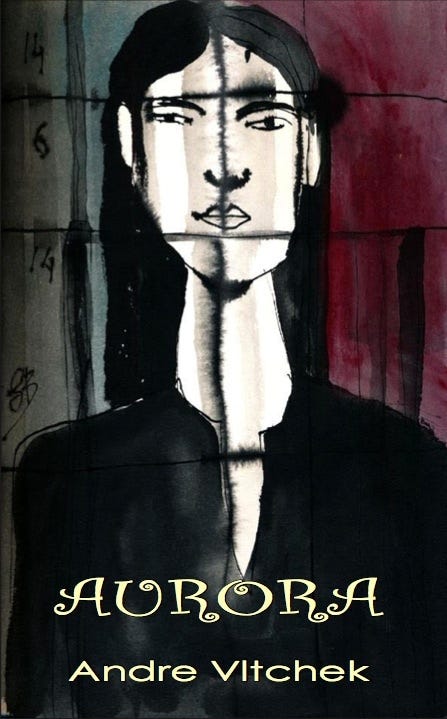
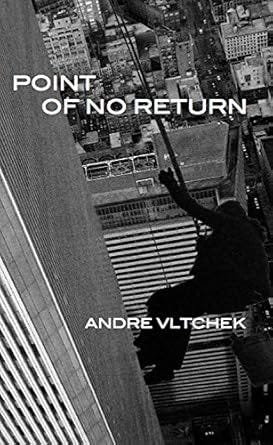
André Vltchek may be the most historically underestimated novelist — as he is not estimated at all. At least not by legacy media. Known in activist and intellectual circles for his injustice-exposing documentary films, journalism, and books of exposé articles, André should be known worldwide for his two great novels, Point of No Return and Aurora. Not to mention his plays.
André died nearly five years ago at the untimely age of 56 after a dedicated and hard, dangerous and world-traveling life of war reporting and activism. Czech, Russian, Chinese, and naturalized American, speaker of more languages than fingers, André Vltchek was a sophisticated hands-in-the-dirt warrior for justice — a revolutionary.
Born and raised in Europe (western Russia and Czechoslovakia), André subsequently lived and worked mainly throughout Asia, Africa, and Latin America, and a bit in Europe, North America, and Australia. He studied film in his twenties at Columbia University and worked as an interpreter in New York City (after working as a translator of business correspondence of German and Russian to Czech, in what is now the Czech Republic, while also working as a tourist guide) before going on to report and work for social justice in over 160 counties. His books of journalism and social analysis have been translated into several dozen languages. He loved many cities, places, and peoples on every continent, including various parts of New York City, which he was eager to share with friends and colleagues, including on one occasion Noam Chomsky, with whom he was a co-author.
Much could be written about André’s biography, also about the biographies of his parents and grandparents. Much could be written about his documentary films, journalism, and plays, but I focus here only on his two political literary novels — the revolutionary, gut-wrenching, war-ripped, and romantic autobiographical novel of war journalism, Point of No Return (review by Ron Ridenour) and his equally gut-wrenching and visionary brief final novel, Aurora. These are liberatory lit, literary populist, global anti-empire novels set vibrantly on all continents except Australia and Antarctica. They are peak literature, and they have been entirely neglected outside of a brief moment in time in France.
To the best of my recollection, in 2004 André contacted me after having read or read of my anti-Iraq-war novel, Homefront. He later said that he was “embarrassed” by my novel, given that his own anti-Empire novel — and perhaps his preferred sense of imaginative literature — was more risqué. After I read his draft of Point of No Return, we immediately decided to form a print-on-demand press, Mainstay, and publish our two novels in paperback — having been rejected everywhere by the literary establishment. I would go on to edit André’s novels and plays and some essays because of his ESL difficulties — English as a Seventh Language, so to speak, in his case. As it happened, I mistook some ESL issues for purposeful style — issues that were addressed years later apparently when the novel was translated by a publisher in France — where the book eventually received limited and rare institutional recognition.
Read Point of No Return (2005) and Aurora (2016) and you will get to know a fair bit of André and his life in this world, and you’ll know what a strong revolutionary populist, anti-Empire stance, understanding, and commitment looks like — to him — inspiring and literary, wrenching and visceral, intellectual and blood-letting, civilized, uncivilized, and dangerous.
As André notes in a 2018 interview with Binu Mathew, “How I Became A Revolutionary and Internationalist: André Vltchek”:
My story is my life; and my journey is my story. Revolution is called ‘the process’, in many countries of Latin America. It is one continuous journey: it can never end. If one is tired of this journey, he or she is tired of this world, and of life itself.
André adds:
Imperialists want us to forget about the stories. They want us to live on pre-fabricated junk stories of Hollywood and Disney. It is our duty to tell the real stories, because they are much more beautiful than computer-generated ones, and they are true. That’s why I create, write, and film. No stories, no revolution! And [the] more I hear and see and create, the happier I get.
For years, André mentioned that he was working on a major subsequent novel titled Winter Journey that he was tight-lipped about, even secretive. A draft of this novel is apparently on a device in the possession of authorities, and it may or may not ever be retrieved or returned. Some hints of Winter Journey may or may not be found in a tense scene in Point of No Return in which the protagonist Karel negotiates with an “anti-terrorist” Peruvian Colonel. André’s two published revolutionary novels push the literary bounds regardless.
When we first discussed publishing our novels, André mentioned that he was bad at coming up with titles and asked if I had a better idea than Point of No Return, and though I knew the title was cliché, I felt the title should be the author’s decision. In any case, nothing sprang quickly to mind. My title Homefront was also cliché. Two very to-the-point titles but less evocative than they could have been. If we had given it more thought, we might have gone with something like Death Front for my novel, and War in a Time of Love for André’s novel — which is the title I gave to the feature film script that I adapted from Point of No Return.
André prefaces Point of No Return with a poem by Octavio Paz in Spanish and a single line by Samuel Beckett in English: “The sun shone, having no alternative, on the nothing new.” The novel then opens during an Israeli bombing of Rafah refugee camp in Gaza, Palestine, decades ago, while of course Gaza today is currently bombed to rubble and continues to be bombed to ever more gruesome rubble at great loss of life and “ethnic cleansing” of Palestinians by Israeli forces using largely American weapons and funds and authority. The first words of Point of No Return:
A Palestinian man stood in the middle of a dusty road in Rafah refugee camp. Next to him stood his donkey. The man was old and so was the donkey.
Israelis fired air-to-ground missiles from helicopters. The earth shook while the old man stood in the middle of the road, blissfully indifferent to what was happening around him.
I liked his face. It was a good face, covered by wrinkles, not very expressive but good nevertheless. I took photographs of him and then we stood there, looking at each other. I greeted him in English and in Arabic and he answered though we knew there could be no serious conversation between us. We belonged to different worlds. I had come to learn and to see and to write, while he was here to stay.
He was a gentle man — it was obvious from the way he treated his donkey…stroking its mane, resting the palm of his hand on the animal’s neck. Donkeys in Gaza pulled old overloaded two-wheel carts and they looked exhausted, overworked and hungry. The old man did not use his donkey for anything in particular, it was simply his companion. It was easy to sell donkeys in Gaza — even old animals were put to work. But these two were used to each other: an old man and his beast.
André went where missiles explode, as do the stories of his novels — straight into your mind and heart.
It’s hard to say what else to excerpt from the novels — the scenes that seem all-too raw, gory, and obscene for print — too war-torn? Could you bear it, here, reader? Could you bear it even in reading the novels? Maybe I should lead with those scenes. Or with the inspirational? The emotional? The intellectual? The eventful? The romantic? The comedic?
As I noted twenty years ago upon the novel’s original publication: Point of No Return is one of the great novels of the 21st century. It deserves a wide readership and serious critical appraisal. Over a half century ago, in his important book “American Moderns — From Rebellion to Conformity,” the great literary critic Maxwell Geismar noted that “Our best literary work has come from writers who are outside [the dominant] intellectual orbit, where [capitalist] panic has slowly subsided into inertia.” Geismar anticipates Vltchek. Point of No Return explodes from that vital realm far beyond hegemonic control.
Aurora, André’s final novel (so far), leaps outside of history while focusing intensely on a particular telling point in time. Aurora raises both prominent and unknown historical figures from the dead to help tell the story. It opens:
At dusk, Bertolt Brecht and Wolfgang Amadeus Mozart entered an ancient tango bar in the old Chilean port city of Valparaiso. At that hour, Cafe Cinzano remained nearly empty. A shy if ardent middle-age couple held hands at a distant table and whispered sweet words over tall glasses of foamy pisco sour. An enormous, fat orange cat stretched comfortably on the floor, certain that, as happened every day, it would feast before long on copious leftovers of fish and seafood.
Brecht and Mozart banter about the global cultural and political scene, mentioning their timeless colleagues “Comrades Shostakovich and Victor Hugo” — and then Mozart tells Brecht his “strange, complex and dark story” about a trip to Indonesia and “what took place in that faraway and unfortunate country”:
Nauseatingly sweet smoke from clove cigarettes swirled into fantastic forms. Ghostlike, the smoke filtered through the dimly visible tropical vegetation and levitated into the starless night sky. The outdoor café in one of the country’s former capitals once again overflowed with local artists, all uniformly dressed in dark-colored T-shirts, jeans and plastic sandals, their grimy feet resting on old chair frames and worn-out cushions. Their faces, detached and mildly cynical. The few women wore clothes identical to their male companions, and they too smoked clove cigarettes. In the semi-darkness, the women were difficult to distinguish from the men. All seemed desperate to blend into the obscurity of the night.
This nation of thousands of islands and languages once proud of its diversity had descended into gray uniformity — its cities and villages increasingly indistinguishable one from another. People were worn down. So many dressed in the same untidy and unattractive fashion, behaving the same way, believing in the same things, thinking alike, submitting to the same religions, to capitalism and to repressive family structures. Differences had not been tolerated for many decades. Independence was broken at an early age, considered dangerous and evil.
Mozart: Like in my old Vienna.
Brecht: Like in all parts of the world where oppressive cultures reign.
Hans G, a European cultural envoy in this “far away land,” sat at one of the rough and robust wooden tables in the center of the café, his disciples surrounding him, something truly ancient and biblical in the gathering.
And from there in Aurora we get transcontinental revolution, revenge, horror, and a historical reckoning of Empire — in that opposite order. André knew Indonesia inside out, as with many other places. In Indonesia, he filmed his documentary Terlena: Breaking of a Nation (re-edited as Downfall!) about the American assisted 1965 massacres and imposition of military dictatorship. He was married to Rossie Indira Vltchek, an Indonesian woman with active social and historical ties in the country and with whom he closely partnered — dying in his sleep of natural causes by her side as they were being driven in a car overnight from the Black Sea to Istanbul.
Over the course of his life at various harrowing points of life-or-death, imprisonment, or conscription, André was forced to fight and flee more than a few countries — including countries in Europe, South America, Asia, and Africa. To most of these countries, though not to all, he dared return, whether to continue his life or work, or both. Not for nothing has Noam Chomsky often characterized nation states as institutions of violence. As in Aurora as in Point of No Return, both novels culminate in battle and revolution, very much in the vein of realism in Point of No Return, differently in Aurora, while gritty in both. Meanwhile these astounding two stories are overlain with and underwritten by romance — in every sense of the word. And humor.
Is there anything more dreadful than a review that gets in the way of the spectacular object of its attention? The artist has gone to all that work — making the art — and the tag-along reviewer too often emphasizes, and excessively, their fly-by-night notions. If you’ve never had the opportunity to travel the world in wildly adventurous and meaningful ways — and who does? — both on and off the beaten path, then Point of No Return is the novel for you. If you want to jump into an all-out revolution — then Point of No Return is also the novel for you. That is, if you have the guts, heart, and mind for an exposé of brutal Empire and a thirst and outrage for revolution against the Empire and for better worlds. If so, then both novels are for you. Intellectual and horror stories — and popular triumphs. Plenty of comedy too, amazingly enough — a testament to what is called the human spirit. Inspirational, revealing characters, places, events — liberatory experience.
As Tamara Pearson’s recent liberatory revolutionary novel The Eyes of the Earth reveals the world from the Earth’s floor looking upward and from a revolutionary vantage looking around, André Vltchek’s two partisan novels of literary populism reveal the world from both pre-revolutionary and post-revolutionary vantages — amid the blood and terror bombings of Empire and amid the victorious resistance — the personal and social transformations, the revolts of people and the world. It takes a kind of infinite and eternal eye, mind, and heart — to perceive and envision, to know and feel the greater, more expansive phenomena.
André Vltchek’s novels are cutting-edge literature. The cliché is that vaunted work pulls no punches, which is too easy, too vague. The reality is that the novels deliver punches that the various establishments of Empire can neither stand nor — taken to their logical and moral extensions — withstand. The writing it too literary and, more, too liberatory to be anything less than revolutionary.
Of course such work is underestimated by the establishment, because it is unestimated — dismissed out of hand. There in the Empire’s literary dustbin of history may be found some of the most vital present and future of experience, art, and consciousness, the public and the private, the real, the revolutionary, transfigured and full. Lit writ large.
From Point of No Return, in which our hero war journalist Karel tries and fails to calm his boss, Green, editor of the international section of The Weekly Globe magazine:
Green was sweating, getting excited, messed up. Cathy sat at the bar, her legs crossed. She looked in our direction. I smiled at her, to relax the atmosphere, and she let one of her shoes slide from her heel to dangle from her toes. Good move, I thought. A pity that Green had lost all interest in the surrounding world. He ordered more drinks. He was getting into it. Analyzing and drinking.
“I respect your opinions. That’s why I invited you all here. And I’m going to meet you, one by one, and I am not going to let you go before you explain to me what is really happening.”
“I don’t know more than what you do,” I said.
“You do know more,” said Green. “Something is happening. Something scary. Something that justifies your total indifference to our readers. Something I still don’t understand.”
“Things have become more complex,” I tried.
“I am not an asshole,” Green informed me. “I know that the situation is confusing. We don’t have many enemies, anymore. We have mostly friends. Friends that don’t like us. Friends we cannot trust. We have Saudi friends, for instance — that’s extremely confusing. Simple Joe doesn’t like many of our friends, either. He despises the French and Japanese, partly because he knows that the French and Japanese despise him — simple Joe. He thinks it takes five Poles to screw in a light bulb, but Poland is now in NATO. Many Americans look down at Latinos, they are afraid of Asians, and absolutely refuse to note the existence of Africa. They think that Saudis ride camels and put bed sheets over the heads of their women. Moretti tried to explain everything in one of his editorials. From Moscow. Eventually he just hit the bottle. He is falling apart from all that friendship. Our Moscow office is turning into a bordello, our Russian secretaries becoming single mothers. Moretti hired two new typists he doesn’t need, from his own salary. He has his ‘zapois,’ whatever that means. Still, he manages to write well. The only problem is that nobody wants to read his dispatches.”
“You didn’t tell him any of this today,” I said.
“And what the hell should I tell him? That he writes well, maybe too well for this magazine?”
From Aurora:
Then Hans G noticed the tall, commanding figure of a man sitting at a nearby table. He knew instantly, almost intuitively, who that man was, and his feeling of invincibility shrunk ever further. In fact it was almost smashed to pieces. He felt dizzy. His feeling of unease kept mounting. A sticky sweat now covered his entire body, leaving large dark spots on his shirt and trousers.
How could this be happening? Why hadn’t he, Hans G, a man ‘in charge of culture,’ been alerted beforehand? How was it possible that this dangerous foreigner had not been stopped at the airport, the seaport, wherever he had entered the country?
Hans recognized Pablo Orozco, one of the living symbols of the Venezuelan Revolution.
A ‘dangerous foreigner,’ Pablo Orozco, was now sitting comfortably on a cracked and stained chair, in this damned filthy dive full of fucked-up, untalented, lazy and thoroughly prostituted local scribes and artistes. Why the hell had he come here, to this laboratory that had been, until now, so perfectly managed by Hans G? What terrible luck, what an insane coincidence! Why did it happen? No accomplished outsiders ever came here! No great artist, no great thinker bothered to visit this brain-dead archipelago, especially this motherfucking degenerate town. This country was for second-rate businessmen and aging sexual tourists. It had been cut off from the rest of the world, on purpose, for decades! It was supposed to be completely isolated and quarantined! That had been the plan, since the mid 1960s. So why this, why now? What was one of the greatest, and at the same time one of the most provocative artists on Earth, doing in this intellectual bordello?
When Hans spotted him, Orozco was not calling for rebellion in art and philosophy. He was not telling how, in his studio in Caracas, he was splashing red paint all over his massive canvases. Instead, his enormous hands were making simple origami for two street children that he had insisted be allowed to enter this café with him and Aurora. One child on each knee, Orozco fashioned tiny paper cranes and other fabulous creatures, talking to the children in Spanish, English and in broken local language.
For a grand figure of the Latin American Revolution, for a guru of engaged, combative art, for a symbol of everything that Hans was laboriously and tirelessly trying to disappear and keep disappeared in this part of the world, Orozco looked surprisingly simple, even timid. There was not a trace of arrogance or superiority engraved on his face. He was merely enjoying his quiet interaction with the children, talking and drinking beer.
‘And the most troubling thing is,’ thought Hans, ‘there is no trace of fear in Orozco’s face.’
And there is no fear in the novels, in the artistry, in the expression of André Vltchek, no authorial timidity — not in Aurora and not in Point of No Return and presumably not in Winter Journey, whatever it may be.
For the sake of his sense of justice and his journalistic endeavors, André put his life on the line repeatedly — one might even say constantly — transformed moments of which appear throughout Point of No Return in particular. And so it is that André’s life may be found laid on the line in his novels — and in our own lives too — that is, in the lives of revolutionaries and potential revolutionaries, among other manifestations — too often infestations — of human, or rather inhuman, ways to be. How to be inhuman? How not to be a revolutionary? How to be liberatory in literature and life? André wrestled mightily with all of it. How to be revolutionary. Dare an objective journalist drop his recording device and pick up a gun in the heat of battle alongside a drunk colleague who, anyway, assumed they were on a suicide mission? See one of the latter scenes of Point of No Return where the question and apocalyptic situation is confronted point-blank.
To write a biography of André would seem borderline impossible, as the stories of his life are endless and far-flung, many happening in remote or opposite corners of the globe, often simultaneously, somehow. You get some of the flavor and substance of this in Point of No Return especially, also in Aurora. Some of the chaos, some of the romance and humor, some of the danger, some of the warmth, some despair, some of the intentionally revolutionary. As the facts and truths of André’s life are astonishing, so are the revolutionary facts and truths of the imagined life of his novels no less astounding and inspired, moving and potentially life-changing.
A few years after his death, when I requested André’s file from the national political police, AKA the FBI, I received some heavily redacted electronic documents and a “release letter” noting that scarcely more than half the pages on file were being released. Something too bold about André’s life or too nefarious about the FBI for the public to be allowed to know, apparently. America’s greatest philosopher John Dewey, sort of America’s Marx, notes in passing in his incisive The Public and Its Problems that “politics is the shadow cast on society by big business” — and so the secrets hidden and guarded from the public by the nation state may be considered to be economic at their root. So much is made of this or that bloody political situation that what is often glossed over or disguised is how intensely economic the situations are at their core. So often, no one would suffer the “political” as victims in the first place or much care about the “political” as victimizers if the economics were different — more equitable, more just. André’s blood-soaked novels can be understood as revolutionary economics, and not only where explicitly stated. André’s novels are bold examples of what literature can be. Consequently, the novels, such novels, are made an example of by the establishments of Empire in being effectively disappeared, marginalized, unestimated, misestimated — or profoundly underestimated at best.
These novels are written to help usher in, to help power up the day, the new progressive populist age when the weaponized and deficient acts and evaluations of Empire might be resoundingly reversed. The novels of André Vltchek express revolutionary consciousness, a fertile literary populism. And the novels express lively ways forward through our too-often bitter and potentially terminal time in which many people seek, and long, and struggle daily, at their most conscious, to be ever more revolutionary — more human, healthy, and whole.
POST VIA LIBERATION LIT & The Republic of Letters
 A Practical Policy